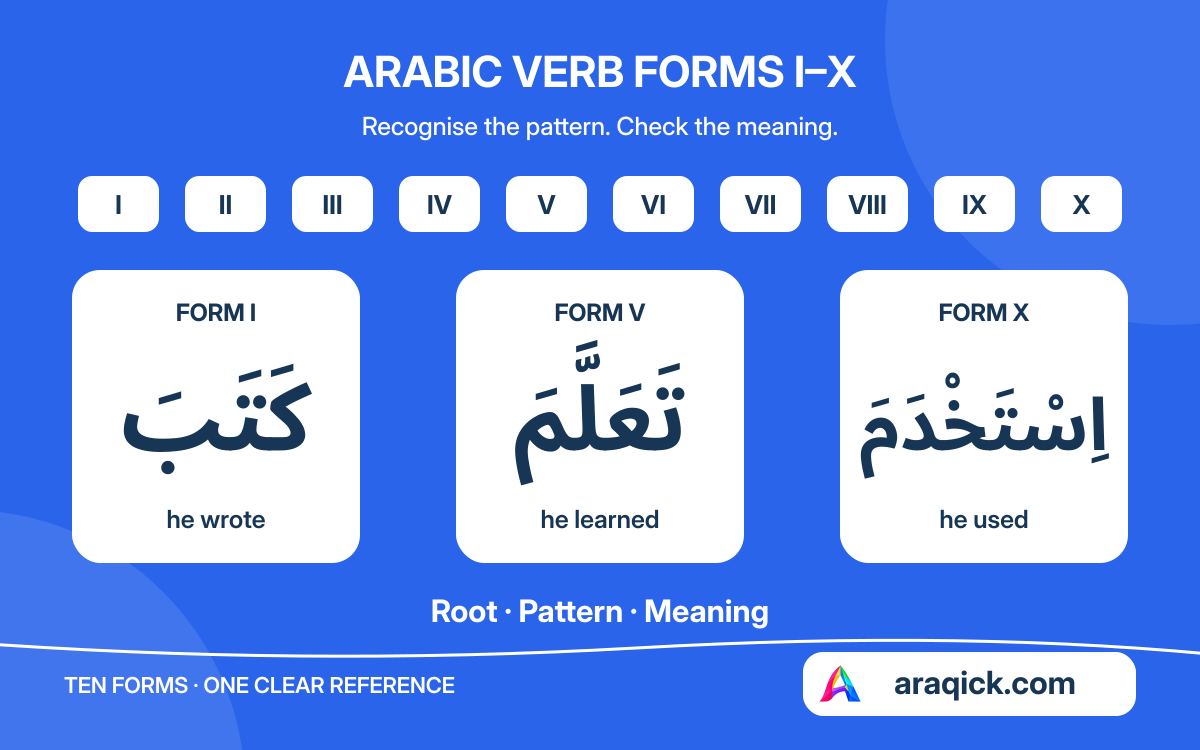
Arabic verb forms describe how a verb is built around its root. The labels I to X name ten common families, not ten tenses. Recognising a family helps you read its related words, while a dictionary confirms the exact meaning. Start with a few visible clues, then use the comparison charts as a reference.
01Separate a root from a complete verb
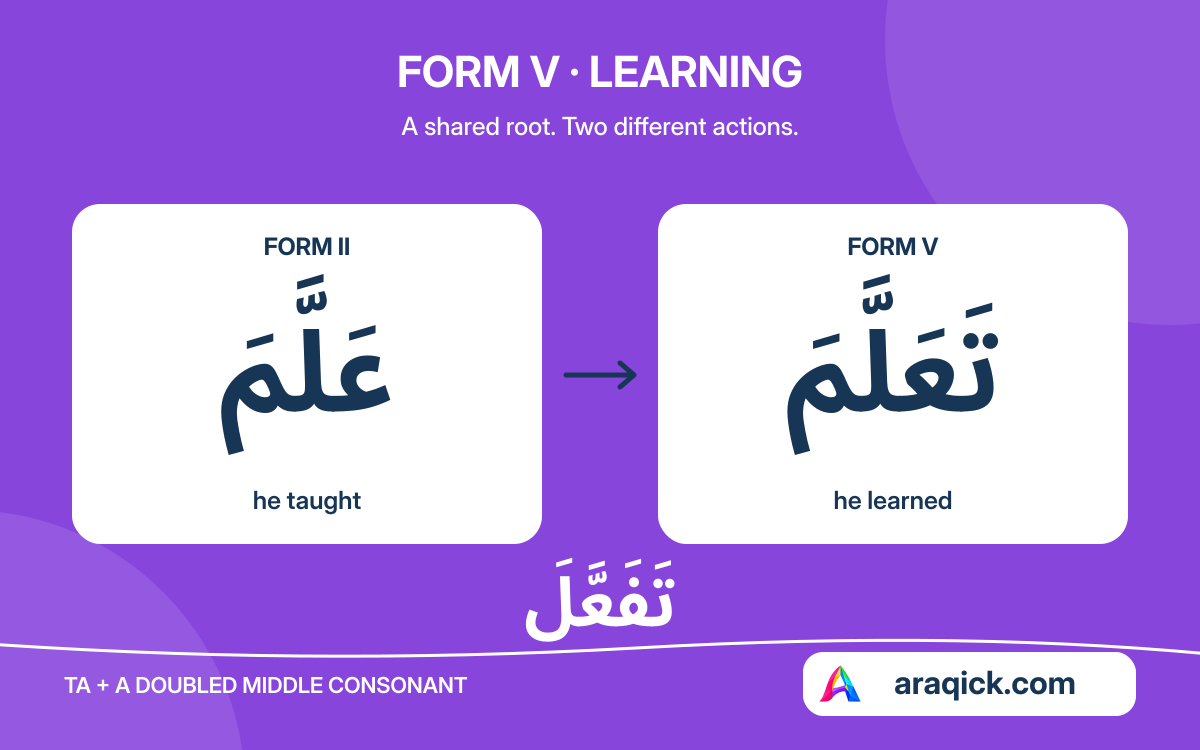
عَلَّمَ — تَعَلَّمَ
allama — taallama
He taught — He learned
Both verbs share the root ع ل م. Allama is Form II; taallama is Form V. The extra ta and the doubled middle consonant belong to the pattern. The root links the words, while each complete verb has its own meaning.
The conventional pattern letters ف ع ل stand for the three root positions. They are a measuring template, not letters that every verb must contain. Review roots and dictionary forms first if that distinction is new.
02Recognise the common added shapes
Form I is the basic three-root stem, called mujarrad. Forms II–X are augmented, or mazid. Doubling a root consonant counts as augmentation even though Arabic writes it with a shaddah.
عَلَّمَ — شَارَكَ — أَرْسَلَ
allama — sharaka — arsala
He taught — He participated — He sent
II doubles the middle root consonant. III places a long a after the first. IV begins with hamzat alqat. These are clues in the dictionary past form; person prefixes in a present verb are a separate layer.
03Compare V through X in small groups
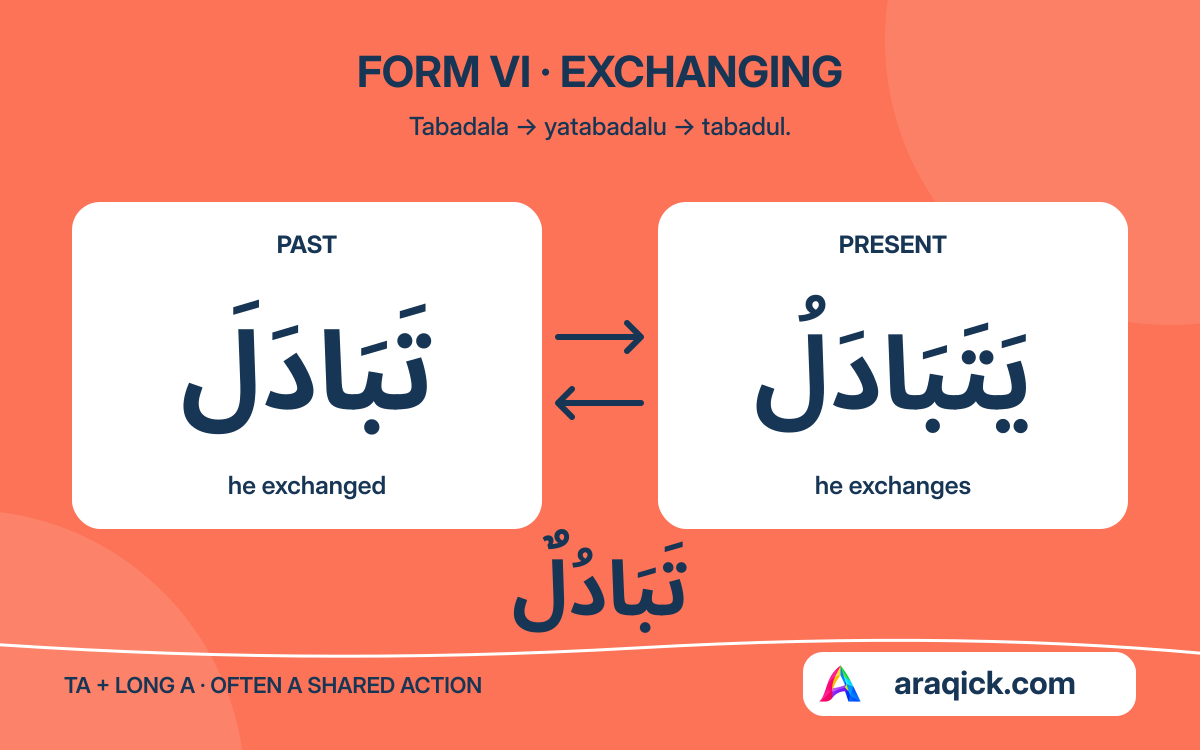
V adds ta to the doubled-middle pattern; VI combines ta with a long a. VII begins with in, while VIII places an added ta after the first root consonant. IX doubles the last consonant. X begins with ista in its ordinary past pattern.
تَبَادَلَ — اِنْكَسَرَ — اِسْتَخْدَمَ
tabadala — inkasara — istakhdama
He exchanged — It broke — He used
Learn the root with the form. The ta of a known root is not automatically an added letter, and weak roots or sound changes can hide a simple template.
04Change tense without changing the family
تَعَلَّمَ — يَتَعَلَّمُ
taallama — yataallamu
He learned — He learns
Both are Form V. The present prefix does not turn the second word into a new numbered form. Likewise, I learned, تَعَلَّمْتُ, remains Form V after the past suffix is attached.
The tables show active past and indicative present models. Passive voice, mood and person are further distinctions. Forms I–X are a morphology map, not a replacement for those grammar categories.
05Use meaning clues without inventing words
Several forms suggest useful meaning relationships: teaching and learning, or breaking something and the thing breaking. These are tendencies. Form X اِسْتَخْدَمَ means used; translating every Form X as asked for would fail here.
A root need not have all ten forms in ordinary use. Learn an attested verb with its present, meaning and example. The linked form guides explain each family in manageable steps; derived masdars and active participles extend the same patterns into nouns.
What to remember
- A root links vocabulary; a numbered form describes the verb’s pattern.
- Tense and person can change while the numbered form stays the same.
- Use the form as a clue and verify the actual word and meaning.
Your reference shelf
Open a guide whenever you need it.
Forms I–V at a glanceDifferent roots illustrate attested verbs; these are not ten inventions from one root
Forms VI–X at a glanceRegular patterns are starting points; weak and assimilated verbs need further attention
| Form | Past pattern | Past / present example | Meaning |
|---|---|---|---|
| VI | تَفَاعَلَ | تَبَادَلَ يَتَبَادَلُ | exchanged / exchanges |
| VII | اِنْفَعَلَ | اِنْكَسَرَ يَنْكَسِرُ | broke / breaks intransitively |
| VIII | اِفْتَعَلَ | اِجْتَمَعَ يَجْتَمِعُ | met / meets |
| IX | اِفْعَلَّ | اِحْمَرَّ يَحْمَرُّ | turned / turns red |
| X | اِسْتَفْعَلَ | اِسْتَخْدَمَ يَسْتَخْدِمُ | used / uses |
Form I has several past and present vowel combinations. The chosen kataba pair is one example. The alif at the start of VII–X represents hamzat alwasl in these models; Form IV uses hamzat alqat. These ten common forms do not exhaust every historical Arabic verb pattern.
Sources & further learning
References for the language explanations and learning guidance.