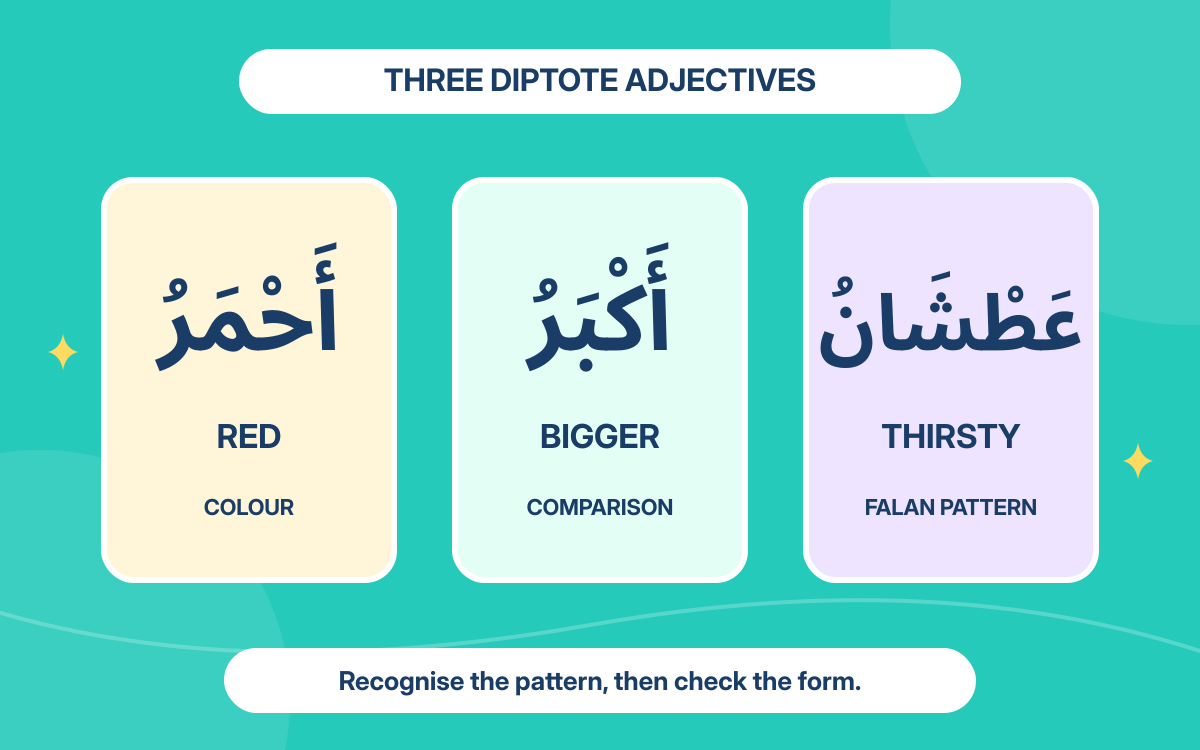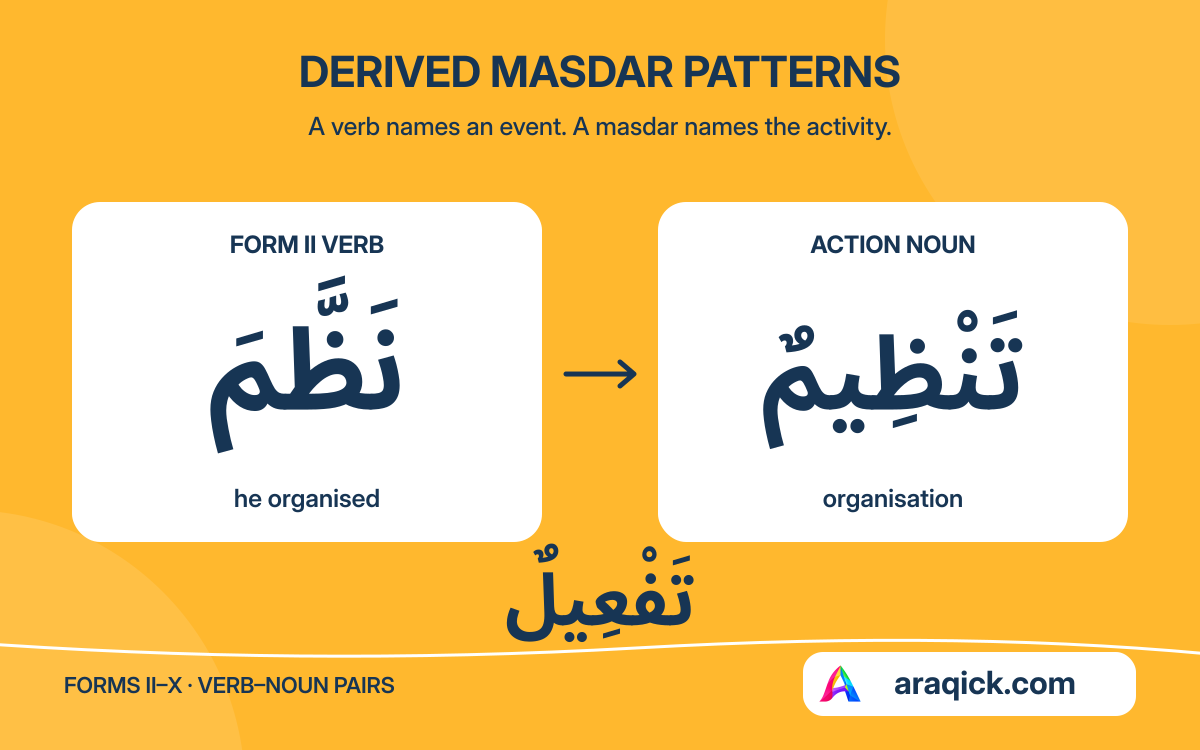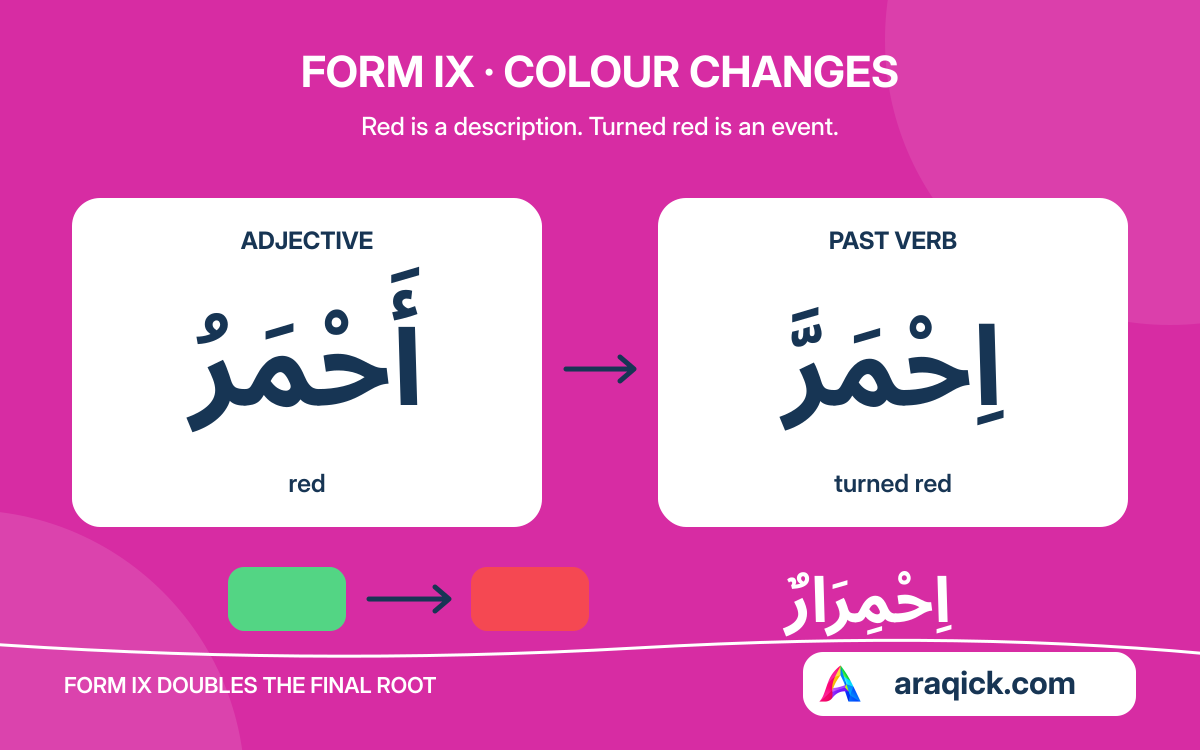
Ahmar describes something red. Ihmarra says that it turned red. This change is a useful doorway into Form IX, a family associated especially with colours and physical characteristics. Its doubled final root consonant distinguishes it from the doubled middle consonant of Form II.
01Separate being red from turning red
الْوَرَقُ أَحْمَرُ
alwaraqu ahmaru
The foliage is red.
اِحْمَرَّ الْوَرَقُ
ihmarra alwaraqu
The foliage turned red.
The first sentence uses the adjective ahmar as its predicate. The second uses a past verb to describe a change. The related words share root ح م ر, but an adjective and a verb do different jobs.
This distinction lets you report an event instead of only naming the present colour.
02Double the last root consonant
The ordinary Form IX past pattern is اِفْعَلَّ. In ihmarra, ha is the first root consonant, mim the second and ra the doubled third. The initial alif supplies hamzat alwasl.
اِصْفَرَّتْ وَرَقَةٌ
isfarrat waraqatun
A leaf turned yellow.
Isfarra follows the same pattern with root ص ف ر. The final ta in isfarrat marks a feminine subject. It does not replace the doubled ra inside the stem.
03Recognise the present and its subject
تَحْمَرُّ الْوَرَقَةُ فِي الْخَرِيفِ
tahmarru alwaraqatu fi alkharifi
The leaf turns red in autumn.
With a feminine subject, the present begins with ta. The masculine form is يَحْمَرُّ, yahmarru. The final ra remains doubled; the ordinary indicative ends in u.
The helping initial i of the past is absent after the present prefix; the root ha stays. Compare ihmarra with yahmarru. The family remains the same. No word meaning become needs to be added to this verb.
04Recognise the related noun and participle
The masdar اِحْمِرَارٌ means reddening or redness. Its two ra letters are separated by a long alif. The active participle is مُحْمَرٌّ, reddened or becoming red in a suitable context.
اِحْمِرَارُ الْوَرَقِ وَاضِحٌ
ihmiraru alwaraqi wadihun
The reddening of the foliage is clear.
Ihmiraru starts an idafa, so it has no tanween here. The noun names the change without itself saying he, she or I. Compare the broader masdar patterns for the other forms.
05Learn attested colour verbs as a small set
Useful examples include ihmarra, turned red; isfarra, turned yellow; اِبْيَضَّ, turned white; and اِسْوَدَّ, turned black. The last two contain a weak root letter, so keep their checked spellings.
Form IX also occurs with certain physical characteristics. Do not invent a verb from every colour adjective or assume every word with shaddah is Form IX. See colour vocabulary for descriptions and doubled verbs for how repeated consonants behave before endings.
What to remember
- A colour adjective describes; a Form IX verb can report a change of colour.
- Form IX doubles the final root consonant, as in ihmarra.
- Ihmirar is the masdar; learn the actual colour verbs and their spellings.
Your reference shelf
Open a guide whenever you need it.
Four colour changesPast and present forms are third-person masculine singular
| Meaning | Past | Present | Masdar |
|---|---|---|---|
| Turn red | اِحْمَرَّ | يَحْمَرُّ | اِحْمِرَارٌ |
| Turn yellow | اِصْفَرَّ | يَصْفَرُّ | اِصْفِرَارٌ |
| Turn white | اِبْيَضَّ | يَبْيَضُّ | اِبْيِضَاضٌ |
| Turn black | اِسْوَدَّ | يَسْوَدُّ | اِسْوِدَادٌ |
These are learned vocabulary items. The patterns are not a command to invent a Form IX verb from every adjective.
Description, event and action nounChoose the word type required by your sentence
| Word | Word type | Useful meaning |
|---|---|---|
| أَحْمَرُ | Adjective | red, masculine |
| اِحْمَرَّ | Past verb | he or it turned red |
| اِحْمِرَارٌ | Masdar | reddening / redness |
The participle muhmar has a doubled final ra. A basic Form IX colour verb is intransitive in these examples; an ordinary passive-participle column is not supplied. The chart avoids commands because everyday colour changes are more naturally described than ordered.
Sources & further learning
References for the language explanations and learning guidance.