Saada means “he helped.” Its long a after the first root letter is a useful sign of Form III. Follow the pattern into “he helps” and “help,” then use the verb in a sentence with a clear helper and a person receiving help.
01Learn the help verb and its root
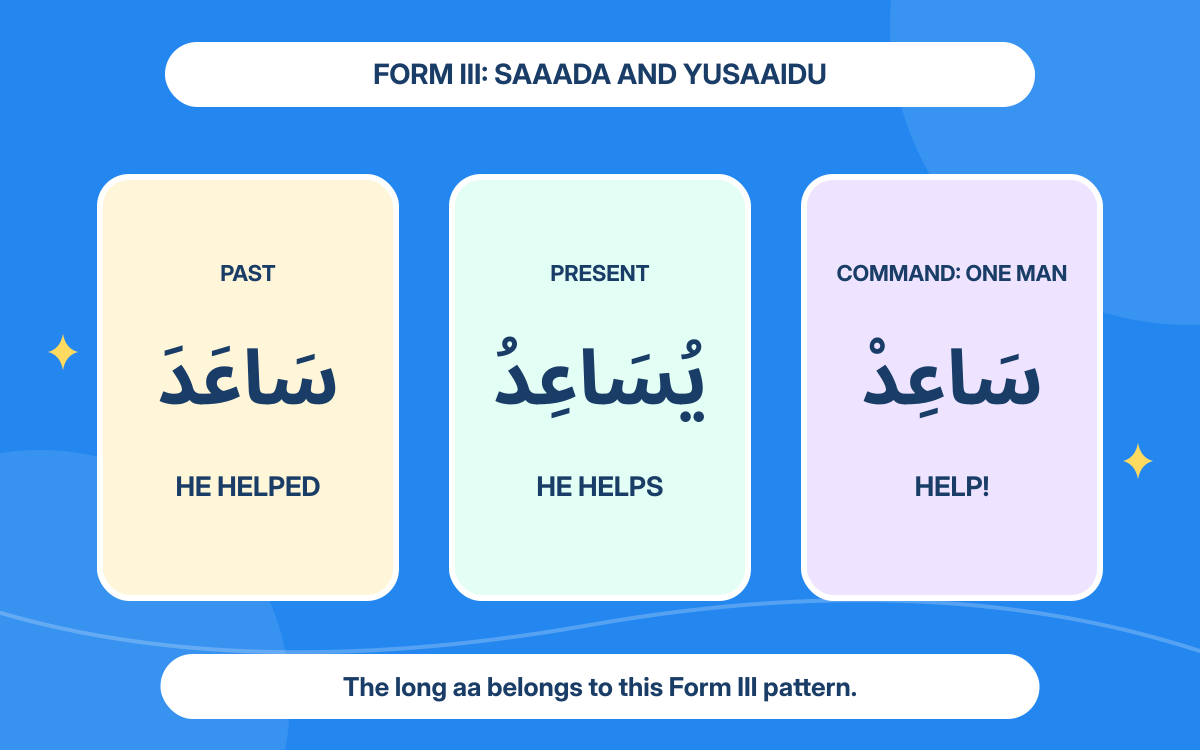
سَاعَدَ means he helped. Its original root is س ع د. The alif after س is an added part of the verb pattern, not another original root consonant.
سَاعَدَ
saada
He helped.
This verb is Form III. Learn its meaning as vocabulary. Some Form III verbs describe interaction, but the pattern does not mean that every action is mutual. Saada can report one person helping another without saying the help went both ways.
02Recognise the added long a
The regular active past pattern is فَاعَلَ. Insert alif after the first root letter to represent a long a; the second and third root letters each have a short a.
فَاعَلَ → سَاعَدَ
pattern to saada
The long a follows the first root letter س.
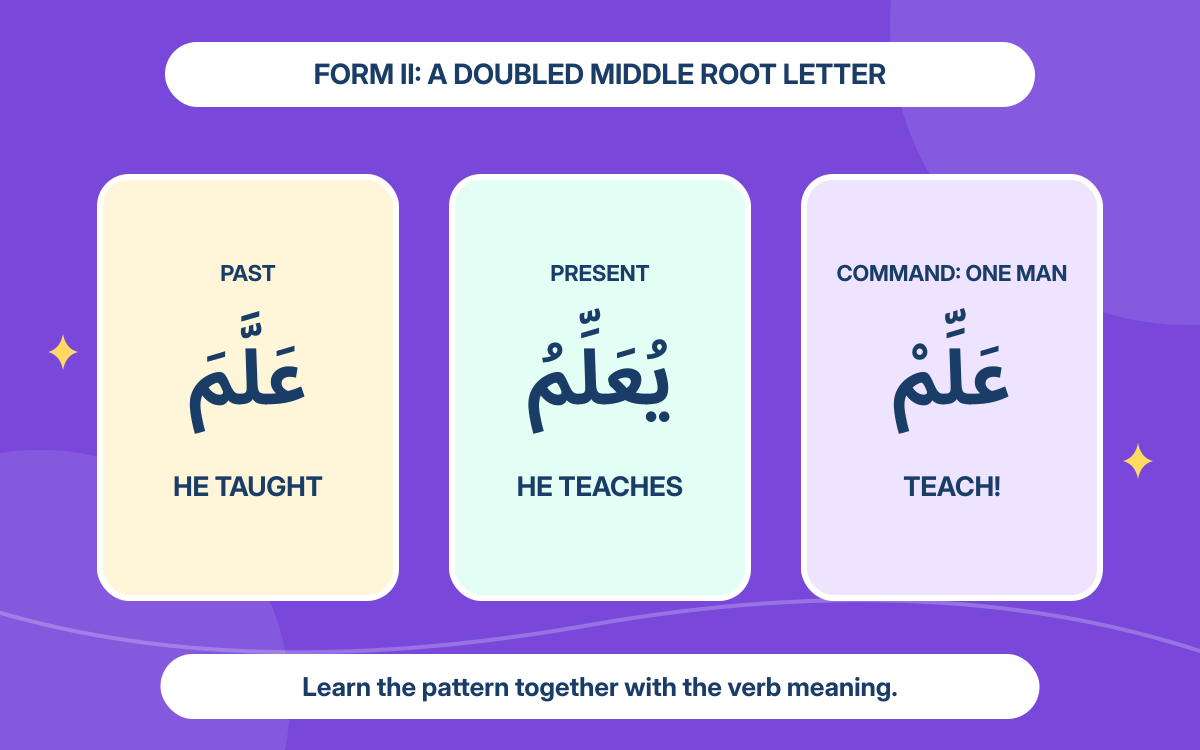
Form II فَعَّلَ adds middle doubling; Form III adds this alif. The form number is a pattern label, not the number of printed letters. Check the root, vowels and additions together.
03Keep the long a in the present
For he, the regular active present follows يُفَاعِلُ. Its prefix has u, the long a stays, the second root letter has i and this ordinary present form ends in u.
يُسَاعِدُ
yusaidu
He helps / is helping.
Past saada has a after ع. Present yusaidu has i after ع. Keep the added alif in both forms; changing the form does not change the original root س ع د.
04Ask one male to help
The masculine singular command follows فَاعِلْ. Keep the long a and the middle i, then end the standalone form with sukun. It needs no initial alif before the first root letter.
سَاعِدْ
said
Help! Addressing one male.
Saada reports a past action, yusaidu describes a present action, and said asks the listener to act. The alif inside the command is still part of the Form III pattern.
05Name the helper and the person helped
In this verb first sentence, the teacher is the nominative doer. The student is the accusative direct object receiving the help.
سَاعَدَ الْمُعَلِّمُ الطَّالِبَ.
saada lmuallimu ttaliba
The teacher helped the student.
The sentence does not say “the teacher and student helped each other.” Identify the doer and object before translating. Practise the verb first, then the teacher and the student. Our plain reading aids simplify Arabic sounds and vowel length.
What to remember
- Regular Form III follows فَاعَلَ in the active past, with an added long a after the first root letter.
- Learn سَاعَدَ / يُسَاعِدُ / سَاعِدْ together: he helped, he helps and help one male.
- The root remains س ع د. Learn each verb’s meaning rather than assuming every Form III action is mutual.
Your reference shelf
Open a guide whenever you need it.
Compare the three help formsCheck the long a, middle vowels and command ending
| Role | Pattern | Example | Meaning |
|---|---|---|---|
| Past, he | فَاعَلَ | سَاعَدَ | He helped |
| Ordinary present, he | يُفَاعِلُ | يُسَاعِدُ | He helps / is helping |
| Command, one male | فَاعِلْ | سَاعِدْ | Help! |
The original consonant root is س ع د. The alif inside these stems is added by the Form III pattern. In the past, the second radical has a; in the active present and command it has i.
Keep verb and noun patterns distinct. فَاعَلَ is this past verb pattern; فَاعِلٌ is the sound Form I active-participle noun pattern studied earlier, as in كَاتِبٌ (katibun, a writer). The vowels and endings determine which form you are reading; a shared long a is not enough.
These models cover a regular root and one male command addressee. Other person forms use their own prefixes and endings; weak Form III roots can change the stem. Learn attested meanings, and use a dictionary when the form is unfamiliar.
Sources & further learning
References for the language explanations and learning guidance.