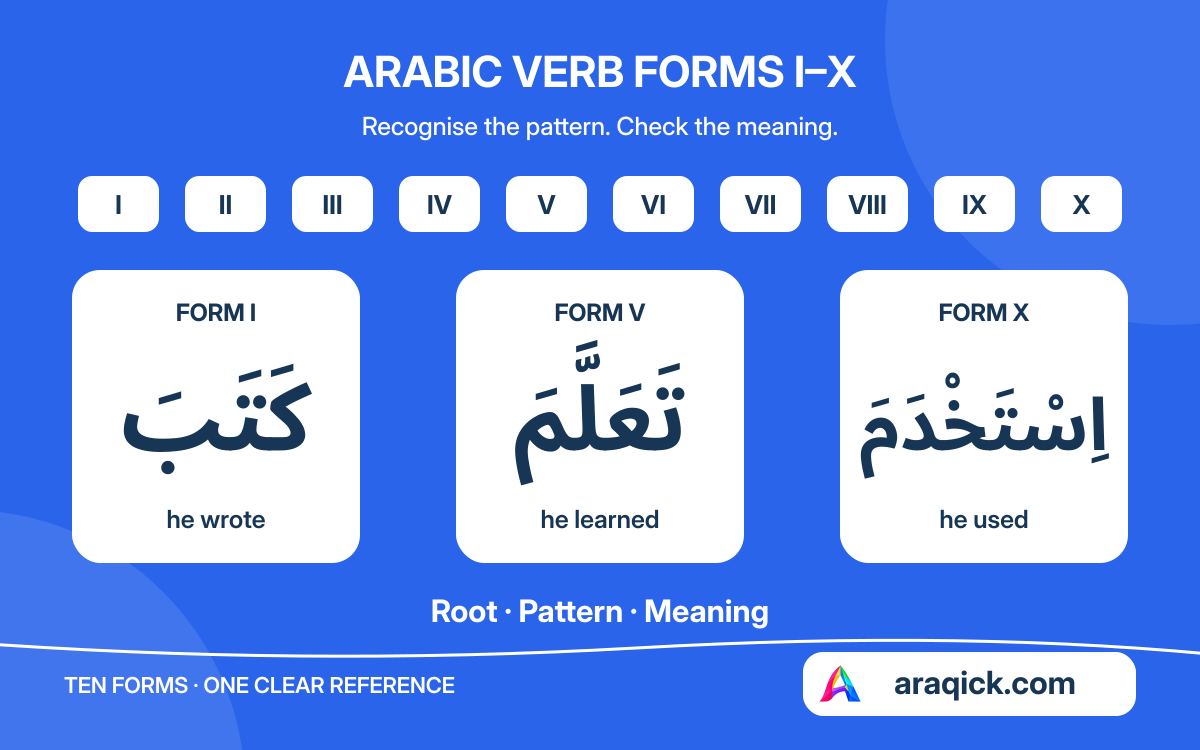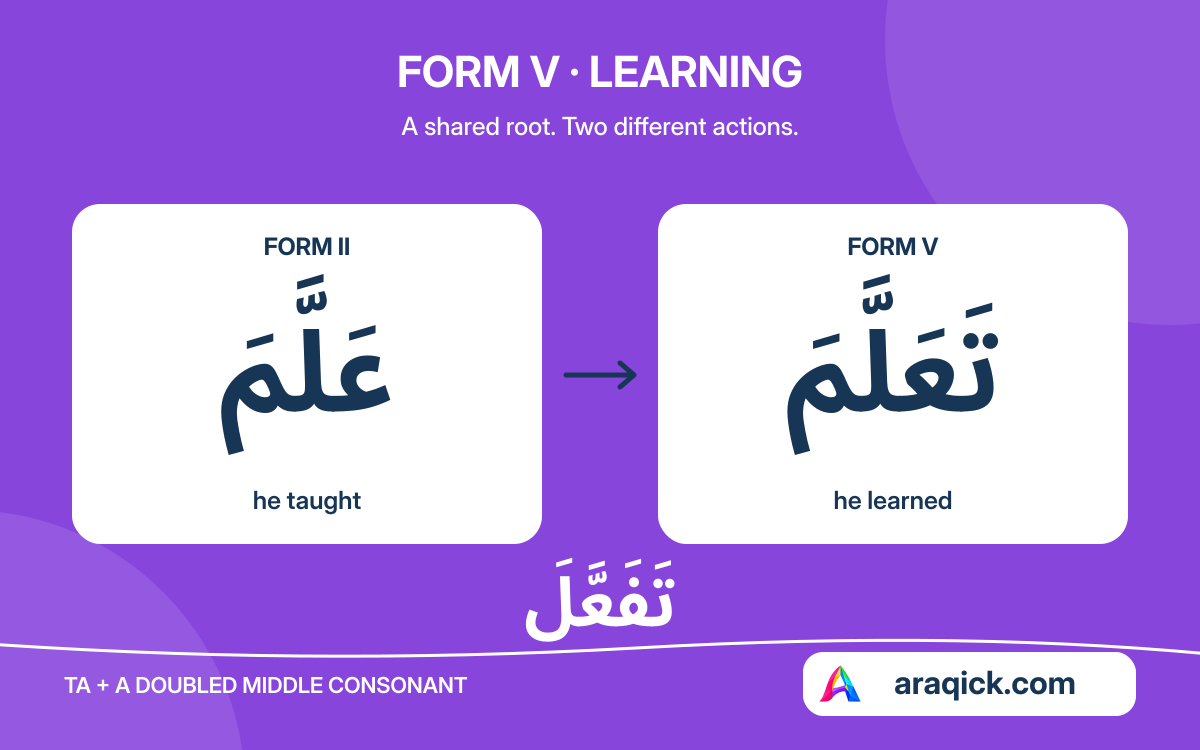
Form V combines an initial ta with a doubled middle root consonant. Taallama, he learned, is a useful starting verb. Its relationship with allama, he taught, makes the pattern memorable. Learn the ordinary stem first, then change the person, give a command and recognise the related action noun.
01Connect teaching with learning
تَعَلَّمَ الْخَبَّازُ كَلِمَةً جَدِيدَةً
taallama alkhabbazu kalimatan jadidatan
The baker learned a new word.
The root is ع ل م. The template تَفَعَّلَ adds ta before the root and doubles its middle letter. Here the baker is the learner; kalimatan is the direct object, and jadidatan describes it.
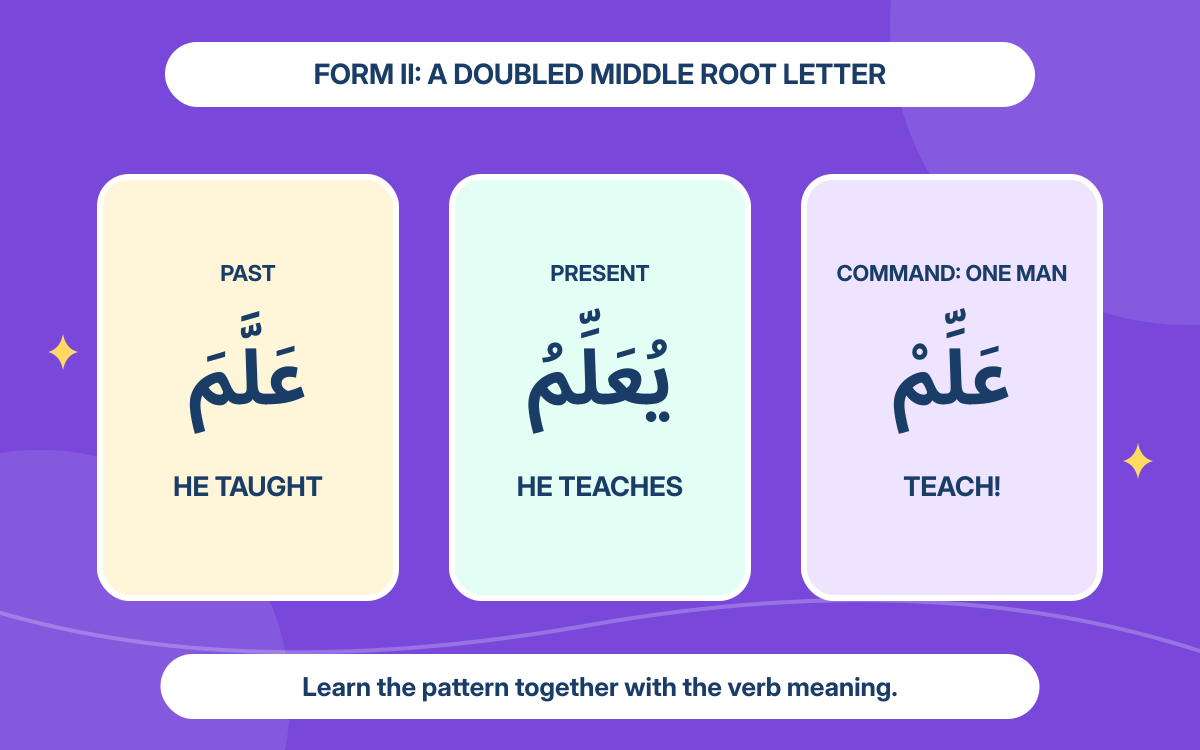
Compare Form II عَلَّمَ, he taught. This pair helps explain a common relationship between II and V, without making every Form V verb a literal reflexive.
02Keep the stem when adding past endings
تَعَلَّمْتُ كَلِمَتَيْنِ الْيَوْمَ
taallamtu kalimatayni alyawma
I learned two words today.
Taallamtu adds tu for I; taallamna, تَعَلَّمْنَا, means we learned. The doubled lam stays. In the example, kalimatayni is the accusative dual because it names what I learned.
She learned is تَعَلَّمَتْ. Notice the final feminine ta as well as the ta at the beginning: one is a subject ending, the other belongs to Form V.
03Add the present prefix before the pattern ta
أَتَعَلَّمُ الْعَرَبِيَّةَ مَسَاءً
ataallamu alarabiyyata masaan
I learn Arabic in the evening.
The I prefix a comes before the Form V ta. He learns is yataallamu, يَتَعَلَّمُ; you learn to one man is tataallamu, تَتَعَلَّمُ. Both initial ta letters in that last word have a job.
Keep the a before the final root consonant in these active present stems. Do not copy the internal i of Form II yuallimu into yataallamu.
04Give a learning instruction
تَعَلَّمْ هَذِهِ الْكَلِمَةَ
taallam hadhihi alkalimata
Learn this word. — to one man
The command is taallam, with final sukun. No helping alif is needed because the first ta already has a vowel. To one woman, use تَعَلَّمِي; to a male or mixed group, use تَعَلَّمُوا.
For a past negative, لَمْ أَتَعَلَّمْ هَذِهِ الْكَلِمَةَ means I did not learn this word. The I prefix remains after lam; a negative report is different from a command.
05Learn related words and other Form V meanings
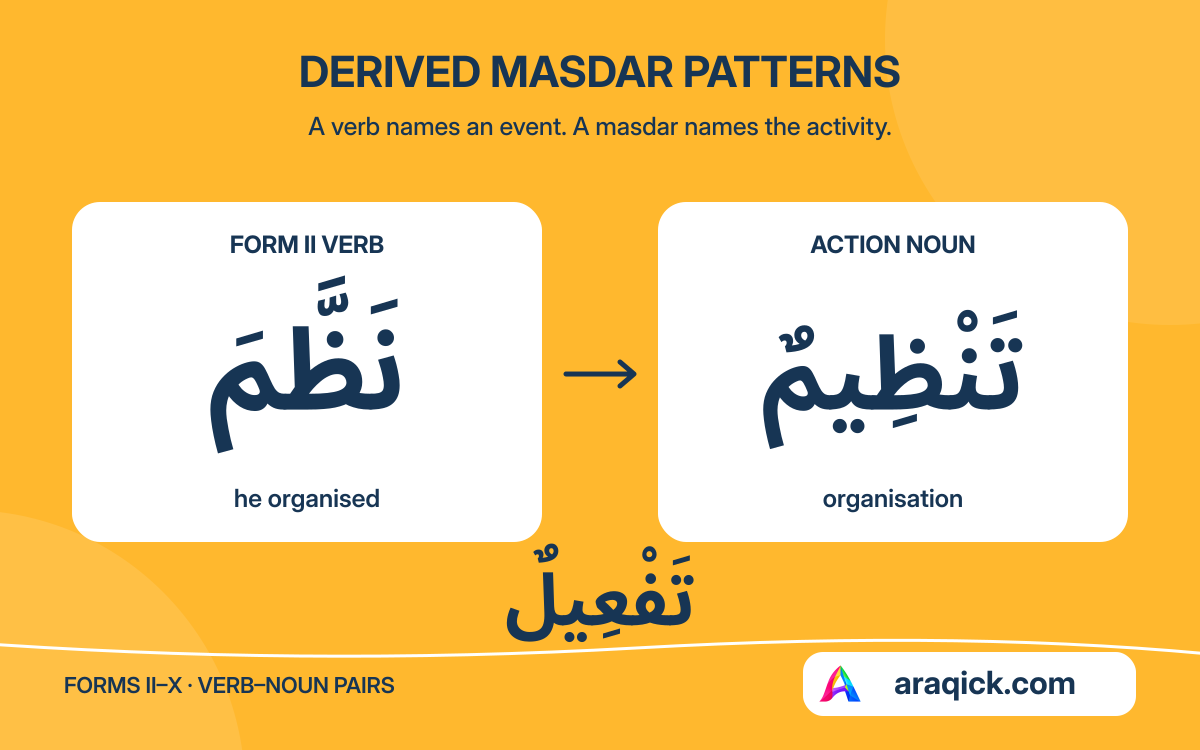
The masdar تَعَلُّمٌ names learning. The active participle مُتَعَلِّمٌ names a learner or describes someone learning. These are nouns, so they follow noun grammar.
تَعَلُّمُ الْعَرَبِيَّةِ مُفِيدٌ
taallumu alarabiyyati mufidun
Learning Arabic is useful.
Other familiar Form V verbs include تَكَلَّمَ, spoke, and تَذَكَّرَ, remembered. Their meanings are learned vocabulary. Compare Form II and the derived masdar chart to organise the family.
What to remember
- Form V adds ta and doubles the middle root consonant.
- Taallama becomes yataallamu in the present and taallam in the command.
- Taallum names learning; mutaallim names a learner.
Your reference shelf
Open a guide whenever you need it.
Taallama: past and presentCompare past forms with the ordinary indicative present
| Person | Past | Present |
|---|---|---|
| He | تَعَلَّمَ | يَتَعَلَّمُ |
| They: two men | تَعَلَّمَا | يَتَعَلَّمَانِ |
| They: male or mixed group | تَعَلَّمُوا | يَتَعَلَّمُونَ |
| She | تَعَلَّمَتْ | تَتَعَلَّمُ |
| They: two women | تَعَلَّمَتَا | تَتَعَلَّمَانِ |
| They: female group | تَعَلَّمْنَ | يَتَعَلَّمْنَ |
| You: one man | تَعَلَّمْتَ | تَتَعَلَّمُ |
| You: two people | تَعَلَّمْتُمَا | تَتَعَلَّمَانِ |
| You: male or mixed group | تَعَلَّمْتُمْ | تَتَعَلَّمُونَ |
| You: one woman | تَعَلَّمْتِ | تَتَعَلَّمِينَ |
| You: female group | تَعَلَّمْتُنَّ | تَتَعَلَّمْنَ |
| I | تَعَلَّمْتُ | أَتَعَلَّمُ |
| We | تَعَلَّمْنَا | نَتَعَلَّمُ |
The two-person you form applies to either gender. These regular stems keep their internal pattern; the endings mark the person. The present column is indicative. Other moods have their own endings.
Commands by listenerKeep the stem and choose the listener ending
| Listener | Command |
|---|---|
| One man | تَعَلَّمْ |
| One woman | تَعَلَّمِي |
| Two people | تَعَلَّمَا |
| Male or mixed group | تَعَلَّمُوا |
| Female group | تَعَلَّمْنَ |
The alif after the masculine plural waw is silent. A direct command already identifies its listener. Plain Latin readings elsewhere simplify vowel length and some consonants; the marked Arabic shows the exact forms.
Sources & further learning
References for the language explanations and learning guidance.