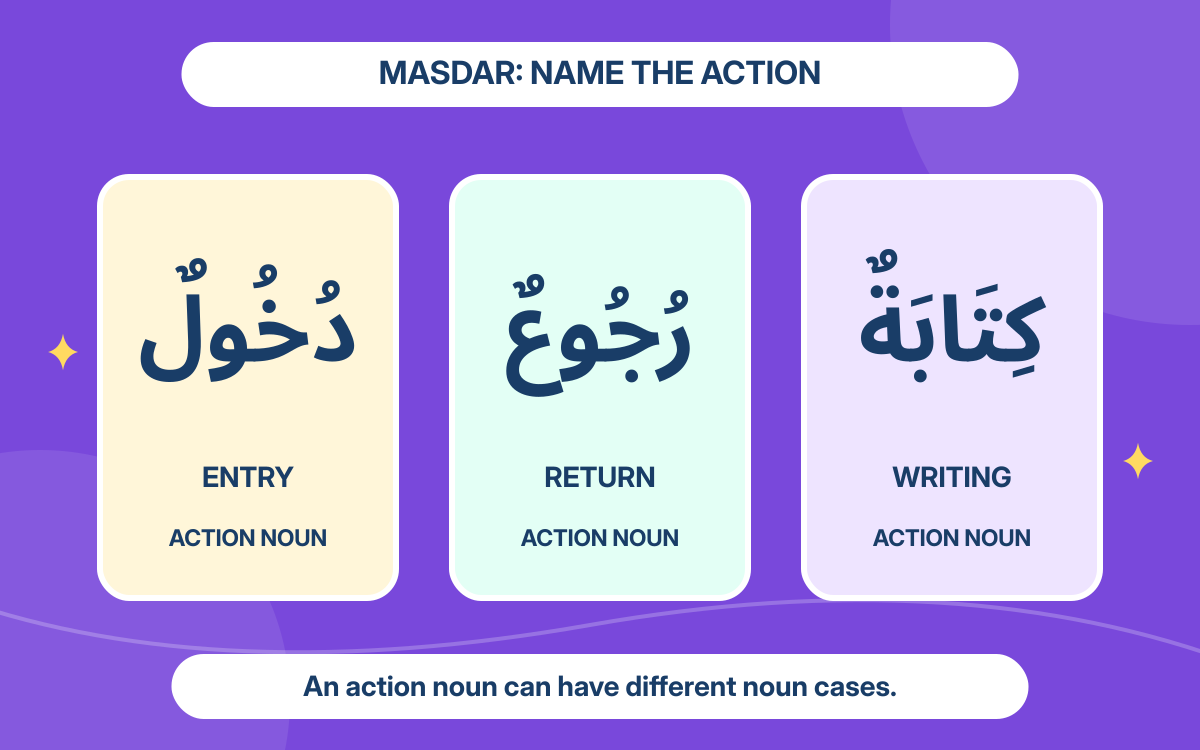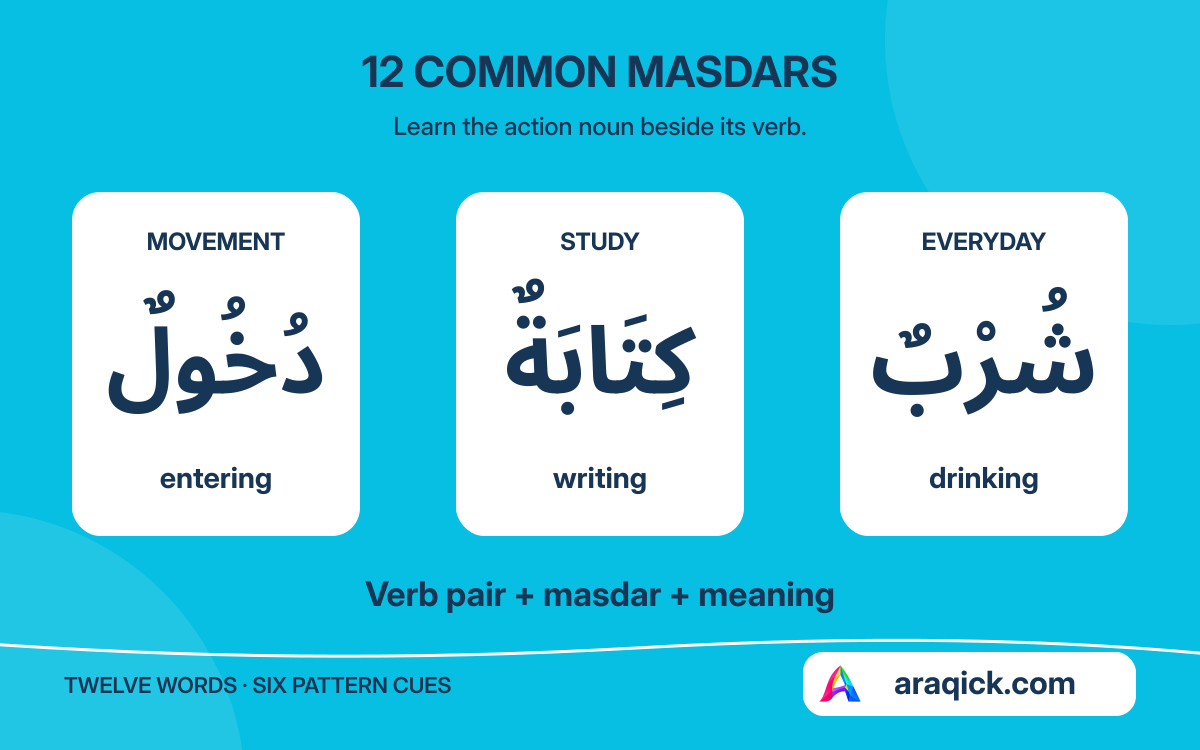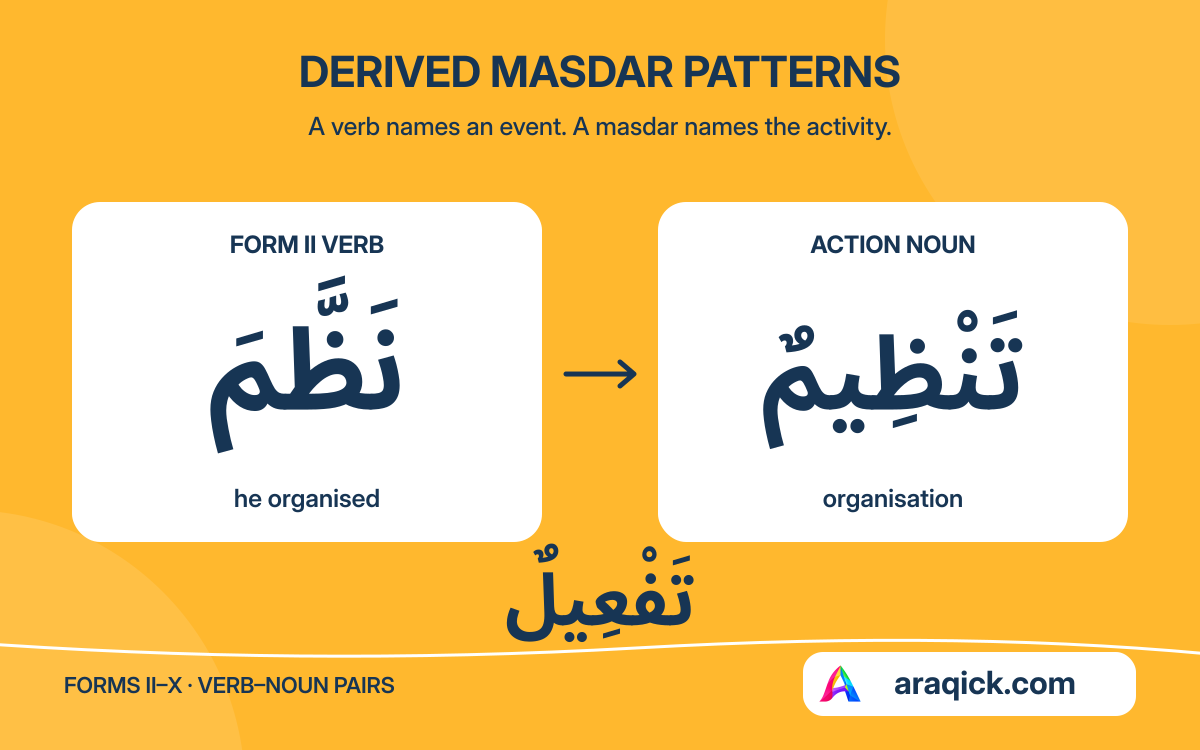
Once you recognise a derived verb, its masdar often follows a useful pattern. Nazzama means he organised; tanzim names organisation. The masdar is a noun rather than another tense of the verb. Learn the regular families in groups and keep room for the variations that real vocabulary requires.
01Turn an activity into the subject of a sentence
تَنْظِيمُ الْوَقْتِ مُهِمٌّ
tanzimu alwaqti muhimmun
Organising time is important.
The verb نَظَّمَ follows Form II. Its masdar تَنْظِيمٌ follows تَفْعِيلٌ. In the sentence, tanzimu is a nominative subject and the first noun of an idafa, so it has no tanween.
Alwaqti is genitive after it. The activity itself is being discussed; the masdar does not say who organised the time or when. The masdar introduction explains those noun roles.
02Group the common II, III and IV patterns
Form II often has tafil, as in tanzim. A common Form III shape is mufaalah: سَاعَدَ — مُسَاعَدَةٌ, helped — assistance. Regular Form IV has ifal: أَرْسَلَ — إِرْسَالٌ, sent — sending.
شُكْرًا عَلَى الْمُسَاعَدَةِ
shukran ala almusaadati
Thank you for the help.
The noun almusaadati is genitive after ala. Some Form III verbs have another established masdar in fial, such as نَاقَشَ — نِقَاشٌ, discussed — discussion. A verb can have more than one attested masdar.
03Hear the u inside Form V and VI nouns
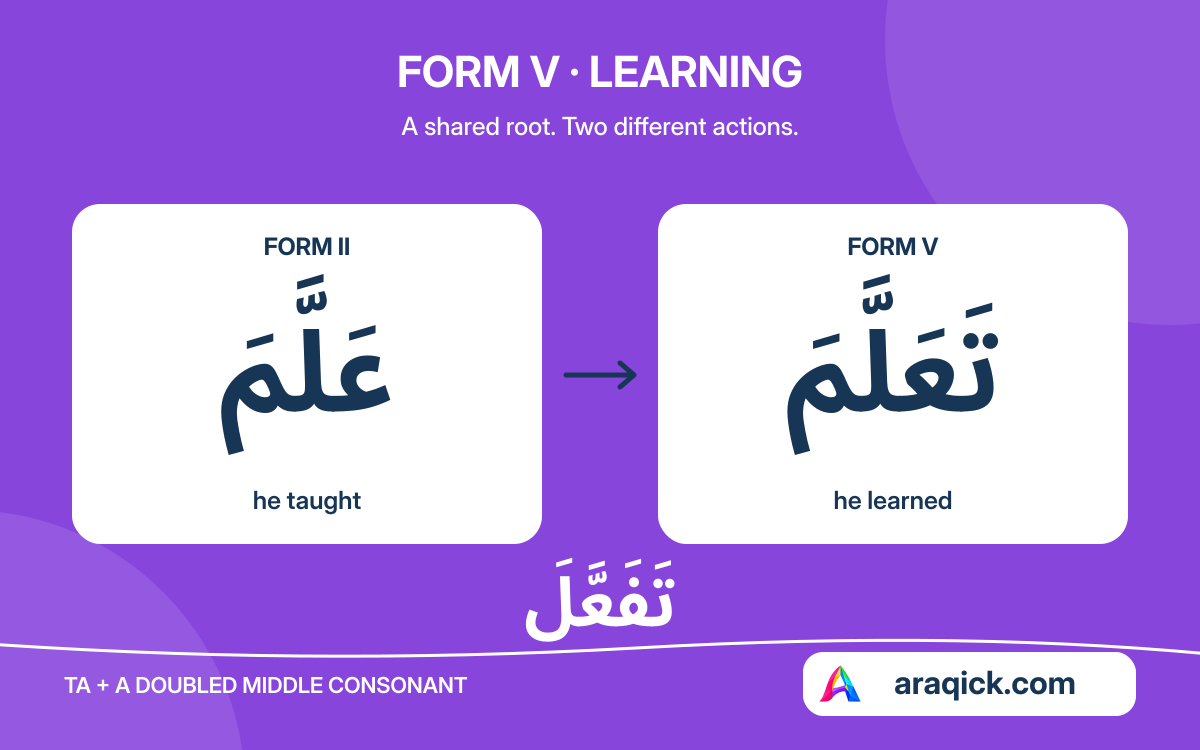
تَعَلَّمَ — تَعَلُّمٌ
taallama — taallum
He learned — Learning
تَبَادَلَ — تَبَادُلٌ
tabadala — tabadul
He exchanged — Exchange
The u before the last root consonant helps distinguish these nouns from their past verbs. Form V keeps the doubled middle consonant; Form VI keeps the long a after its first root.
The final un shown on dictionary nouns is a case ending. It is separate from the internal u that belongs to the masdar pattern. Changing the noun’s case does not remove that internal vowel.
04Recognise the later long-a families
Form VII infitah, opening, and Form VIII ijtima, meeting, contain a long a near the end. Their initial shapes differ: اِنْفِتَاحٌ has the added nun; اِجْتِمَاعٌ has the added ta after the first root consonant.
قَبْلَ اِسْتِخْدَامِ الْجِهَازِ
qabla istikhdami aljihazi
Before using the device
Form X istikhdam follows istifal. It is genitive here after qabla and starts an idafa with the device. Form IX ihmirar, reddening, separates the repeated last root consonants around a long alif.
05Verify forms that fall outside the regular examples
These patterns cover a useful regular starting set. They do not remove the need to learn actual vocabulary. For example, Form II رَبَّى has تَرْبِيَةٌ, upbringing, rather than a mechanically assembled regular tafil form.
Likewise, hollow Form IV أَقَامَ has إِقَامَةٌ. Keep such a pair together and consult the hollow Form IV guide. Begin with a checked verb–noun pair, then use the pattern to recognise it in a new sentence.
The reference charts collect the nine derived families; common Form I masdars need their own learned patterns.
What to remember
- Derived masdars have recurring patterns that help organise checked vocabulary.
- The masdar is a noun and changes its final ending for its sentence role.
- Weak roots and alternative masdars need separate attention.
Your reference shelf
Open a guide whenever you need it.
Masdar patterns II–VIDictionary nouns use indefinite nominative endings
| Form | Pattern | Verb | Masdar and meaning |
|---|---|---|---|
| II | تَفْعِيلٌ | نَظَّمَ | تَنْظِيمٌ tanzim — organisation |
| III | مُفَاعَلَةٌ | سَاعَدَ | مُسَاعَدَةٌ musaadah — help / assistance |
| IV | إِفْعَالٌ | أَرْسَلَ | إِرْسَالٌ irsal — sending |
| V | تَفَعُّلٌ | تَعَلَّمَ | تَعَلُّمٌ taallum — learning |
| VI | تَفَاعُلٌ | تَبَادَلَ | تَبَادُلٌ tabadul — exchange |
Masdar patterns VII–XKeep the added letters and long vowels in their correct positions
| Form | Pattern | Verb | Masdar and meaning |
|---|---|---|---|
| VII | اِنْفِعَالٌ | اِنْفَتَحَ | اِنْفِتَاحٌ infitah — opening |
| VIII | اِفْتِعَالٌ | اِجْتَمَعَ | اِجْتِمَاعٌ ijtima — meeting |
| IX | اِفْعِلَالٌ | اِحْمَرَّ | اِحْمِرَارٌ ihmirar — reddening / redness |
| X | اِسْتِفْعَالٌ | اِسْتَخْدَمَ | اِسْتِخْدَامٌ istikhdam — use / usage |
Form III also has attested fial masdars. Form II and weak-root verbs have further variations. A pattern chart supports recognition; dictionary confirmation supplies the accepted word and its meanings. Form IV ifal begins with hamzat alqat; the VII–X nouns here begin with hamzat alwasl.
Sources & further learning
References for the language explanations and learning guidance.