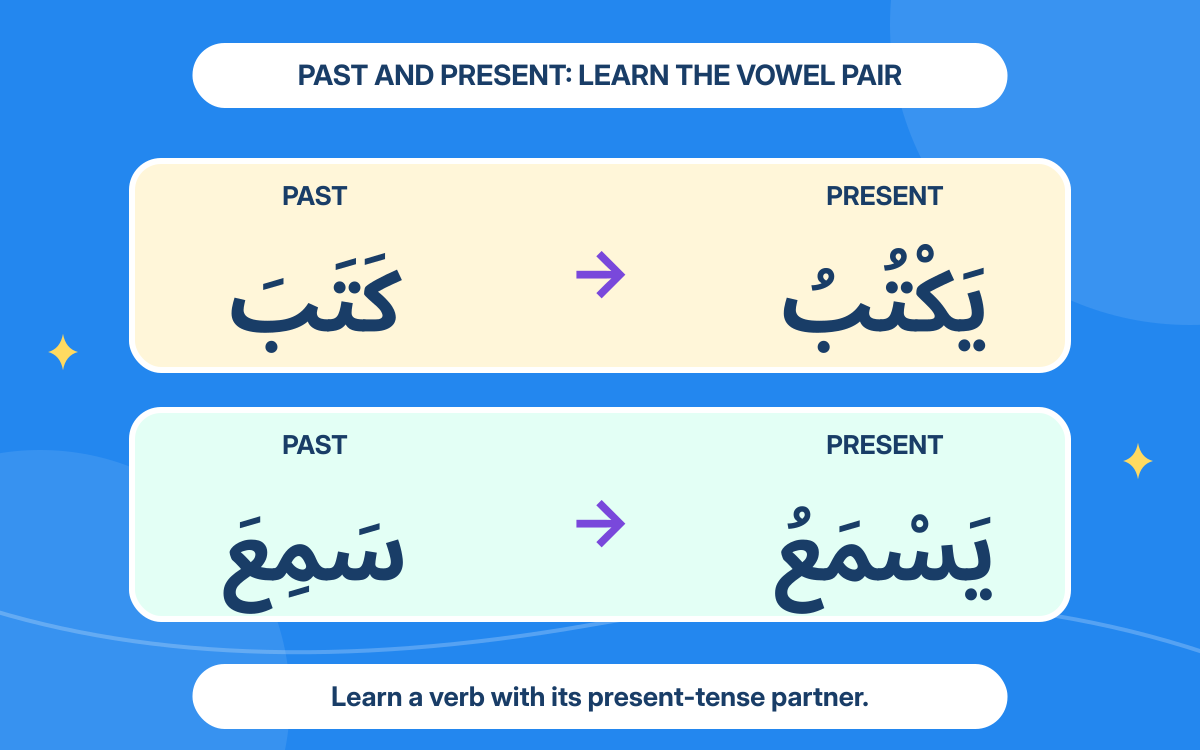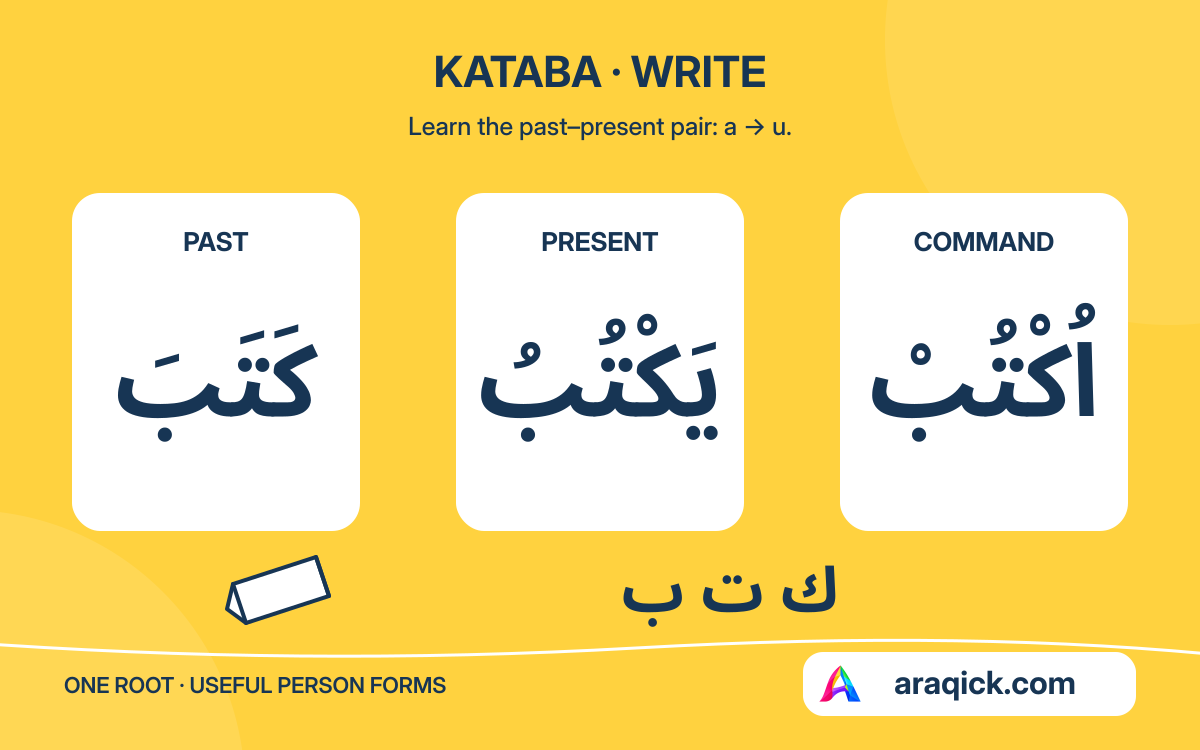
Kataba is the Arabic dictionary form for write: literally, he wrote. Pair it with yaktubu, he writes, so you remember the present stem’s u vowel. The root ك ت ب stays visible throughout these regular forms. A note, a name and a recipient provide enough material to turn the conjugation into useful sentences.
01Begin with a small written object
كَتَبَ مُلَاحَظَةً قَصِيرَةً
kataba mulahazatan qasiratan
He wrote a short note.
Mulahazatan names the thing written and is accusative. Qasiratan describes that note and follows its feminine, indefinite and accusative features. The verb already identifies he; a separate huwa is optional here.
Kataba describes a completed action in this example. It does not mean writer or book, even though those words share its root.
02Change the past ending and add a recipient
كَتَبْتُ مُلَاحَظَةً لِزَمِيلِي
katabtu mulahazatan lizamili
I wrote a note to my colleague.
Katabtu has sukun on b before the I ending tu. Katabna, كَتَبْنَا, means we wrote. Keep the past stem vowel a in both forms.
The attached li in lizamili identifies the recipient, while mulahazatan remains the thing written. In Arabic the phrase is لِزَمِيلِي. The final ya means my.
03Keep the present stem’s u
أَكْتُبُ اسْمِي — نَكْتُبُ أَسْمَاءَنَا
aktubu ismi — naktubu asmaana
I write my name — We write our names
The prefixes a and n identify I and we. Inside both verbs, t takes dammah: ktub, not ktab. Learn kataba–yaktubu as a pair; the past alone does not give every Form I verb’s present vowel.
For one woman, you write is تَكْتُبِينَ. For a male or mixed group, they write is يَكْتُبُونَ. The reference chart collects the other people.
04Ask a listener to write
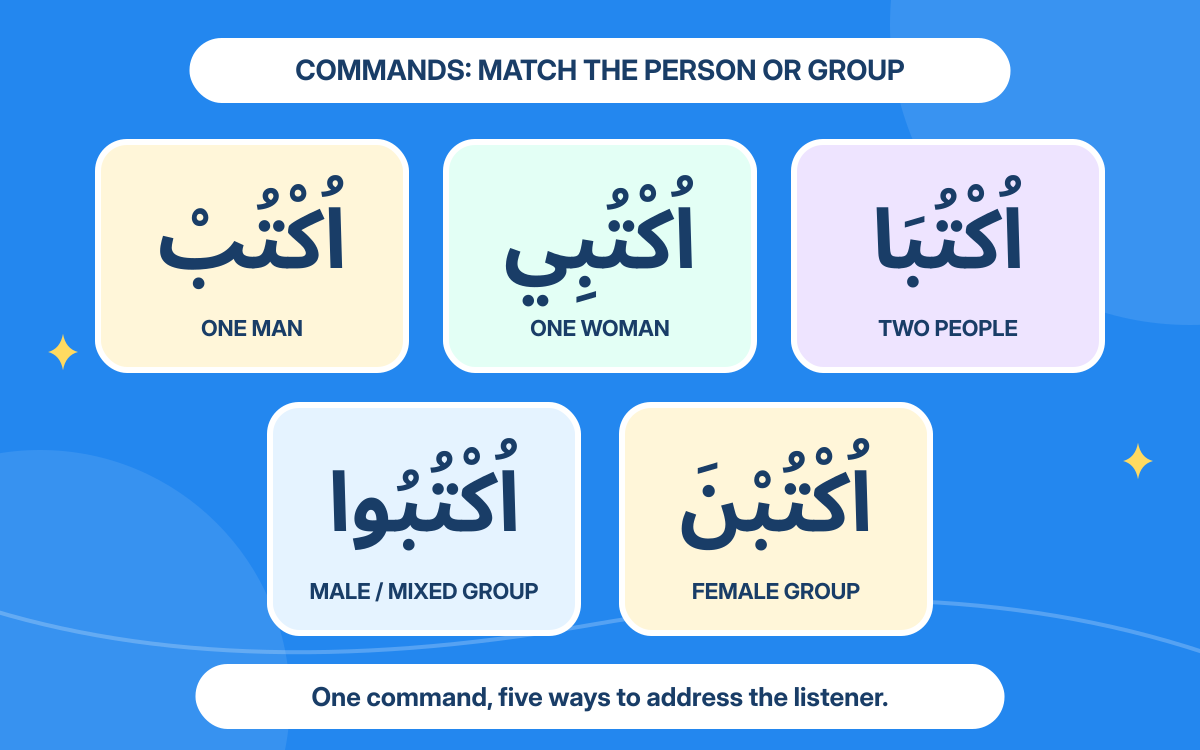
اُكْتُبْ عُنْوَانَكَ هُنَا
uktub unwanaka huna
Write your address here. — to one man
Uktub begins with a helping u when spoken on its own and ends with sukun. The initial alif carries hamzat al-wasl, so that helping vowel drops in connected speech after a preceding vowel.
For one woman, use اُكْتُبِي عُنْوَانَكِ هُنَا. Both uktubi and the possessive ki address her. See command person forms for the listener endings.
05Change mood without changing the root
لَمْ أَكْتُبْ عُنْوَانًا — لَنْ أَكْتُبَ عُنْوَانًا
lam aktub unwanan — lan aktuba unwanan
I did not write an address — I will not write an address
Lam takes jussive aktub with final sukun; lan takes subjunctive aktuba with final fathah. Both keep the present stem’s internal u. The mood changes the ending, not that memorised stem vowel.
Connect this guide with past endings, past–present vowel pairs and lam. Plain reading aids simplify Arabic sounds and long vowels; use the Arabic to check exact forms.
What to remember
- Kataba means he wrote; its present pair is yaktubu with internal u.
- Past suffixes and present prefixes identify the writer; li can introduce the recipient.
- Uktub is a command, while lam and lan require different imperfect endings.
Your reference shelf
Open a guide whenever you need it.
Write: past and present formsPast and ordinary indicative present; use the lesson for other moods
| Person | Past | Present |
|---|---|---|
| He | كَتَبَ | يَكْتُبُ |
| They: two men | كَتَبَا | يَكْتُبَانِ |
| They: male or mixed group | كَتَبُوا | يَكْتُبُونَ |
| She | كَتَبَتْ | تَكْتُبُ |
| They: two women | كَتَبَتَا | تَكْتُبَانِ |
| They: female group | كَتَبْنَ | يَكْتُبْنَ |
| You: one man | كَتَبْتَ | تَكْتُبُ |
| You: two people | كَتَبْتُمَا | تَكْتُبَانِ |
| You: male or mixed group | كَتَبْتُمْ | تَكْتُبُونَ |
| You: one woman | كَتَبْتِ | تَكْتُبِينَ |
| You: female group | كَتَبْتُنَّ | تَكْتُبْنَ |
| I | كَتَبْتُ | أَكْتُبُ |
| We | كَتَبْنَا | نَكْتُبُ |
The dual you form serves two listeners of either gender. Shared spellings depend on context. The present column is indicative; do not use it unchanged after every mood particle.
Commands by listenerMatch the complete command to the listener
| Listener | Command |
|---|---|
| One man | اُكْتُبْ |
| One woman | اُكْتُبِي |
| Two people | اُكْتُبَا |
| Male or mixed group | اُكْتُبُوا |
| Female group | اُكْتُبْنَ |
The dual command serves two listeners of either gender. A final alif after group waw is silent; the dual alif is pronounced.
Sources & further learning
References for the language explanations and learning guidance.