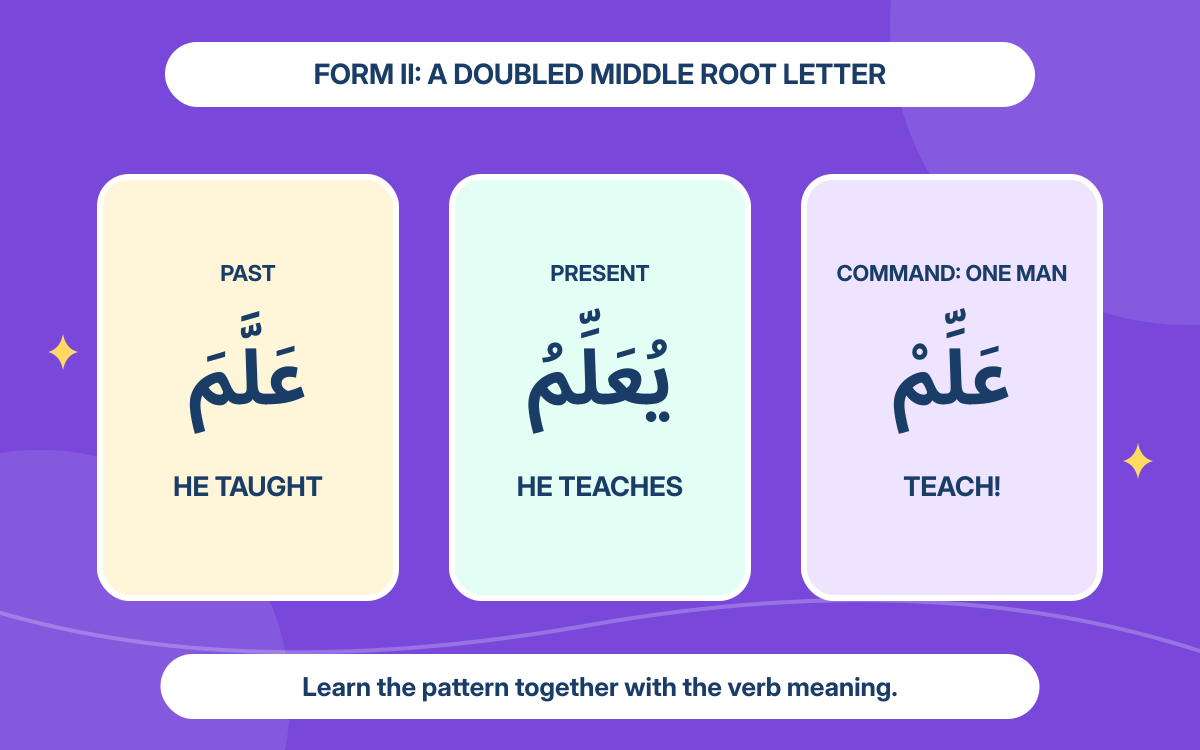
Alima means “he knew”; allama means “he taught.” A doubled middle consonant changes this familiar verb into Form II. Learn its past, present and command together, while keeping the original three root letters separate from the pattern.
01Distinguish knowing from teaching
The root ع ل م links these two verbs, but their meanings differ. Form I alima means he knew; Form II allama means he taught.
عَلِمَ → عَلَّمَ
alima to allama
He knew → he taught
In allama, hold the l sound because لّ has a shadda. “Teach” is this verb’s learned meaning. Form II can convey causing an action, intensity or other meanings; it does not supply one automatic translation for every root.
02Find the doubled second root letter
The regular active past pattern is فَعَّلَ. Its first, second and third root letters stay in order, and the second is doubled.
فَعَّلَ → عَلَّمَ
pattern to allama
The middle root letter ل is doubled.
The root is still ع ل م, not ع ل ل م. A shadda alone does not prove Form II: مَدَّ (madda, he extended) is Form I with the doubled root م د د. Check the root and the whole pattern.
03Read the present pattern
The regular active present pattern for he is يُفَعِّلُ. The prefix has u, the doubled middle consonant has i, and this ordinary present form ends in u.
يُعَلِّمُ
yuallimu
He teaches / is teaching
Compare يَعْلَمُ (yalamu, he knows). The prefix vowel and middle doubling matter. Read the marked form rather than treating the two verbs as interchangeable.
04Ask one male to teach
The masculine singular command follows فَعِّلْ. Keep the doubled middle letter and its i vowel, then end this standalone command with sukun. No initial alif is needed.
عَلِّمْ
allim
Teach! Addressing one male.
Allim asks the listener to act. Allama reports what he did; yuallimu describes what he does or is doing. These are three forms of the same Form II verb.
05Use the verb with a doer and what is taught
Here the teacher performs the action. The student and Arabic are the two objects: the person taught and the subject taught.
عَلَّمَ الْمُعَلِّمُ الطَّالِبَ الْعَرَبِيَّةَ.
allama lmuallimu ttaliba larabiyyata
The teacher taught the student Arabic.
Muallimu is nominative; taliba and arabiyyata are accusative. Keep this verb first, followed by the teacher, the student and Arabic, to practise the model. Our plain reading aids simplify Arabic sounds and vowel length.
What to remember
- Form II adds doubling of the second root letter: عَلَّمَ still has the original root ع ل م.
- Learn the set عَلَّمَ / يُعَلِّمُ / عَلِّمْ: he taught, he teaches and teach one male.
- Check the whole pattern and vocabulary meaning. A shadda can also represent an original doubled root in Form I.
Your reference shelf
Open a guide whenever you need it.
Compare the know and teach familiesCheck the three Form II models and the doubled-root distinction
| Role | Know: Form I | Teach: Form II |
|---|---|---|
| Past, he | عَلِمَ alima | عَلَّمَ allama |
| Ordinary present, he | يَعْلَمُ yalamu | يُعَلِّمُ yuallimu |
| Command, one male | اِعْلَمْ ilam | عَلِّمْ allim |
| Verb | Original root | What the shadda represents |
|---|---|---|
| عَلَّمَ | ع ل م | Added doubling of the second radical in Form II |
| مَدَّ | م د د | The identical second and third radicals of this Form I root |
The command pattern practised here is for one male and regular roots. Other addressees take their own command endings. Weak roots need additional changes. In unvowelled writing, both alima and allama can appear as علم; context and the dictionary determine which verb is intended. Do not identify the form by counting printed letters.
Sources & further learning
References for the language explanations and learning guidance.