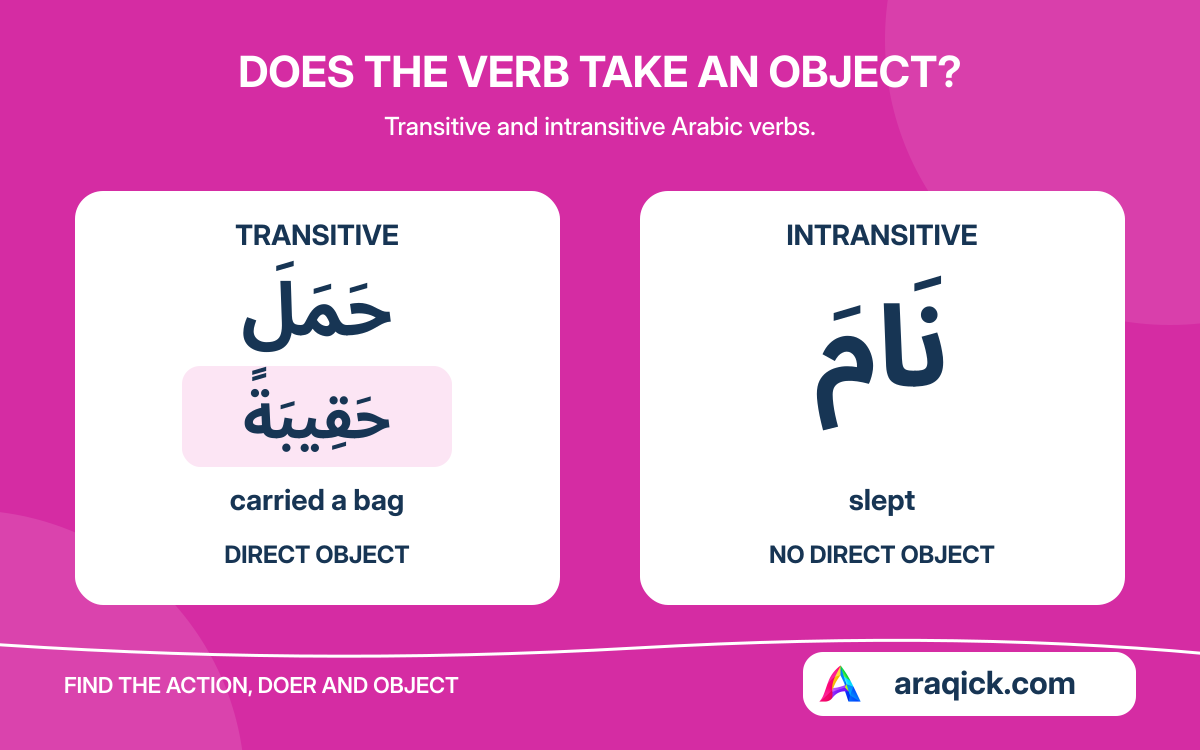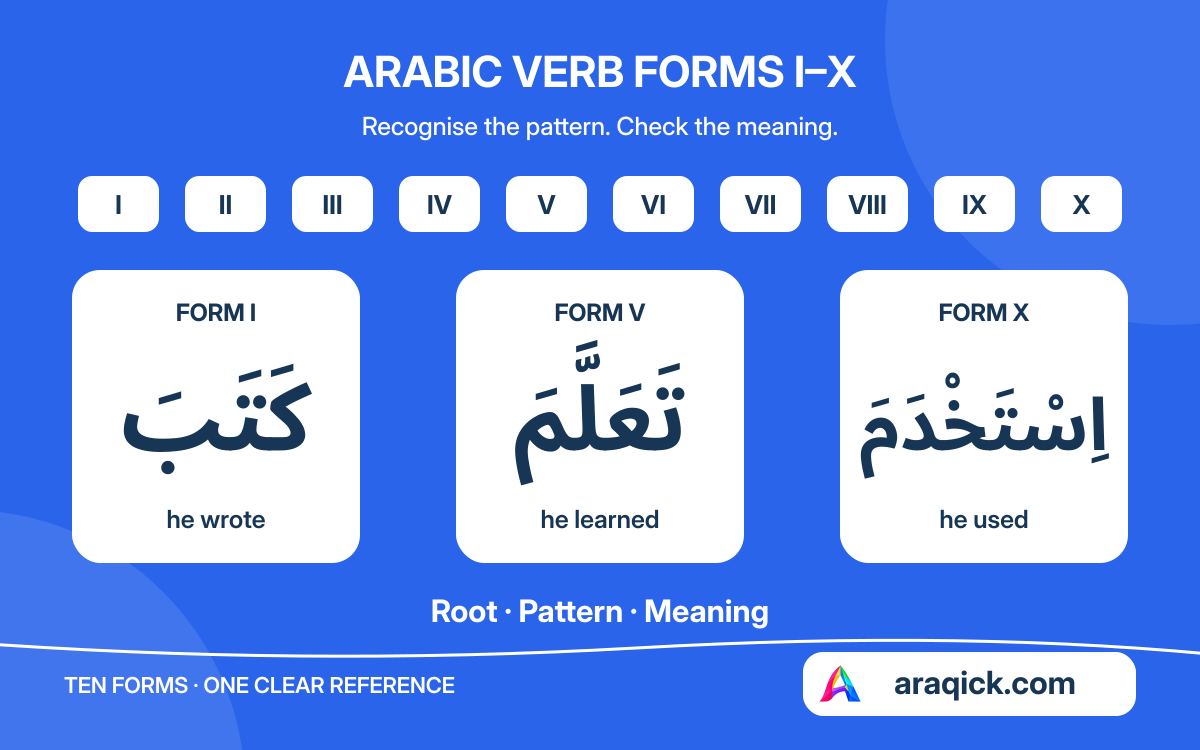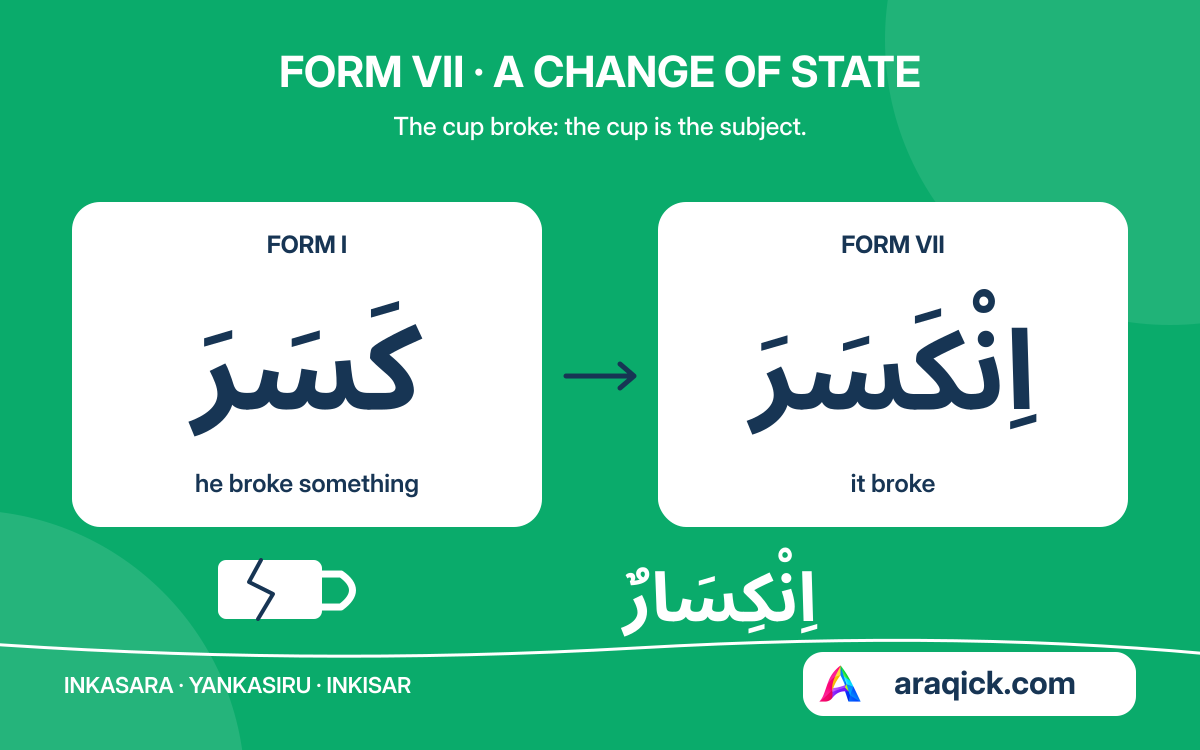
A cup can break without a sentence naming the person responsible. Arabic often uses Form VII for this kind of change: inkasara means broke intransitively. Learn its in beginning, present stem and action noun, then compare the construction with an ordinary transitive sentence and a grammatical passive.
01Make the affected thing the subject
اِنْكَسَرَ الْكُوبُ
inkasara alkubu
The cup broke.
The root is ك س ر. The pattern اِنْفَعَلَ adds an initial alif and nun. Alkubu is the subject and is nominative. This sentence does not name someone breaking the cup.
Compare كَسَرَ الْوَلَدُ الْكُوبَ, the boy broke the cup. In that transitive sentence, the boy is the subject and the cup is an accusative object.
02Hear yan instead of the past in
يَنْكَسِرُ الْكُوبُ بِسُهُولَةٍ
yankasiru alkubu bisuhulatin
The cup breaks easily.
The ordinary present is yankasiru. It begins with ya followed by the added nun, and sin has kasrah. The root remains k s r. The initial helping alif of the past is not retained before the present prefix.
She or it breaks with a feminine subject is تَنْكَسِرُ. In اِنْكَسَرَتْ نَافِذَةٌ, a window broke, the past feminine ending matches the feminine noun.
03Recognise another change of state
اِنْفَتَحَ بَابُ الْمِصْعَدِ
infataha babu almisadi
The lift door opened.
Infataha has the same Form VII outline, with root ف ت ح. Babu is the subject; almisadi completes the idafa. The sentence presents the door’s opening without naming an agent.
Another common Form VII verb is اِنْطَلَقَ, set off. Meanings vary: do not force every member of the family into the English formula was plus a past participle.
04Separate the derived form from passive voice
كُسِرَ الْكُوبُ
kusira alkubu
The cup was broken.
Kusira is the grammatical passive of Form I kasara. Inkasara is a different verb in Form VII, in the active morphological pattern. The two can describe related situations, but their formation and grammatical analysis differ.
In the passive sentence, the cup fills the subject position traditionally called naib alfail. With inkasara, the cup is the subject of an intransitive verb. Review transitive and intransitive verbs to connect the two roles.
05Name the event or resulting condition
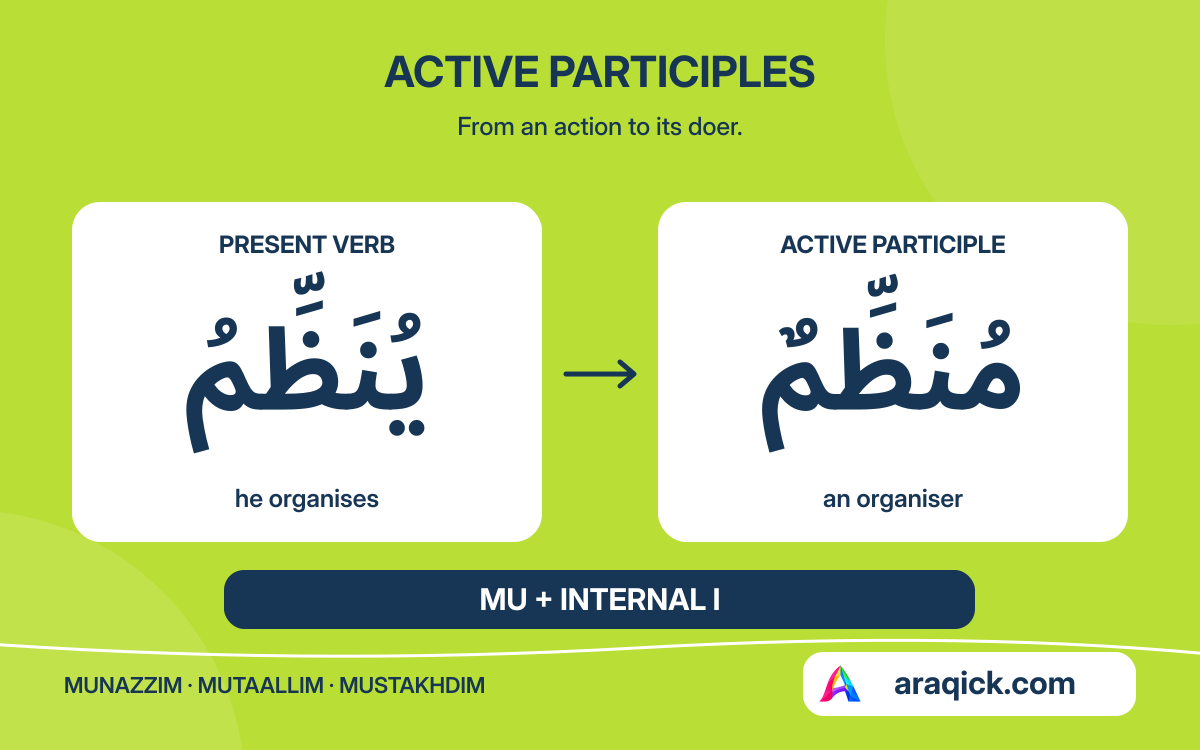
The action noun اِنْكِسَارٌ means breaking or breakage. The active participle مُنْكَسِرٌ can describe something broken. An English passive-looking translation does not automatically make its Arabic word a passive participle.
الْقَلَمُ مُنْكَسِرٌ
alqalamu munkasirun
The pencil is broken.
Munkasir follows the active participle pattern of inkasara. Compare derived active participles and passive participles when reading the charts. These are ordinary intransitive examples; they do not supply a productive direct-object passive for every root.
What to remember
- Form VII commonly presents a change with the affected thing as subject.
- Inkasara and passive kusira are related in meaning but grammatically different.
- Inkisar names the event; munkasir describes the resulting condition.
Your reference shelf
Open a guide whenever you need it.
Four useful Form VII verb pairsThese examples are intransitive in the meanings shown
| Past | Present | Masdar | Meaning |
|---|---|---|---|
| اِنْكَسَرَ | يَنْكَسِرُ | اِنْكِسَارٌ | break intransitively / breakage |
| اِنْفَتَحَ | يَنْفَتِحُ | اِنْفِتَاحٌ | open intransitively / opening |
| اِنْقَطَعَ | يَنْقَطِعُ | اِنْقِطَاعٌ | be interrupted / interruption |
| اِنْطَلَقَ | يَنْطَلِقُ | اِنْطِلَاقٌ | set off / departure |
One event, three sentence structuresTrack the subject and object before translating
| Construction | Arabic | Reading |
|---|---|---|
| Transitive Form I | كَسَرَ الْوَلَدُ الْكُوبَ | The boy broke the cup. |
| Intransitive Form VII | اِنْكَسَرَ الْكُوبُ | The cup broke. |
| Passive Form I | كُسِرَ الْكُوبُ | The cup was broken. |
The regular Form VII outline is infaala, yanfailu and infial. Initial alif is hamzat alwasl: the helping i is heard when beginning there. Learn each actual verb with its meaning and construction.
Sources & further learning
References for the language explanations and learning guidance.