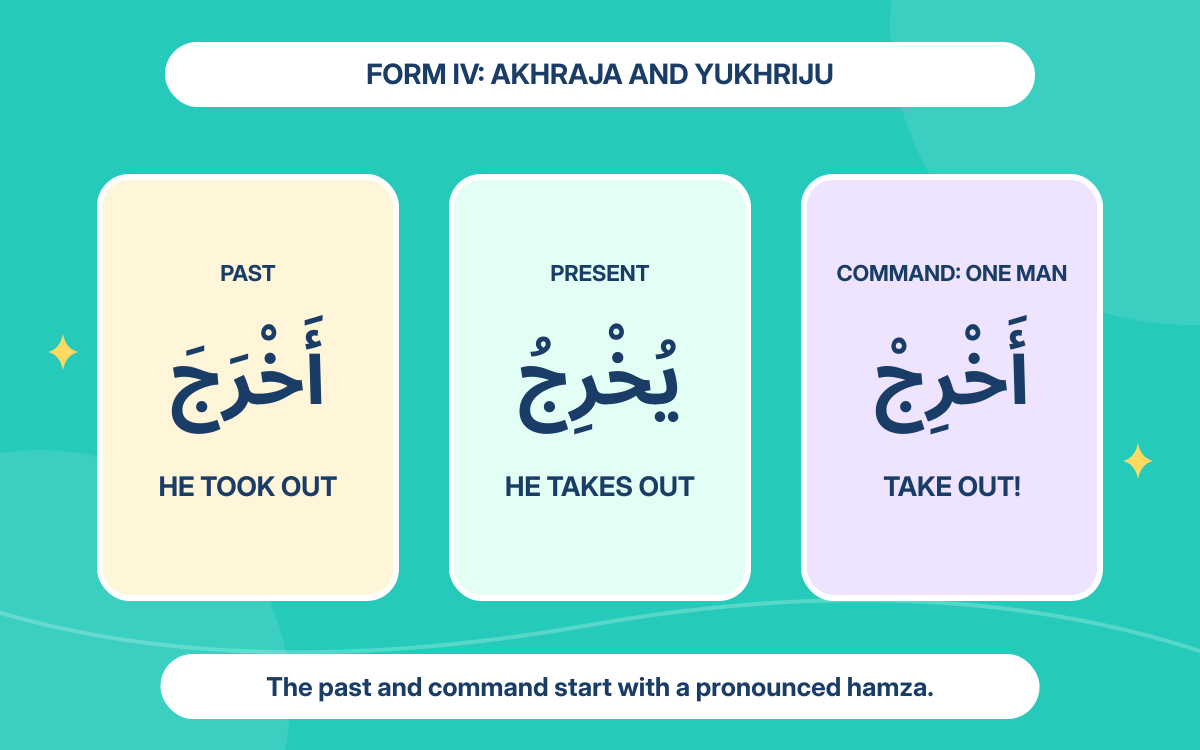
Kharaja means “he went out”; akhraja can mean “he took something out.” The added initial hamza identifies a useful derived verb pattern. Follow the same root into its present and command, and keep the command’s hamza when another word comes before it.
01Distinguish going out from taking out
Both verbs have the root خ ر ج. Kharaja reports going out. Akhraja can describe causing a person or thing to come out.
خَرَجَ → أَخْرَجَ
kharaja to akhraja
He went out → he took out
Akhraja is Form IV. The initial hamza is a pattern addition, not a fourth original root letter. Learn this meaning with the verb; Form IV does not make every verb mean “take out” or guarantee one universal causative meaning.
02Recognise the whole past pattern
The regular active past pattern is أَفْعَلَ: initial hamza with a, first root letter with sukun, and a on the next two root letters.
أَفْعَلَ → أَخْرَجَ
pattern to akhraja
The three root letters fit after the added hamza.
Four written letters alone do not identify Form IV. كَتَبْتُ (katabtu, I wrote) has four written letters because of its subject ending; its root is ك ت ب and its verb is Form I. Check the citation form, vowels and root.
03Read the present with u and i
For he, the regular active present follows يُفْعِلُ. Its prefix has u, the first root letter is vowelless and the second has i.
يُخْرِجُ
yukhriju
He takes out / is taking out
The past’s added initial hamza is absent from this present stem. Write yukhriju directly with the root letters خ ر ج; do not insert another hamza after the prefix. This ordinary present model ends in u.
04Keep the command’s pronounced hamza
The command for one male follows أَفْعِلْ. Its initial hamza is hamzat qat: pronounced both when beginning speech and after a preceding word. The standalone ending is sukun.
أَخْرِجْ
akhrij
Take out! Addressing one male.
وَأَخْرِجْ كِتَابًا.
wa akhrij kitaban
And take out a book.
After wa, still pronounce the initial a of akhrij. This differs from a command beginning with a joining hamza.
05Add a clear doer and object
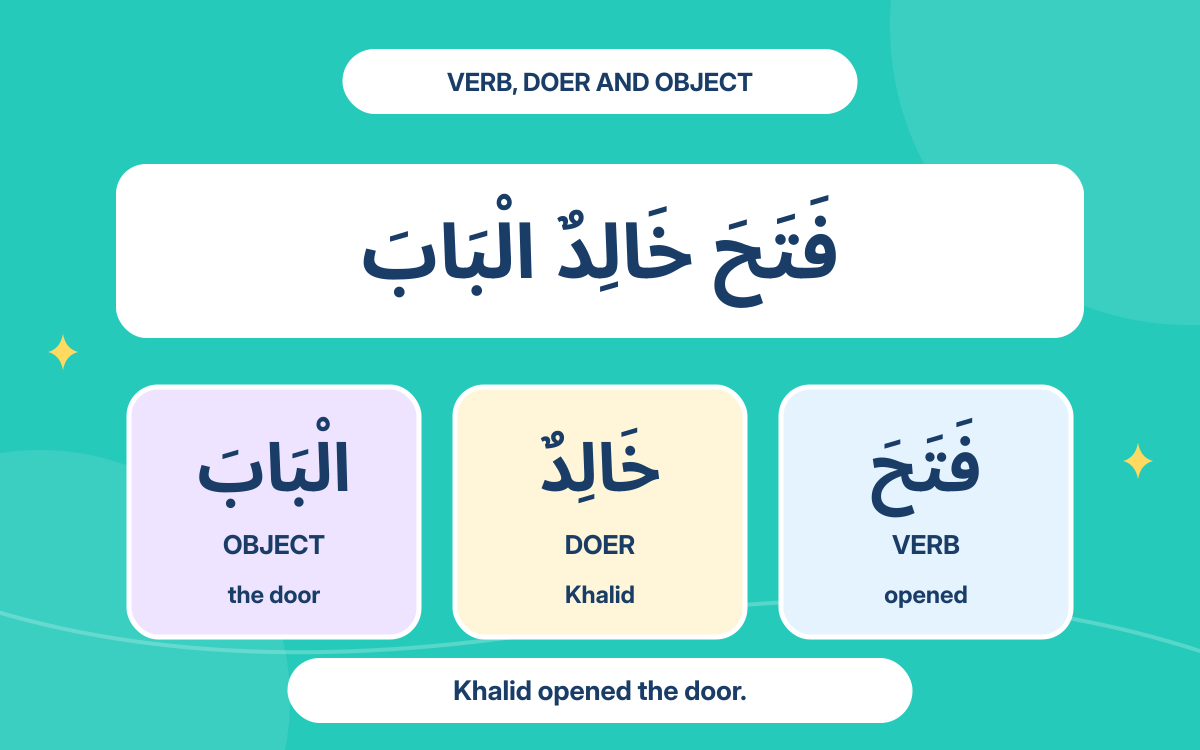
Akhraja can take a direct object naming what was taken out. In this verb first model, the student is nominative and the book is accusative.
أَخْرَجَ الطَّالِبُ الْكِتَابَ.
akhraja ttalibu lkitaba
The student took out the book.
The student performs the action; the book receives it. Keep that distinction when translating. Practise the verb first, then the student and the book. Our plain reading aids simplify Arabic sounds and vowel length.
What to remember
- Regular Form IV has the active past pattern أَفْعَلَ; its added initial hamza is separate from the three original root letters.
- Learn أَخْرَجَ / يُخْرِجُ / أَخْرِجْ together: he took out, he takes out and take out one male.
- The present stem has no extra hamza after its prefix. The command begins with pronounced hamzat qat, including after wa.
Your reference shelf
Open a guide whenever you need it.
Check Form IV from past to commandCompare root letters, three regular patterns and the command hamza
| Role | Pattern | Example | Meaning |
|---|---|---|---|
| Past, he | أَفْعَلَ | أَخْرَجَ | He took out |
| Ordinary present, he | يُفْعِلُ | يُخْرِجُ | He takes out / is taking out |
| Command, one male | أَفْعِلْ | أَخْرِجْ | Take out! |
The consonant root stays خ ر ج. Initial hamza belongs to this derived pattern in the past and command, while the present stem begins with خ after the person prefix. The command keeps hamzat qat in connected reading: وَأَخْرِجْ كِتَابًا.
This guide uses a regular root. A weak middle or final root letter can change the surface stem, so the full sound-root template should not be copied mechanically to every Form IV verb. The form number is a pattern label, not a count of printed letters or a rule assigning exactly the same meaning to every verb.
Sources & further learning
References for the language explanations and learning guidance.