A derived verb can produce a word naming its doer or describing its subject. Yunazzimu means he organises; munazzim can mean an organiser. This active participle belongs to the noun system, even when English uses an ing translation. Learn the mu beginning, the internal vowel and the endings needed in a sentence.
01Start with a familiar derived present verb
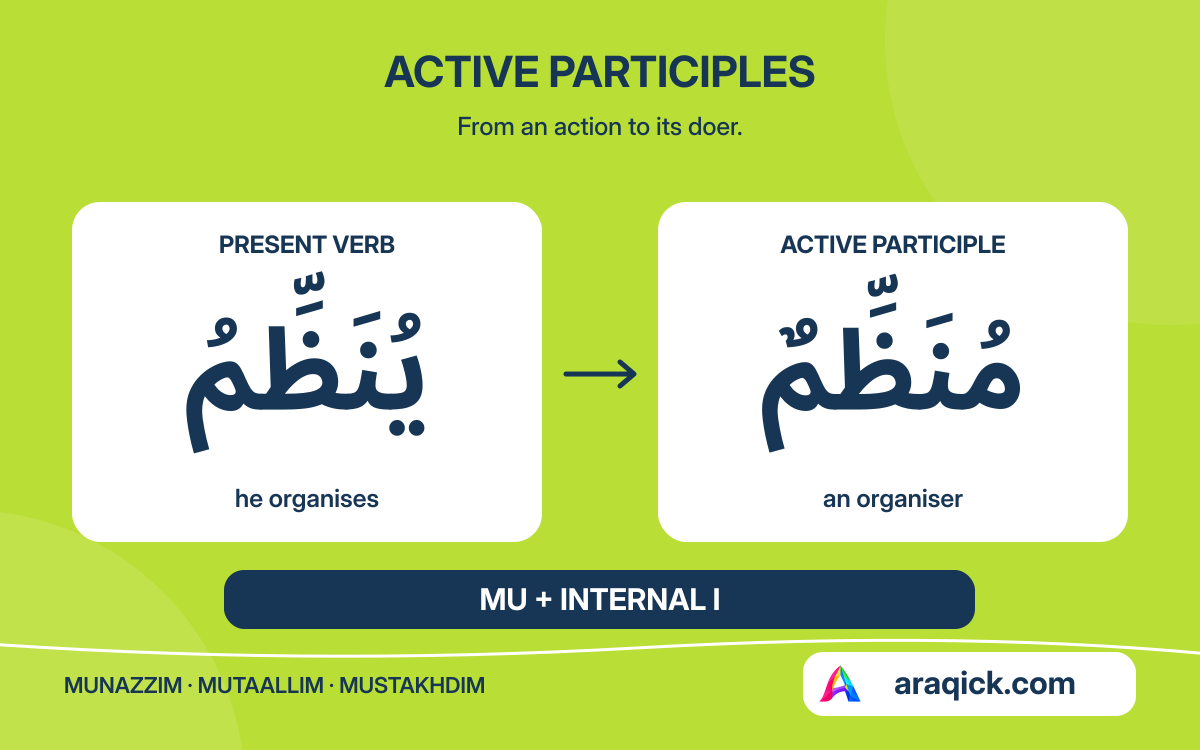
يُنَظِّمُ — مُنَظِّمٌ
yunazzimu — munazzim
He organises — An organiser
For the regular sound examples in Forms II–VIII and X here, replace the present person prefix with مُ and give the consonant before the last root consonant a kasrah. Then use the noun ending required by the sentence.
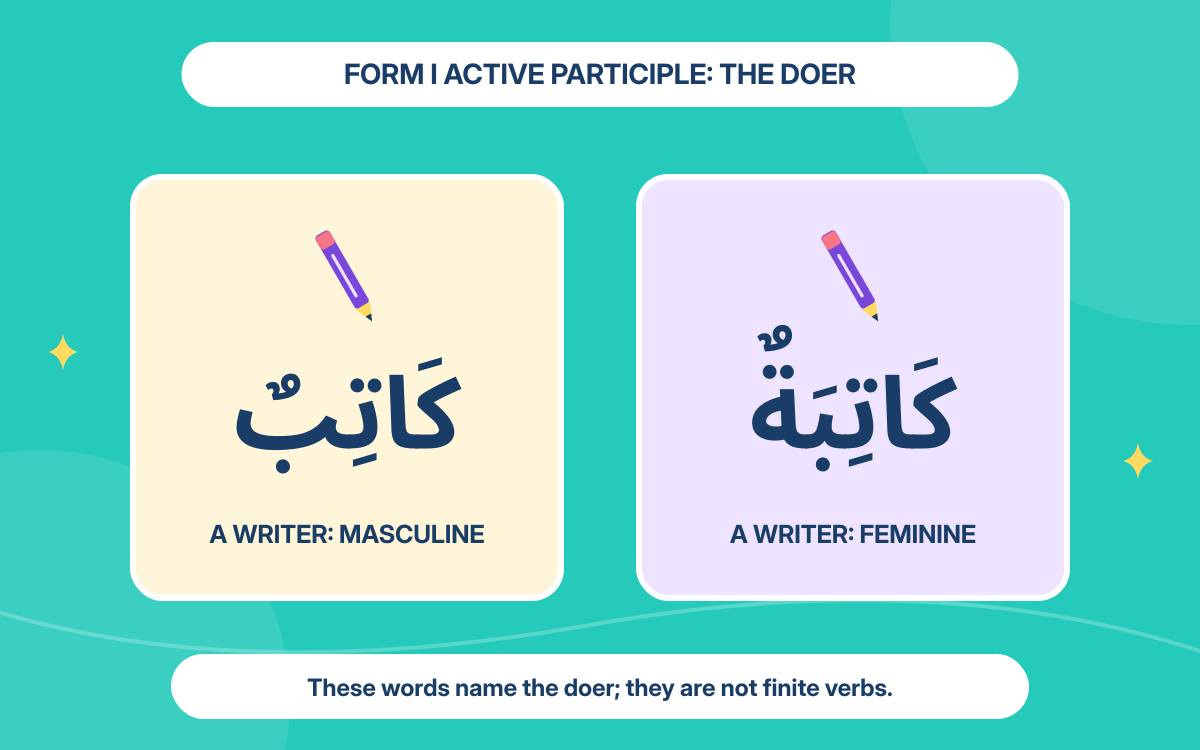
The doubled zay remains. Munazzim is اِسْمُ الْفَاعِلِ, the active participle. Compare the different Form I pattern in katib and other Form I doer nouns.
02Change the internal vowel when needed
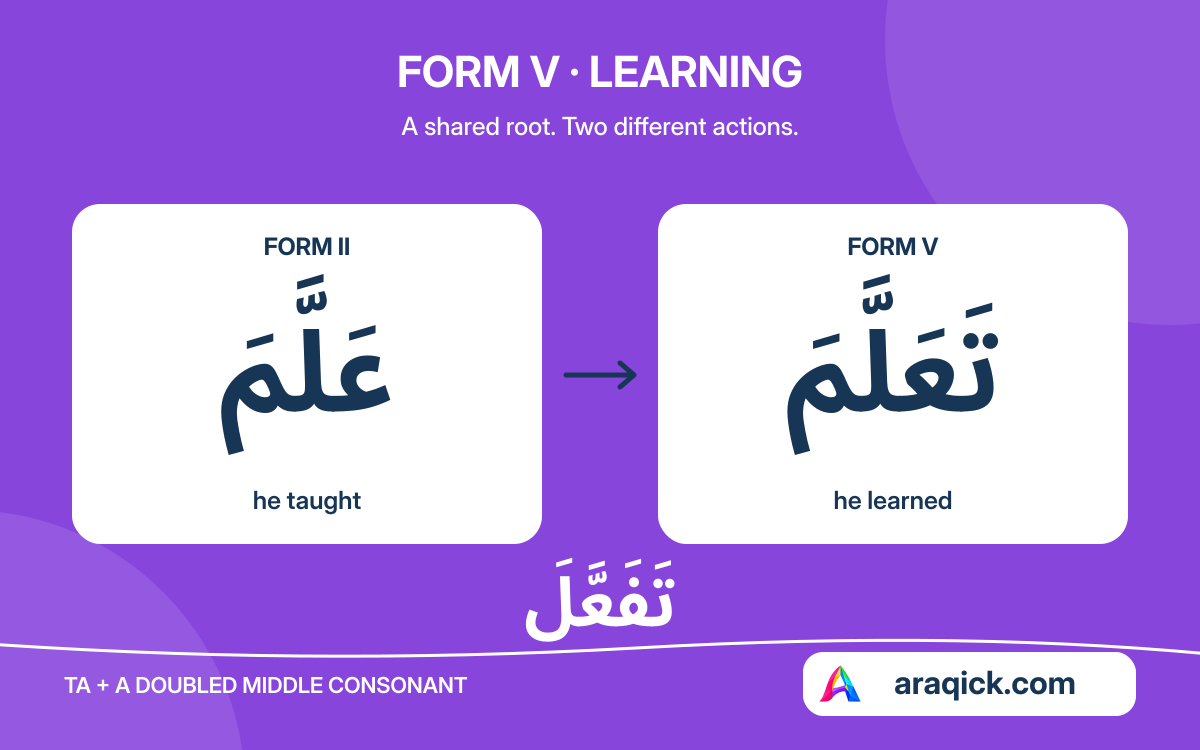
يَتَعَلَّمُ — مُتَعَلِّمٌ
yataallamu — mutaallim
He learns — A learner
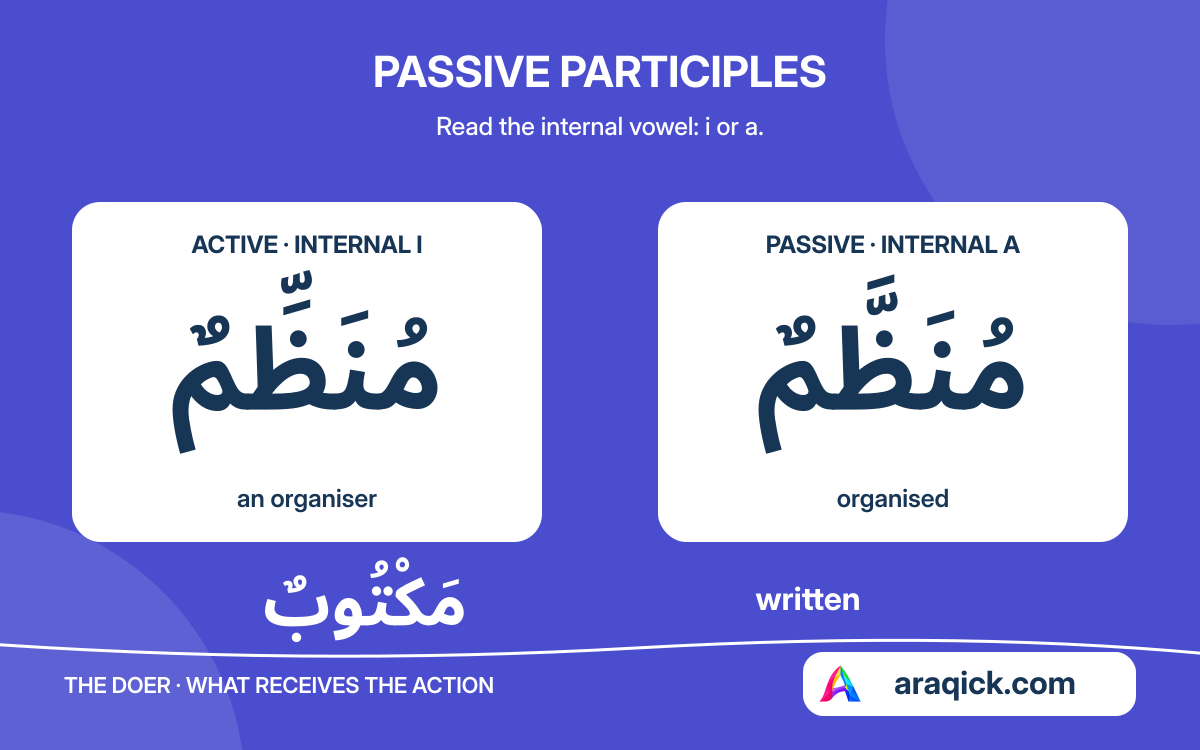
The present verb has a on its doubled lam, but the active participle has i. Replacing ya with mu alone would leave the wrong vowel for learner. The Form V ta and the shaddah both remain.
Likewise, Form VI يَتَبَادَلُ gives مُتَبَادِلٌ. Regular derived patterns share the mu clue, while each form retains its own other additions.
03Use the participle as a noun or description
هَذَا مُسْتَخْدِمٌ جَدِيدٌ
hadha mustakhdimun jadidun
This is a new user.
Mustakhdim comes from Form X istakhdama, used. Here it is a nominative predicate, and jadidun agrees with it. The word names a person associated with the action; it is not a present verb conjugated for he.
With a feminine referent, a regular participle can add taa marbutah: مُسْتَخْدِمَةٌ جَدِيدَةٌ, a new female user. Both words change for agreement.
04Change the noun ending for its role
سَأَلْتُ مُنَظِّمًا
saaltu munazziman
I asked an organiser.
تَحَدَّثْتُ مَعَ مُنَظِّمٍ
tahaddathtu maa munazzimin
I spoke with an organiser.
Munazziman is an accusative object. Munazzimin is genitive after maa. Neither change removes the internal i on zay; that vowel belongs to the active-participle stem.
The feminine counterpart is مُنَظِّمَةٌ. For broader agreement rules, review adjectives and noun agreement and case endings.
05Classify the Arabic form before translating it
From intransitive inkasara, the active participle is مُنْكَسِرٌ, often translated broken. Its English wording does not turn it into an Arabic passive participle. The pattern describes the subject of the original verb.
Form IX مُحْمَرٌّ keeps its doubled final consonant and is best learned as a complete form. Weak-root verbs also need adjustments. The simple sound-verb recipe is not a letter-by-letter rule for every possible word.
Participles do not automatically replace present-tense verbs in all contexts. Learn their sentence use and compare the passive participle to distinguish the doer from what receives an action.
What to remember
- Regular derived active participles use mu and an internal i before the final root consonant.
- Participles follow noun rules for gender, number and case.
- Translate in context and learn weak or doubled-final patterns separately.
Your reference shelf
Open a guide whenever you need it.
Active participles across derived formsThe ordinary present provides a starting point for recognition
| Form | Present | Active participle | Meaning |
|---|---|---|---|
| II | يُنَظِّمُ | مُنَظِّمٌ | organiser / organising |
| III | يُشَارِكُ | مُشَارِكٌ | participant / participating |
| IV | يُرْسِلُ | مُرْسِلٌ | sender / sending |
| V | يَتَعَلَّمُ | مُتَعَلِّمٌ | learner / learning |
| VI | يَتَبَادَلُ | مُتَبَادِلٌ | exchanging / mutual, in context |
| VII | يَنْكَسِرُ | مُنْكَسِرٌ | broken, from the intransitive verb |
| VIII | يَجْتَمِعُ | مُجْتَمِعٌ | gathering / assembled |
| IX | يَحْمَرُّ | مُحْمَرٌّ | reddened / becoming red |
| X | يَسْتَخْدِمُ | مُسْتَخْدِمٌ | user / using |
The noun column uses masculine singular indefinite nominative forms. The Form IX example retains its doubled ending. These examples do not cover weak-root changes or advanced participial constructions governing their own objects.
An organiser across noun rolesKeep the internal kasrah while changing the final ending
| Role | Arabic | Meaning |
|---|---|---|
| Predicate | هُوَ مُنَظِّمٌ | He is an organiser. |
| Object | سَأَلْتُ مُنَظِّمًا | I asked an organiser. |
| After maa | مَعَ مُنَظِّمٍ | With an organiser. |
| Feminine predicate | هِيَ مُنَظِّمَةٌ | She is an organiser. |
Sources & further learning
References for the language explanations and learning guidance.