An Arabic conjugation chart is easier to use when each review has a small job. Choose one verb, recall a few forms, check them and put one into a sentence. The sample twelve-minute session below turns a full reference chart into manageable practice while leaving room to revisit mistakes on later days.
01Choose one verb and record a reliable pair
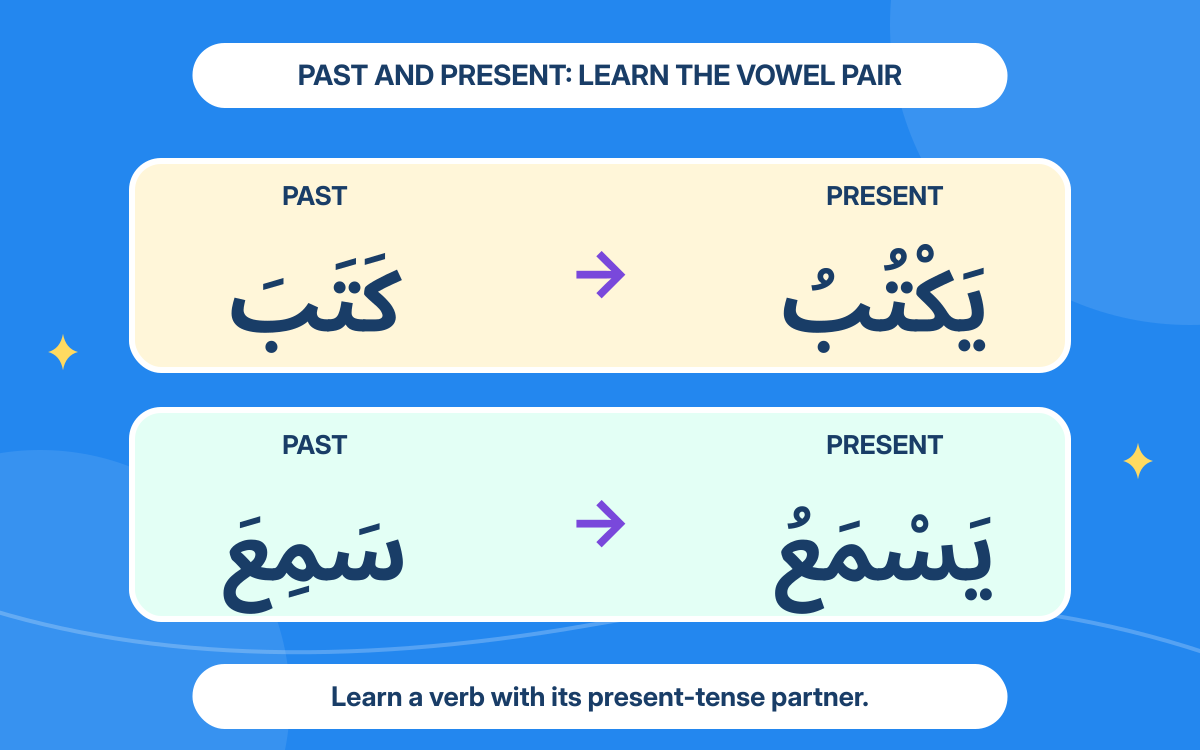
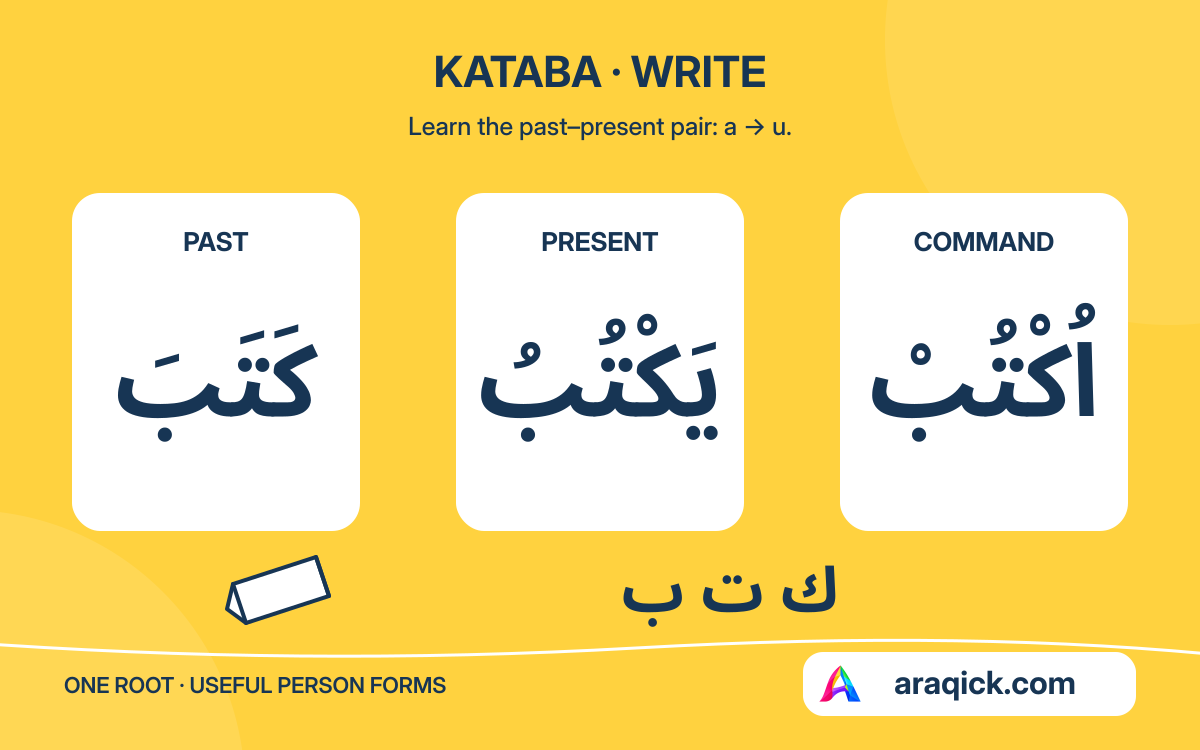
كَتَبَ — يَكْتُبُ
kataba — yaktubu
He wrote — He writes
Write the meaning and root ك ت ب beside the pair. Notice past a versus present u on the middle consonant. Use a checked chart such as kataba rather than predicting the present vowel from the past alone.
Start with one regular verb. Once its person endings are familiar, compare a different vowel pair such as shariba–yashrabu. Save new weak-verb stem changes for a separate small session.
02Change one grammatical feature at a time
كَتَبَ → كَتَبْتُ → أَكْتُبُ
kataba → katabtu → aktubu
He wrote → I wrote → I write
The first change switches the person while keeping the past. The next keeps I while switching to the present. Label the task before answering: person, tense or mood. That makes a wrong answer easier to diagnose.
Add we only after you can retrieve I: كَتَبْنَا — نَكْتُبُ. Expand later to feminine, dual and group forms using the full chart. A few accurate forms are a useful starting set.
03Hide the answer, retrieve it, then check
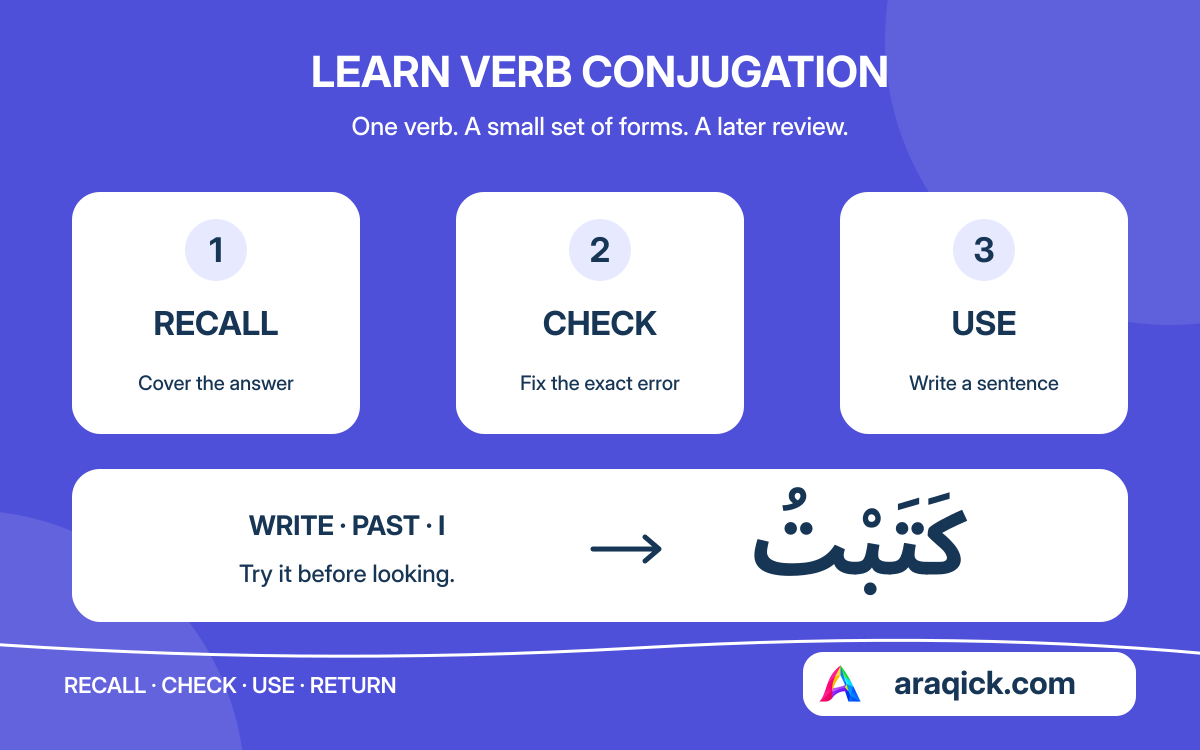
Read a prompt such as write, past, I. Cover the chart and say or write كَتَبْتُ. Reveal the answer and compare the root, internal vowels and person ending. If you miss it, correct the form and try again after another item.
Karpicke and Roediger’s foreign-language vocabulary experiment found better delayed recall from repeated retrieval than from extra study after items had been learned. This supports including recall in practice; the exact Arabic session here is our adjustable example.
Keep a brief error note: wrong person, wrong stem vowel or wrong mood. An answer that merely looks familiar when uncovered still deserves a later recall attempt.
04Use the form in a fresh sentence
أَكْتُبُ جَوَابًا فِي دَفْتَرِي
aktubu jawaban fi daftari
I write an answer in my notebook.
Now change only the time construction: لَمْ أَكْتُبْ جَوَابًا فِي دَفْتَرِي, I did not write an answer in my notebook. Lam requires the jussive, so final u becomes sukun.
Check the sentence as well as the verb. Keep the intended person and object consistent. If the mood rule is new, review lam before adding more negative particles to the same session.
05Return later and choose the next comparison
An example review sequence is today, tomorrow, three days later and one week later. Begin each review with recall before uncovering the chart. Shorten the gap for repeated errors and extend it when the forms remain easy to retrieve.
For the next comparison, use dakhala for another regular a–u pair, then a checked guide to hollow verbs or weak-final verbs. Those families introduce stem changes as well as familiar person endings.
The twelve-minute table is a sample allocation you can adjust. Finish by noting one correct sentence and one form to revisit. Track successful recall across separate sessions, rather than only the number of times you reread a table.
What to remember
- Learn a checked verb pair, then vary person, tense and mood in small steps.
- Retrieve before checking and record the specific feature behind each error.
- Use forms in sentences and adjust later review gaps to your recall.
Your reference shelf
Open a guide whenever you need it.
A sample twelve-minute sessionAdjust the time allocation to your level and available time
| Time | Task | Concrete result |
|---|---|---|
| 2 minutes | Check the verb pair, meaning and root | كَتَبَ — يَكْتُبُ; write; ك ت ب |
| 3 minutes | Retrieve I and we in past and present | كَتَبْتُ، كَتَبْنَا، أَكْتُبُ، نَكْتُبُ |
| 3 minutes | Write one sentence and one controlled change | An affirmative sentence and its lam negative |
| 2 minutes | Check and label errors | Person, stem vowel, spelling or mood |
| 2 minutes | Retry a missed form and set a later review | One corrected form plus a next review date |
A reusable recall prompt bankCover the last column before answering
| Prompt | Feature to watch | Answer |
|---|---|---|
| Write: past, I | Past subject suffix | كَتَبْتُ |
| Write: present, we | Present subject prefix | نَكْتُبُ |
| Drink: present, he | Internal a in the present stem | يَشْرَبُ |
| Write: did not, I | Jussive ending after lam | لَمْ أَكْتُبْ |
| Enter: command, one man | Helping u and final sukun | اُدْخُلْ |
Use each verb’s own reference chart when expanding to more people. The new-verb choice and review timing are flexible; accuracy and later recall guide the next session.
Sources & further learning
References for the language explanations and learning guidance.