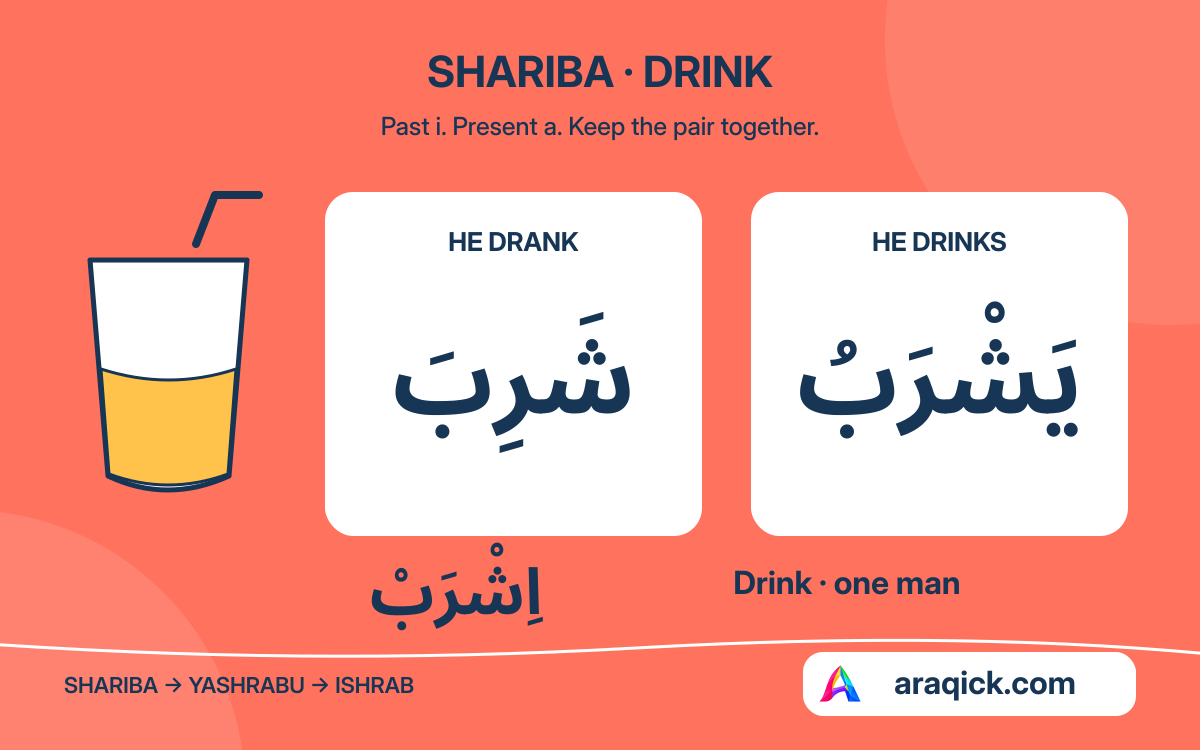
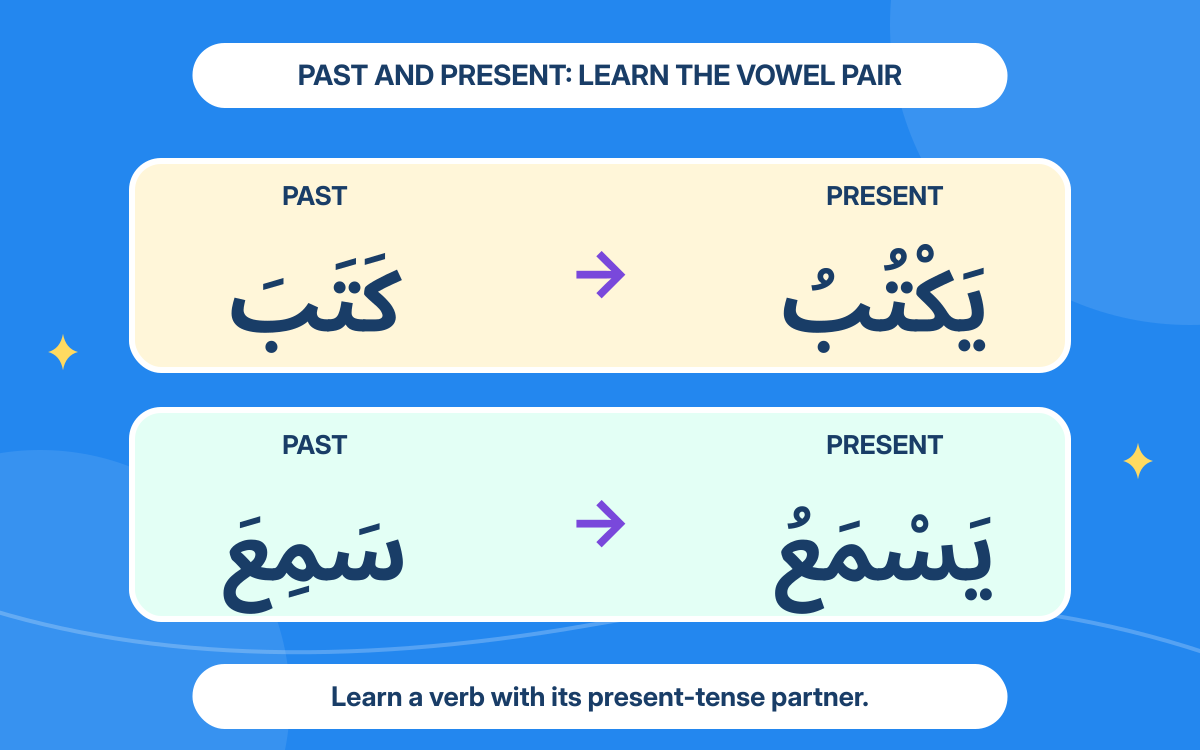
Shariba means he drank, while yashrabu means he drinks. Notice the small vowel change: ri in the past becomes ra in the present. The root ش ر ب stays the same. This guide uses familiar drinks to practise the verb’s people, commands and negative forms without memorising a disconnected list.
01Name the drink after the verb
شَرِبَ عَصِيرَ الْبُرْتُقَالِ
shariba asira alburtuqali
He drank orange juice.
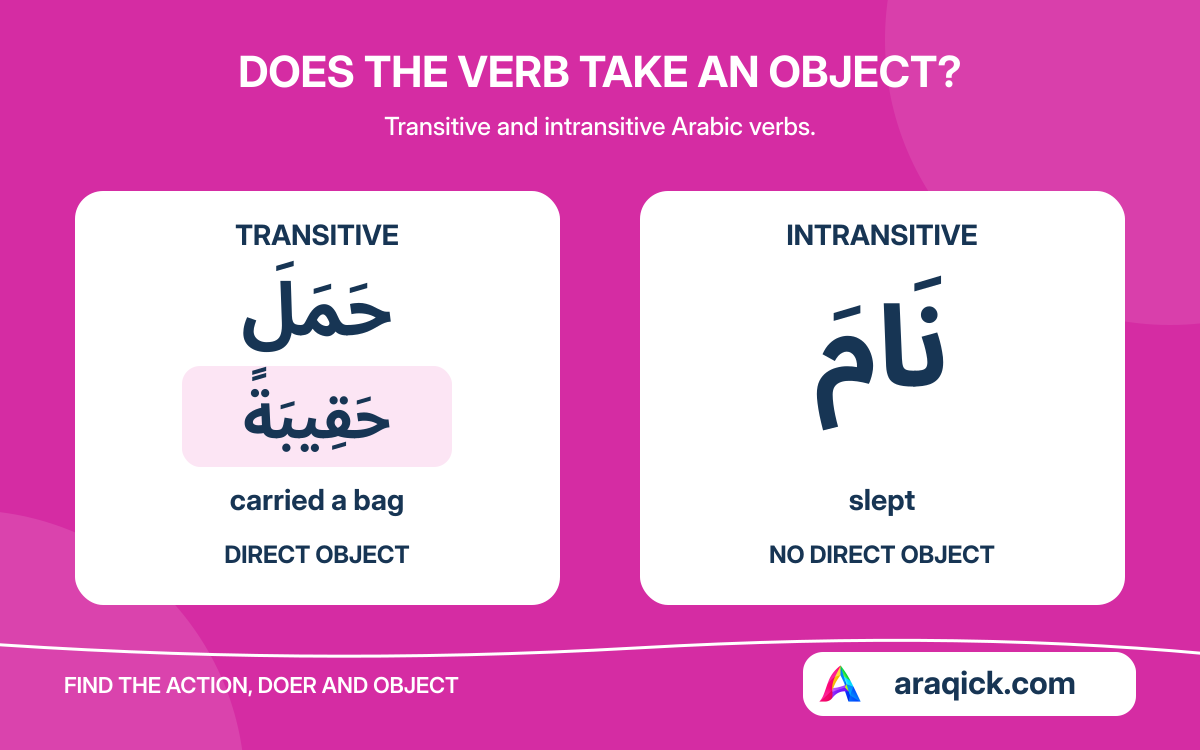
Asira is the direct object and takes the accusative. Alburtuqali completes the phrase orange juice and is genitive because the two nouns form an idafah. The verb tells us that the drinking happened.
For a simpler object, شَرِبَ حَلِيبًا means he drank milk. The indefinite drink word carries accusative tanween.
Question 1 of 1Try it now
02Keep ri in the past person forms
شَرِبْتُ حَلِيبًا — شَرِبْنَا عَصِيرًا
sharibtu haliban — sharibna asiran
I drank milk — We drank juice
Tu identifies I and na identifies we. In both forms, r still has kasrah, and b has sukun before the subject ending. The internal i belongs to this verb’s past stem.
She drank is شَرِبَتْ (sharibat). They drank for a male or mixed group is شَرِبُوا (sharibu). The table also distinguishes one female listener from a female group.
Question 1 of 1Try it now
03Change the present stem to ra
أَشْرَبُ الْحَلِيبَ صَبَاحًا
ashrabu alhaliba sabahan
I drink milk in the morning.
Ashrabu has the I prefix a and a fathah on r. The final u marks the ordinary indicative. Do not carry the past i into the present and invent ashribu.
We drink is نَشْرَبُ; you drink to one woman is تَشْرَبِينَ. A habitual time phrase such as sabahan helps give this present form an everyday meaning.
Question 1 of 2Try it now
04Use ishrab for a direct instruction
اِشْرَبْ عَصِيرًا
ishrab asiran
Drink some juice. — to one man
The singular command starts with a helping i and retains the stem’s a. It ends with sukun on b. Compare اُكْتُبْ, write, which has a different stem vowel and begins with u.
To one woman, say اِشْرَبِي; to a male or mixed group, اِشْرَبُوا. A direct imperative can be softened with min fadlika or min fadliki, according to the listener.
Question 1 of 2Try it now
05Distinguish did not from do not
لَمْ أَشْرَبْ قَهْوَةً
lam ashrab qahwatan
I did not drink coffee.
لَا تَشْرَبْ هَذَا
la tashrab hadha
Do not drink this. — to one man
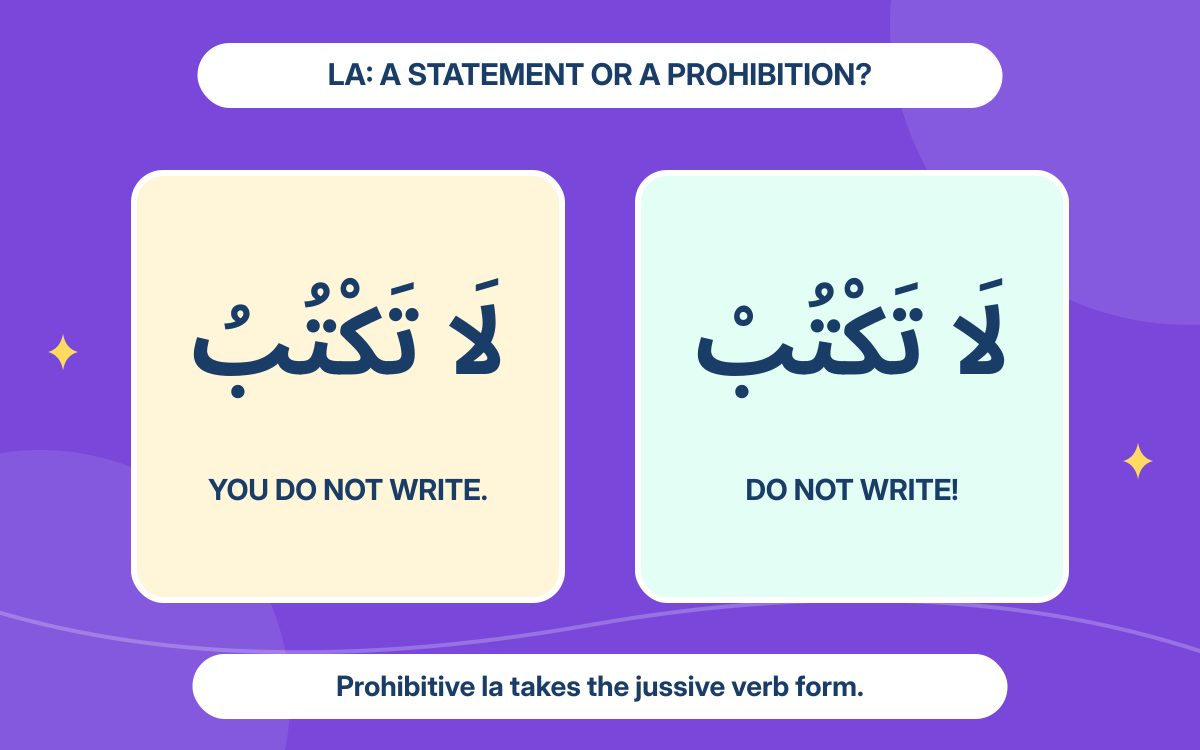
The first sentence denies a past action by I. The second directs one male listener not to act. Both use a jussive verb with final sukun, but their prefixes and sentence functions differ.
Review prohibitive la, vowel pairs and kataba for comparison. The plain reading aids simplify long vowels and sounds; the Arabic keeps the exact endings visible.
Question 1 of 1Try it now
TAKE IT WITH YOU
What to remember
Shariba–yashrabu changes the internal vowel from i to a.
The drink is the object; past endings and present prefixes identify the drinker.
Ishrab means drink, while la tashrab means do not drink to one man.
KEEP THIS HANDY
Your reference shelf
Open a guide whenever you need it.
Drink: past and present formsPast and ordinary indicative present; use the lesson for other moods+
Drink: past and present forms
Person
Past
Present
He
شَرِبَ
يَشْرَبُ
They: two men
شَرِبَا
يَشْرَبَانِ
They: male or mixed group
شَرِبُوا
يَشْرَبُونَ
She
شَرِبَتْ
تَشْرَبُ
They: two women
شَرِبَتَا
تَشْرَبَانِ
They: female group
شَرِبْنَ
يَشْرَبْنَ
You: one man
شَرِبْتَ
تَشْرَبُ
You: two people
شَرِبْتُمَا
تَشْرَبَانِ
You: male or mixed group
شَرِبْتُمْ
تَشْرَبُونَ
You: one woman
شَرِبْتِ
تَشْرَبِينَ
You: female group
شَرِبْتُنَّ
تَشْرَبْنَ
I
شَرِبْتُ
أَشْرَبُ
We
شَرِبْنَا
نَشْرَبُ
The dual you form serves two listeners of either gender. Shared spellings depend on context. The present column is indicative; do not use it unchanged after every mood particle.
Commands by listenerMatch the complete command to the listener+
Direct command forms
Listener
Command
One man
اِشْرَبْ
One woman
اِشْرَبِي
Two people
اِشْرَبَا
Male or mixed group
اِشْرَبُوا
Female group
اِشْرَبْنَ
The dual command serves two listeners of either gender. A final alif after group waw is silent; the dual alif is pronounced.
Sources & further learning
References for the language explanations and learning guidance.
Use la with a jussive present verb for do not. Contrast prohibitions and negative statements, then practise female, dual and plural listener forms in seven quizzes.