A hollow verb has waw or ya as its middle root letter. Its visible middle vowel can be long in one form and short in another: qala becomes qultu, and yaqulu becomes yaqul after lam. Learn three common Form I models to see the pattern without assuming that every hollow verb uses the same vowel.
01Find the middle radical
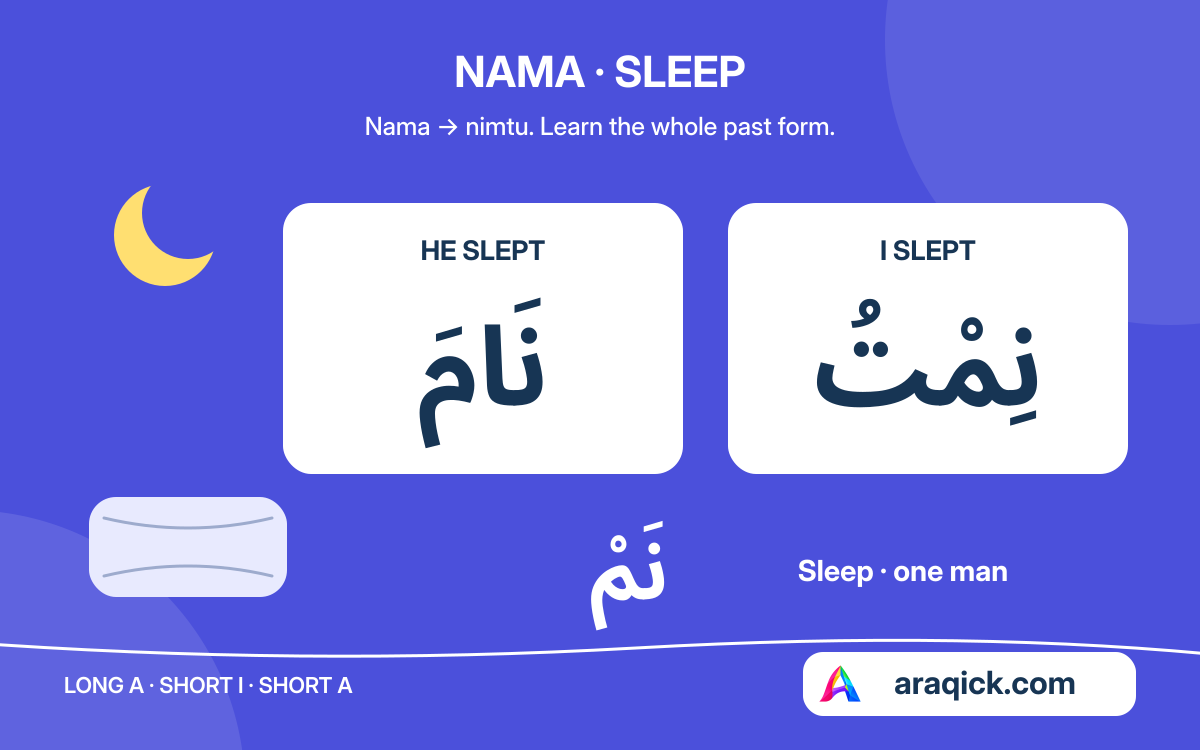
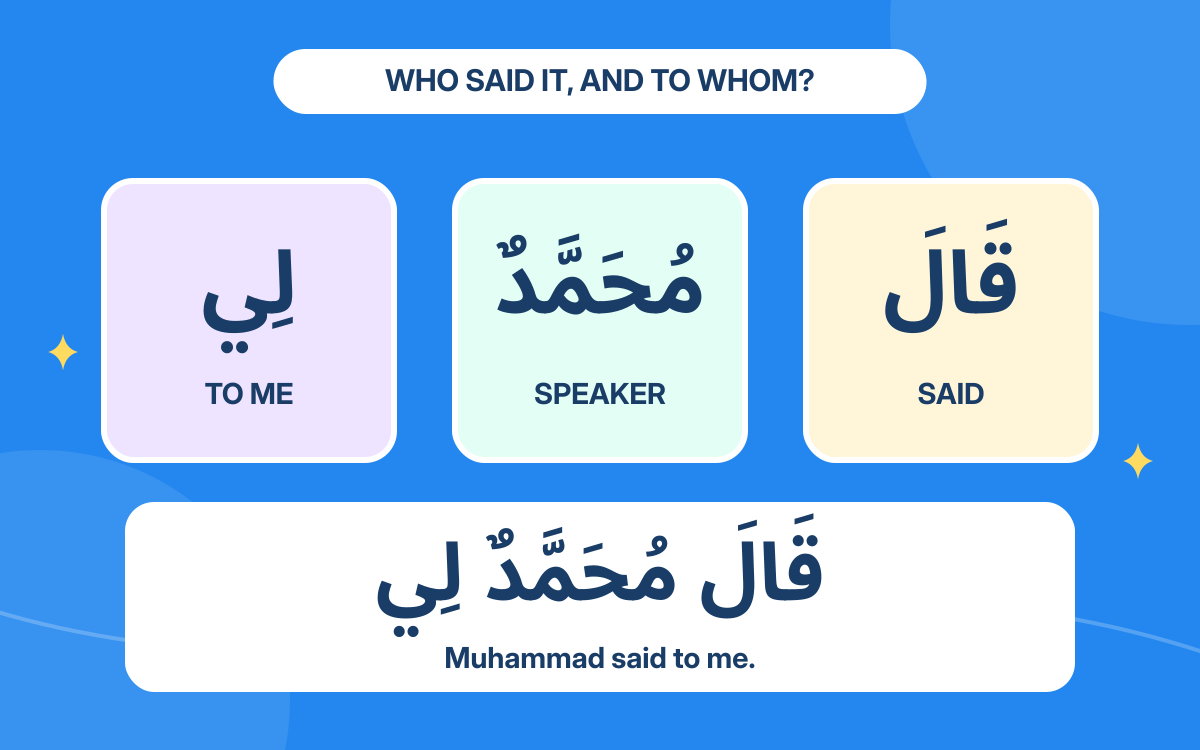
قَالَ — بَاعَ — نَامَ
qala — baa — nama
He said — He sold — He slept
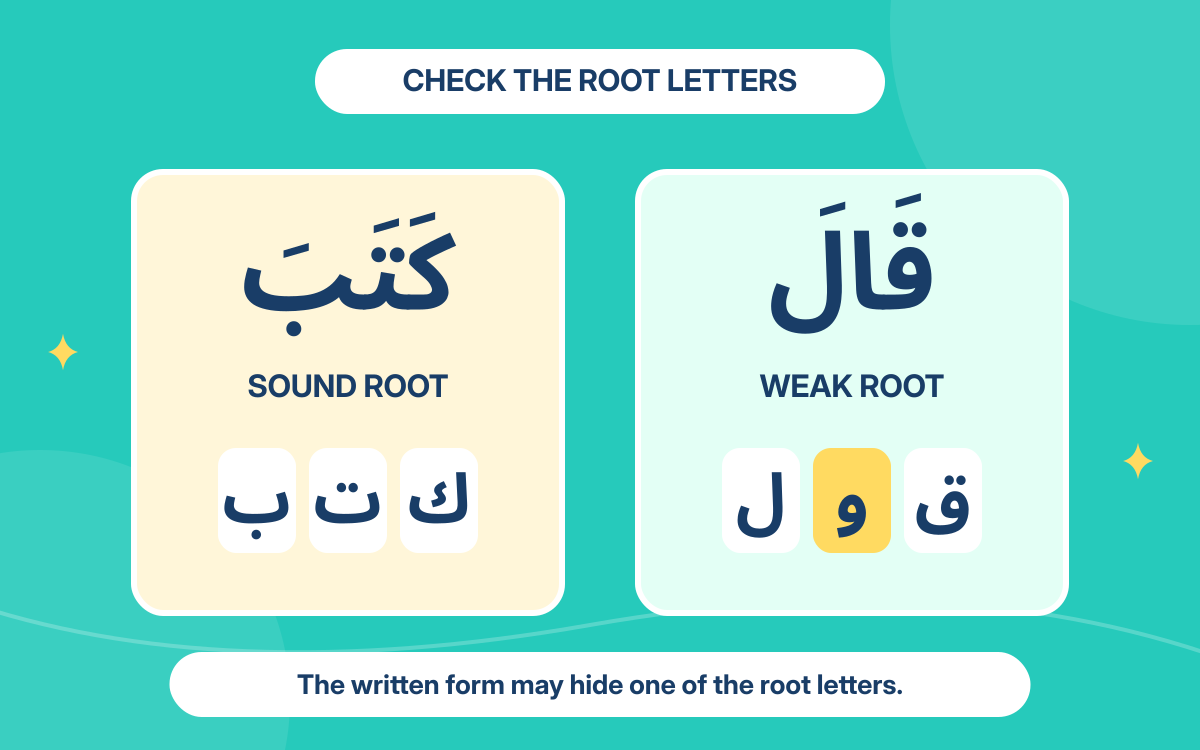
These are ajwaf verbs, أَجْوَف. Qala has root ق و ل; baa has ب ي ع; nama has ن و م. Each displayed past form contains a long middle a, although the original weak radical differs.
The written alif does not identify the root by itself. Check a dictionary and the learned verb family, as explained in sound and weak verbs.
02Shorten the past before tu and na
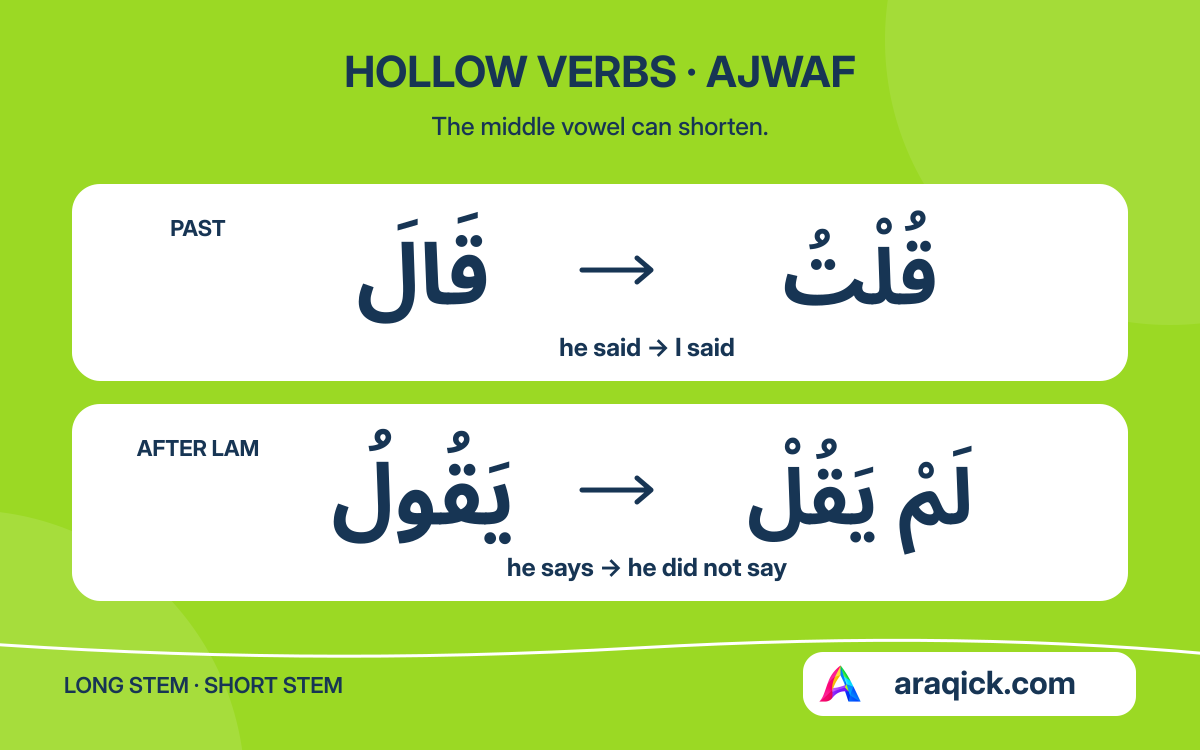
قُلْتُ نَعَمْ
qultu naam
I said yes.
بِعْتُ كِتَابًا — نِمْتُ مُبَكِّرًا
bitu kitaban — nimtu mubakkiran
I sold a book — I slept early
Qala uses short u in qultu, while baa and nama use short i in bitu and nimtu. The same chosen short vowel appears before the we ending: قُلْنَا، بِعْنَا، نِمْنَا.
Do not attach tu to an unchanged long-a form. Learn the short stem with the verb. In contrast, qala and qalat keep their long a.
03Learn the present vowel too
يَقُولُ — يَبِيعُ — يَنَامُ
yaqulu — yabiu — yanamu
He says — He sells — He sleeps
The three ordinary present forms have long u, i and a respectively. Their last root consonant carries the normal indicative u. Keep that final mood vowel separate from the long vowel inside the stem.
For I, use أَقُولُ، أَبِيعُ، أَنَامُ. Our plain readings simplify vowel length and the sound ayn in baa and yabiu; the Arabic spelling preserves those distinctions.
04Shorten these singular jussive forms
لَمْ يَقُلْ ذَلِكَ
lam yaqul dhalika
He did not say that.
After lam, yaqulu becomes yaqul: the final consonant takes sukun and the middle long vowel shortens. Compare لَمْ يَبِعْ (he did not sell) and لَمْ يَنَمْ (he did not sleep).
After lan, these forms keep the long middle vowel and take final fathah: لَنْ يَقُولَ، لَنْ يَبِيعَ، لَنْ يَنَامَ. Changing mood does not always shorten the middle.
05Compare one listener with a group
قُلْ نَعَمْ
qul naam
Say yes. — to one man
The singular commands are قُلْ، بِعْ، نَمْ: say, sell, sleep. Each uses a short middle vowel and needs no helping initial alif.
For a male or mixed group, the long stem returns: قُولُوا، بِيعُوا، نَامُوا. Compare qul and qulu in the Arabic, since our plain reading aids simplify length. The singular shortening rule is not a command to remove every middle weak letter in every person form.
The hollow Form IV guide treats another pattern. Keep its arada and aqama forms separate from these Form I models.
What to remember
- A hollow verb has a weak middle radical, but its short vowel must be learned.
- Qultu, bitu and nimtu contrast with the long-a past citation forms.
- Singular jussives and commands shorten in these models; other person forms can retain the long stem.
Your reference shelf
Open a guide whenever you need it.
Three hollow models side by sideCompare the same person and construction before generalising
| Meaning | He: past | I: past | He: present | After lam | Command: one man |
|---|---|---|---|---|---|
| Say | قَالَ | قُلْتُ | يَقُولُ | لَمْ يَقُلْ | قُلْ |
| Sell | بَاعَ | بِعْتُ | يَبِيعُ | لَمْ يَبِعْ | بِعْ |
| Sleep | نَامَ | نِمْتُ | يَنَامُ | لَمْ يَنَمْ | نَمْ |
These are selected active Form I patterns. The past short vowel and the present short vowel are not always identical: nimtu has i, but lam yanam has a. Confirm the complete form instead of applying a single vowel to the entire verb family.
Qala: notice where the long stem staysA small person chart prevents over-shortening
| Person | Past | Indicative | With lam |
|---|---|---|---|
| He | قَالَ | يَقُولُ | لَمْ يَقُلْ |
| She | قَالَتْ | تَقُولُ | لَمْ تَقُلْ |
| I | قُلْتُ | أَقُولُ | لَمْ أَقُلْ |
| We | قُلْنَا | نَقُولُ | لَمْ نَقُلْ |
| They: male or mixed group | قَالُوا | يَقُولُونَ | لَمْ يَقُولُوا |
| They: female group | قُلْنَ | يَقُلْنَ | لَمْ يَقُلْنَ |
The male or mixed plural jussive loses mood nun while retaining its long stem. The female plural is fixed with its subject nun. The final long a of the we form qulna is written قُلْنَا; female they qulna is قُلْنَ. The Arabic, rather than the simplified reading aid, shows that contrast.
Sources & further learning
References for the language explanations and learning guidance.