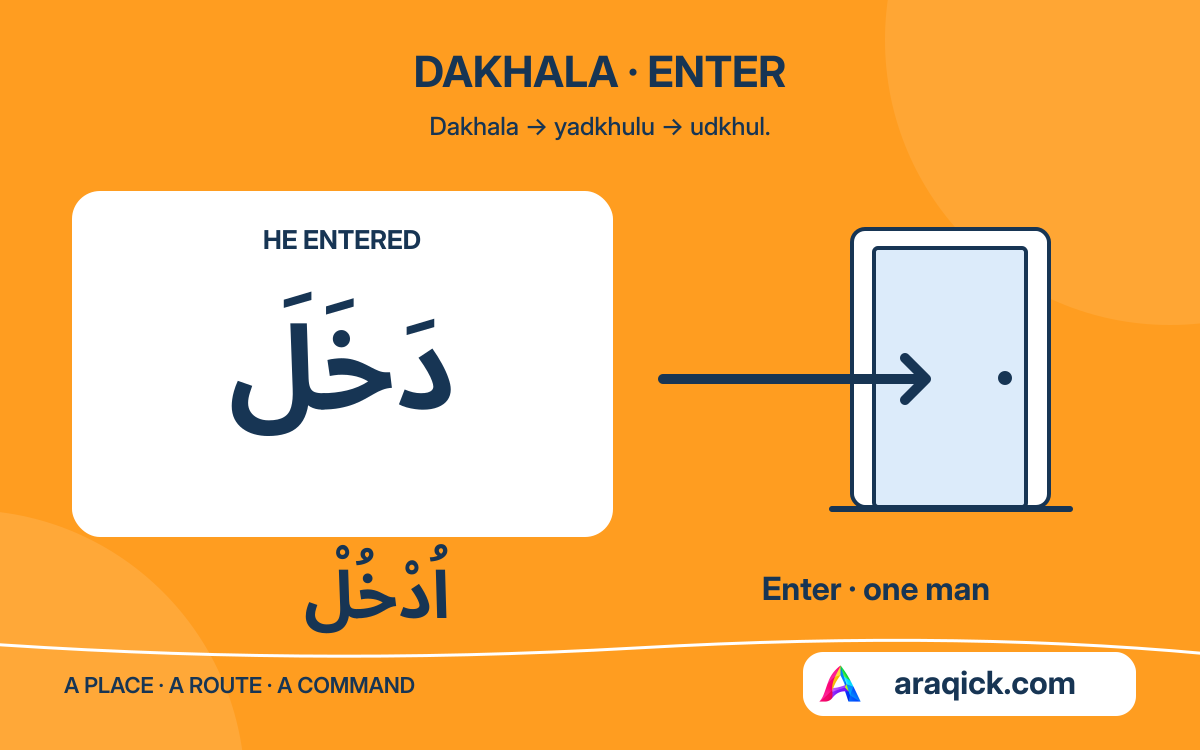
Dakhala means he entered. Its present partner is yadkhulu, and the direct command to one man is udkhul. These forms use the root د خ ل. A doorway provides a simple scene: someone enters a place, asks another person to come in, or says that entry did not happen.
01Put a place after entered
دَخَلَ الْمَكْتَبَ
dakhala almaktaba
He entered the office.
This familiar place construction uses the noun directly after dakhala. Almaktaba has an accusative ending here. Do not add an English-style into word automatically just because the translation suggests movement into a place.
Arabic can also use dakhala with ila in suitable contexts. Learn the complete expression you encounter; the direct place pattern above is enough for this lesson.
02Tell who entered
دَخَلْتُ الْمَتْجَرَ — دَخَلْنَا الْمَتْجَرَ
dakhaltu almatjara — dakhalna almatjara
I entered the shop — We entered the shop
Dakhaltu uses tu for I, while dakhalna uses na for we. The l carries sukun before these endings. The root letters do not shorten or disappear.
She entered is دَخَلَتْ. They entered for a male or mixed group is دَخَلُوا. Keep the subject ending separate from the name of the place.
03Learn the u in yadkhulu
نَدْخُلُ الْمَكْتَبَ صَبَاحًا
nadkhulu almaktaba sabahan
We enter the office in the morning.
The present has dammah on kh: dkhul. N identifies we, and final u marks the ordinary indicative. I enter is أَدْخُلُ; he enters is يَدْخُلُ.
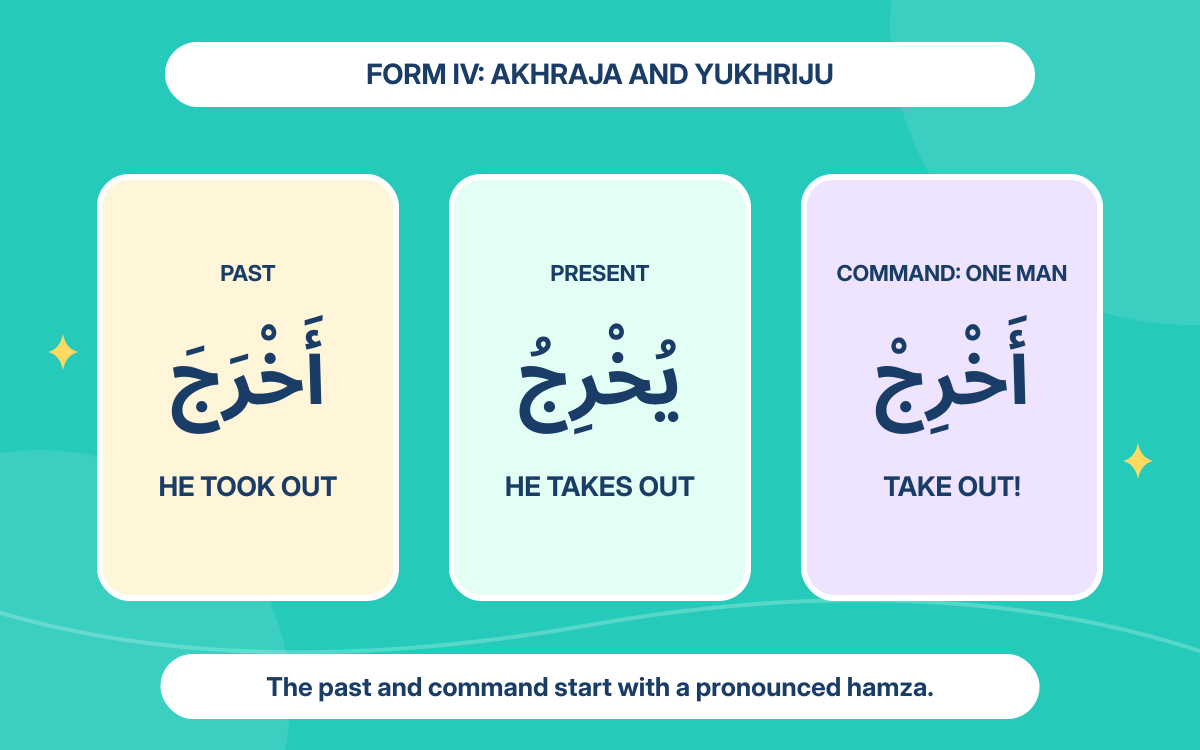
Do not confuse دَخَلَ with أَدْخَلَ, he brought or put something in. The latter is a separate Form IV verb that can make someone or something enter. Compare Form IV verbs.
04Invite a listener to enter
اُدْخُلْ مِنْ هَذَا الْبَابِ
udkhul min hadha albabi
Enter through this door. — to one man
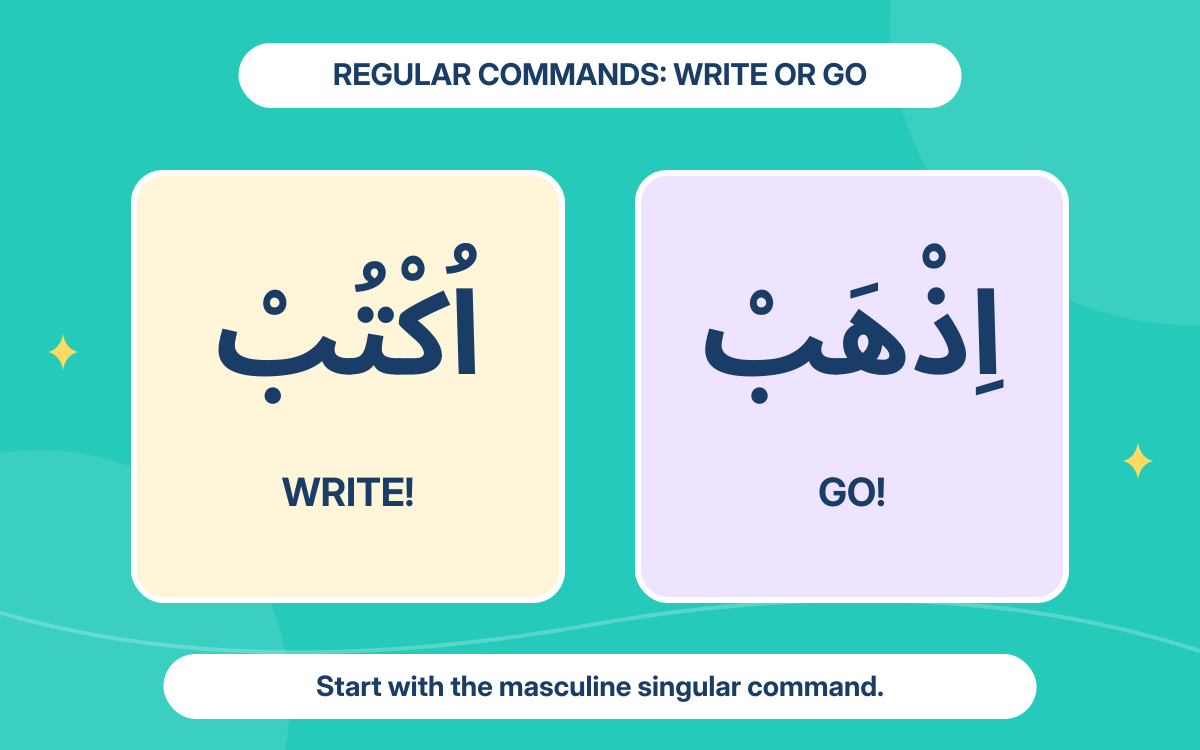
Udkhul begins with a helping u when said alone, matching the u inside its stem. The final l has sukun. Min hadha albabi identifies the doorway through which the listener should enter.
To one woman, use اُدْخُلِي. To a male or mixed group, use اُدْخُلُوا. The initial helping vowel belongs to hamzat al-wasl; it is not an extra root consonant.
05Compare entry with exit and a past denial
دَخَلَ الْمَتْجَرَ، ثُمَّ خَرَجَ مِنْهُ
dakhala almatjara thumma kharaja minhu
He entered the shop, then went out of it.
لَمْ أَدْخُلْ هَذَا الْمَتْجَرَ
lam adkhul hadha almatjara
I did not enter this shop.
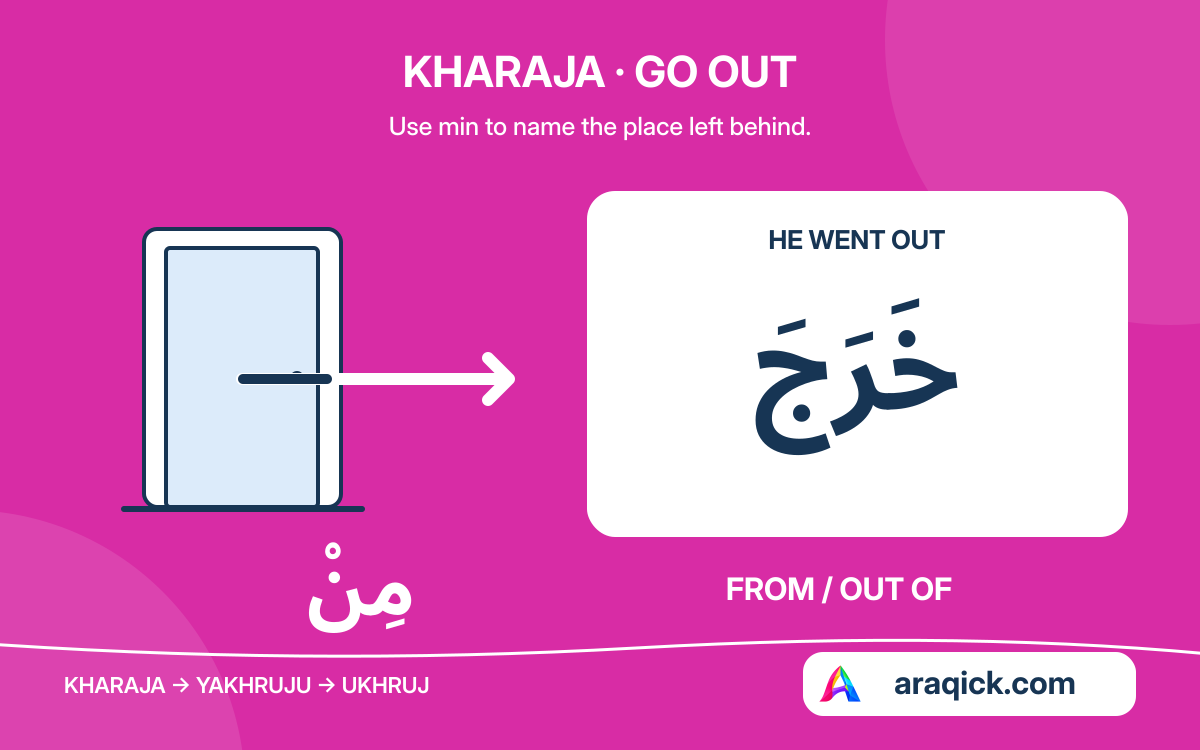
Kharaja min names movement out of a place. In the negative example, lam requires adkhul with final sukun. It does not take the past form dakhaltu.
Use kharaja for the opposite movement and lam for past denials. The reference table also supports a short conjugation practice routine. Plain reading aids simplify Arabic sounds and vowel length.
What to remember
- Dakhala–yadkhulu means enter and can be followed directly by a place in the taught pattern.
- Udkhul is a command; its listener endings identify who should enter.
- Adkhala is a separate causative verb, while kharaja min describes going out.
Your reference shelf
Open a guide whenever you need it.
Enter: past and present formsPast and ordinary indicative present; use the lesson for other moods
| Person | Past | Present |
|---|---|---|
| He | دَخَلَ | يَدْخُلُ |
| They: two men | دَخَلَا | يَدْخُلَانِ |
| They: male or mixed group | دَخَلُوا | يَدْخُلُونَ |
| She | دَخَلَتْ | تَدْخُلُ |
| They: two women | دَخَلَتَا | تَدْخُلَانِ |
| They: female group | دَخَلْنَ | يَدْخُلْنَ |
| You: one man | دَخَلْتَ | تَدْخُلُ |
| You: two people | دَخَلْتُمَا | تَدْخُلَانِ |
| You: male or mixed group | دَخَلْتُمْ | تَدْخُلُونَ |
| You: one woman | دَخَلْتِ | تَدْخُلِينَ |
| You: female group | دَخَلْتُنَّ | تَدْخُلْنَ |
| I | دَخَلْتُ | أَدْخُلُ |
| We | دَخَلْنَا | نَدْخُلُ |
The dual you form serves two listeners of either gender. Shared spellings depend on context. The present column is indicative; do not use it unchanged after every mood particle.
Commands by listenerMatch the complete command to the listener
| Listener | Command |
|---|---|
| One man | اُدْخُلْ |
| One woman | اُدْخُلِي |
| Two people | اُدْخُلَا |
| Male or mixed group | اُدْخُلُوا |
| Female group | اُدْخُلْنَ |
The dual command serves two listeners of either gender. A final alif after group waw is silent; the dual alif is pronounced.
Sources & further learning
References for the language explanations and learning guidance.