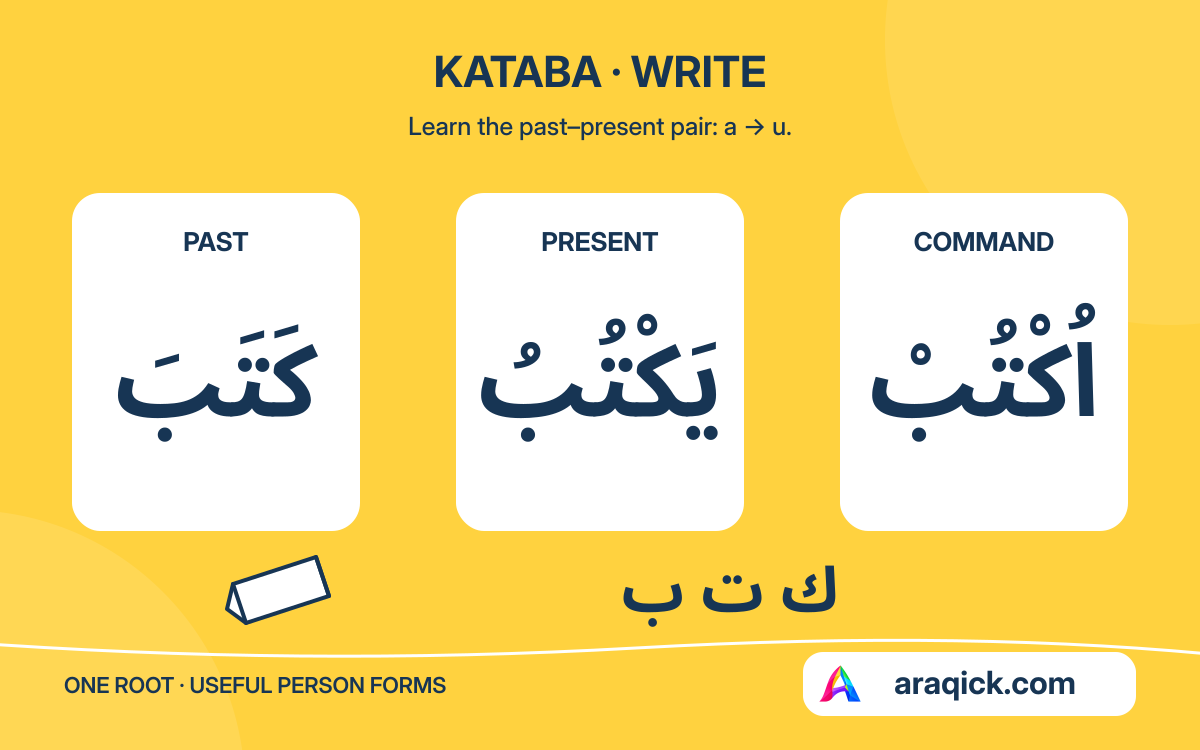
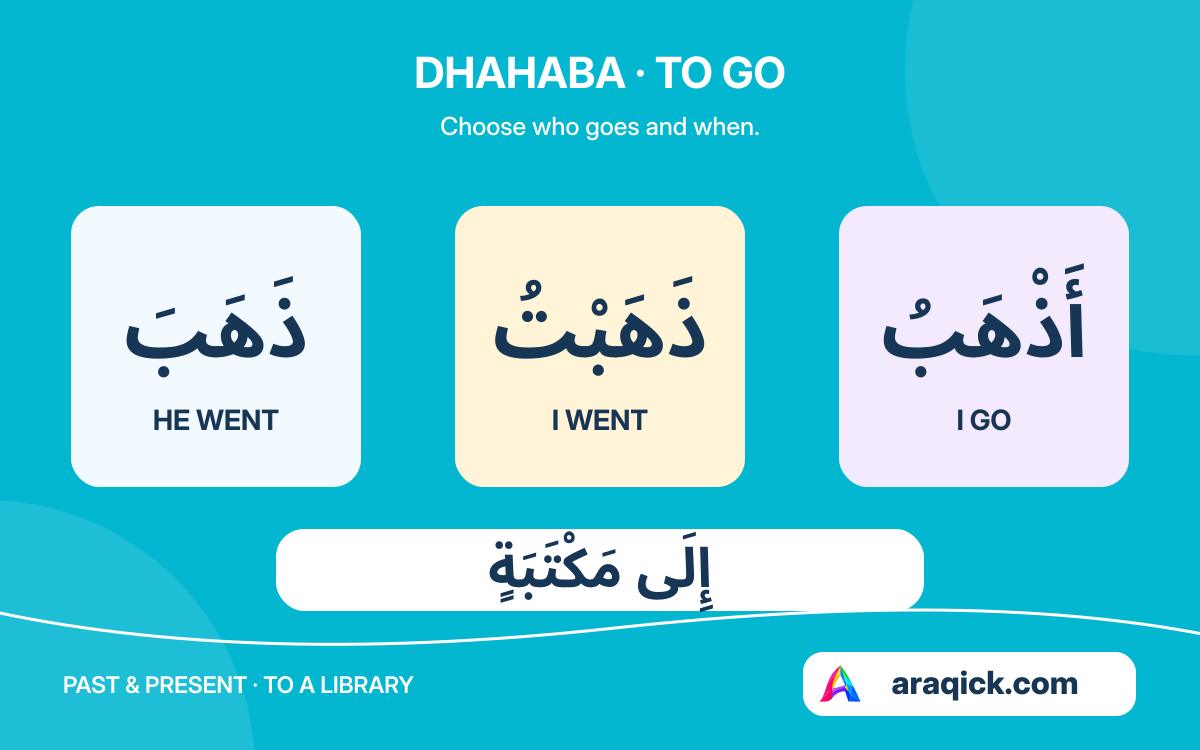
Katabtu, katabta and katabti describe the same writing action, but different people do it. A small vowel changes “I” into “you.” Practise six forms of one regular past verb so you can recognise the doer without learning a new action every time.
01Start with I wrote
كَتَبْتُ
katabtu
I wrote.
The ending تُ (tu) identifies the speaker. It works for a man or a woman; the verb does not mark the speaker’s gender here. Notice the sukun on بْ: pronounce katab, then tu. Keep that final u clear when practising these full forms.
02Change the vowel for you
كَتَبْتَ
katabta
You wrote: speaking to one male.
كَتَبْتِ
katabti
You wrote: speaking to one female.
The consonants stay the same as in katabtu. Ta addresses one male; ti addresses one female. The listener’s gender determines this choice, regardless of whether the speaker is male or female.
Without vowel marks, all three appear as كتبت. Context then helps the reader choose the intended form. While learning, use the marked Arabic to connect each ending with its meaning.
03Use na for we
كَتَبْنَا
katabna
We wrote.
The ending نَا (na) identifies a group including the speaker. It works for male, female or mixed groups. Its a is long, even though this site’s plain reading aid writes one a.
Do not add na after katabtu: replace the first person singular ending with the plural ending. The result is katabna, not katabtuna. These are two different choices for the doer of the same writing action.
04Compare he wrote and she wrote
كَتَبَ
kataba
He wrote.
كَتَبَتْ
katabat
She wrote.
Kataba is the basic third person masculine singular form. Katabat adds a feminine marker. Its final تْ has sukun when pronounced by itself; the b before it has fathah.
Compare katabat with katabtu carefully. In katabtu, tu is an attached subject pronoun meaning I. In katabat, the final t marks feminine agreement; it is not the subject pronoun “you.” With no named subject in our example, “she” is understood from the verb and context.
Keep the final t vowelless when you stop after katabat, or continue before a pronounced consonant, as in كَتَبَتْ فَاطِمَةُ, katabat fatimatu: Fatima wrote. Before ال in connected formal speech, its opening wasl sound drops. The feminine تْ takes a temporary joining kasrah to avoid two vowelless consonants meeting.
كَتَبَتِ الطَّالِبَةُ
katabati ttalibatu
The female student wrote.
The article’s l merges into the following sun letter t. The joining i does not mean you: كَتَبَتِ still has a on b, unlike كَتَبْتِ, katabti, where b has sukun.
05Add a separate pronoun when useful
أَنَا كَتَبْتُ رِسَالَةً
ana katabtu risalatan
I wrote a letter.
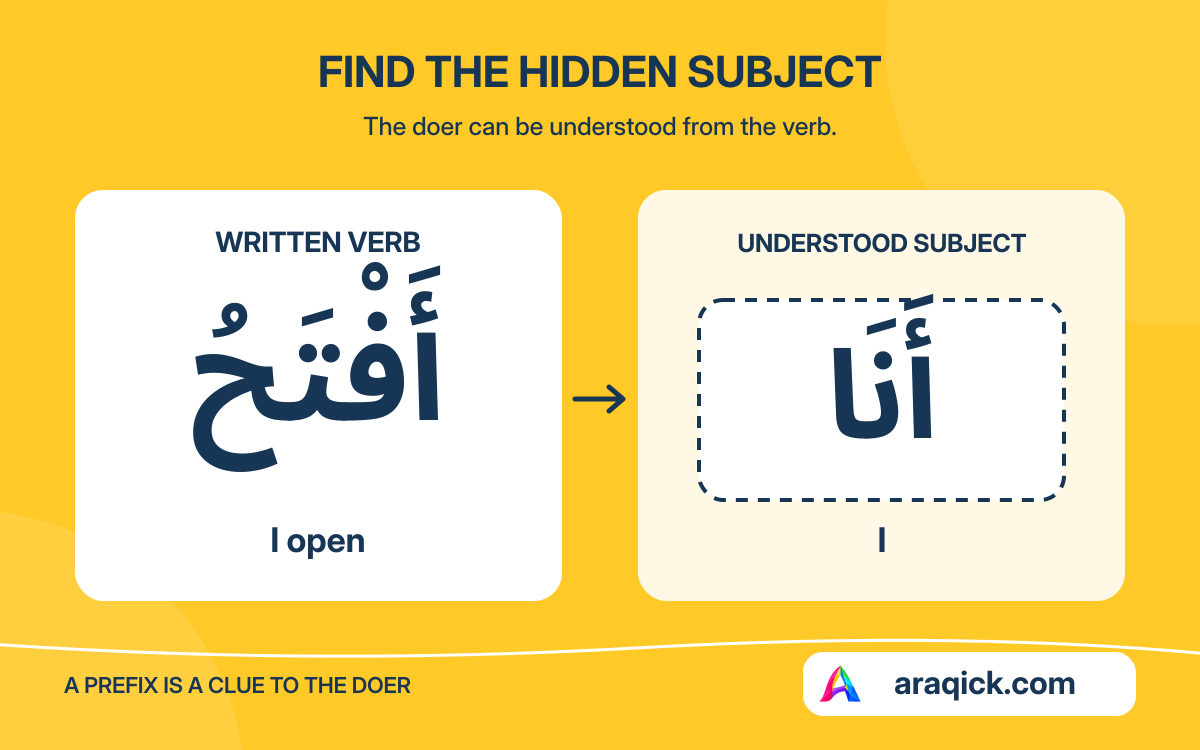
Ana means I and risalatan means a letter. The verb already identifies the speaker, so كَتَبْتُ رِسَالَةً also works. Add ana when you want to make the speaker explicit or emphasise a contrast.
These are regular past forms, not a rule for making every Arabic verb by attaching letters to an unchanged dictionary form. Learn the complete form when a verb changes internally. For now, check the ending, identify the doer, then read the rest of the sentence.
What to remember
- Tu means I; ta and ti address one male and one female respectively.
- Na means we in katabna; kataba and katabat mean he wrote and she wrote.
- A separate pronoun is optional when the verb already identifies the doer.
Your reference shelf
Open a guide whenever you need it.
Six writing forms side by sideReview the endings and the two different jobs of final ta
| Meaning | Arabic | Plain reading aid |
|---|---|---|
| I wrote | كَتَبْتُ | katabtu |
| You wrote: one male | كَتَبْتَ | katabta |
| You wrote: one female | كَتَبْتِ | katabti |
| We wrote | كَتَبْنَا | katabna |
| He wrote | كَتَبَ | kataba |
| She wrote | كَتَبَتْ | katabat |
The vowelled subject ta in katabtu, katabta and katabti is called تَاءُ الْفَاعِلِ. The feminine marker in katabat is تَاءُ التَّأْنِيثِ السَّاكِنَةُ. Their shared letter does not give them the same grammatical job.
| Arabic | Connected reading aid | Meaning |
|---|---|---|
| كَتَبَتْ فَاطِمَةُ | katabat fatimatu | Fatima wrote. |
| كَتَبَتِ الطَّالِبَةُ | katabati ttalibatu | The female student wrote. |
| فَتَحَتِ الْبَابَ | fatahati lbaba | She opened the door. |
The feminine t is vowelless at a stop or before a pronounced consonant. When hamzat al wasl drops and two vowelless consonants would meet, t takes a temporary kasrah. Both article examples show this connection; the sun letter t also absorbs the article’s l in ttalibatu, while the moon letter b leaves l audible in lbaba.
A carefully marked connected text may write تِ; the underlying feminine ending remains تْ. Its joining kasrah is a pronunciation adjustment, not a noun case ending or the subject pronoun meaning you. If you pause after كَتَبَتِ, return to katabat and pronounce the article’s opening a when starting the next word.
The six forms here are a starting set. Arabic also has dual and additional plural forms. Recognising these six accurately is enough for the seven questions above.
Sources & further learning
References for the language explanations and learning guidance.