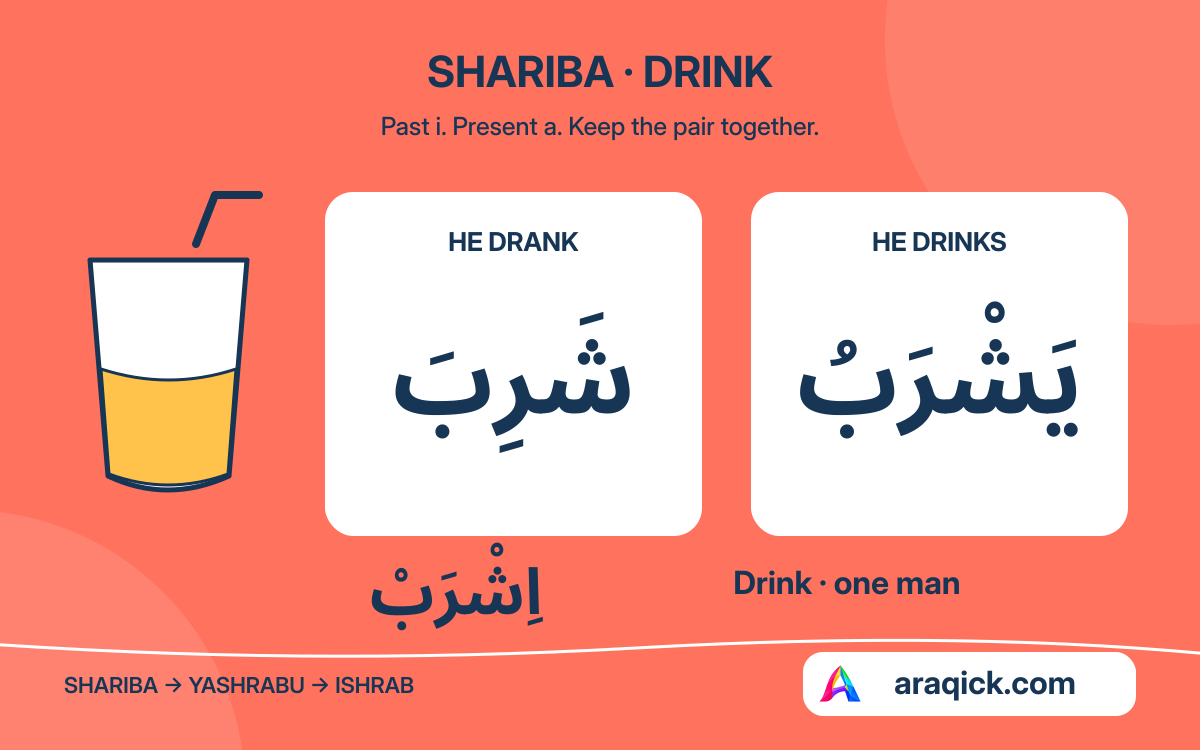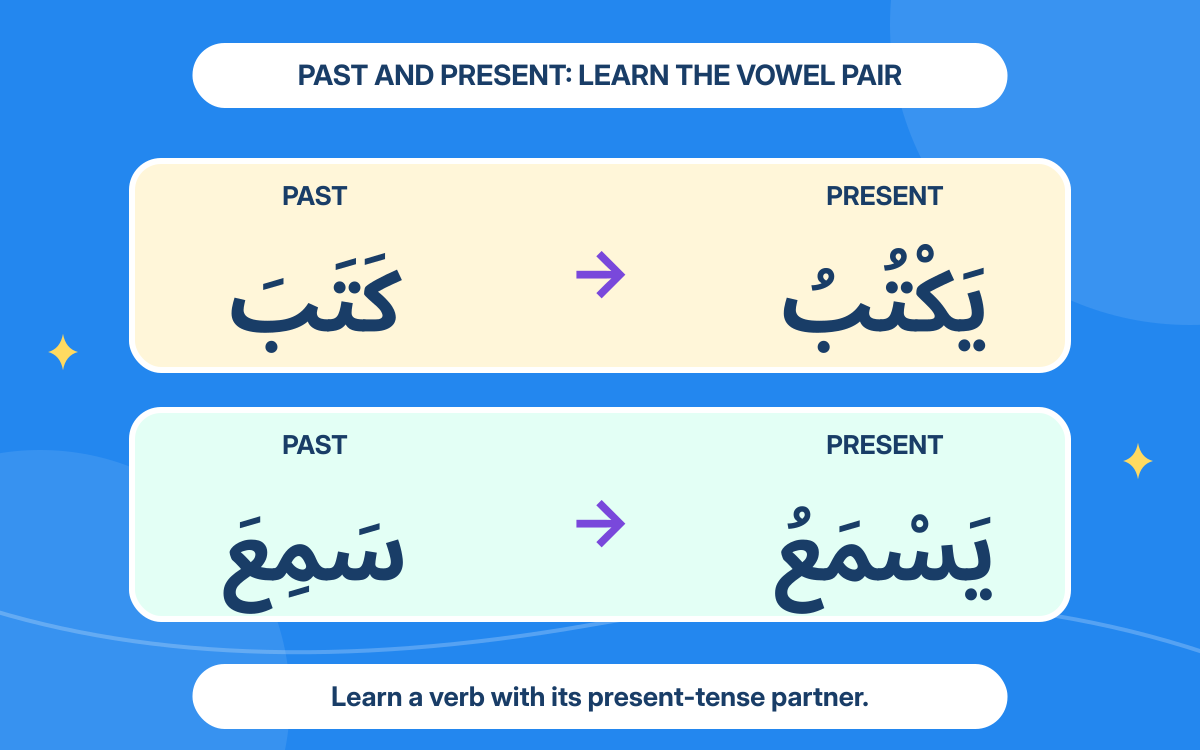
Knowing a verb’s root or past form does not always tell you its present middle vowel. Learn the past and present as a pair. This guide compares sound basic three-root verbs, often called Form I, using five useful examples before a reference chart of all six vowel pairs.
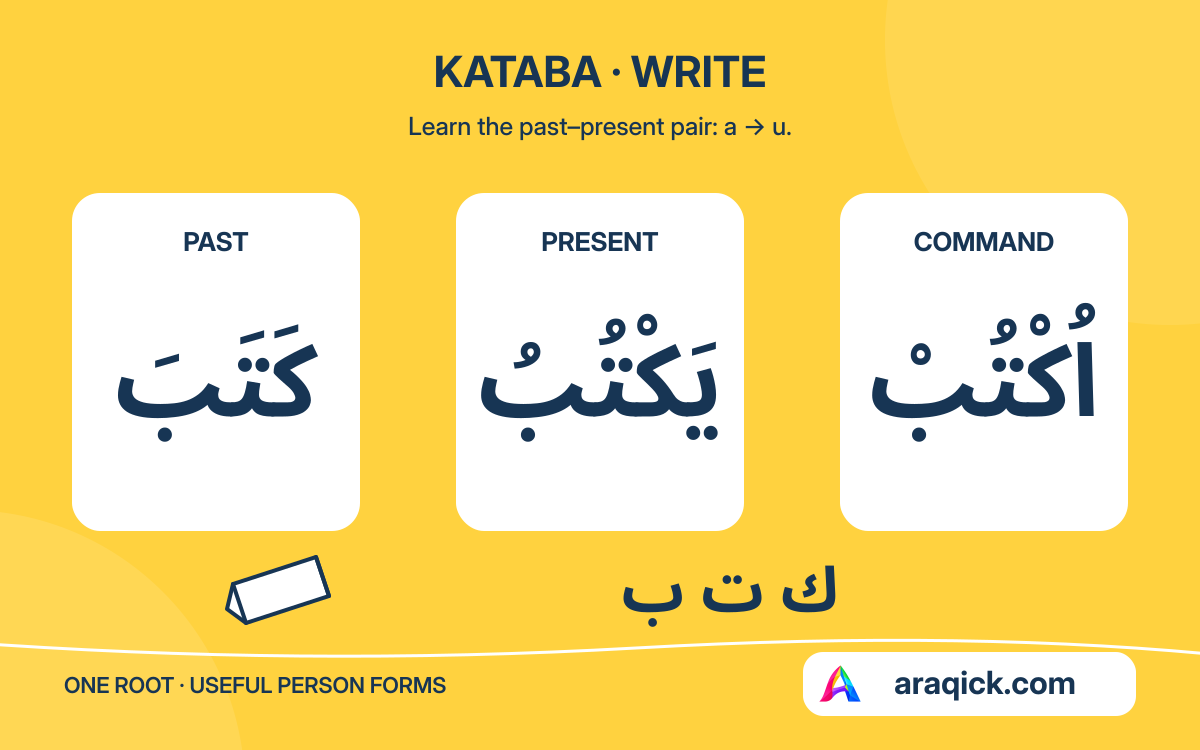
01Learn kataba with yaktubu
The middle root letter in kataba is تَ, with a. In yaktubu it is تُ, with u. Call this the a to u pair. Compare the middle root vowel, rather than the prefix or final mood ending.
كَتَبَ — يَكْتُبُ
kataba — yaktubu
He wrote — he writes.
Keep both forms in your vocabulary notes. The root letters remain ك ت ب, but adding y to the past spelling does not produce the learned present form.
02The same past a can lead to i or a
Other verbs with middle a in the past have a different present vowel. Jalasa belongs to the a to i pair; fataha belongs to the a to a pair. Learn the particular verb, rather than guessing from its past a.
جَلَسَ — يَجْلِسُ
jalasa — yajlisu
He sat — he sits.
فَتَحَ — يَفْتَحُ
fataha — yaftahu
He opened — he opens.
Together with kataba and yaktubu, these show three present vowels following the same past middle vowel.
03Compare samia with yasmau
Samia has i on its middle root letter مِ. Its learned present form yasmau has a on مَ. This is the i to a pair.
سَمِعَ — يَسْمَعُ
samia — yasmau
He heard — he hears.
The final u in yasmau is the ordinary indicative ending shown here. It is separate from the middle vowel that identifies this pair.
04Keep u in karuma and yakrumu
Karuma has u on its middle root letter رُ. Yakrumu keeps that u, giving the u to u pair. This verb describes generosity.
كَرُمَ — يَكْرُمُ
karuma — yakrumu
He was generous — he is generous.
Do not replace the learned vowel merely because another familiar verb follows a different pair.
05Use the learned present form in a sentence
Once you know kataba and yaktubu, you can use the present member of that pair to describe his writing. Risalatan names a letter.
هُوَ يَكْتُبُ رِسَالَةً
huwa yaktubu risalatan
He writes a letter.
When learning a new verb, record its past form, present form and meaning together. Check a dictionary when the vowel is unfamiliar. Our plain Latin readings use no hyphens and simplify Arabic sounds and vowel length; read the vowelled Arabic too.
What to remember
- Learn a verb’s past form, present form and meaning together; the root alone does not supply all its vowels.
- Past middle a can pair with present u, i or a, as kataba, jalasa and fataha show.
- The middle root vowel identifies the pair; do not confuse it with the present prefix or final mood ending.
Your reference shelf
Open a guide whenever you need it.
The six basic middle-vowel pairsCompare citation forms of sound basic three-root verbs
| Pair | Past → present | Plain reading | Meaning |
|---|---|---|---|
| a to u | كَتَبَ → يَكْتُبُ | kataba → yaktubu | He wrote → he writes |
| a to i | جَلَسَ → يَجْلِسُ | jalasa → yajlisu | He sat → he sits |
| a to a | فَتَحَ → يَفْتَحُ | fataha → yaftahu | He opened → he opens |
| i to a | سَمِعَ → يَسْمَعُ | samia → yasmau | He heard → he hears |
| u to u | كَرُمَ → يَكْرُمُ | karuma → yakrumu | He was generous → he is generous |
| i to i | حَسِبَ → يَحْسِبُ | hasiba → yahsibu | He thought → he thinks |
The less common i to i example hasiba and yahsibu is a recognised learned variant; hasiba and yahsabu also occur. Confirm the form used by your dictionary or text. These six pairs organise basic three-root verbs. They are not six numbered derived forms and do not replace learning individual verbs.
The chart uses he forms and ordinary indicative present endings. Weak and doubled verbs can have additional spelling or stem changes, so do not apply this visible sound-verb template mechanically to every verb.
Sources & further learning
References for the language explanations and learning guidance.