Arabic is spoken across North Africa and Western Asia, including Egypt, Morocco, Saudi Arabia, Iraq, Jordan and many neighbouring countries. It also has official or institutional roles in multilingual countries such as Somalia, Djibouti and Chad. “Arabic-speaking” describes language use; it does not mean that everyone speaks the same variety or that Arabic is the only official language.
01Where is Arabic spoken?
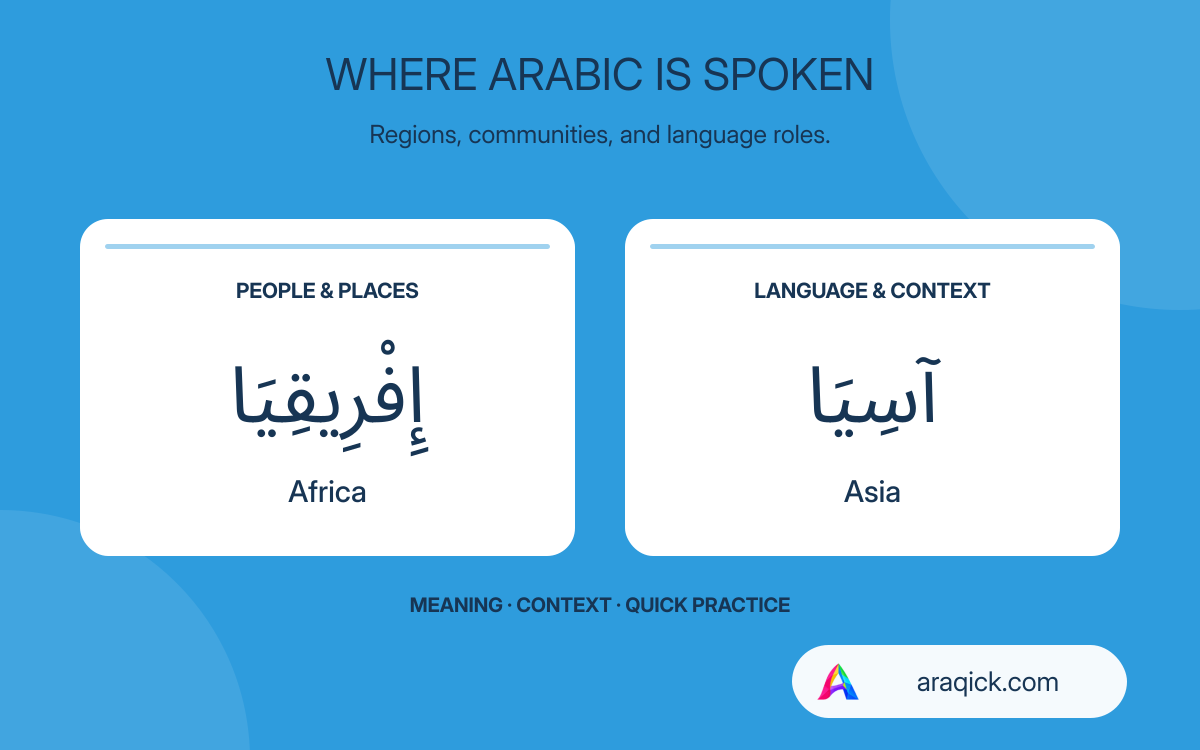
Start with two connected areas: Africa and Asia. In Africa, Arabic varieties are used across the Maghreb and the Nile region. In Asia, they extend through the Levant, Iraq and the Arabian Peninsula. The regional reference below groups countries so you can place unfamiliar names.
A region is a helpful starting point, rather than a uniform language zone. Neighbouring communities can use different words and pronunciations, while people separated by borders may share closely related speech.
02What does an official language mean?
An official language has a recognised role in public institutions. That role differs from the language a person first learns at home. Egypt and the United Arab Emirates identify Arabic as their official language. Morocco recognises Arabic and Amazigh; Iraq recognises Arabic and Kurdish.
Somalia lists Somali and Arabic, and Djibouti lists Arabic and French. These examples show why an official-language map cannot tell you which language every resident uses for shopping, family conversation or school.
03Why do country lists give different totals?
Check what each list counts: Arab League members, countries with an official Arabic role, places where Arabic is a home language, or wider communities. These categories overlap but are not identical. Chad, for example, has official Arabic and French but is not an Arab League member.
Country and territory classifications can also change a total. A useful list names its inclusion rule and distinguishes each language status. The tables here provide a regional guide and selected official-status examples, rather than presenting one unexplained worldwide number.
04Are special and working status the same as official?
Keep the labels visible. Israel’s Basic Law identifies Hebrew as the language of the state and gives Arabic special status, while preserving its prior practical status. That wording deserves its own description rather than being silently added to a simple co-official list.
Eritrea’s Ministry of Information describes Arabic, Tigrinya and English as working languages. Working use concerns practical institutional communication. It should not automatically be rewritten as the same constitutional status found in the country examples above.
05Does everyone speak Modern Standard Arabic?
Modern Standard Arabic, or MSA, serves formal writing and prepared communication across countries. Everyday conversation usually draws on regional varieties. Egyptian Arabic, Palestinian Arabic and Moroccan Darija are useful examples; broad labels also contain local differences.
A shared written standard helps connect readers, while spoken understanding depends on the speakers, varieties, topic and previous exposure. A country name alone does not settle that question. Compare our MSA and dialect guide before choosing a conversation course.
06Is Arabic used beyond these regions?
Yes. Arabic-speaking communities also live beyond Africa and Western Asia. A family may use Arabic at home while education or work takes place in another language. Community use does not make Arabic a national official language in that country.
Reading Arabic script is another separate skill. Recognising a text for religious study does not necessarily mean being able to hold an everyday Arabic conversation. Ask what someone can read, understand and say instead of assigning all these abilities from one label.
07Which Arabic should I learn for a place?
Begin with the people and task. For reading public information, build MSA and script skills. For visiting relatives or chatting with neighbours, practise the variety they actually use. For travel, combine local exchanges with standard written words you will see on signs.
Try our Egyptian phrases, Levantine phrases, Moroccan Darija or selected Emirati forms. Learn an introduction and a request with matching replies, then confirm the wording with speakers from your destination.
What to remember
- Arabic connects communities across Africa, Asia and beyond; a language map does not identify every person’s home language.
- Official, special, working and community use are different descriptions and should keep their labels.
- Choose MSA for appropriate formal reading and a relevant regional variety for everyday conversation.
Your reference shelf
Open a guide whenever you need it.
Arabic across regions: practical country guideCountry groups and language-use notes; these rows are a regional guide, not a single official-status list.
| Region | Countries and settings | Reading the group |
|---|---|---|
| Maghreb | Algeria, Libya, Mauritania, Morocco, Tunisia | Regional Arabic varieties coexist with other languages. “Maghrebi” does not mean one identical dialect. |
| Egypt and the Nile region | Egypt, Sudan | Egyptian and Sudanese Arabic are separate broad learning labels; neither names every local speech variety. |
| Levant and Iraq | Iraq, Jordan, Lebanon, Palestine, Syria | Levantine varieties and Iraqi varieties need their own speech models. Many communities also use other languages. |
| Arabian Peninsula and Gulf | Bahrain, Kuwait, Oman, Qatar, Saudi Arabia, United Arab Emirates, Yemen | Gulf is a regional label. Selected UAE examples should not be treated as universal Saudi, Omani or Yemeni forms. |
| Horn of Africa | Djibouti, Somalia; working-language use in Eritrea | Official or working roles must be distinguished from the everyday use of Somali, Afar, Tigrinya and other languages. |
| Sahel and Indian Ocean | Chad; Comoros | Arabic has an institutional role in multilingual settings. Do not infer that it is everyone’s first language. |
| Other communities | Arabic-speaking communities beyond these regions | Identify the community’s variety and individual language skills; a community presence does not imply national official status. |
Official, special and working: selected examplesExamples with distinct source wording; this is not an exhaustive worldwide legal register.
| Place | Arabic’s role in the cited source | What to remember |
|---|---|---|
| Egypt | Official language | Official status does not describe every citizen’s individual language skills. |
| Morocco | Official alongside Amazigh | A multilingual country can recognise more than one official language. |
| Iraq | Official alongside Kurdish | The constitution names both; it also addresses other community languages. |
| United Arab Emirates | Official language | MSA is used for official writing; everyday Emirati speech is a regional model. |
| Somalia | Official alongside Somali | The government lists two official languages. |
| Djibouti | Official alongside French | The constitution’s Article 1 names both languages. |
| Chad | Official alongside French | Official Arabic does not depend on Arab League membership. |
| Israel | Special status under the Basic Law | The law also protects Arabic’s preceding practical status; retain this qualification. |
| Eritrea | Working-language use with Tigrinya and English | The ministry’s description should remain a working-language description. |
The language-status examples were checked against the sources below for this guide. For a current institutional requirement, consult the relevant country’s own published rules.
Choose Arabic practice by taskA small planning chart plus Arabic labels you can recognise on a language page.
| Your task | Useful starting focus | First practice task |
|---|---|---|
| Read a formal notice | MSA and Arabic script | Recognise a heading, a date and the action requested. |
| Talk with family | Their local spoken variety | Ask one familiar question and understand the answer. |
| Visit a particular city | Local speech plus standard written words | Ask for a place, then recognise its name on a sign. |
| Use Arabic in a multilingual workplace | The actual workplace language and register | Check how colleagues make requests and write messages. |
| Arabic | Reading aid | English |
|---|---|---|
| اللُّغَةُ الْعَرَبِيَّةُ | allugha alarabiyya | The Arabic language |
| لُغَةٌ رَسْمِيَّةٌ | lugha rasmiyya | An official language |
| بَلَدٌ | balad | A country |
| لَهْجَةٌ | lahja | A dialect |
The reading aids use simple pause forms. Final Arabic case vowels are shown in the written examples.
Sources & further learning
References for the language explanations and learning guidance.
- Egypt State Information Service: basic information and official language
- Moroccan government: Arabic and Amazigh in the constitution
- Iraqi constitution, Article 4: Arabic and Kurdish (UN-certified English translation hosted by the KRG)
- UAE government: national fact sheet
- Federal Republic of Somalia: country overview
- Presidency of Djibouti: constitution, Article 1
- United Nations Group of Experts on Geographical Names: Chad country language record
- Knesset: Basic Law, Israel — The Nation State of the Jewish People, Article 4
- Eritrea Ministry of Information: working languages
- Abdelali and colleagues: research on country-level Arabic dialect data
- United Nations General Assembly: official and working languages, Rule 51
- African Commission on Human and Peoples’ Rights: 2024 Comoros mission report, official languages