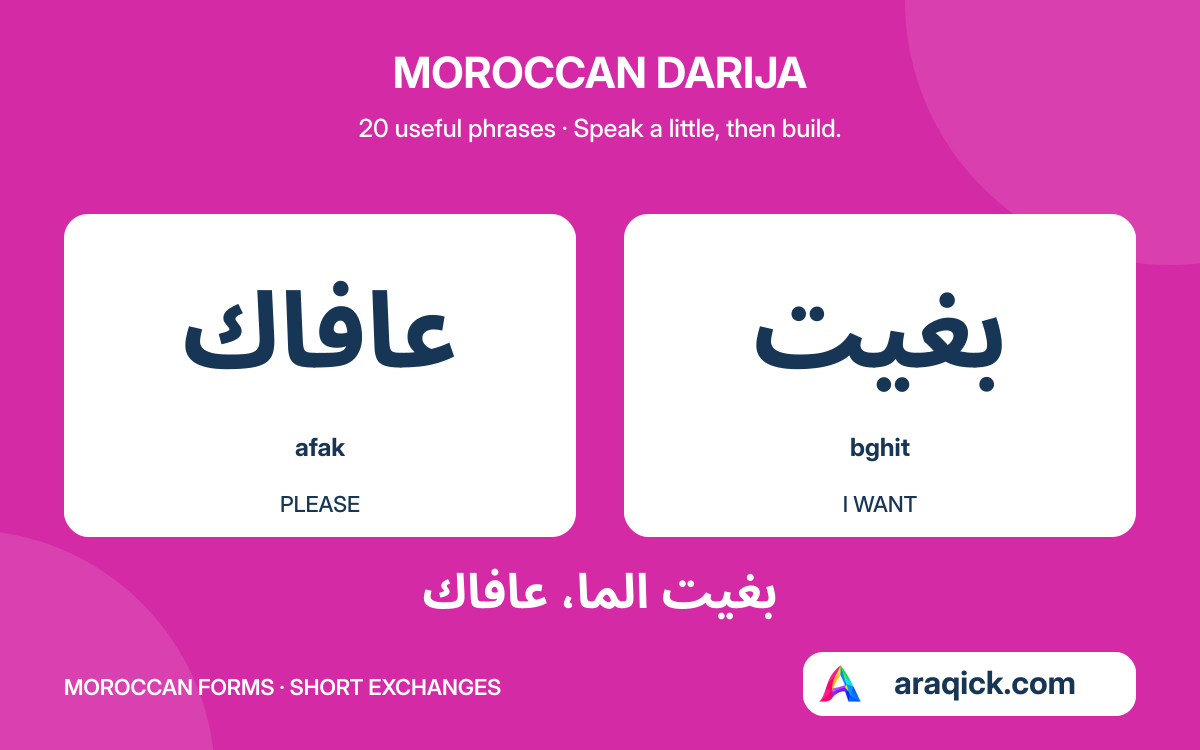
Begin Moroccan Darija with لاباس؟ (labas, are you well?), عافاك (afak, please), بغيت (bghit, I want), and ما فهمتش (ma fhemtsh, I did not understand). The 20-entry chart uses common Moroccan forms supported by Peace Corps Morocco teaching materials. Darija has regional pronunciation and spelling variation; these are useful learning models.
01How do I greet someone in Darija?
Moroccan Darija · a short greeting
A لاباس؟
labas
Are you well?
B بخير، الحمد لله
bikhir lhamdullah
Well, thank God.
Labas can also serve in an answer. Another question is kif dayr to a man or kif dayra to a woman. Learn the exchange as a pair instead of using the same question for every reply.
02How do I ask and give a name?
Moroccan Darija · an introduction
A شنو سميتك؟
shnu smitk
What is your name?
B سميتي سلمى
smiti Salma
My name is Salma.
Shnu asks what; smitk means your name. Smiti means my name. The plain reading keeps consonant groups such as sm and shn together instead of adding MSA-style vowels to every position.
03How do I use afak?
Moroccan Darija
بغيت الما، عافاك
bghit lma afak
I would like water, please.
Afak adds please. Bghit expresses a present want in this request, although the form resembles a past-tense verb. It is not limited to reporting a past wish. Shukran thanks the person; bla jmil can answer thanks.
04How do I ask where or how much?
fin bit lma
Where is the bathroom?
bshhal hada
How much is this?
Fin asks where. Bshhal asks a price here. The masculine demonstrative hada refers to the item being discussed; hadi is a feminine counterpart. Pointing and context can help identify the item.
05How do I ask someone to slow down?
Moroccan Darija
ما فهمتش. بشوية، عافاك
ma fhemtsh. bshwiya afak
I did not understand. Slowly, please.
The negative ma ... sh surrounds the verb in ma fhemtsh. Treat it as a complete expression while starting out. Bshwiya asks for a slower pace; it does not mean that you already understood.
06How do I request repetition?
awed afak
Repeat, please.
awdi afak
Repeat, please.
The female listener form has the ending i. Likewise, smeh liya addresses a man and smehi liya addresses a woman when saying excuse me or sorry. The listener controls these changes.
07How should I review the phrases?
Start with an introduction, add the water request, and finish with bslama. Then practise a repair: say that you did not understand and ask for repetition. Keep the purpose of each phrase clear.
The spellings here are readable learning choices, not a single official Darija spelling system. Compare MSA and dialects before using the separate MSA shopping lesson. Darija bghit and MSA uridu should remain in their own model exchanges.
What to remember
- Afak adds please; bghit introduces a want or request.
- Fin asks where, while bshhal asks price in these examples.
- Ma fhemtsh, bshwiya afak and awed/awdi help repair understanding.
Your reference shelf
Open a guide whenever you need it.
20 Moroccan Darija phrasesPaired listener forms are kept in one entry.
| Use / meaning | Arabic | Plain reading |
|---|---|---|
| Hello / peace greeting | السلام عليكم | ssalamu alaykum |
| Reply to the peace greeting | وعليكم السلام | wa alaykum ssalam |
| Are you well? | لاباس؟ | labas |
| Well, thank God | بخير، الحمد لله | bikhir lhamdullah |
| How are you? · to a man / woman | كيف داير؟ / كيف دايرة؟ | kif dayr / kif dayra |
| What is your name? | شنو سميتك؟ | shnu smitk |
| My name is Salma | سميتي سلمى | smiti Salma |
| Nice to meet you | متشرفين | mtsherrfin |
| Please | عافاك | afak |
| Thank you | شكراً | shukran |
| You are welcome | بلا جميل | bla jmil |
| Excuse me / sorry · to a man / woman | سمح ليا / سمحي ليا | smeh liya / smehi liya |
| No problem | ماشي مشكل | mashi mushkil |
| I did not understand | ما فهمتش | ma fhemtsh |
| Slowly, please | بشوية، عافاك | bshwiya afak |
| Repeat, please · to a man / woman | عاود، عافاك / عاودي، عافاك | awed afak / awdi afak |
| Where is the bathroom? | فين بيت الما؟ | fin bit lma |
| How much is this? · masculine item | بشحال هادا؟ | bshhal hada |
| I would like water, please | بغيت الما، عافاك | bghit lma afak |
| Goodbye | بسلامة | bslama |
Plain readings simplify sounds without using texting numbers. Spellings and vowel realisations vary across Morocco; reference recordings can help with consonant groups.
Sources & further learning
References for the language explanations and learning guidance.