Arabic is written from right to left because its script developed within an older right-to-left writing tradition. Its immediate historical background includes Nabataean writing, an Aramaic script tradition. This explains an inherited convention; it does not establish one original inventor’s reason for choosing that direction. Within an Arabic paragraph, ordinary decimal numbers and Latin-script words keep their own left-to-right order.
01What did Arabic writing inherit?
Arabic script did not appear as a completely new set of shapes with a newly chosen direction. Nabataean writing developed from Aramaic, and Arabic writing emerged through that historical connection. Aramaic and Nabataean texts already used a right-to-left direction.
Think of direction as one convention carried through a changing writing system. Letter shapes could develop while the main reading direction continued. This is a history of scripts: the languages recorded with related scripts need not be the same language.
02How do historians trace the connection?
Inscriptions preserve forms between Nabataean and recognisable Arabic writing. At the Bibliothèque nationale de France, CNRS epigrapher Laïla Nehmé explains the development through changing characters between the third and fifth centuries CE. Such transitional evidence helps trace the relationship.
This was a process, not a single moment when every writer adopted today’s alphabet. A dated inscription can show which forms existed at a particular place and time. It cannot, by itself, identify the motives of everyone who helped shape a writing tradition.
03Did stone carving or handedness cause the direction?
Stories about a right-handed stone carver, a hammer, or avoiding ink smudges offer an appealing physical explanation. They should not be treated as established reasons for Arabic’s direction without historical evidence connecting those actions to the convention’s origin.
The documented script lineage gives a firmer answer to the immediate question: Arabic continued an earlier direction. The deeper question of why an ancient predecessor first preferred one direction requires its own evidence. A practical story and a demonstrated historical explanation are different kinds of claim.
04Is right-to-left a property of the language?
It is a convention of the writing system. Persian and Urdu also use adaptations of Arabic script, but they are distinct languages, not Arabic dialects. Sharing a writing direction does not establish that two languages have the same grammar or ancestry.
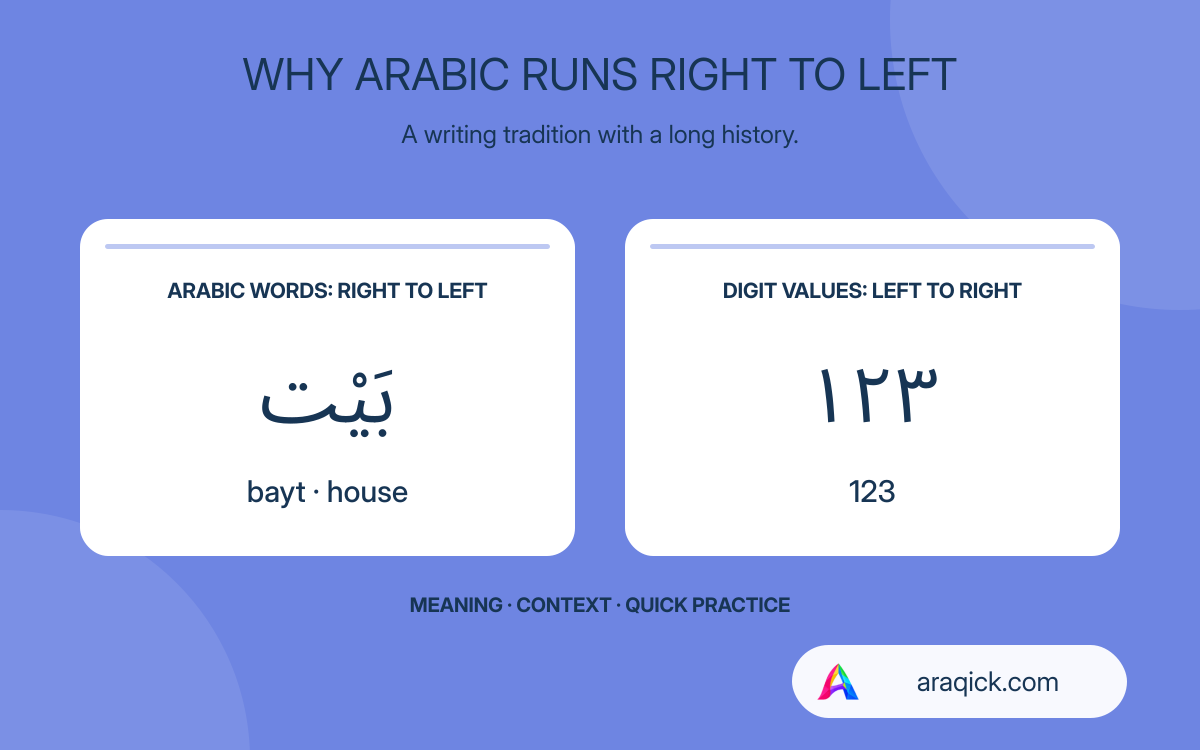
When an Arabic word is represented in Latin letters, that reading aid normally runs left to right. بَيْت and bayt can represent the same word, “house,” using different scripts. Compare our Arabic–Persian and Arabic–Urdu guides.
05Why do numbers seem to go the other way?
Ordinary decimal numerals keep the highest-value digit on the left. ١٢٣ and 123 both represent one hundred and twenty-three. Neither becomes 321 merely because the surrounding words are Arabic. Distinguish the shape of a digit from the direction of a number.
For example, رَقْمُ الْغُرْفَةِ followed by ١٢٣ gives “the room number is 123.” Dates, telephone groups and punctuation introduce further layout conventions, so do not infer their complete arrangement from a three-digit example.
06What happens in books and on screens?
The main flow of an Arabic paragraph runs right to left, while successive lines normally continue down the page. An embedded English name or decimal number keeps its own internal direction. Readers move between these runs without reversing the letters of the English name.
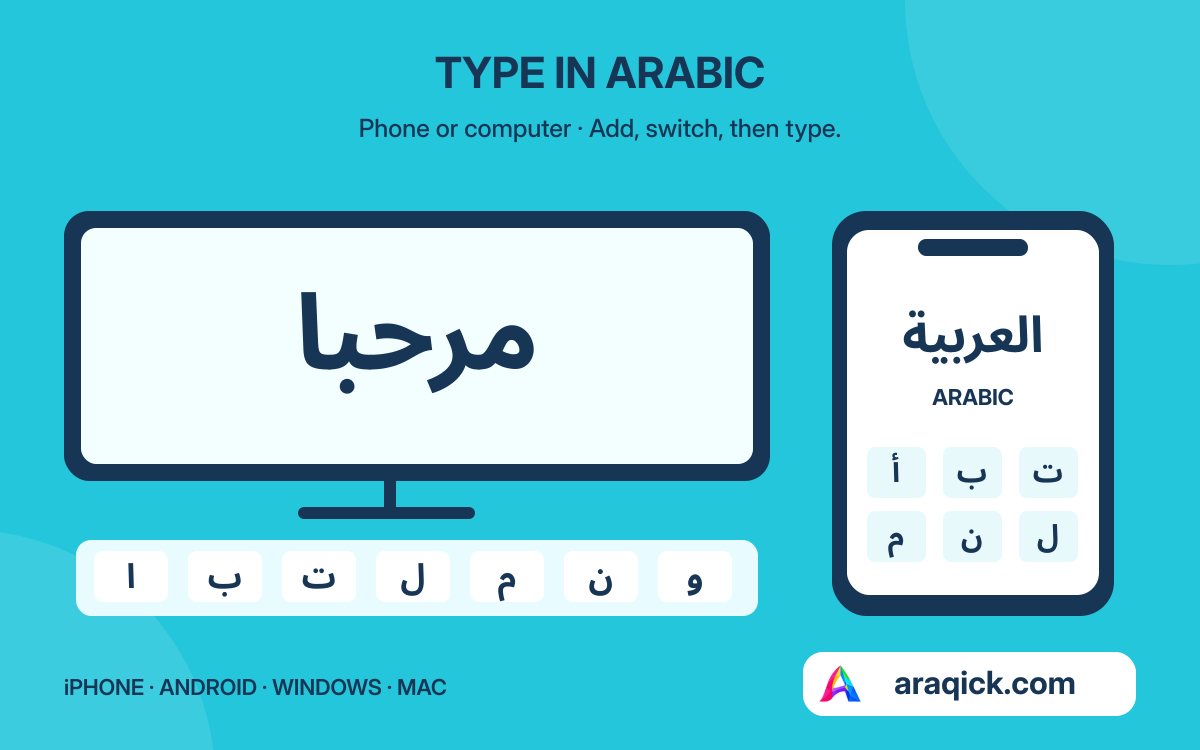
Arabic books usually have right-side binding, but a bilingual spread or a reference table may use a different layout. On a phone or computer, type Arabic letters in their normal reading order. Suitable text software arranges the display; manually reversing a word usually creates a problem.
07How can I practise the direction?
Start with one word. In بَيْت (bayt), read ba first, then ya, then ta. Follow the word from its right-hand beginning instead of interpreting it as a mirrored English word. Next, add a small number and check that its value stays unchanged.
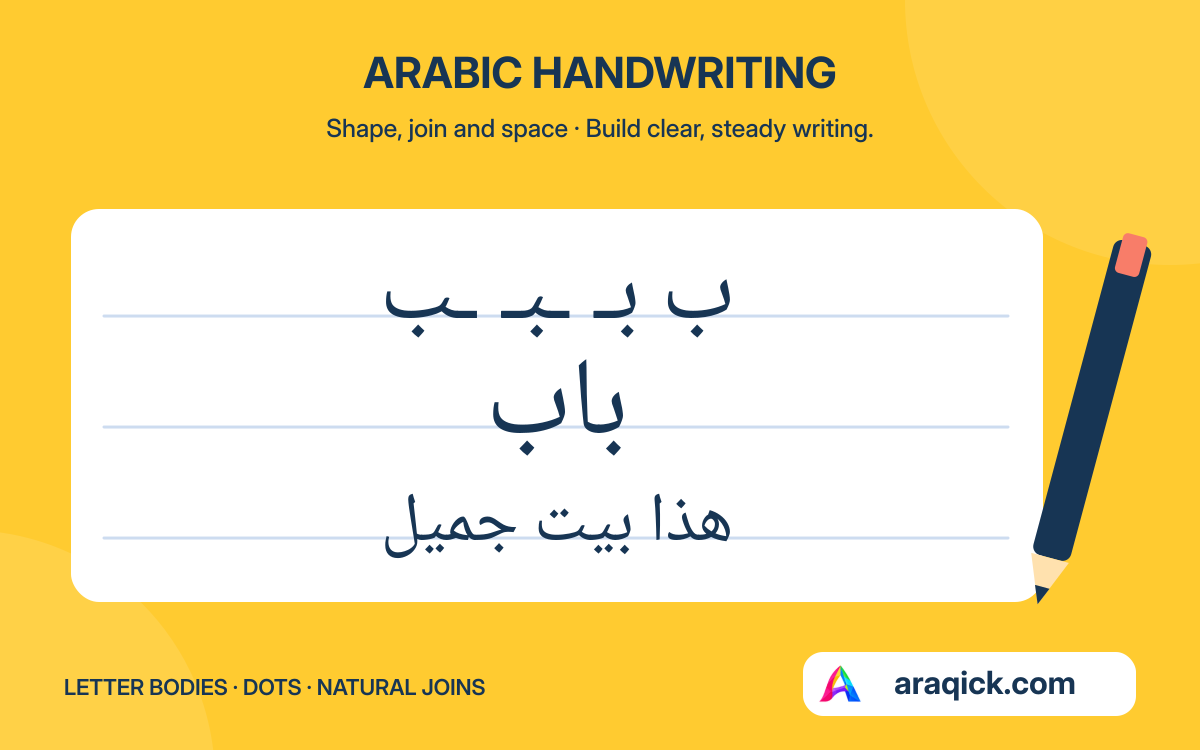
Use the Arabic alphabet chart to connect shapes with sounds and handwriting practice for joining. For mixed text, see typing in Arabic. Reading direction becomes more familiar through accurate short examples.
What to remember
- Arabic’s right-to-left direction continues an older script tradition connected through Nabataean and Aramaic.
- Script history, language ancestry and stories about writing tools answer different questions.
- Ordinary decimal numbers and Latin-script text retain their own internal order within an Arabic paragraph.
Your reference shelf
Open a guide whenever you need it.
The script connection at a glanceA simplified historical relationship, not a claim that all stages changed at once.
| Stage | Connection | What it helps explain |
|---|---|---|
| Aramaic writing | An earlier script tradition used across parts of Western Asia | Right-to-left writing predates recognisable Arabic script. |
| Nabataean writing | Developed within the Aramaic script tradition | An important immediate background to Arabic letterforms. |
| Transitional forms | Inscriptions preserve changes between Nabataean and Arabic | Script development can be traced through actual letter shapes. |
| Arabic writing | Developed through this connection and continued right-to-left flow | Today’s direction is inherited; the alphabet did not arrive fully formed in one event. |
The Nabataean-to-Arabic development discussed by Laïla Nehmé includes transitional evidence from the third to fifth centuries CE. This is not an exact invention date for the Arabic language.
Words, digits and mixed textKeep a number’s place value distinct from the main direction of the line.
| Text type | Example | Internal reading direction |
|---|---|---|
| Arabic word | بَيْت · bayt, house | Right to left: ba, ya, ta |
| Arabic-script decimal digits | ١٢٣ = 123 | Highest place value on the left |
| Western decimal digits | 123 | Highest place value on the left |
| Latin reading aid | bayt | Left to right |
| An English name within Arabic text | Araqick | The English name retains its left-to-right letter order |
This chart concerns ordinary decimal numbers. Historical numeral systems and the arrangement of complete dates, phone groups or mathematical expressions require their own conventions.
Check the claim before repeating itA short distinction between documented history and conclusions that need more evidence.
| Claim | Assessment | Useful check |
|---|---|---|
| Nabataean is connected to Aramaic and Arabic script development | Supported by script study and transitional evidence | Look for the actual writing tradition and the dated forms. |
| Every person wrote in one direction because of the same tool | Not established by a demonstration of convenience alone | Ask for evidence about the particular period and practice. |
| Anything written right to left must be Arabic | Incorrect | Persian and Urdu also use Arabic-based scripts. |
| Arabic paragraphs reverse the value of 123 | Incorrect for ordinary decimal numerals | Identify the hundreds, tens and units without reversing the digits. |
| A reading aid and its Arabic word must flow in the same direction | Incorrect | The script determines the direction of each written representation. |
Sources & further learning
References for the language explanations and learning guidance.
- Unicode Standard: Imperial Aramaic and Nabataean script history and direction
- Bibliothèque nationale de France / Laïla Nehmé, CNRS: Nabataean-to-Arabic script development
- W3C: Arabic and Persian layout requirements, writing direction and mixed text
- Unicode Consortium: writing direction, decimal digits and bidirectional text
- W3C: logical text ordering and correct display of mixed scripts