Arabic and Urdu are separate languages with related writing systems. Arabic is Semitic; Urdu is Indo-Aryan, within the Indo-European family, and closely related to Hindi. Urdu uses a Persian-adapted Arabic script with additional letters. Shared spellings and Arabic loanwords help recognition, but they do not replace learning Urdu grammar.
01Is Urdu a form of Arabic?
No. Urdu developed in South Asia, and its basic grammar is closely related to Hindi. Arabic has a different linguistic history. Religious vocabulary and written forms can overlap without making two languages the same.
This guide compares Modern Standard Arabic (MSA) with standard Urdu. It does not treat every spoken Arabic dialect as identical to MSA.
02Which script features are shared?
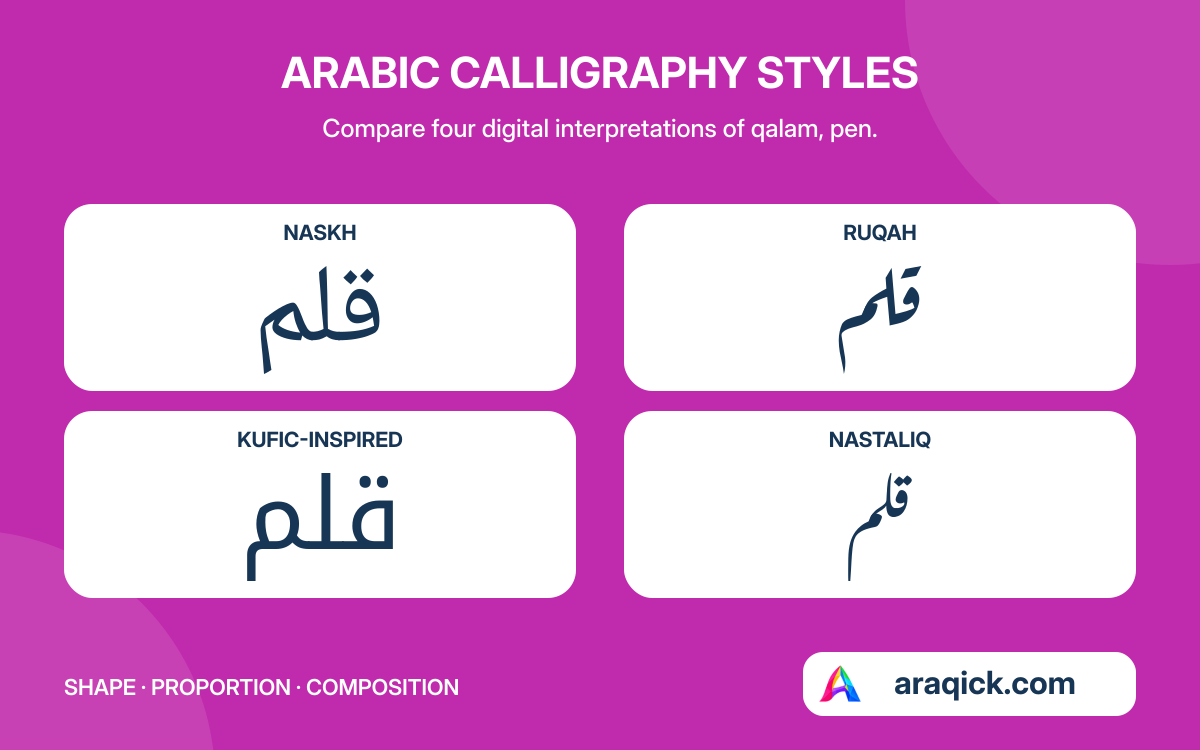
Arabic and Urdu both read from right to left and use contextual letter shapes. Urdu print often uses Nastaliq, with sloping and stacked word shapes; Naskh is common in Arabic print. These are writing styles, not language families.
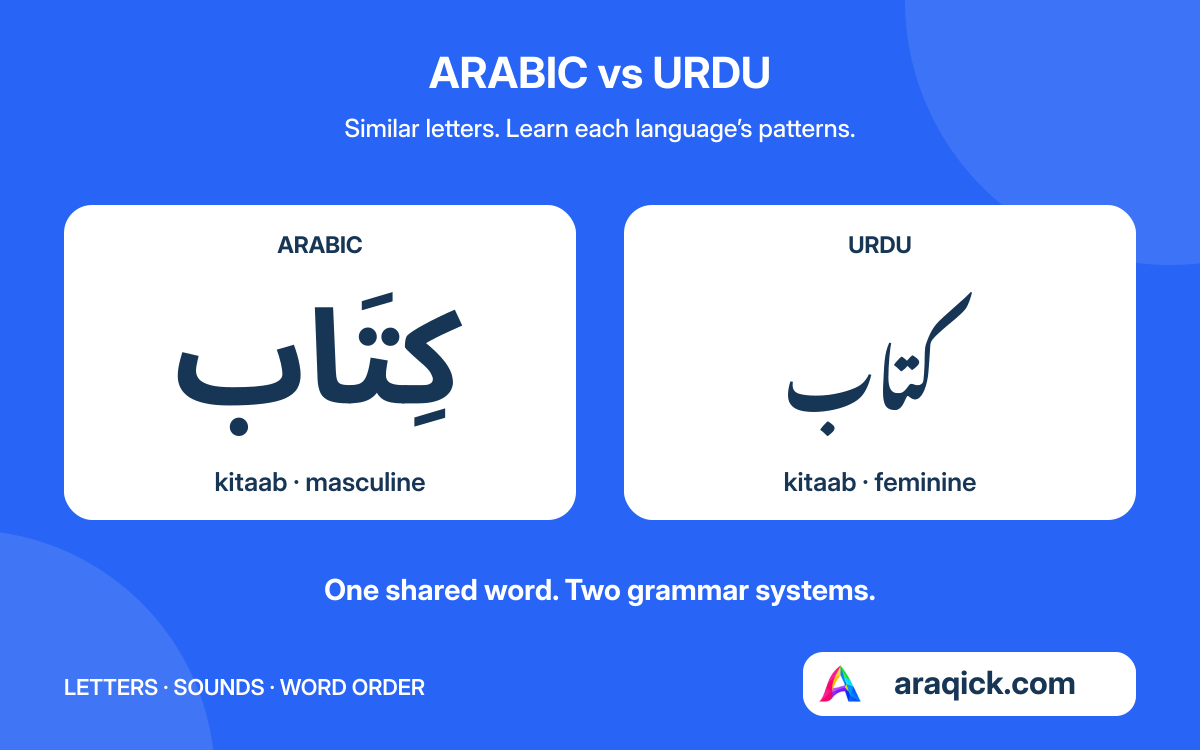
Compare the word for book: Arabic كِتَاب and Urdu کتاب. Both are read approximately kitaab. The familiar word is useful, but the surrounding grammar still matters.
03Which Urdu letters are new to Arabic readers?
| Letter | Sound clue |
|---|---|
| پ | p |
| چ | ch |
| گ | g as in go |
| ٹ ڈ ڑ | Retroflex t, d and r-like sounds |
Retroflex sounds use a tongue position farther back than the corresponding dental sounds. Urdu also uses ھ in aspirated combinations such as بھ (bh): a consonant followed by an audible breath. These distinctions need listening practice.
04How does an Urdu sentence work?
MSA
هَذَا كِتَابٌ
haadhaa kitaab
This is a book.
Urdu
یہ کتاب ہے
yeh kitaab hai
This is a book.
Urdu hai expresses “is” here. MSA usually has no spoken “is” in a simple present nominal sentence. In ordinary verbal clauses, Urdu’s basic order is subject–object–verb. MSA often places the verb before the object.
05Do the languages assign the same gender?
Both have grammatical masculine and feminine, but the gender of a borrowed noun can differ. Arabic كِتَاب is masculine; Urdu کتاب is feminine.
Arabic · masculine adjective
كِتَابٌ جَدِيدٌ
kitaabun jadiid
A new book
Urdu · feminine adjective
نئی کتاب
nai kitaab
A new book
In these examples, Arabic places the describing adjective after the noun; Urdu places it before. Learn the noun with its own language’s agreement pattern.
06Which words are shared, and which differ?
Book and pen are easy shared examples: Urdu کتاب، قلم and Arabic كِتَاب، قَلَم. Everyday words can be unrelated: Arabic مَاء (maa, water) and بَيْت (bayt, house) correspond to Urdu پانی (paani) and گھر (ghar).
Some borrowed letters are pronounced differently in Urdu. Do not automatically use an Arabic pronunciation for every familiar-looking Urdu word.
07Does knowing Arabic make Urdu easy?
It gives a useful head start with direction, joining and some vocabulary. The remaining work includes new sounds, verb patterns, gender and word order. Try comparing one complete sentence instead of guessing from one recognised word.
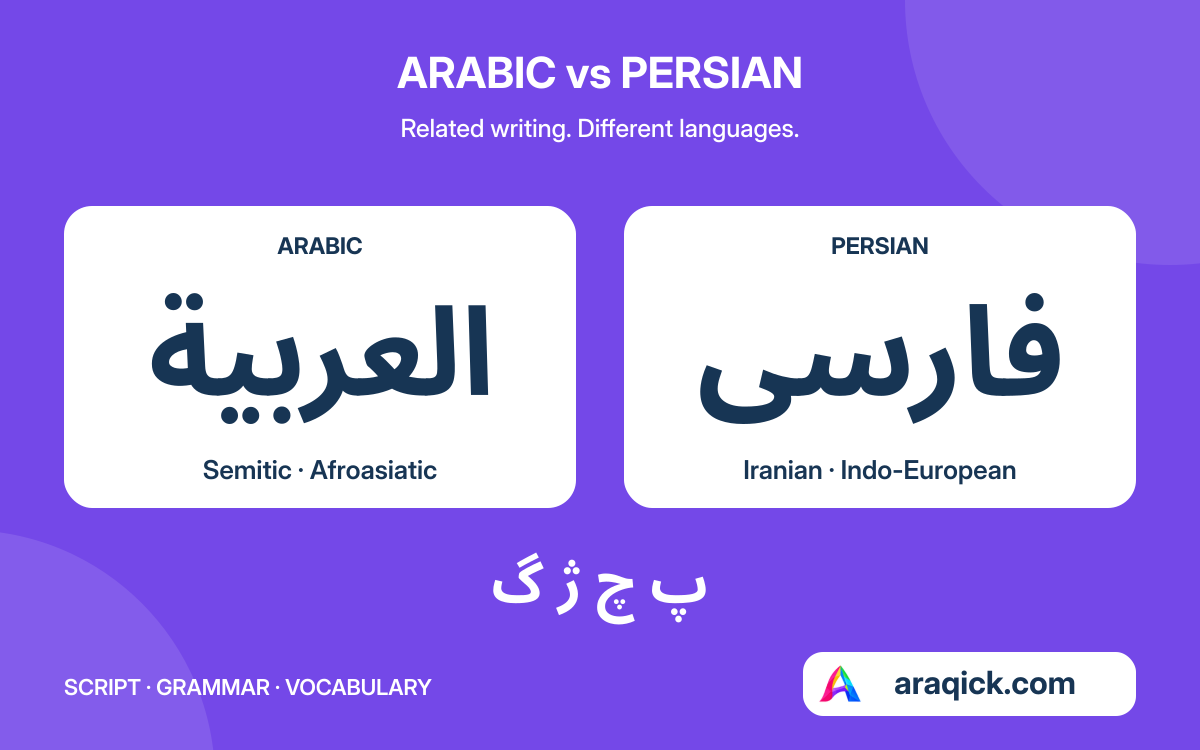
Continue with Arabic versus Persian, calligraphy styles or Arabic noun gender. The reference shelf summarises the differences used in this lesson.
What to remember
- Arabic and Urdu are different languages with related scripts.
- Extra Urdu letters and sound distinctions are meaningful.
- A shared noun can have different gender and sentence behaviour.
Your reference shelf
Open a guide whenever you need it.
Arabic and Urdu at a glanceExamples refer to Modern Standard Arabic and standard Urdu.
| Feature | Arabic | Urdu |
|---|---|---|
| Family | Semitic, Afroasiatic | Indo-Aryan, Indo-European |
| Common print style | Naskh | Nastaliq; Naskh is also used |
| Simple present example | هَذَا كِتَابٌ | یہ کتاب ہے |
| Book gender | Masculine | Feminine |
| A new book | كِتَابٌ جَدِيدٌ | نئی کتاب |
| Water | مَاء · maa | پانی · paani |
| House | بَيْت · bayt | گھر · ghar |
Sources & further learning
References for the language explanations and learning guidance.