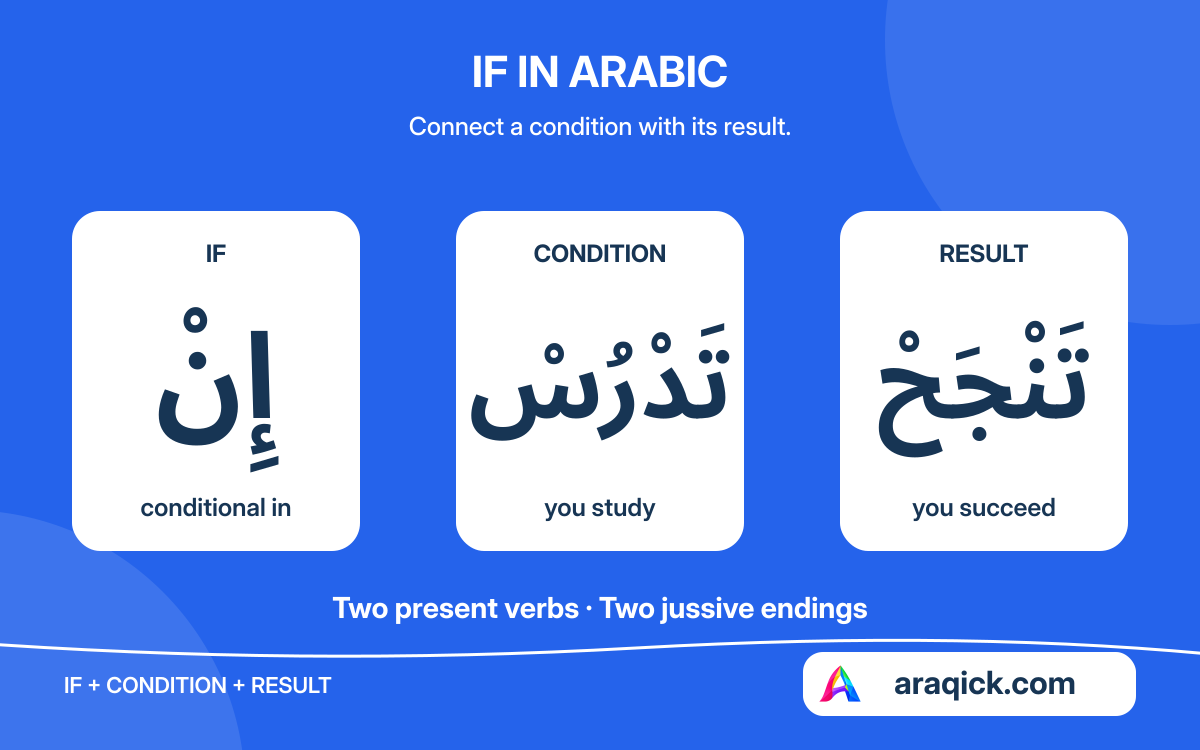
A conditional result is not always a plain verb. It can be a statement beginning with a noun, an instruction or a clause with a future marker. Arabic uses linking fa to attach these result types to the condition. Fa connects the clauses; it does not give every word after it the same ending.
01Start with the direct verbal result
إِنْ تَتْدَرَّبْ تَتَحَسَّنْ
in tatadarrab tatahassan
If you practise, you will improve.
Both present verbs are jussive in this basic structure. The result can follow directly. Now compare a result that begins with the pronoun anta: it is a nominal clause, so a connector is required. Review the basic in pattern before adding new result types.
02Link a nominal result
إِنْ تَتْدَرَّبْ فَأَنْتَ مُسْتَعِدٌّ
in tatadarrab fa anta mustaiddun
If you practise, you are ready. — to one man
Anta is the topic and mustaiddun is its nominative predicate. Fa connects that complete nominal clause to the condition. Do not change the predicate’s damma to sukun: it is a noun, not a jussive verb.
A nominal result can also begin with a noun or with inna. Identify the clause type, rather than memorising only the spelling fahuwa.
03Link a command or negative instruction
إِنْ تَفْهَمْ فَاشْرَحْ لِي
in tafham fashrah li
If you understand, explain it to me. — to one man
إِنْ تَتْعَبْ فَلَا تُكْمِلْ
in tatab fala tukmil
If you get tired, do not continue. — to one man
Commands and prohibitions are request-type results; questions belong to this group too. Tukmil is jussive because of prohibitive la inside the result. Linking fa does not cancel the normal effect of that la.
04Watch the first word of the result
إِنْ تَحْضُرْ فَسَأَشْرَحُ لَكَ
in tahdur fasa ashrahu laka
If you come, I will explain it to you.
A result introduced by sa or sawfa requires fa. Ashrahu keeps its ordinary indicative damma here. Results beginning with lan, qad or negative ma also take the connector, as do fixed verbs such as laysa. The chart gives a separate example of each.
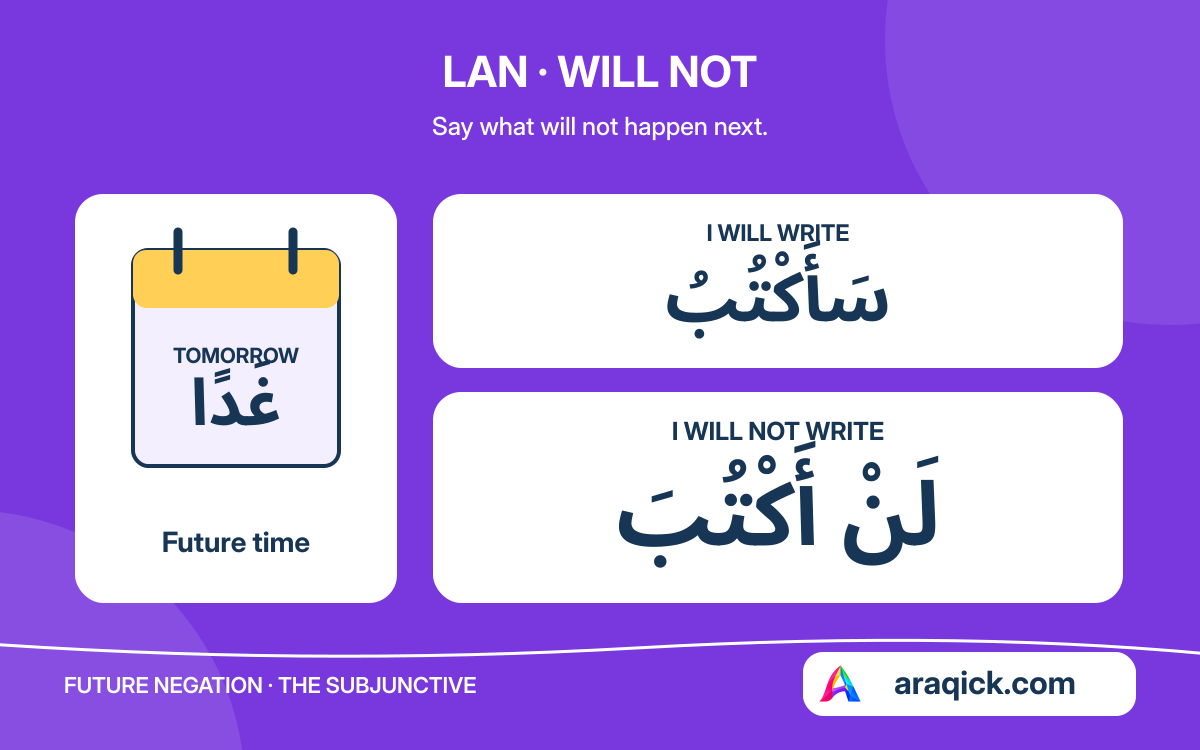
After lan, the verb is subjunctive: فَلَنْ أَتَأَخَّرَ, then I will not be late. The ending comes from lan.
05Analyse the result as a whole
After a jussive conditional word, a fa-linked result clause occupies the grammatical position of a jussive answer. That description applies to the whole clause. The words inside it still follow their own rules: a nominative predicate, an indicative verb after sa, or a subjunctive verb after lan.
The same linking fa also appears after idha, although idha itself does not govern jussive verbs. Compare amma and fa and ordinary sequencing fa as separate constructions.
What to remember
- Nominal results and request-type results normally need linking fa.
- Watch for laysa, qad, lan, negative ma, sa and sawfa at the start of the result.
- Fa connects the clauses; each word inside the result keeps the ending its own grammar requires.
Your reference shelf
Open a guide whenever you need it.
Common reasons to link the result with faThese are result fragments to place after a suitable condition
| Result type | Example | Meaning |
|---|---|---|
| Nominal clause | فَأَنْتَ مُسْتَعِدٌّ | Then you are ready. |
| Command | فَاشْرَحْ لِي | Then explain it to me. |
| Prohibition | فَلَا تُكْمِلْ | Then do not continue. |
| Question | فَمَاذَا نَفْعَلُ؟ | Then what do we do? |
| Fixed verb: laysa | فَلَيْسَ الْأَمْرُ صَعْبًا | Then the matter is not difficult. |
| Qad | فَقَدْ نَجَحْتَ | Then you have succeeded. |
| Lan | فَلَنْ أَتَأَخَّرَ | Then I will not be late. |
| Negative ma | فَمَا أَتْرُكُكَ | Then I do not leave you. |
| Sa or sawfa | فَسَأَشْرَحُ / فَسَوْفَ أَشْرَحُ | Then I will explain. |
The notes also include فَكَأَنَّمَا, then it is as though. A clause introduced by this expression likewise takes linking fa. English then is a teaching aid; it need not appear in every natural translation.
Three different endings after faRead the governor inside the result
| Result | Ending | Reason |
|---|---|---|
| فَسَأَشْرَحُ | Indicative damma | Sa does not govern the subjunctive or jussive. |
| فَلَنْ أَتَأَخَّرَ | Subjunctive fatha | Lan governs the subjunctive. |
| فَلَا تُكْمِلْ | Jussive sukun | Prohibitive la governs the jussive. |
For more practice, review lan: will not.
Sources & further learning
References for the language explanations and learning guidance.