“I opened the door, then entered” tells events in order. Arabic can also show whether the next step follows closely or comes after an interval. Learn that contrast with fa and thumma, and see why wa alone does not settle which event happened first.
01Use fa for the next closely connected step
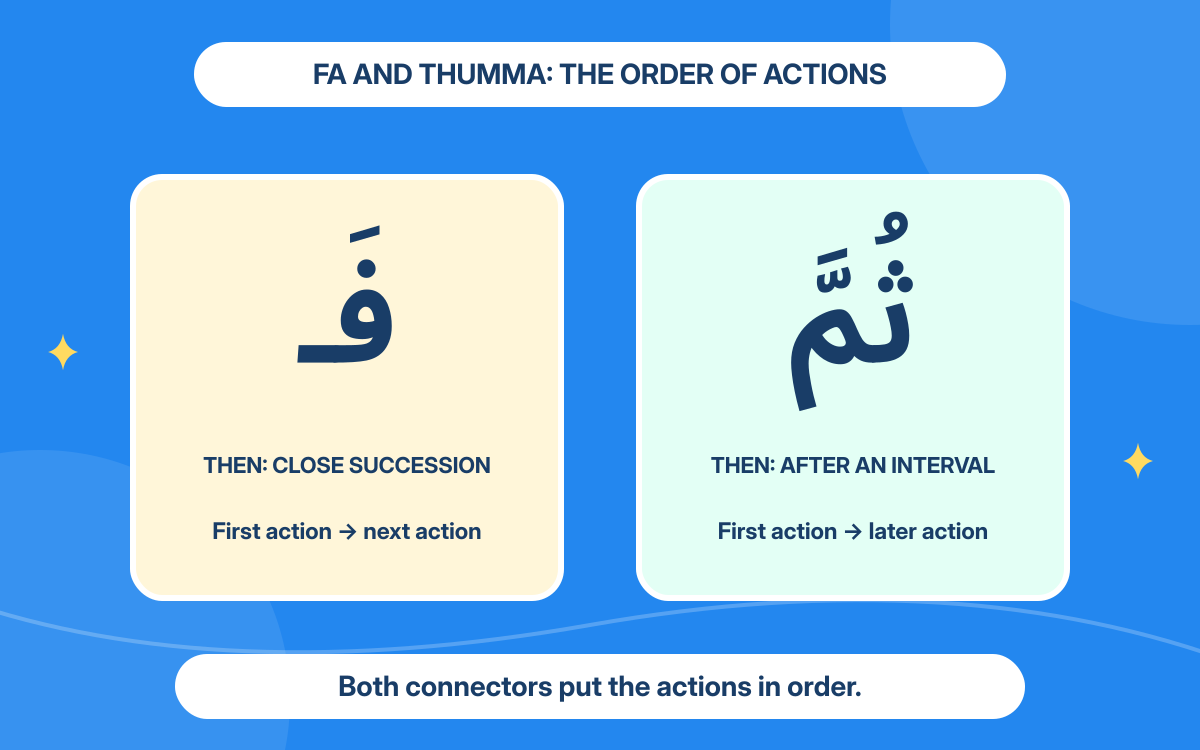
The conjunction فَـ (fa) can join events in their order of occurrence. In this sequence use, the second follows the first closely, without a separate waiting stage.
فَتَحْتُ الْبَابَ فَدَخَلْتُ.
fatahtu lbaba fadakhaltu
I opened the door and then entered.
Opening comes first; entering follows as the next connected step. The meaning is close succession in context. Fa does not specify an exact number of seconds.
02Use thumma when the story leaves an interval
The conjunction ثُمَّ (thumma) also gives an order, but presents the second event after an interval. It is a conjunction, not a preposition.
كَتَبْتُ ثُمَّ رَجَعْتُ.
katabtu thumma rajatu
I wrote, then later returned.
The writing comes before the return. Thumma leaves room for a pause or intervening stage; it does not tell us whether the gap was minutes or hours. Use it when that separation matters to the story.
03Wa adds events without fixing their order
وَ (wa) joins actions as “and.” Unlike these sequence uses of fa and thumma, wa itself does not require the first-mentioned action to happen first.
كَتَبْتُ وَقَرَأْتُ.
katabtu waqaratu
I wrote and read.
Both actions happened. Their actual timing may be clear from context, but wa alone does not establish it. If you want the connector to present a sequence, choose fa or thumma.
04Attach fa; leave thumma as its own word
Write fa directly on the following word: فَدَخَلْتُ. Write thumma separately: ثُمَّ دَخَلْتُ. Wa also attaches to its following word.
كَتَبَ حَامِدٌ فَقَرَأَ.
kataba hamidun faqaraa
Hamid wrote and then read.
Kataba gives the first action; faqaraa gives the next action by the same doer. Keep fa joined to its following word.
05Read fa in its whole sentence
Fa has uses beyond a time sequence. It can connect a statement with a reason or explanation, where English may use “for” or “so.”
الْكِتَابُ مُفِيدٌ، فَهُوَ سَهْلٌ.
alkitabu mufidun fahuwa sahlun
The book is useful, for it is easy.
This describes the book and explains why it is useful; it does not narrate two events happening one after another. First decide whether the clauses tell actions or give an explanation. Our plain reading aids simplify sounds and vowel length; the Arabic shows the full endings.
What to remember
- In an action sequence, fa presents the next closely following step; thumma presents a later step with an interval.
- Wa adds actions without itself requiring their order. Attach fa and wa to the next word; write thumma separately.
- Fa can also introduce a reason or explanation. Read the full context before translating it as then.
Your reference shelf
Open a guide whenever you need it.
Compare the three connectorsCheck sequence, spacing and the wider use of fa
| Connector | Written model | What it contributes |
|---|---|---|
| فَـ | فَتَحْتُ الْبَابَ فَدَخَلْتُ | Ordered close succession: I opened the door, then entered. |
| ثُمَّ | كَتَبْتُ ثُمَّ رَجَعْتُ | Ordered sequence with an interval: I wrote, then later returned. |
| وَ | كَتَبْتُ وَقَرَأْتُ | Addition: I wrote and read; the connector itself does not settle order. |
These are the ordinary action-sequence uses practised here. The length of a natural next step depends on the actions and context. Fa is not a stopwatch, and thumma does not give a fixed duration.
Fa may also connect a reason, explanation or result. In الْكِتَابُ مُفِيدٌ، فَهُوَ سَهْلٌ, “for it is easy” explains the first description. Its precise English rendering follows the relationship between the clauses. More advanced verb-governing uses are outside this guide.
Sources & further learning
References for the language explanations and learning guidance.