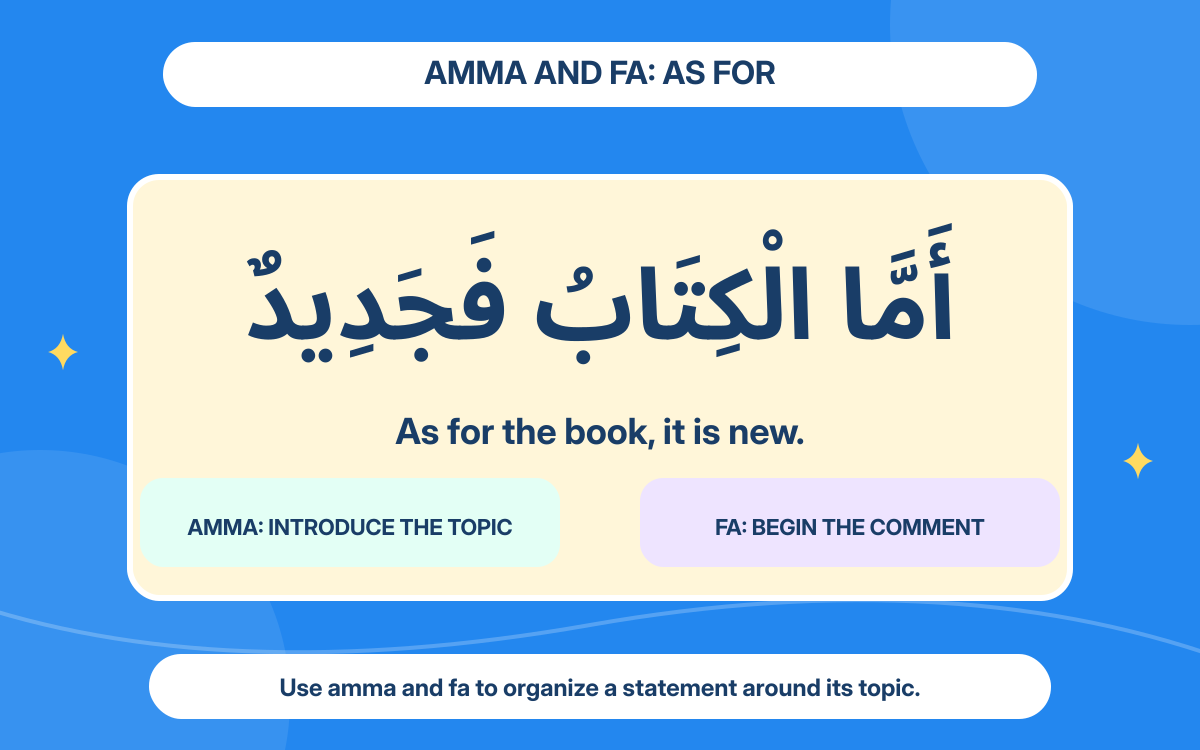
“As for the book, it is new” shifts attention to one item before saying something about it. Arabic uses amma to introduce the topic and fa to link its comment. Practise this common pattern, then contrast a book with a notebook.
01Introduce a topic with as for
أَمَّا (amma) introduces the topic you want to discuss. In our common nominal patterns, put the topic between amma and the comment introduced by fa.
أَمَّا الْكِتَابُ فَجَدِيدٌ
amma lkitabu fajadidun
As for the book, it is new.
Alkitabu means the book; jadidun means new. Fa links the comment to the topic. Keep fa attached to the following word: فَجَدِيدٌ, with no space. Retain this linking fa in the patterns taught here.
02Contrast one thing with another
First describe one item, then use amma to turn to the other. Qadimun means old; addaftaru means the notebook.
الْكِتَابُ جَدِيدٌ، أَمَّا الدَّفْتَرُ فَقَدِيمٌ
alkitabu jadidun amma ddaftaru faqadimun
The book is new; as for the notebook, it is old.
Addaftaru is the nominative topic, ending in u. Qadimun is its nominative adjective predicate, ending in un. Amma is not a preposition and does not make this topic genitive. Fa belongs at the start of the comment, after the topic.
03Resume the topic with a pronoun
The comment can be a clause with its own pronoun. Use huwa for a masculine singular topic and hiya for a feminine singular topic.
أَمَّا الْقَلَمُ فَهُوَ عَلَى الْمَكْتَبِ
amma lqalamu fahuwa ala lmaktabi
As for the pen, it is on the desk.
أَمَّا الْحَقِيبَةُ فَهِيَ هُنَا
amma lhaqibatu fahiya huna
As for the bag, it is here.
Haqibah, bag, is feminine. Hiya refers back to it. Fa attaches to the first word of each comment clause: fahuwa or fahiya.
04Let a verb clause describe the topic
A verb clause can also serve as the comment. The topic remains before fa; the verb follows it.
أَمَّا الطَّالِبُ فَيَدْرُسُ الْعَرَبِيَّةَ
amma ttalibu fayadrusu larabiyyata
As for the male student, he studies Arabic.
Attalibu is the nominative topic. Yadrusu means he studies, with its understood he referring back to the student. Alarabiyyata, Arabic, is the accusative object of studying. Write فَيَدْرُسُ as one word: fa is attached to the verb, not written separately before it.
05Link a comment, not a time sequence
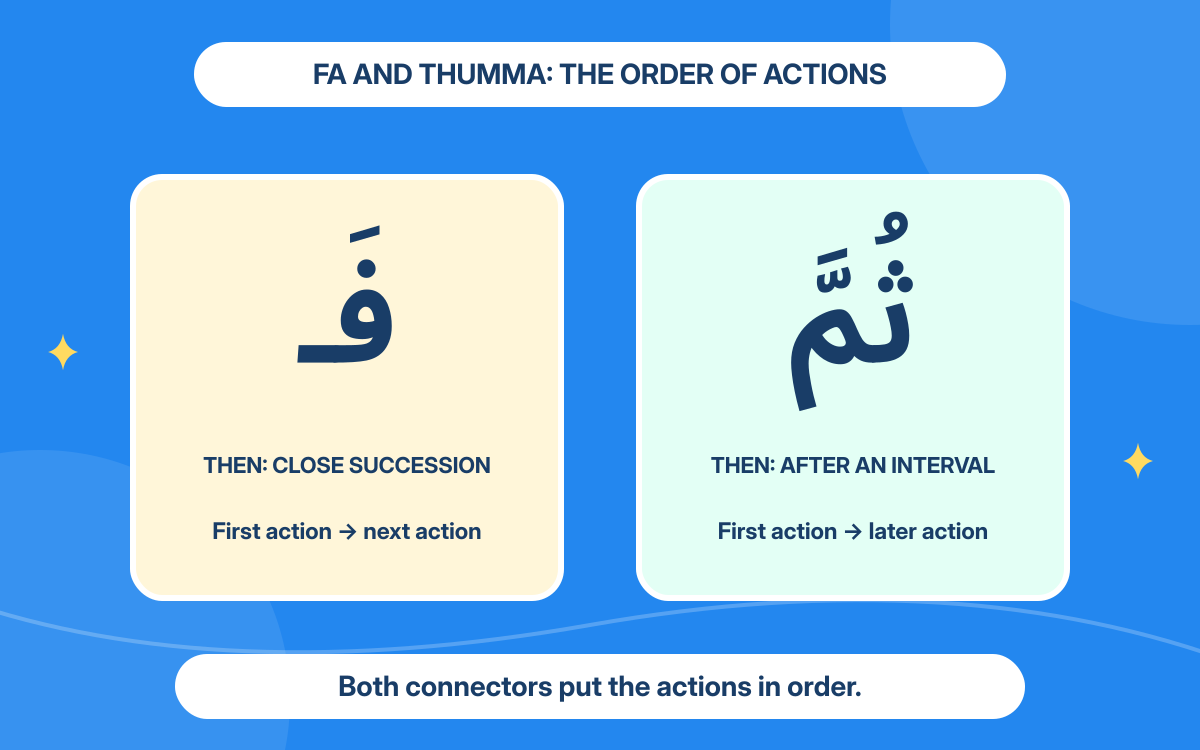
In this construction fa links the comment to its topic. It does not mean the book became new after some earlier event.
أَمَّا الْكِتَابُ فَجَدِيدٌ
amma lkitabu fajadidun
As for the book, it is new.
Build this model in three parts: amma, then the book topic, then the attached fa plus new. Other uses of fa can connect events in time; read its function from the construction. Amma can introduce a single topic or recur when several topics are compared. Our plain reading aids show connected pronunciation and full endings while simplifying vowel length.
What to remember
- Amma introduces a topic; keep the linking fa at the start of its comment in these common patterns.
- A nominal topic can have an adjective predicate, a pronoun clause or a verb clause as its comment.
- Attach fa to its following word, and keep each noun’s grammatical role rather than treating amma as a preposition.
Your reference shelf
Open a guide whenever you need it.
Review the three comment patternsAn adjective, a pronoun clause or a verb clause can follow the linking fa
أَمَّا الْكِتَابُ فَجَدِيدٌ — amma lkitabu fajadidun — an adjective predicate.
أَمَّا الْقَلَمُ فَهُوَ عَلَى الْمَكْتَبِ — amma lqalamu fahuwa ala lmaktabi — a pronoun clause.
أَمَّا الطَّالِبُ فَيَدْرُسُ الْعَرَبِيَّةَ — amma ttalibu fayadrusu larabiyyata — a verb clause.
Traditional grammar describes amma as a particle containing a conditional sense and often expressing detailed division. These examples focus on nominative topics. In other constructions, a noun placed after amma may have another role, such as a fronted object, so the nominative rule is specific to the models taught here. Do not substitute the narrative meaning then for this linking fa.
Sources & further learning
References for the language explanations and learning guidance.