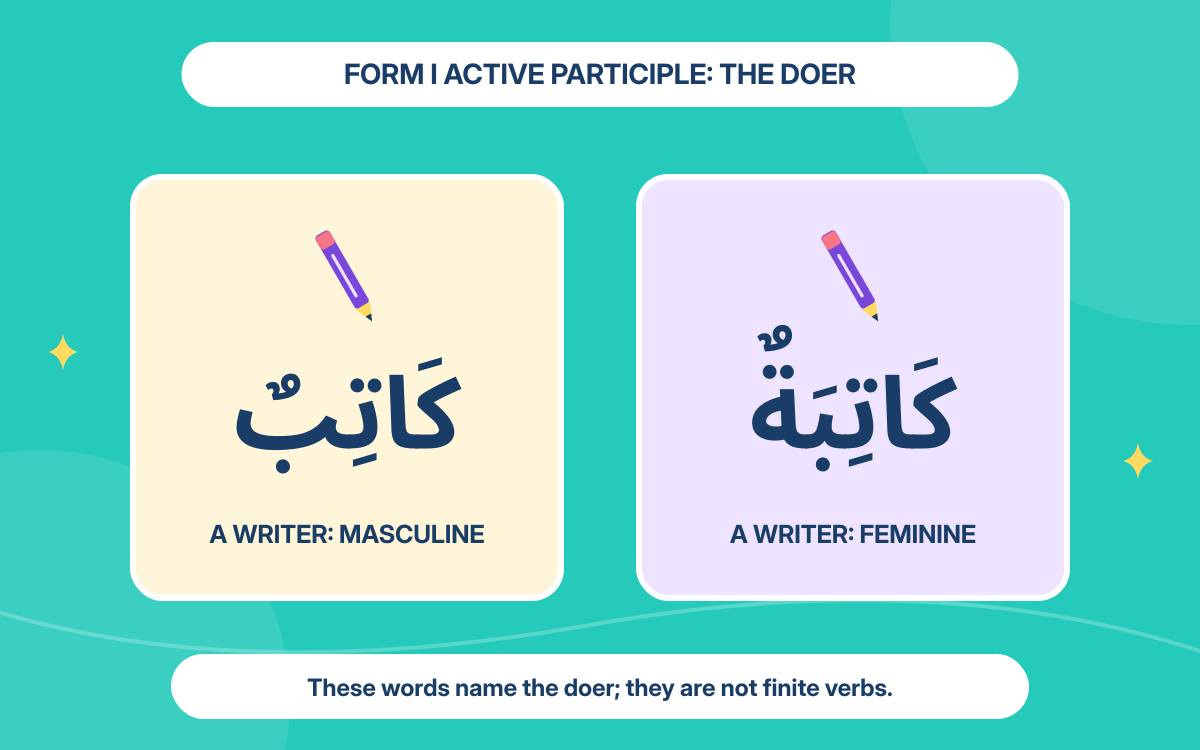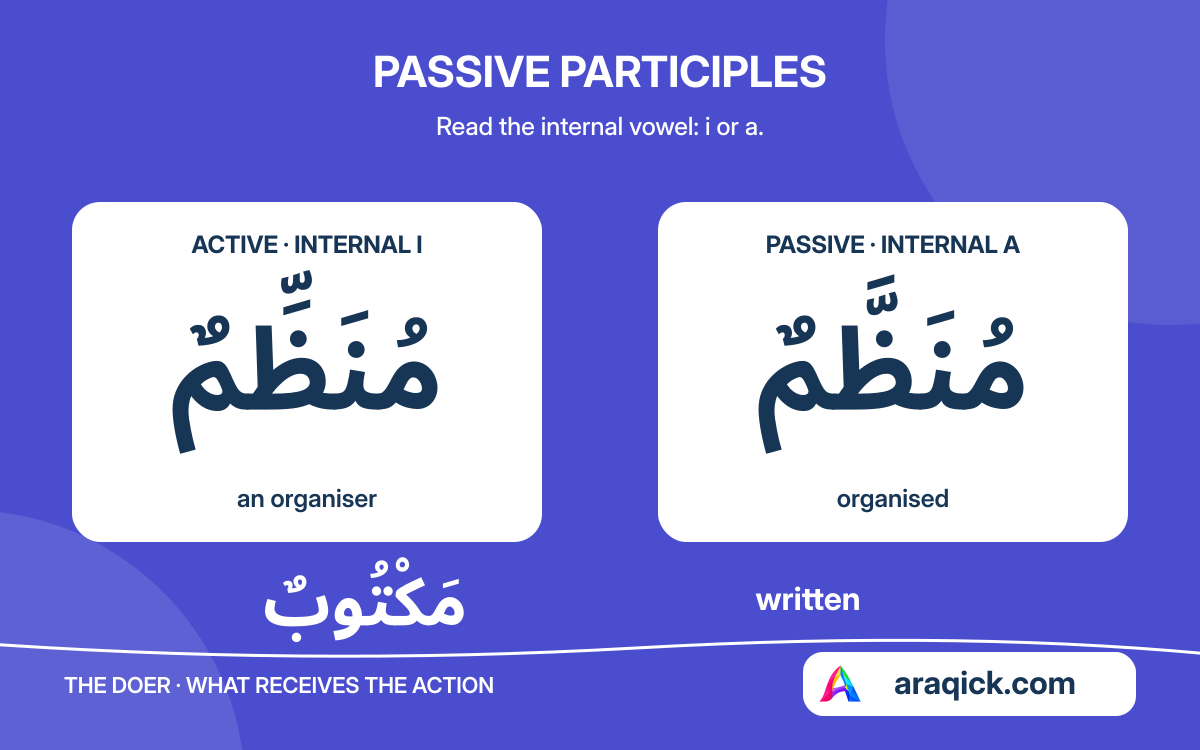
Maktub means written, while maftuh means open or opened. These are passive participles: words connected with what receives a verb’s action. They can describe a noun or serve as a sentence predicate. Begin with the familiar Form I pattern, then compare active and passive participles from derived verbs.
01Describe the result of an action
الْعُنْوَانُ مَكْتُوبٌ
alunwanu maktubun
The address is written.
Maktub comes from كَتَبَ, wrote. The Arabic term for a passive participle is اِسْمُ الْمَفْعُولِ (ism almaful). The address is the nominal subject and maktubun is its nominative predicate. The sentence does not identify the writer.
For a regular sound Form I transitive verb, a common passive-participle pattern is مَفْعُولٌ. Compare فَتَحَ — مَفْتُوحٌ, opened — open or opened. Weak and doubled roots require further rules.
02Build the regular derived pattern with mu
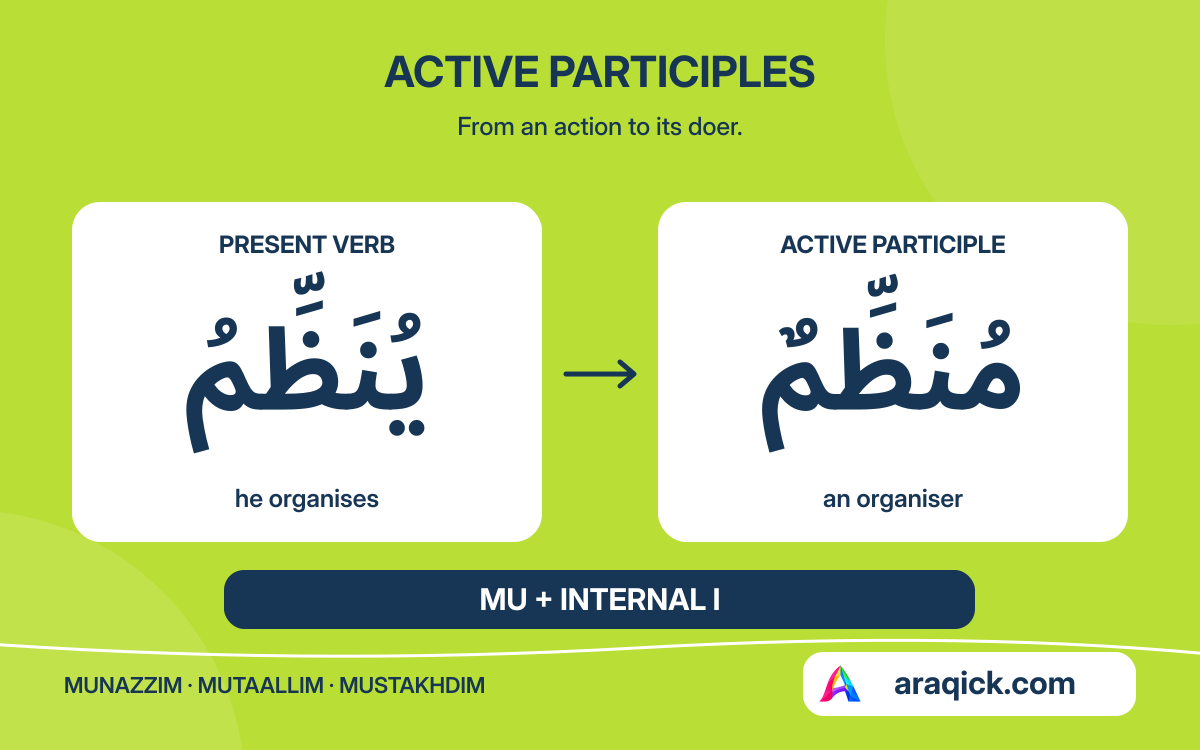
يُنَظِّمُ — مُنَظَّمٌ
yunazzimu — munazzam
He organises — Organised
For a regular derived transitive verb, replace the present person prefix with mu and put fathah before the last root consonant. The resulting participle follows noun grammar. The doubled zay in this Form II example stays doubled.
The active partner is مُنَظِّمٌ, an organiser. Internal i points to the doer; internal a points to what is organised in this pair. This vowel distinction is separate from the final case ending.
03Match the noun being described
رِسَالَةٌ مَكْتُوبَةٌ
risalatun maktubatun
A written letter
الرِّسَالَةُ مَكْتُوبَةٌ
arrisalatu maktubatun
The letter is written.
Maktubah takes a feminine ending because risalah is feminine. The first example is an indefinite noun phrase. The second is a complete nominal statement, with a definite subject and an indefinite predicate.
For the definite phrase the written letter, use الرِّسَالَةُ الْمَكْتُوبَةُ. A descriptive adjective agrees in definiteness; a predicate does not simply copy the subject’s al. Review phrases versus statements.
04Compare user with used
جِهَازٌ مُسْتَخْدَمٌ
jihazun mustakhdamun
A used device
Mustakhdam has a on dal and describes a device that has been used. مُسْتَخْدِمٌ has i on dal and means a user. The same unvowelled spelling can conceal the difference, so context and internal vowels matter.
If the phrase follows bi, both words are genitive: بِجِهَازٍ مُسْتَخْدَمٍ, with a used device. The final ending changes to in, but the internal a of the passive participle remains.
05Keep participles separate from passive verbs
كُتِبَ الْعُنْوَانُ
kutiba alunwanu
The address was written.
Kutiba is a finite passive past verb. Maktub is a participle used as a noun or description. The two constructions relate to the same action, but a participle does not itself carry a past-tense person ending.
This guide uses verbs that take direct objects in the intended meanings. Intransitive verbs and prepositional constructions need separate treatment. The English word broken may also translate active مُنْكَسِرٌ from inkasara; read the Arabic form.
Compare active participles and Form VII to keep the distinctions clear.
What to remember
- A passive participle describes what receives the action in these transitive examples.
- Regular derived active and passive participles often differ by internal i versus a.
- Participles follow noun agreement and case rules; finite passive verbs are a separate construction.
Your reference shelf
Open a guide whenever you need it.
Common sound Form I passive participlesLearn the action and its resulting description together
| Verb | Passive participle | Meaning |
|---|---|---|
| كَتَبَ | مَكْتُوبٌ | written |
| فَتَحَ | مَفْتُوحٌ | open / opened |
| غَسَلَ | مَغْسُولٌ | washed |
| حَفِظَ | مَحْفُوظٌ | preserved / memorised, according to context |
Compare derived active and passive participlesThe internal vowel matters even when the unvowelled spelling matches
| Form | Active participle | Passive participle | Contrast |
|---|---|---|---|
| II | مُنَظِّمٌ | مُنَظَّمٌ | organiser / organised |
| III | مُشَاهِدٌ | مُشَاهَدٌ | viewer / watched |
| IV | مُرْسِلٌ | مُرْسَلٌ | sender / sent |
| VIII | مُكْتَشِفٌ | مُكْتَشَفٌ | discoverer / discovered |
| X | مُسْتَخْدِمٌ | مُسْتَخْدَمٌ | user / used |
The table selects regular transitive verbs with straightforward passive meanings. It is not a passive recipe for all verbs in all forms. A word may develop a specialised lexical meaning; choose the interpretation that fits its sentence.
Sources & further learning
References for the language explanations and learning guidance.