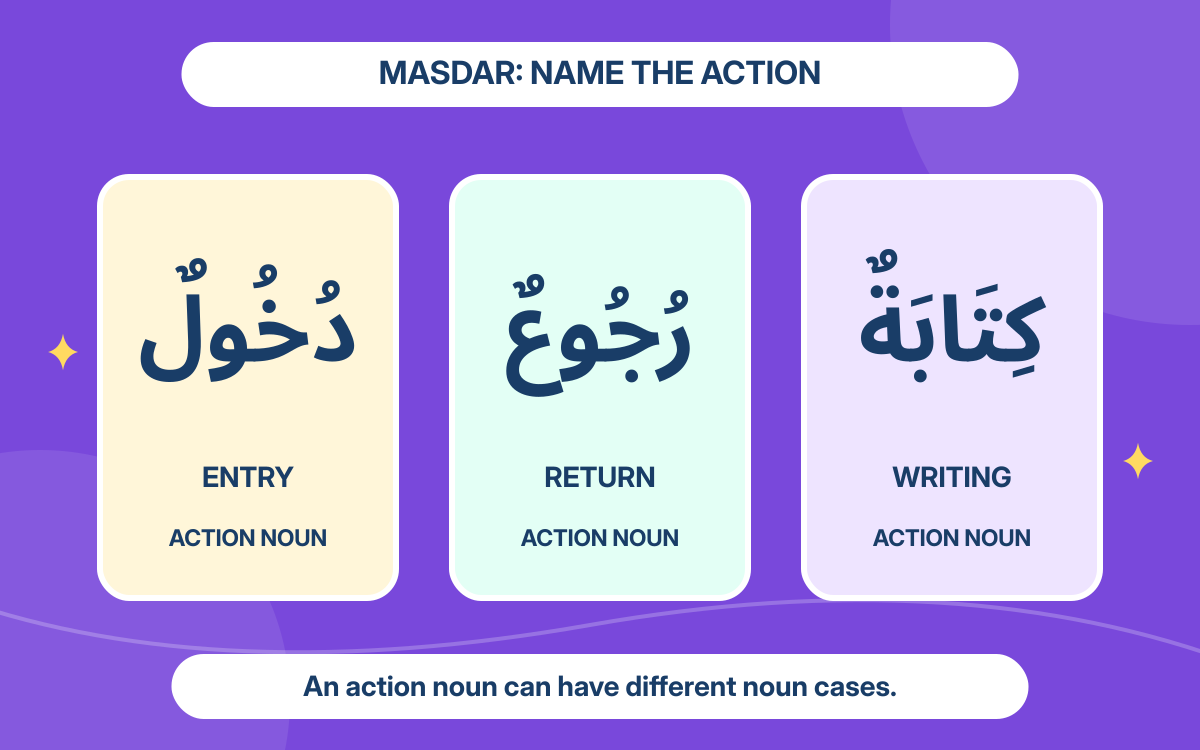
Kataba means “he wrote”; katib can name a writer. The same root can produce a noun describing the person associated with an action. Start with the regular active-participle pattern of sound basic verbs, then use masculine and feminine forms in short sentences.
01Name the person associated with the action
The active participle, اِسْمُ الْفَاعِلِ, is a noun or describing word for someone performing or associated with an action. It is different from a conjugated verb.
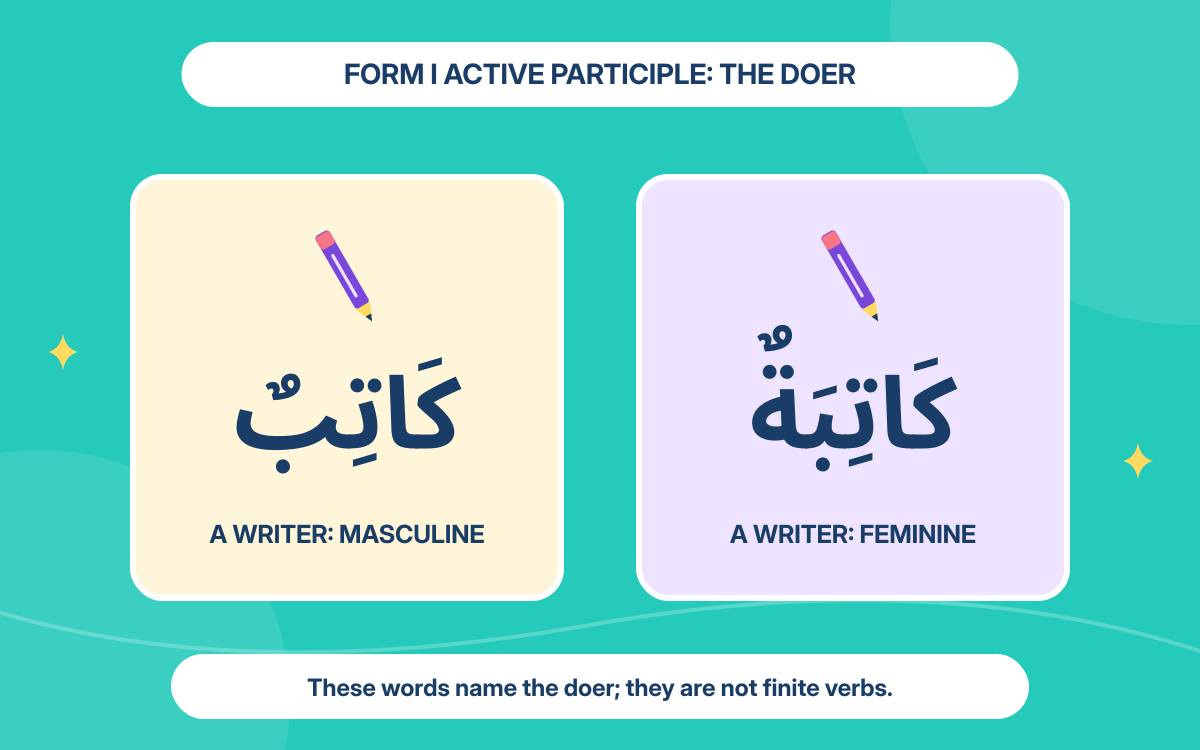
كَتَبَ → كَاتِبٌ
kataba to katibun
He wrote → a writer
Kataba reports the past action. Katibun names or describes the writer. The noun does not itself say “he wrote yesterday” or “he is writing right now.”
02Recognise the regular fa il pattern
For the sound basic Form I verbs practised here, use فَاعِلٌ (faailun): insert a long a after the first root letter and put i after the second. Keep the three root letters in order.
دَرَسَ → دَارِسٌ
darasa to darisun
He studied → a person studying / a learner
طَلَبَ → طَالِبٌ
talaba to talibun
He sought → a seeker; in a school context, a student
Talib has the common learned meaning “student.” A pattern helps recognise a word’s structure, but its usual meaning still needs vocabulary and context. Weak and doubled verbs need further formation rules.
03Add the feminine noun ending
For these regular nouns, the feminine counterpart adds ة. With the nominative indefinite ending, katibun becomes katibatun and talibun becomes talibatun.
هِيَ كَاتِبَةٌ.
hiya katibatun
She is a writer.
هِيَ طَالِبَةٌ.
hiya talibatun
She is a student.
The noun now agrees with a female person. This is a feminine noun ending, not the past-verb ending used in katabat, “she wrote.”
04Let the noun’s job determine its case
An active participle behaves as a noun or adjective in the sentence. It can take noun case endings rather than finite-verb person endings.
رَأَيْتُ كَاتِبًا.
raaytu katiban
I saw a writer.
مَرَرْتُ بِكَاتِبٍ.
marartu bikatibin
I passed by a writer.
Katiban is an accusative direct object after “I saw.” Bikatibin is genitive after bi. The word still names a writer; changing its case does not turn it into a past or present verb.
05Distinguish a noun sentence from a verb
An active participle can describe a person’s role or state. Its precise time interpretation comes from the surrounding sentence and context.
هُوَ كَاتِبٌ.
huwa katibun
He is a writer.
هُوَ يَكْتُبُ.
huwa yaktubu
He writes / is writing.
The first model uses a noun predicate; the second uses a finite present verb. Do not automatically translate every active participle as an action happening now. Use the same noun-sentence pattern with hiya and the feminine noun. Our plain reading aids simplify sounds and vowel length; faailun contains a long a in Arabic.
What to remember
- For the sound basic Form I models here, the active participle follows فَاعِلٌ: katibun, darisun and talibun.
- The regular feminine counterparts add ة: katibatun and talibatun. These words take noun endings according to their sentence role.
- An active participle names or describes the person associated with an action. Its usual vocabulary meaning and time interpretation depend on context.
Your reference shelf
Open a guide whenever you need it.
Compare verbs and their doer nounsCheck the regular pattern, feminine forms and noun endings
| Past verb | Masculine noun | Feminine noun | Meaning |
|---|---|---|---|
| كَتَبَ | كَاتِبٌ | كَاتِبَةٌ | Writer |
| دَرَسَ | دَارِسٌ | دَارِسَةٌ | Person studying / learner |
| طَلَبَ | طَالِبٌ | طَالِبَةٌ | Seeker; commonly a student in school contexts |
| Role | Model | Case |
|---|---|---|
| Predicate | هُوَ كَاتِبٌ | Nominative katibun |
| Direct object | رَأَيْتُ كَاتِبًا | Accusative katiban |
| After bi | مَرَرْتُ بِكَاتِبٍ | Genitive katibin |
The active participle is a morphological word form, اِسْمُ الْفَاعِلِ. The grammatical subject of a finite verb, الْفَاعِلُ, is a sentence role. These labels are related but not identical: in رَأَيْتُ كَاتِبًا, katiban is an active participle functioning as a direct object, not the subject.
This introductory template covers the selected sound Form I action verbs. Weak verbs, doubled roots and derived verb forms require their own formation rules. Active participles can also govern objects under particular grammatical conditions; that advanced construction is outside this guide.
Sources & further learning
References for the language explanations and learning guidance.