A new book and a new bag use different forms of “new” in Arabic. An adjective inside a noun phrase follows the noun and agrees with it. Check gender, number, definiteness and case together. We will start with regular singular examples, then meet one important plural pattern.
01Start with the noun’s gender
كِتَابٌ جَدِيدٌ
kitabun jadidun
A new book
حَقِيبَةٌ جَدِيدَةٌ
haqibatun jadidatun
A new bag
Kitab is masculine; haqiba is feminine. The adjective follows each noun: jadidun for the book, jadidatun for the bag. The ending ة is pronounced t in these full forms. Both examples describe one thing.
02Match definite with definite
الْكِتَابُ الْجَدِيدُ
alkitabu ljadidu
The new book
الْحَقِيبَةُ الْجَدِيدَةُ
alhaqibatu ljadidatu
The new bag
Now both words have ال. The adjective belongs inside a definite noun phrase, so it is definite too. In “a new book,” neither word has ال and both regular words take tanween. In “the new book,” neither takes tanween.
These are phrases identifying something. They do not yet tell us what happened to it or make a statement such as “The book is new.” Practise the pair as one unit.
03Carry the case through the phrase
فِي الْحَقِيبَةِ الْجَدِيدَةِ
fi lhaqibati ljadidati
In the new bag
Fi makes the noun it governs genitive. The adjective describing that noun is genitive too. For these regular singular words, both endings are i. We have kept the case vowels in the reading so you can hear the agreement.
An adjective does not automatically end in u. Its case follows the noun it describes. The same feminine, singular and definite bag phrase now has genitive endings because of its place in the larger structure.
04Check number, with one useful exception
كِتَابَانِ جَدِيدَانِ
kitabani jadidani
Two new books
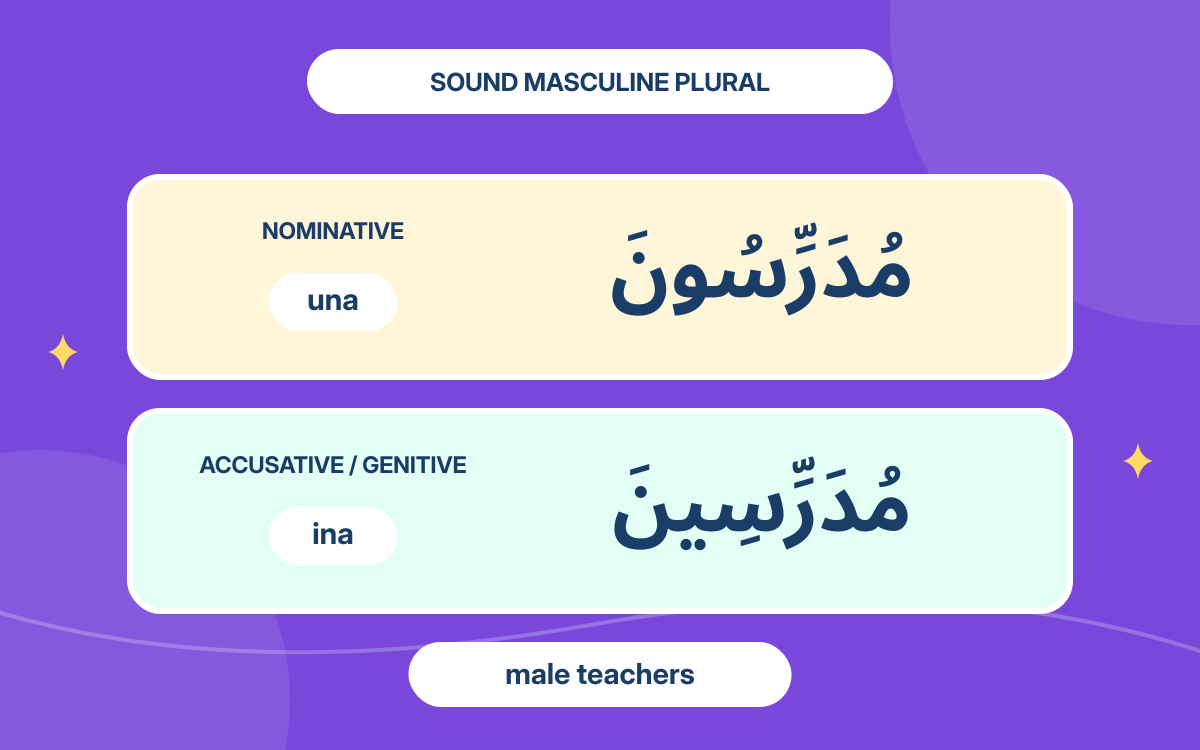
The dual uses dual agreement. Human plurals also normally take plural adjectives: مُدَرِّسُونَ مُجْتَهِدُونَ (mudarrisuna mujtahiduna), “hardworking male teachers.” You do not need to learn every plural ending today.
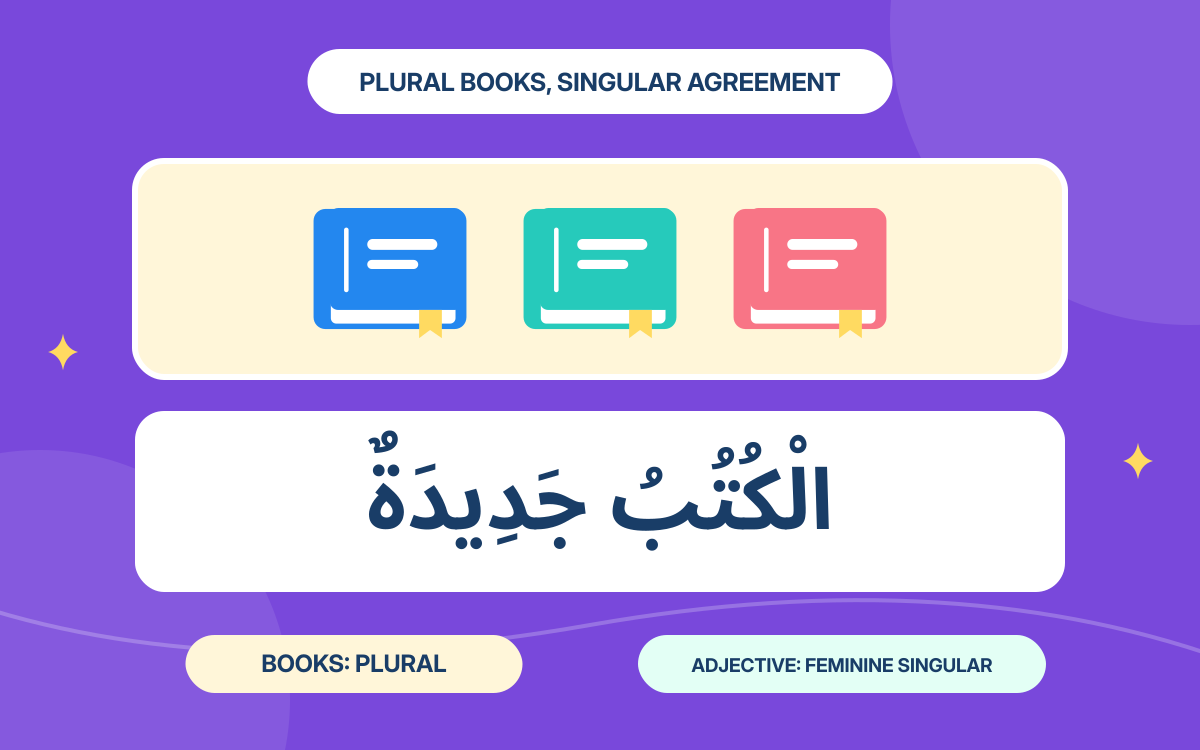
كُتُبٌ جَدِيدَةٌ
kutubun jadidatun
New books
For ordinary nonhuman plurals such as books, Standard Arabic normally uses a feminine singular adjective. Kutub means several books, but jadidatun has the same form used for one feminine noun. This is a regular agreement pattern, not a claim that there is only one book.
05Ask four small questions
Before choosing the adjective, identify the noun it describes. Then ask: masculine or feminine? One, two or more? Definite or indefinite? Nominative, accusative or genitive? Apply the nonhuman plural pattern when needed.
For “in the new bag,” the answers are feminine, singular, definite and genitive. That gives aljadidati in its full standalone form, read ljadidati after the preceding vowel. The adjective agrees in grammatical features; it does not simply copy the noun’s letters.
Our examples show full formal endings. When stopping, final short endings are usually not pronounced, but the written grammatical relationship remains. Keep these checks for phrases; a predicate giving information about a subject has a different job.
What to remember
- An adjective inside these noun phrases follows its noun and agrees in gender, number, definiteness and case.
- Ordinary nonhuman plurals usually take feminine singular adjectives.
- Matching case means sharing a grammatical case, not necessarily identical written endings.
Your reference shelf
Open a guide whenever you need it.
Four checks at a glanceReview the examples and distinguish case from spelling
The adjective is called نَعْت (nat) or صِفَة (sifah). The described noun is the مَنْعُوت (manut). Here we have practised a direct adjective describing that noun.
| Feature | In the new bag |
|---|---|
| Gender | Feminine noun and feminine adjective |
| Number | Singular noun and singular adjective |
| Definiteness | Both definite with ال |
| Case | Both genitive: فِي الْحَقِيبَةِ الْجَدِيدَةِ |
A diptote adjective can agree in case and definiteness even when its visible ending differs from that of an ordinary noun. Tanween is not a universal requirement for every indefinite adjective. Our main examples deliberately use straightforward regular forms.
The nonhuman plural pattern includes ordinary plurals for objects and animals. Human plural agreement and special literary constructions need fuller treatment; this article establishes the common beginner patterns.
Sources & further learning
References for the language explanations and learning guidance.