In formal Arabic, a noun’s ending can show its grammatical job. The book may appear as alkitabu, alkitaba or alkitabi. The book itself has not changed: its role in the sentence has. Begin with these three forms of one regular singular noun.
01Same book, different ending
alkitabu
Nominative · u
alkitaba
Accusative · a
alkitabi
Genitive · i
The changing mark is on the final b of kitab. These are case endings, a part of إِعْرَاب (irab). This guide shows the full formal forms; do not treat any one ending as correct in every sentence.
02Use nominative for the topic here
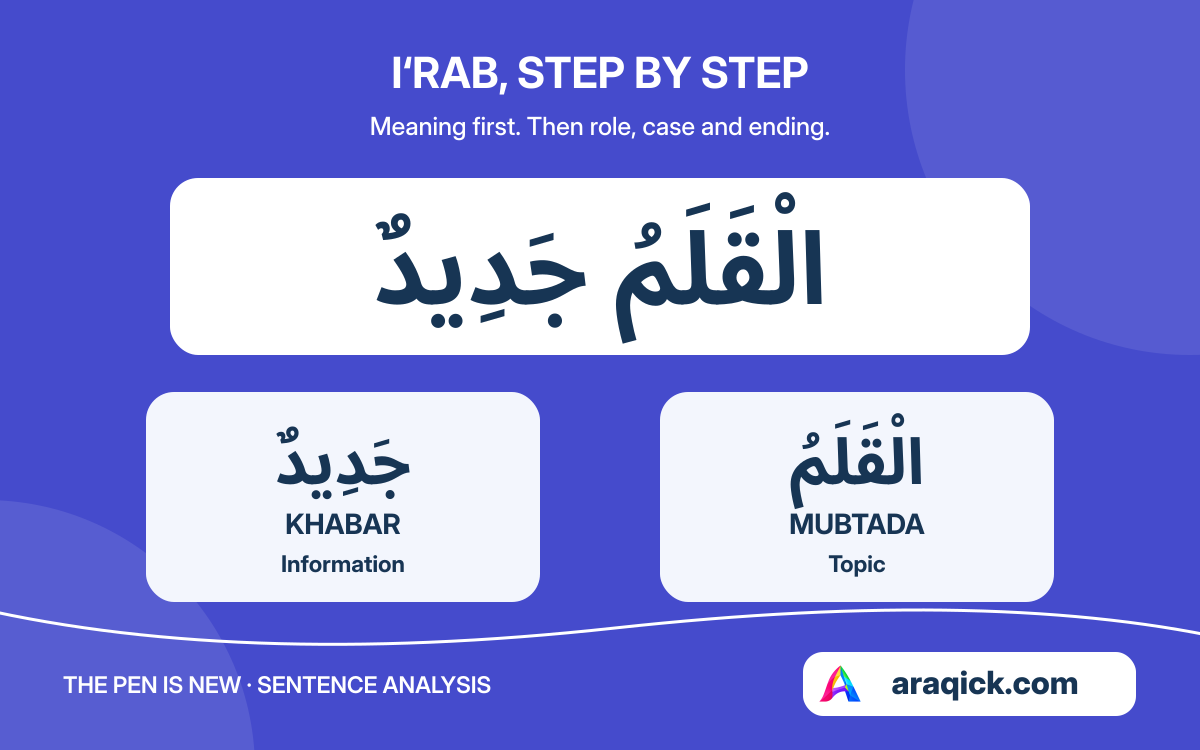
الْكِتَابُ جَدِيدٌ
alkitabu jadidun
The book is new.
Alkitabu is the subject, or topic, of this simple nominal sentence. It is nominative: مَرْفُوع (marfu). Jadidun gives the information about it and is also nominative in this pattern.
Notice that Arabic needs no separate present-tense word for “is” here. The u ending belongs to the grammatical structure. Do not choose u merely because a word appears first: other structures can begin differently. A noun naming the doer of an ordinary active verb is also nominative.
03Use accusative for the direct object
قَرَأْتُ الْكِتَابَ
qaratu lkitaba
I read the book.
Qaratu means “I read,” in the past. What did I read? The book. Here alkitaba is the direct object, so it is accusative: مَنْصُوب (mansub). For this regular definite singular noun, the visible ending is a.
The verb already identifies the reader as I. The book receives the action; it is not the reader. This is one important use of the accusative, not its only use. Compare the book’s job here with its job in “The book is new.”
04Use genitive after a preposition
فِي الْكِتَابِ
fi lkitabi
In the book
Fi is a preposition meaning “in.” A noun governed by a preposition is genitive: مَجْرُور (majrur). Alkitabi therefore ends in i. The same happens with مِنَ الْكِتَابِ (mina lkitabi, from the book).
These examples are phrases, not complete statements. Their endings are still meaningful. Keep the preposition and its noun together when practising. In connected reading, the initial vowel of ال is not pronounced after fi; the book’s final i remains visible in the full form.
05Find the role before choosing the ending
- In our simple “The book is new” pattern: alkitabu, nominative.
- As the direct object of “I read”: alkitaba, accusative.
- After fi, “in”: alkitabi, genitive.
For an ordinary indefinite noun, the matching endings include tanween: كِتَابٌ (kitabun), كِتَابًا (kitaban), كِتَابٍ (kitabin). A different ending does not make book into a different vocabulary word.
At a pause, final short case vowels are normally dropped. Un and in are also normally not pronounced; an has special pause rules. Most everyday writing omits these vowel marks, but the grammatical roles remain.
Our u, a and i pattern is a starting model. Duals, some plurals, diptotes and fixed-form words need additional rules. Learn this regular noun first; the optional reference explains the limits.
What to remember
- Nominative, accusative and genitive describe grammatical roles, not three different books.
- For the regular definite singular noun here, compare alkitabu, alkitaba and alkitabi.
- Read the structure first; pause pronunciation and missing vowel marks do not remove grammatical case.
Your reference shelf
Open a guide whenever you need it.
The three-case starter chartReview regular endings and the limits of this first model
| Case | Arabic term | Definite | Indefinite | Role practised here |
|---|---|---|---|---|
| Nominative | مَرْفُوع marfu | الْكِتَابُ alkitabu | كِتَابٌ kitabun | Subject of a simple nominal sentence |
| Accusative | مَنْصُوب mansub | الْكِتَابَ alkitaba | كِتَابًا kitaban | Direct object |
| Genitive | مَجْرُور majrur | الْكِتَابِ alkitabi | كِتَابٍ kitabin | Noun governed by a preposition |
Does every noun show u, a and i?
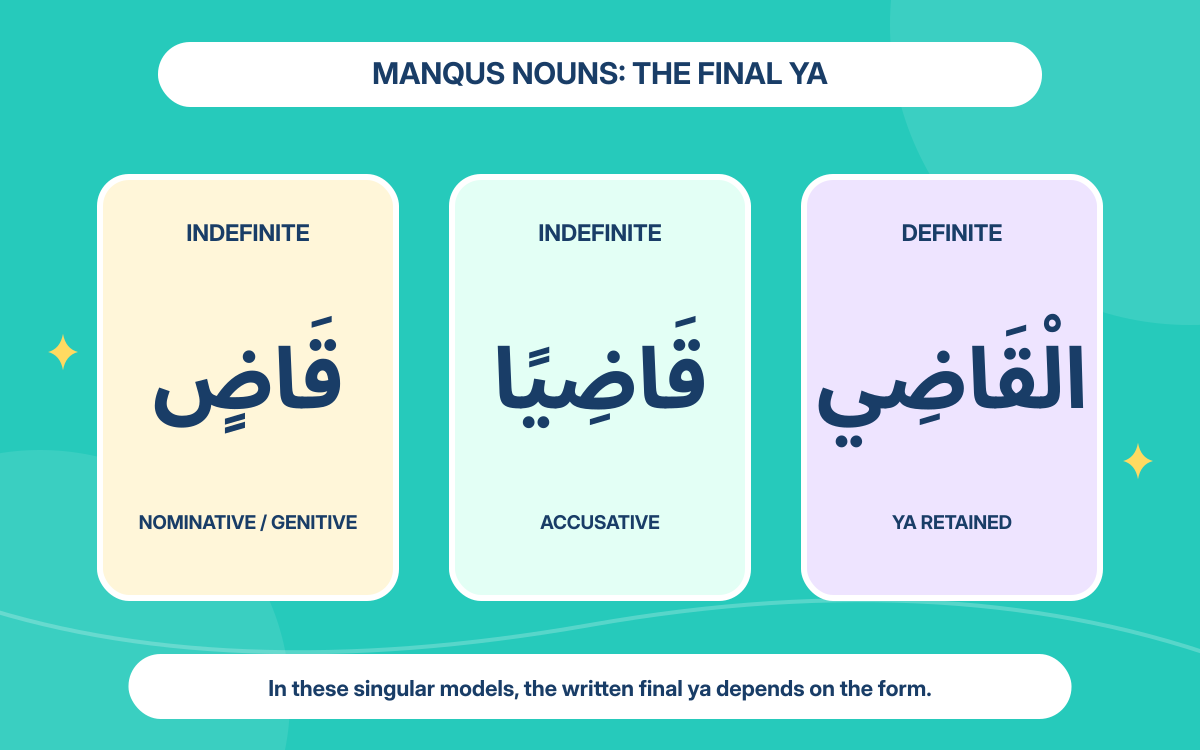
No. The dual and sound masculine plural use letter-based endings. Sound feminine plurals use a different accusative pattern. Diptotes have their own restrictions. Some nouns have endings that cannot show the case vowel, and indeclinable words keep a fixed form. These words can still occupy grammatical positions.
What changes when I stop?
A definite form such as alkitabu is normally pronounced alkitab at a pause. Kitabun and kitabin also lose their final endings when stopping. Indefinite accusative kitaban normally ends with a long a at a formal pause; taa marbuta has a different pause pattern. The examples above retain full endings for study.
Does nominative only mean subject?
No. It also appears in other roles, including the predicate jadidun in our simple nominal sentence. This starter chart gives useful examples, not a complete list of case rules.
Sources & further learning
References for the language explanations and learning guidance.