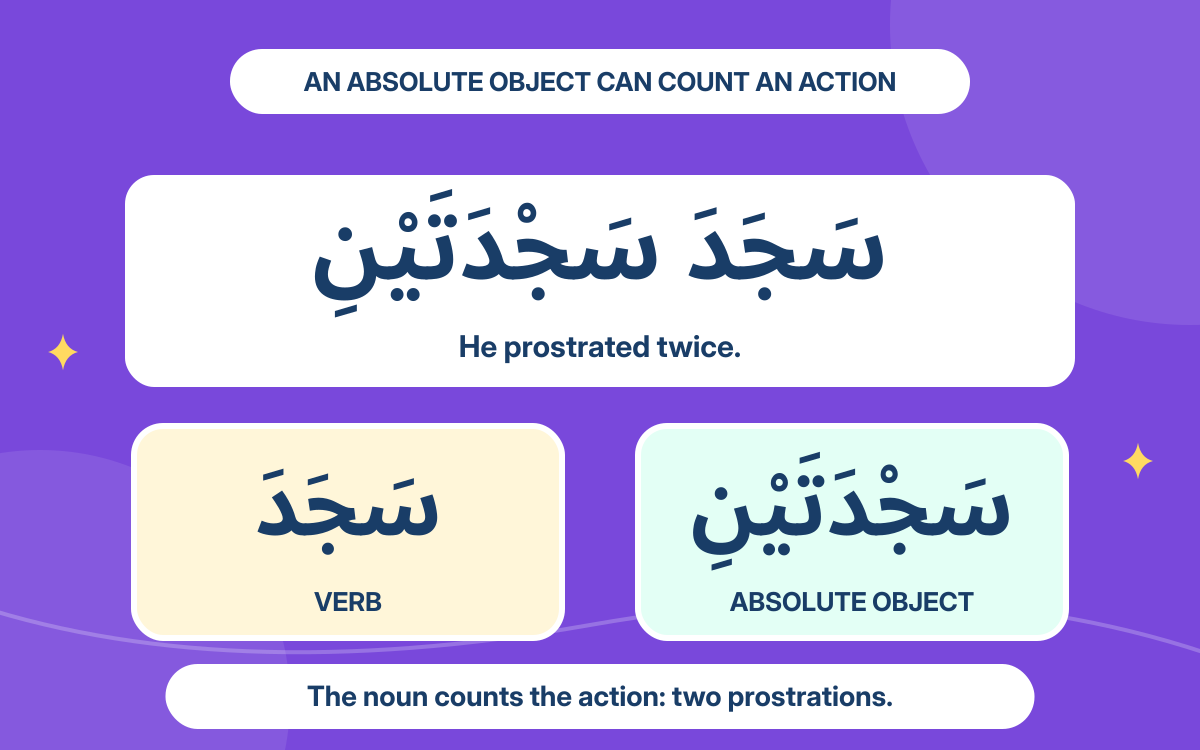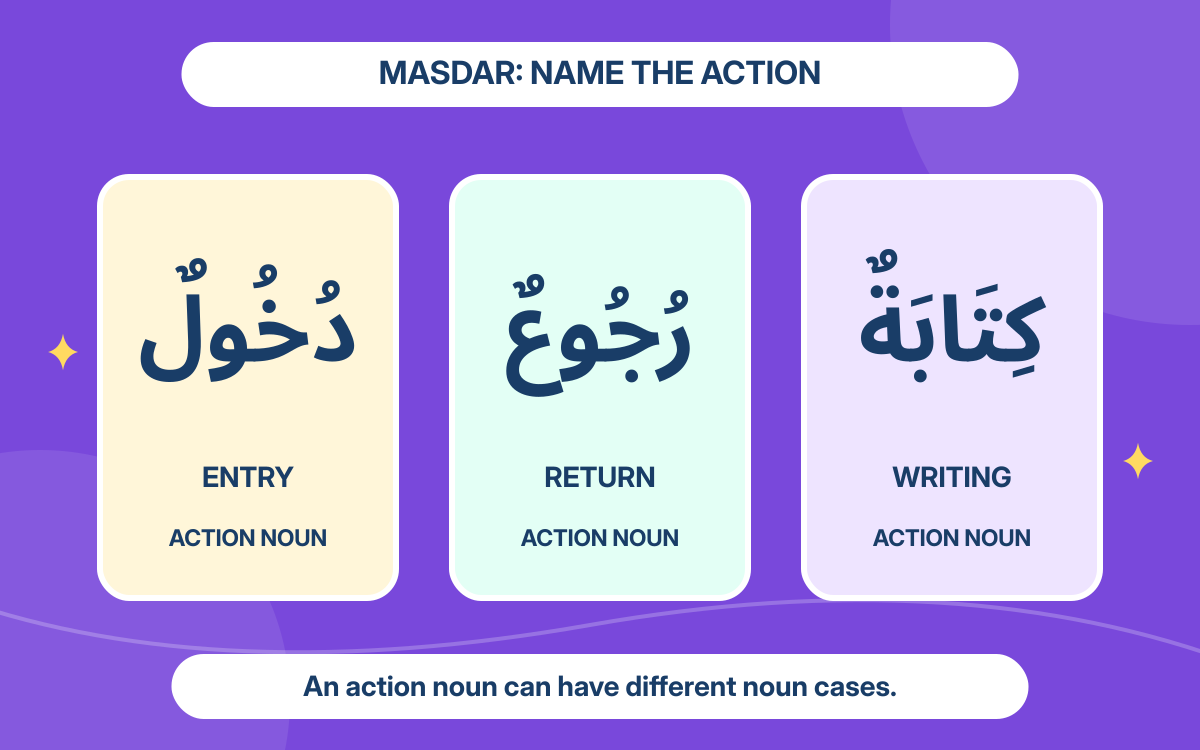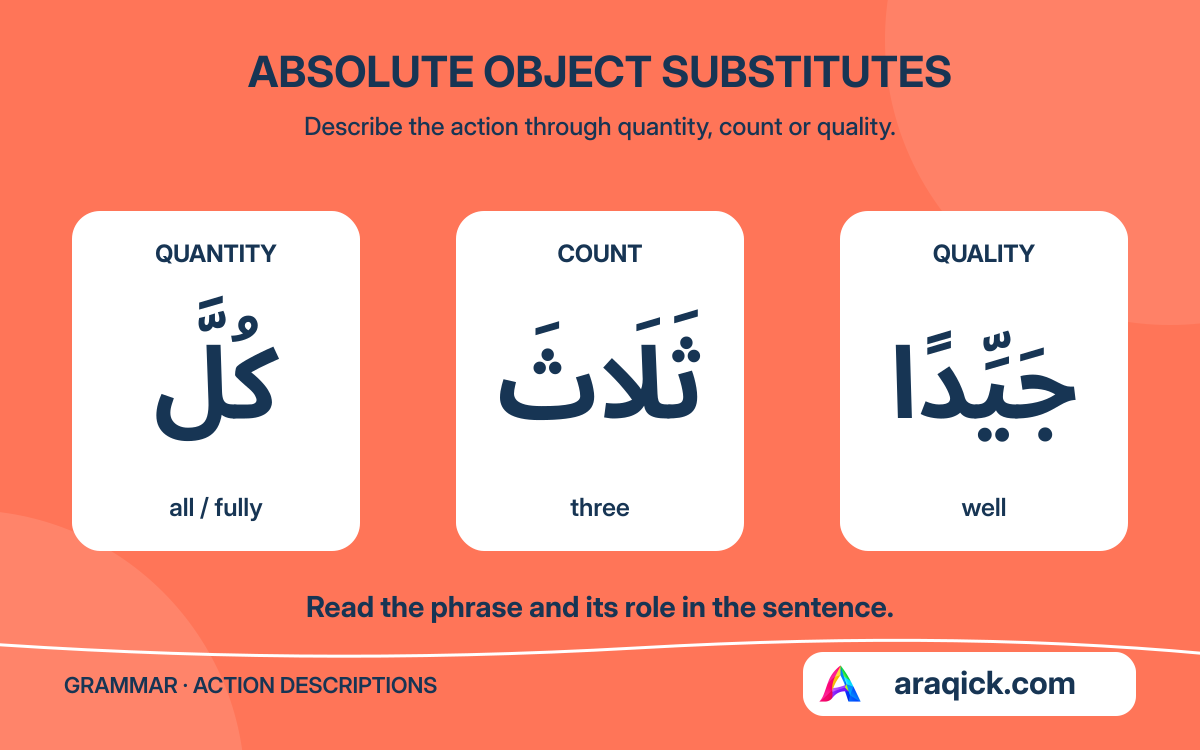
An absolute object often repeats an action as a masdar. Arabic can also put another expression in that role: a quantity word, an action count, a description or a demonstrative. These are traditionally called substitutes for the absolute object. Their job is to describe the action itself.
01Use kull with the action noun
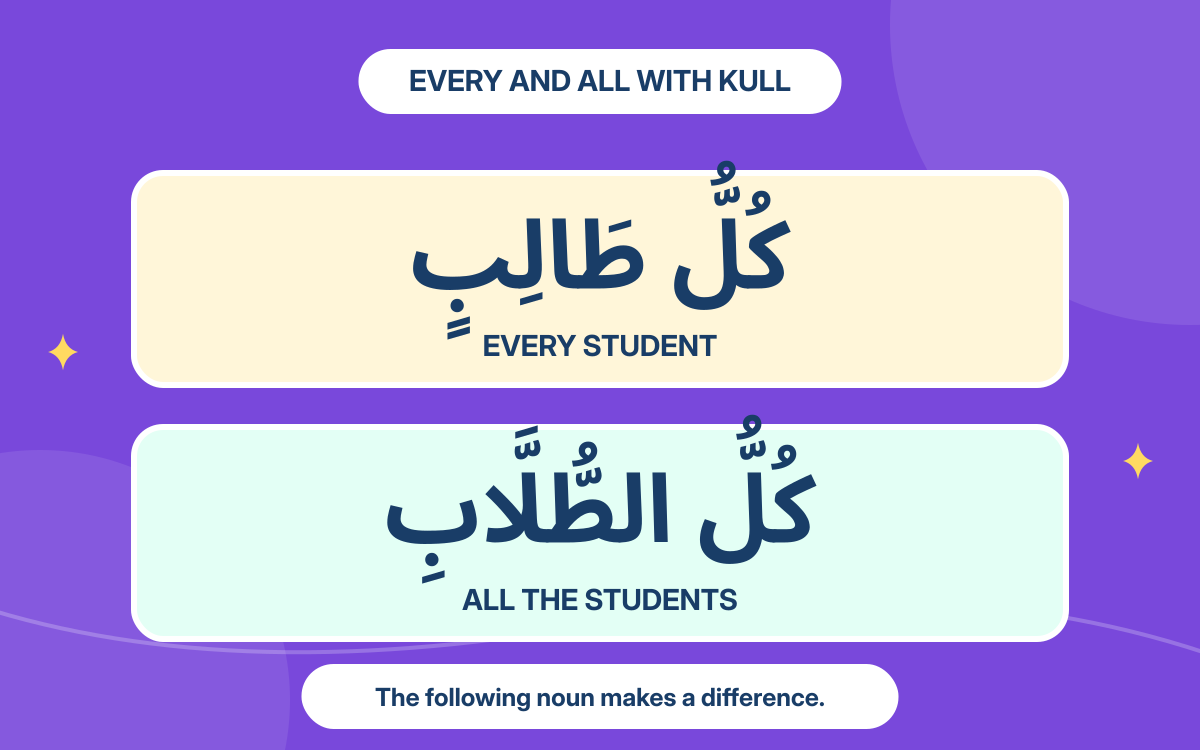
أَحْتَرِمُ مُعَلِّمِي كُلَّ الِاحْتِرَامِ
ahtarimu muallimi kulla alihtirami
I respect my teacher completely.
Kulla stands in the accusative action-description role. Alihtirami is genitive because it completes the idafa after kull. The teacher is the person respected; kulla alihtirami tells us the extent of that respect.
Do not make both words accusative. The phrase has an overall action-related role, but its two words still have separate grammatical relationships. Compare the basic absolute object before learning the shortened patterns.
02Let a number count the actions
طَرَقْتُ الْبَابَ ثَلَاثَ طَرَقَاتٍ
taraqtu albaba thalatha taraqatin
I knocked on the door three times.
Thalatha counts the knocks and stands for the action noun in the accusative. Taraqatin names the counted action and is genitive after a number from three to ten. Albaba is still the direct object.
The number agrees by the usual counting rules: tarqah is feminine, so three appears as thalath. Do not interpret the three as three doors; the counted noun identifies what is being counted.
03Recognize a description with an omitted masdar
فَهِمْتُ التَّعْلِيمَاتِ جَيِّدًا
fahimtu attalimati jayyidan
I understood the instructions well.
In the analysis used here, jayyidan describes an understood فَهْمًا, understanding. The fuller phrase is فَهْمًا جَيِّدًا. When the masdar is omitted, its description takes its place.
This explains one common adverb-like use; it does not make every Arabic word translated with English well an absolute-object substitute. Identify the omitted action and check that the description fits it.
04Point to a kind of action
سَاعَدْتُهُ هَذِهِ الْمُسَاعَدَةَ
saadtuhu hadhihi almusaadata
I helped him in this way.
Hadhihi points to the help itself. It occupies the accusative absolute-object position, while almusaadata explains the demonstrative and is accusative. Hadhihi is indeclinable, so that case is a position, not a visible final vowel.
The attached hu already identifies the person helped. This action phrase adds the kind of help, not another person. See declinable and indeclinable words for the distinction between an ending and a grammatical position.
05Test meaning before assigning the label
كَتَبْتُ رِسَالَةً كِتَابَةً وَاضِحَةً
katabtu risalatan kitabatan wadihatan
I wrote a letter clearly.
Risalatan names what I wrote, while kitabatan wadihatan describes the writing. This example contains an ordinary absolute object, not a substitute. Removing a repeated masdar is one possible construction, not a requirement.
Other substitutes include an established ism masdar, a synonymous action noun or a pronoun referring back to an action. The reference shelf separates the main types. Start with the word’s role rather than its tanwin, and review numbers from three to ten for counted-action endings.
What to remember
- A substitute can fill the action-description role of an absolute object.
- The complement of kull and the counted noun after three to ten have their own genitive endings.
- Case endings alone do not distinguish a direct object from an action phrase.
Your reference shelf
Open a guide whenever you need it.
Common substitutes for the absolute objectRead the action-related job of the expression
| Type | Model | Analysis |
|---|---|---|
| Kull + masdar | كُلَّ الِاحْتِرَامِ | Kull is accusative; its complement is genitive |
| Number + action count | ثَلَاثَ طَرَقَاتٍ | Number is accusative; counted plural is genitive |
| Description of an omitted masdar | فَهِمْتُهُ جَيِّدًا | Jayyidan stands for a description of fahman |
| Demonstrative + masdar | هَذِهِ الْمُسَاعَدَةَ | Demonstrative in an accusative position; explaining noun accusative |
| Ism masdar | كَلَّمْتُهُ كَلَامًا لَطِيفًا | Kalaman can stand for the speech action |
| Synonymous action noun | فَرِحْتُ سُرُورًا | Sururan reinforces the joy expressed by farihtu |
These are grammatical models, not a rule that every quantity, adjective or demonstrative is an absolute object.
Three different accusative jobsThe question answered helps identify the role
| Expression | Question answered | Role |
|---|---|---|
| رِسَالَةً after كَتَبْتُ | What did I write? | Direct object |
| كِتَابَةً وَاضِحَةً | What kind of writing? | Absolute object + adjective |
| كُلَّ الِاحْتِرَامِ | To what extent did I respect? | Substitute + genitive complement |
| ثَلَاثَ طَرَقَاتٍ | How many knocks? | Number as substitute + counted noun |
Sources & further learning
References for the language explanations and learning guidance.