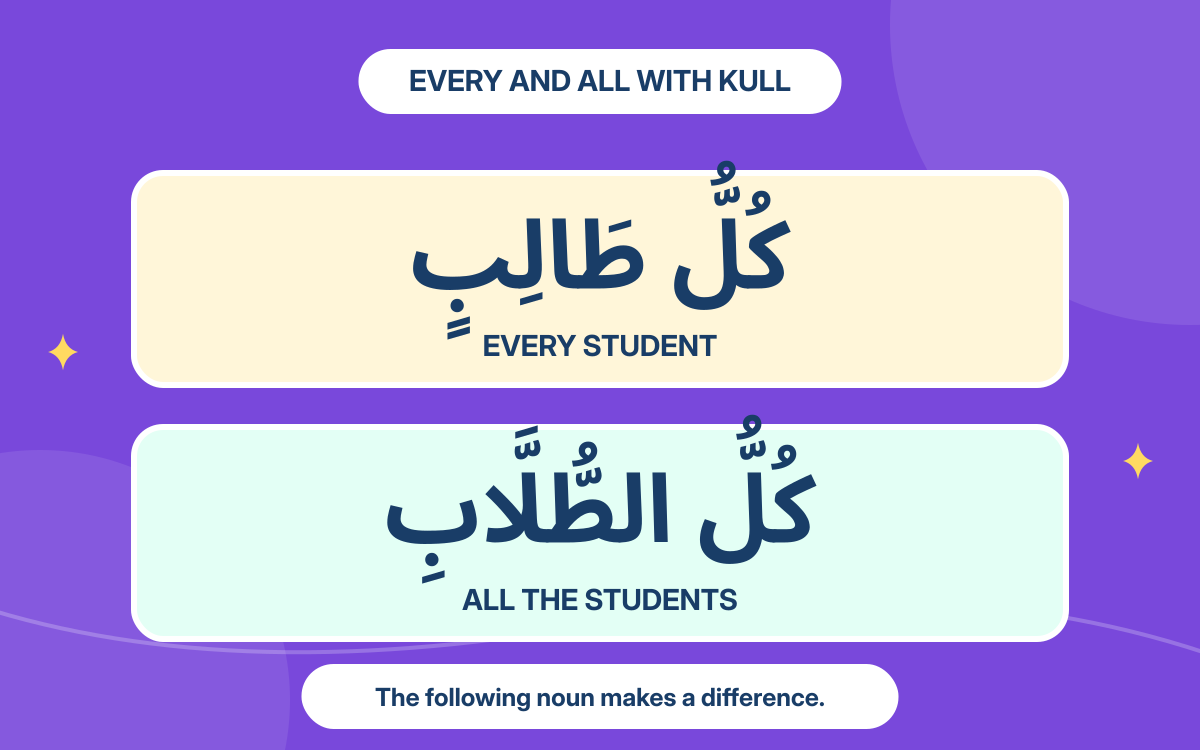
Kull lets you include every member of a group or the whole of something. Its meaning depends on what follows: an indefinite singular noun gives every, while a definite plural gives all. The construction uses idafa, so the following noun is genitive even when kull itself changes ending.
01Put an indefinite singular noun after kull
To express every, use kull followed by one indefinite singular noun. You are including each member, rather than naming just one. The second noun is genitive because the two words form an idafa.
كُلُّ طَالِبٍ هُنَا
kullu talibin huna
Every student is here.
طَالِبٍ is singular and indefinite; its tanween is the genitive in ending. Kull has no tanween here because it heads the construction. English every does not need a separate Arabic word for of.
02Use a definite plural for all
For all the members of a known group, follow kull with a definite plural. Notice both the plural meaning and the definite article on the noun.
كُلُّ الْكُتُبِ هُنَا
kullu lkutubi huna
All the books are here.
The books stay plural and genitive. Compare كُلُّ كِتَابٍ, every book, with كُلُّ الْكُتُبِ, all the books. The first considers each book; the second includes the complete group. This pattern can describe people or things.
03Say all of them or all of us
When the group is already known, an attached pronoun can replace the following noun. The suffix points back to that group.
كُلُّهُمْ هُنَا
kulluhum huna
All of them are here. (A male or mixed group of people.)
كُلُّنَا هُنَا
kulluna huna
All of us are here.
The first form joins kullu to hum; the second joins it to na. Kulluna includes the speaker. For a group of women, كُلُّهُنَّ, kulluhunna, means all of them. These forms are single written words.
04Change kull according to its own role
The u ending is not permanent. A subject uses kullu, a direct object uses kulla, and a noun after a preposition uses kulli. The noun belonging to the idafa stays genitive in all three.
قَرَأْتُ كُلَّ الْكُتُبِ
qaratu kulla lkutubi
I read all the books.
فِي كُلِّ بَيْتٍ
fi kulli baytin
In every house
In the first example, the whole expression is the object of I read. In the second, fi makes kull genitive; bayt is genitive because it follows kull in idafa. Do not copy the case of kull onto its following noun.
05Distinguish every from the whole
A definite singular noun can give the meaning the whole. One complete house differs from every house in a larger group.
كُلُّ بَيْتٍ
kullu baytin
Every house
كُلُّ الْبَيْتِ
kullu lbayti
The whole house
Choose the intended meaning first, then inspect the following noun: indefinite singular for every, definite singular for the whole, or definite plural for all. Finally choose the ending of kull from its sentence role. The examples retain formal case endings; a plain reading aid does not show every Arabic sound or vowel length.
What to remember
- Kull with an indefinite singular noun means every; with a definite plural it means all.
- The following noun is genitive in idafa, while kull takes its own case ending.
- Kulluhum means all of them, kulluna means all of us, and a definite singular can give the whole meaning.
Your reference shelf
Open a guide whenever you need it.
Three meanings and three case endingsReview what follows kull and why its own ending changes
| Pattern | Arabic | Meaning |
|---|---|---|
| Indefinite singular | كُلُّ كِتَابٍ | Every book |
| Definite singular | كُلُّ الْكِتَابِ | The whole book |
| Definite plural | كُلُّ الْكُتُبِ | All the books |
| Pronoun suffix | كُلُّهُمْ | All of them: male or mixed human group |
| Pronoun suffix | كُلُّهُنَّ | All of them: female human group |
| Pronoun suffix | كُلُّنَا | All of us |
Compare كُلُّ الْكُتُبِ هُنَا (All the books are here), قَرَأْتُ كُلَّ الْكُتُبِ (I read all the books), and فِي كُلِّ الْكُتُبِ (in all the books). The noun الْكُتُبِ remains genitive. Kull changes u, a or i according to its own role. Attached pronouns are fixed forms with a genitive grammatical role in this construction.
Kull can also follow a noun to emphasise totality, but that has a different case relationship. This guide practises the construction beginning with kull; it does not teach all the agreement choices possible in longer quantified sentences.
Sources & further learning
References for the language explanations and learning guidance.