An action can be the topic of a sentence: “Entry is prohibited” or “I like writing.” Arabic uses a masdar, a noun naming the action itself. Its ending follows its job in the sentence, so an action noun is not automatically an absolute object.
01Name the action itself
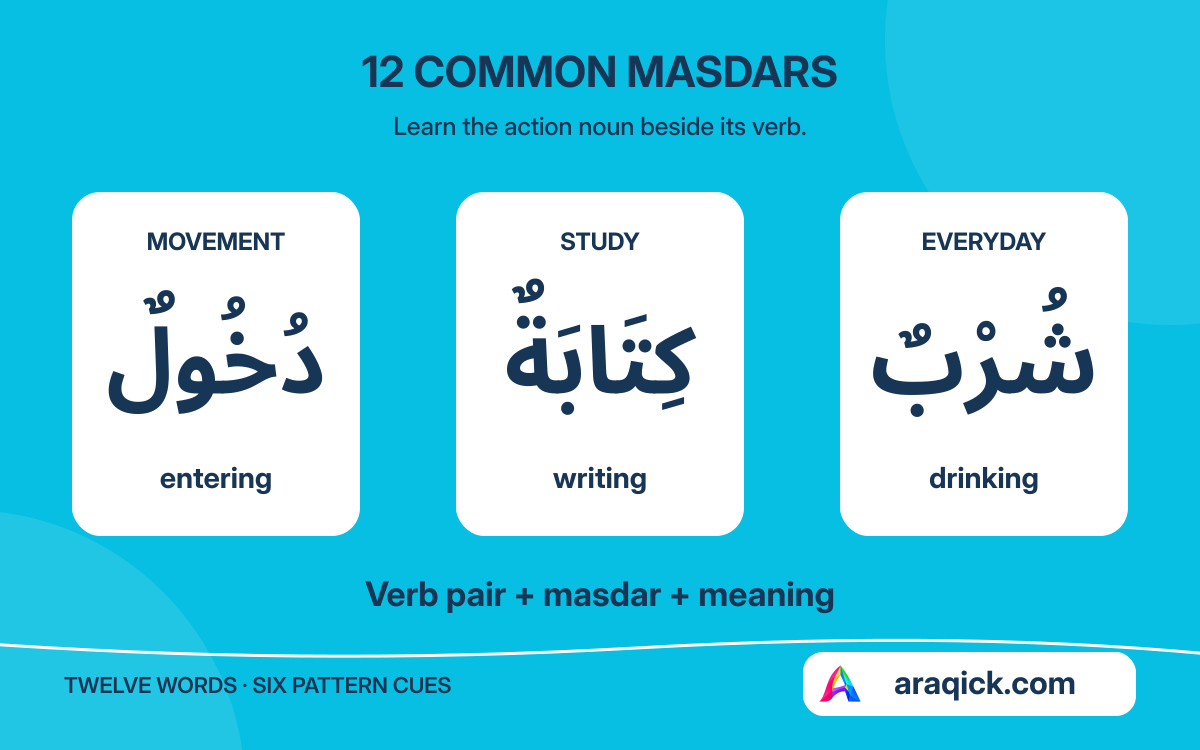
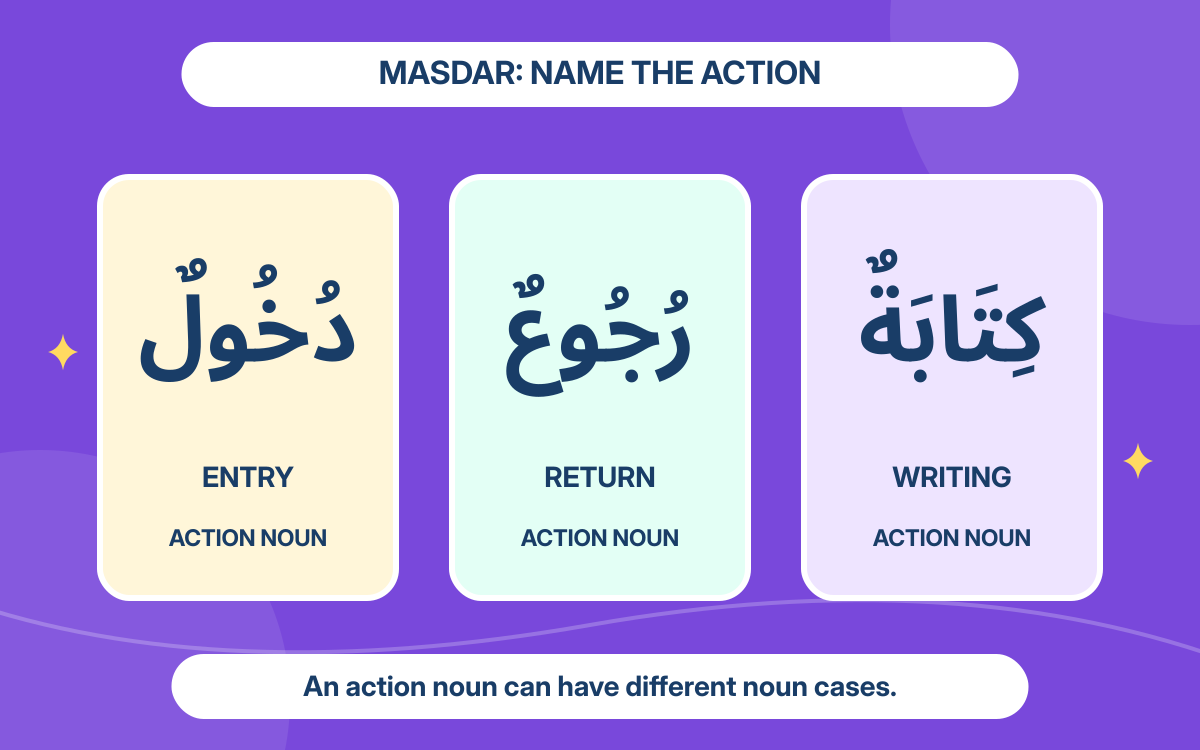
A masdar, مَصْدَرٌ, names an action or event without itself specifying its time or doer. Learn it alongside its verb. English translations include “entry,” “return” and “writing.”
دَخَلَ → دُخُولٌ
dakhala to dukhulun
He entered → entry / entering
رَجَعَ → رُجُوعٌ
rajaa to rujuun
He returned → return / returning
كَتَبَ → كِتَابَةٌ
kataba to kitabatun
He wrote → writing
Basic Form I masdars have several patterns. These examples do not give one reliable rule for every verb; verify unfamiliar forms in a dictionary.
02Make the action the subject
A masdar can start a noun sentence as its subject, with a nominative ending. A definite noun with الْـ takes no tanwin.
الدُّخُولُ مَمْنُوعٌ.
addukhulu mamnuun
Entry is prohibited.
Dukhul names the action of entering. Here addukhulu is the subject and ends in u; mamnuun is its predicate. The sentence states a rule about entry, without saying that someone entered at a particular time.
03Make the action a direct object
The action noun can name what someone likes or wants. As a direct object, it is accusative.
أُحِبُّ الْكِتَابَةَ.
uhibbu lkitabata
I like writing.
Alkitabata names what I like. Its final a marks the accusative here. This is a direct object of “I like,” not an absolute object repeating a writing verb. Masdar is the word type; direct object is its role in this sentence.
04Put the action after a preposition
After a preposition, the action noun is genitive. The attached preposition li can express purpose, “for.”
هَذَا الْبَابُ لِلدُّخُولِ.
hadha lbabu liddukhuli
This door is for entry.
The phrase liddukhuli contains li and definite addukhul. The action noun ends in i after the preposition. The doubled d in the reading aid reflects the pronounced definite article before d.
05Link the action to someone in an idafa
An idafa can say whose action you mean. After “after,” the action noun is genitive; the following owner is genitive too.
بَعْدَ رُجُوعِ حَامِدٍ، نَخْرُجُ.
bada rujui hamidin nakhruju
After Hamid’s return, we leave.
Rujui is genitive after bada and starts the idafa, so it has no tanwin. Hamidin completes it. The action noun does not itself choose the time of our leaving: the verb and context do. Our plain reading aids simplify sounds and vowel length; the Arabic shows the grammatical endings.
What to remember
- A masdar names an action without itself fixing its time or doer. Learn basic verb and masdar pairs together.
- An action noun takes the case required by its sentence role: nominative subject, accusative direct object or genitive complement.
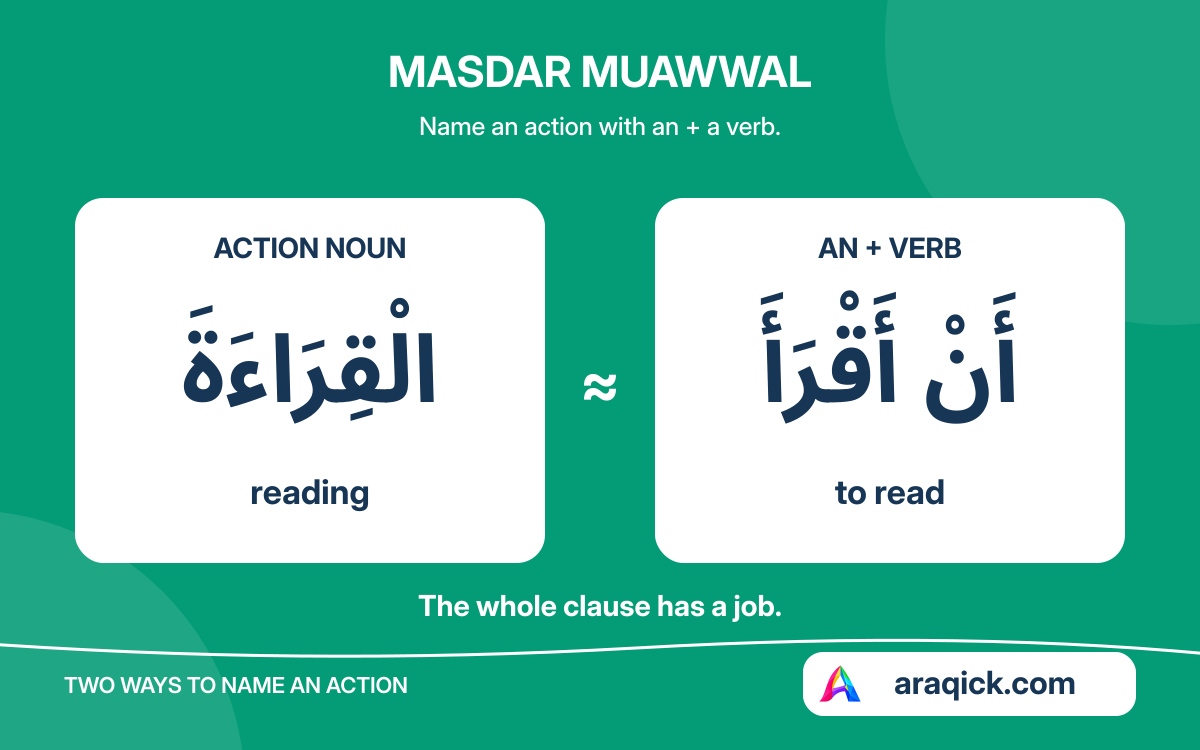
- Masdar is a word type. The absolute object is one possible use of it, alongside the different roles practised here.
Your reference shelf
Open a guide whenever you need it.
One action noun, different sentence jobsCompare noun roles and the three learned action words
| Role | Arabic model | Ending |
|---|---|---|
| Noun-sentence subject | الدُّخُولُ مَمْنُوعٌ | Addukhulu: nominative u. |
| Direct object | أُحِبُّ الْكِتَابَةَ | Alkitabata: accusative a. |
| After a preposition | لِلدُّخُولِ | Liddukhuli: genitive i. |
| Idafa after “after” | بَعْدَ رُجُوعِ حَامِدٍ | Rujui: genitive, without tanwin as the first idafa noun. |
| Verb | Masdar | Action |
|---|---|---|
| دَخَلَ | دُخُولٌ | Entry / entering |
| رَجَعَ | رُجُوعٌ | Return / returning |
| كَتَبَ | كِتَابَةٌ | Writing |
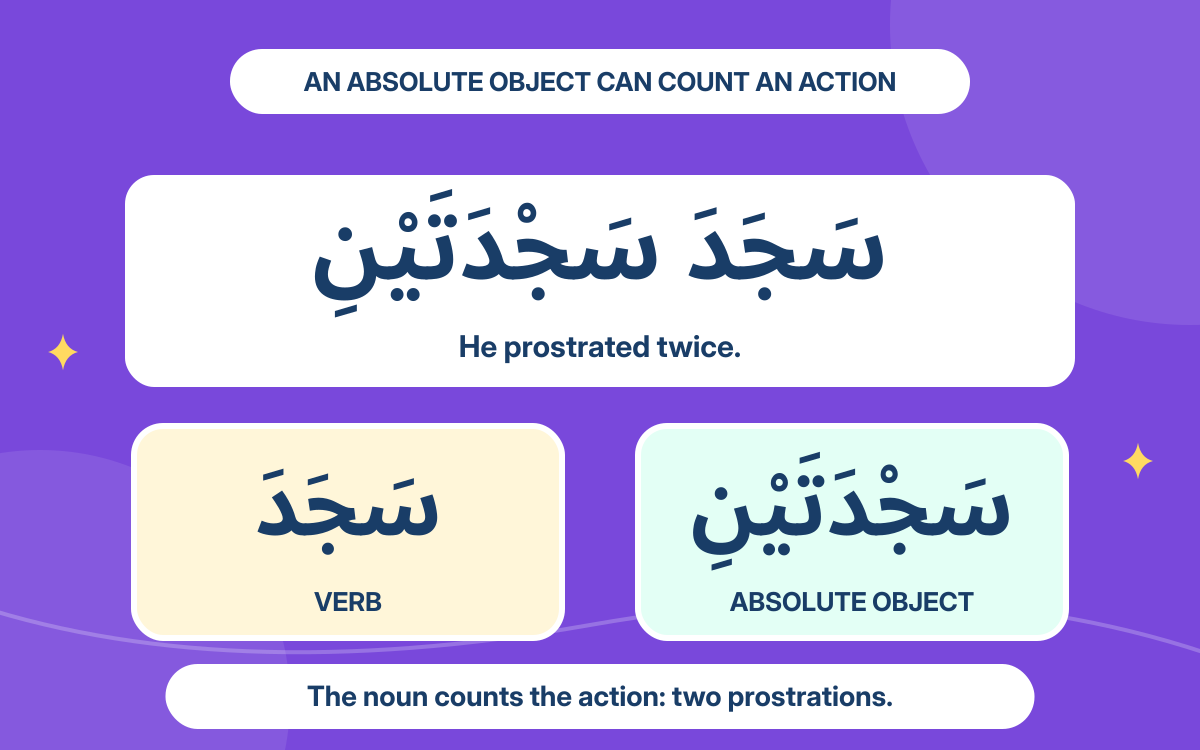
A masdar can also be an absolute object, as in كَتَبَ كِتَابَةً, where the action noun relates to the writing verb. That construction is taught in the linked absolute-object guide. In أُحِبُّ الْكِتَابَةَ, however, the action noun is what the person likes, so it is a direct object.
Basic Form I verbs have several attested masdar patterns; dictionary verification remains necessary. Derived verb forms often supply more regular patterns, which are outside this introductory guide.
Sources & further learning
References for the language explanations and learning guidance.