Some Arabic words change their ending with grammatical case; others keep a fixed form. Muʿrab and mabni name this difference. A fixed noun can still be a subject, an object or part of a phrase after a preposition. Its final sound does not tell the whole story.
01Start with a changeable noun
A muarab noun is declined for case. The familiar book gives a visible example.
الْكِتَابُ جَدِيدٌ
alkitabu jadidun
The book is new.
قَرَأْتُ الْكِتَابَ
qaratu lkitaba
I read the book.
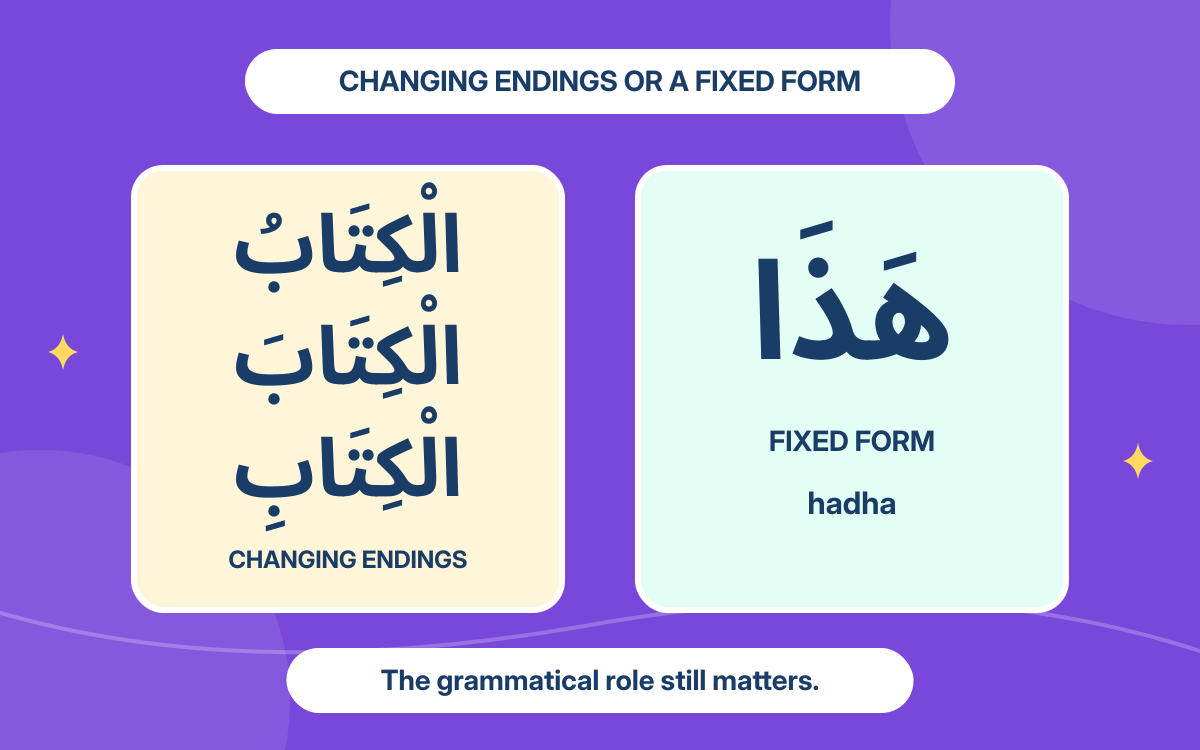
Alkitabu is nominative as the topic in the first sentence. Alkitaba is accusative as the direct object in the second. Its grammatical job changes, and this regular noun displays that change on its last consonant.
02Compare a fixed demonstrative
A mabni noun has a fixed ending that does not change for its case position. Hadha means “this.”
هَذَا قَلَمٌ
hadha qalamun
This is a pen.
Hadha is the subject, or topic, and occupies a nominative position. Yet it keeps its final long a. You do not turn it into hadhu to show nominative case. Qalamun is the nominative predicate; unlike hadha, it displays its case ending.
03Keep the form when the position changes
Now use the same demonstrative as an object and after a preposition.
أَخَذْتُ هَذَا
akhadhtu hadha
I took this.
فِي هَذَا
fi hadha
In this
In the first example, hadha occupies an accusative position as the direct object. In the second, it occupies a genitive position after fi. Its form stays hadha in both. For a mabni noun, describe the position rather than inventing a new case vowel.
05Ask two separate questions
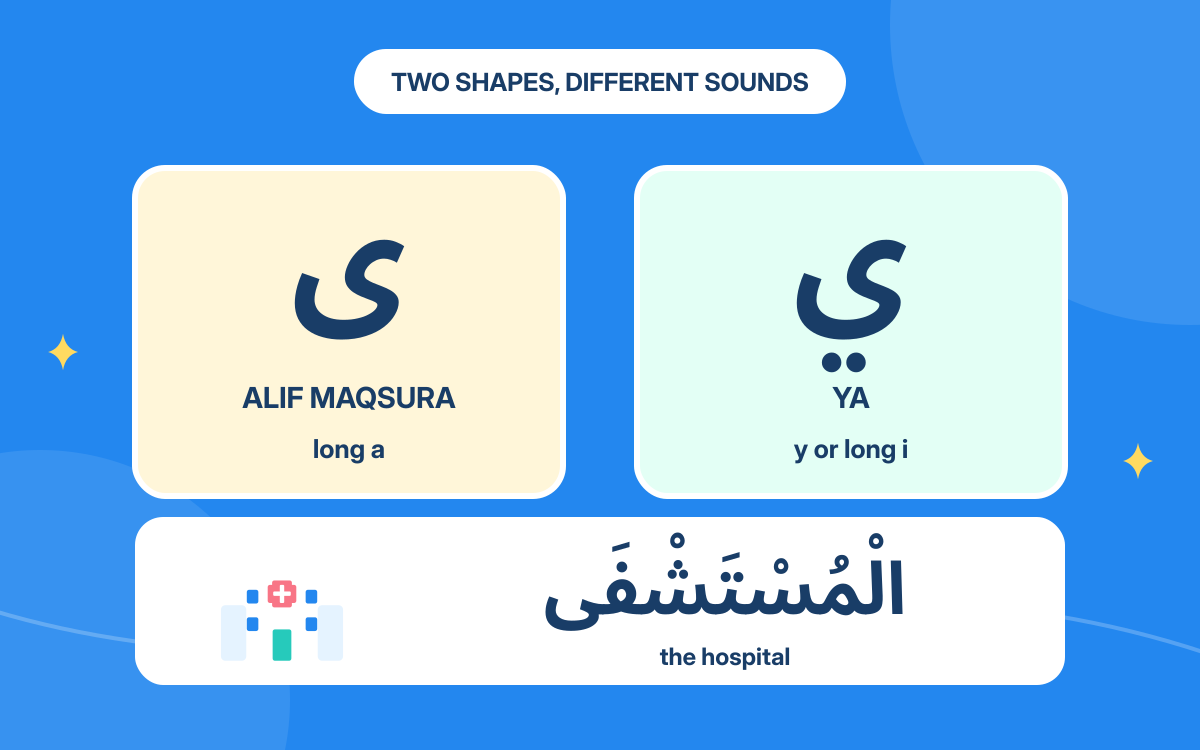
First ask: what job does the noun have here? Then ask: how does this kind of noun show that job? A regular book displays a vowel, the hospital has an estimated sign, and hadha keeps a fixed ending.
Pronouns such as أَنَا (ana, I) and هُوَ (huwa, he) are also mabni. Do not assume every demonstrative is fixed: the dual forms هَذَانِ and هَذَيْنِ change for case in the standard pattern. This guide focuses on nouns; the rules for verb endings are a separate topic.
What to remember
- Muarab nouns are declined for case; mabni nouns have fixed endings.
- A fixed noun still occupies a grammatical position, such as subject, object or genitive after a preposition.
- Hidden case signs on a noun such as الْمُسْتَشْفَى are different from mabni forms.
Your reference shelf
Open a guide whenever you need it.
Visible, estimated or fixed?Compare three ways a noun’s ending relates to its grammatical role
| Example noun | Classification | How to describe it |
|---|---|---|
| الْكِتَابُ / الْكِتَابَ / الْكِتَابِ | Muarab | Visible case signs |
| الْمُسْتَشْفَى | Muarab | Estimated case signs |
| هَذَا | Mabni | Fixed form; identify its case position |
The term فِي مَحَلِّ رَفْعٍ means “in a nominative position.” Corresponding expressions describe accusative and genitive positions. They let you analyse a fixed noun without assigning it a changing final vowel.
Do not decide the category from two matching spellings alone. Unvowelled writing can hide ordinary endings, a maqsur noun has estimated signs, and a mabni noun is fixed. Identify the word type as well as the sentence structure.
Sources & further learning
References for the language explanations and learning guidance.