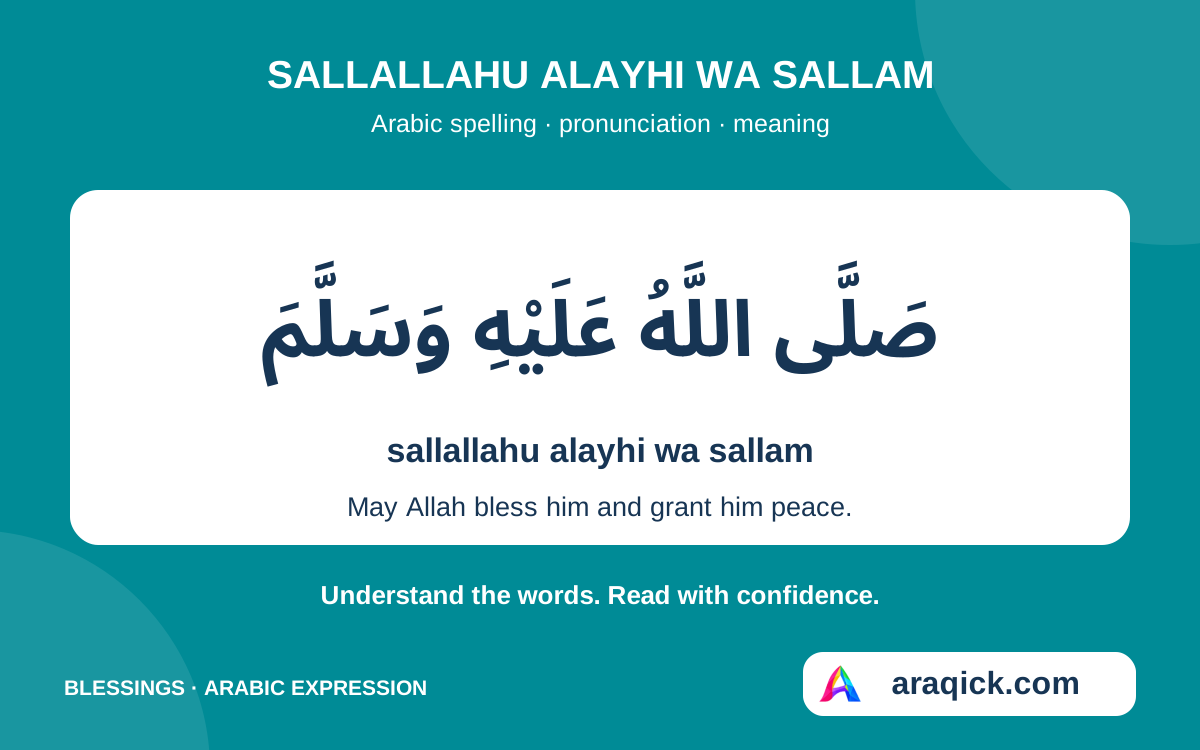
Sallallahu alayhi wa sallam is صَلَّى اللَّهُ عَلَيْهِ وَسَلَّمَ, meaning “May Allah bless him and grant him peace.” Muslims commonly say or write it after mentioning Prophet Muhammad. It is a supplication of blessing and peace, also represented by the Arabic ligature ﷺ.
01What does the phrase mean?
The expression asks Allah to bless him and grant him peace. In its familiar use after Muhammad’s name, “him” refers to the Prophet. The phrase is not part of his personal name: it is the speaker’s or writer’s supplication after naming him.
صَلَّى اللَّهُ عَلَيْهِ وَسَلَّمَ
sallallahu alayhi wa sallam
May Allah bless him and grant him peace.
English renderings sometimes use “peace and blessings be upon him.” The order differs, but that familiar translation conveys the combined blessing and peace. Read the Arabic slowly enough to notice both parts.
02Identify the words and the pronoun
صَلَّى اللَّهُ gives the blessing part of the supplication. عَلَيْهِ (alayhi) means “upon him”; its ending hi refers to a singular male. وَسَلَّمَ adds the request for peace.
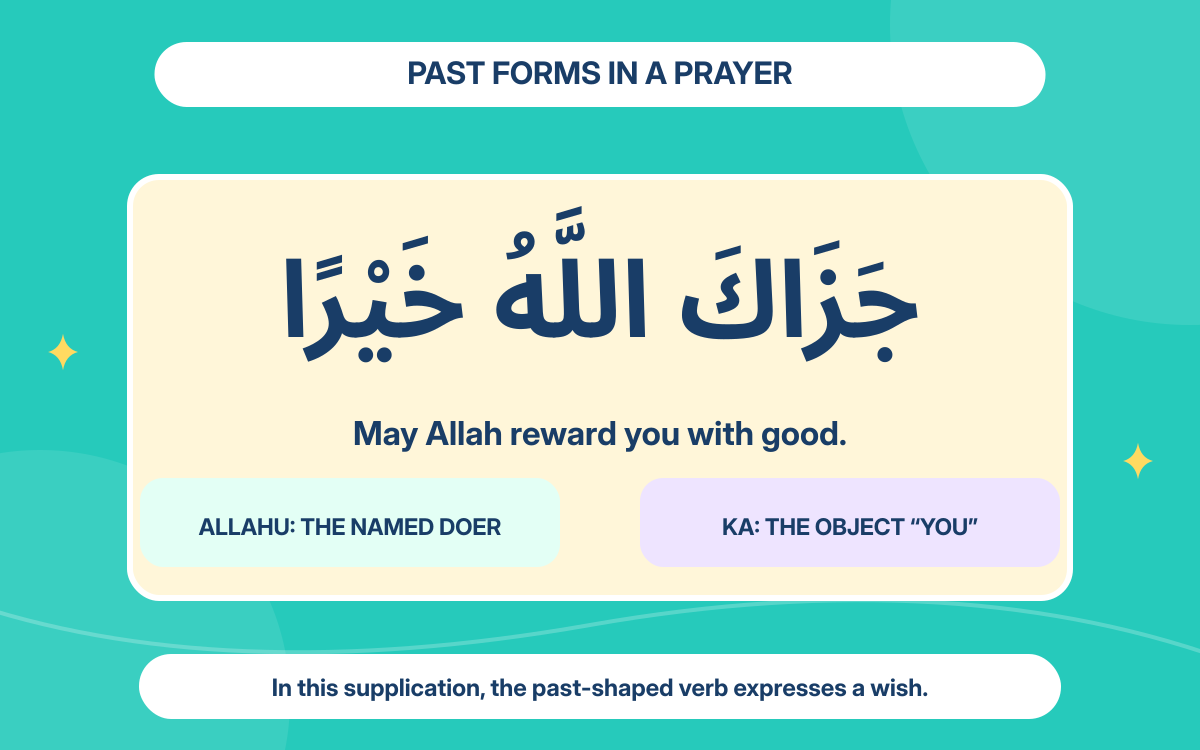
Although the verbs have past-form shapes, this established expression functions as a supplication: “may Allah…” rather than merely reporting a past event. Words connected with salah have meanings that depend on context. Translating this phrase as “Allah prayed to him” would miss its meaning. See past forms in Arabic prayers for this supplication pattern. Our prepositions with pronouns guide explains combinations like alayhi.
03Read the connected form
Practise salla | Allahu | alayhi | wa sallam, then connect the first two chunks as sallallahu. Both salla and sallam have a doubled l. The shaddah in the vowelled Arabic tells you to hold that consonant rather than replace it with an extra vowel.
The word alayhi begins with ع, the Arabic throat letter ayn. The plain reading aid does not capture that sound precisely. You may see alaihi instead of alayhi in English spelling. Keep using the Arabic text as the stable reference while learning from a reliable spoken model.
04The Quranic connection
Quran 33:56 instructs believers to invoke blessings upon the Prophet and offer greetings of peace. This supports the combined themes of the familiar short expression. The short formula itself is not the entire wording of the verse.
Keep that distinction when labelling a quotation: a verse, an explanation of it and a supplication used in response to its instruction are not identical texts. This language guide explains wording and recognition; it does not assign a repetition count or promise a particular worldly result for saying it.
05What does the ﷺ symbol stand for?
The sign ﷺ represents the full Arabic expression. Unicode encodes it as a ligature, a combined written form, rather than as one ordinary Arabic vocabulary word. If a device shows an empty box or an unfamiliar shape, the full text remains صَلَّى اللَّهُ عَلَيْهِ وَسَلَّمَ.
English initials such as PBUH and SAW are abbreviations used by writers. PBUH commonly expands to “peace be upon him”; it does not display every Arabic word of this longer formula. For learning, practising the full wording helps you connect the symbol, sound and meaning.
06Short blessing, longer salawat and greetings
Longer prayers of blessing also exist. Sahih al-Bukhari 3370 records a longer taught formula beginning اللَّهُمَّ صَلِّ عَلَى مُحَمَّدٍ (Allahumma salli ala Muhammad), “O Allah, bless Muhammad.” The short phrase taught here is not the complete longer formula sometimes called Durood Ibrahim.
It also differs from السَّلَامُ عَلَيْكُمْ, a greeting addressed to the people you meet. See Arabic greetings for that exchange, bismillah for beginning with God’s name, and alhamdulillah for praise. Similar religious settings do not erase the different meanings.
What to remember
- Sallallahu alayhi wa sallam asks Allah to bless him and grant him peace.
- The pronoun in alayhi means him; in the familiar usage it refers to Prophet Muhammad.
- The ﷺ ligature represents the full expression, which differs from a greeting and from longer salawat.
Your reference shelf
Open a guide whenever you need it.
Blessing formula: word meaningsFollow the blessing, the pronoun and the request for peace.
| Arabic | Reading | Meaning or use |
|---|---|---|
| صَلَّى | salla | Bless; in this supplication |
| اللَّهُ | Allahu | Allah |
| عَلَيْهِ | alayhi | Upon him |
| وَ | wa | And |
| سَلَّمَ | sallam | Grant peace; in this supplication |
A full phrase, a sign and a related greetingRecognise the form and the person addressed or referred to.
| Arabic | Reading | Meaning or use |
|---|---|---|
| صَلَّى اللَّهُ عَلَيْهِ وَسَلَّمَ | sallallahu alayhi wa sallam | May Allah bless him and grant him peace |
| ﷺ | sallallahu alayhi wa sallam | Ligature representing the same complete expression |
| اللَّهُمَّ صَلِّ عَلَى مُحَمَّدٍ | Allahumma salli ala Muhammad | O Allah, bless Muhammad; opening of a longer formula |
| السَّلَامُ عَلَيْكُمْ | assalamu alaykum | Peace be upon you; a greeting |
Sources & further learning
References for the language explanations and learning guidance.