A verb can have a past form while a whole expression serves as a prayer. When wishing someone healing or thanking someone with a supplication, read the context as well as the form. These two phrases show how.
01Read the healing phrase as a prayer
You hear that a man is unwell and pray for him. The expression below wishes him healing. In this context, translate it with English “May,” rather than reporting that healing already happened.
شَفَاهُ اللَّهُ
shafahullahu
May Allah heal him.
The verb has the past form: شَفَى (shafa), “he healed,” with hu attached for him. That form stays past-shaped even when the expression functions as a supplication.
02Separate the doer from him
Who is asked to bring the healing? Allah. اللَّهُ is the named grammatical doer, or subject, and is nominative with the ending u. The attached هُ (hu) identifies him, the person receiving healing.
شَفَاهُ اللَّهُ
shafahullahu
May Allah heal him.
Hu is an object pronoun; it does not identify the healer. It stays attached to the verb. The reading aid joins the words smoothly and preserves the doubled l of Allah.
03Use a prayer to thank someone
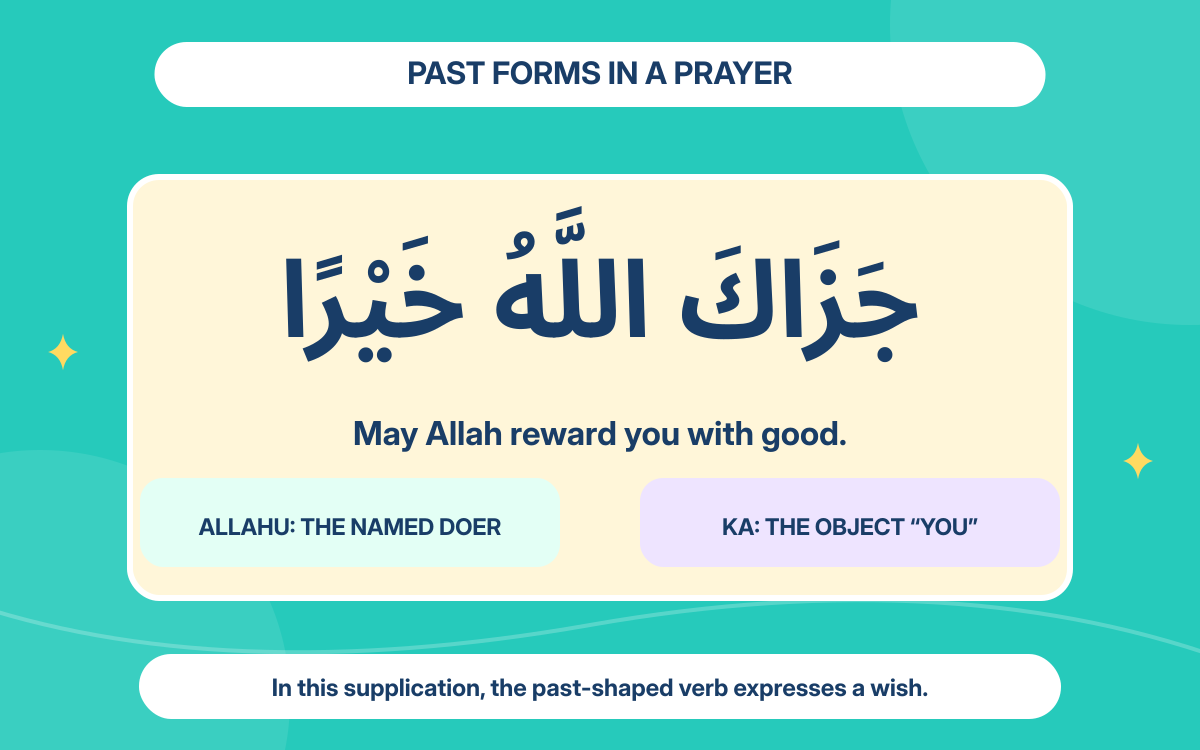
After a man helps you, this expression wishes him a good reward. The attached ka addresses one male person as you, the recipient of that reward. Allah remains the named doer.
جَزَاكَ اللَّهُ خَيْرًا
jazakallahu khayran
May Allah reward you with good.
The past-shaped base is جَزَى (jaza), “he rewarded.” Adding ka gives jazaka. Ka here is an object pronoun, not the person who does the rewarding. The supplication expresses thanks by wishing him good.
04Keep the ending of good
Khayran gives the good wished for in our reward phrase. It is accusative here, with the regular indefinite ending an. Keep that ending when reading the complete formal model.
جَزَاكَ اللَّهُ خَيْرًا
jazakallahu khayran
May Allah reward you with good.
The written endings have different jobs: Allahu is nominative as the doer; khayran is accusative. Ka remains an attached object pronoun. Its final a is part of that pronoun’s form, not an ordinary noun’s case ending.
05Check form and use together
Our two expressions use past-shaped verbs as prayers because the situation makes that purpose clear. They express wishes, not promises that the requested result is certain. Do not translate every past verb with “May.”
شَفَاهُ اللَّهُ
shafahullahu
May Allah heal him: a prayer for an unwell man.
In an ordinary account of completed events, a past form can instead report what happened. Even a healing expression can be a report in a suitable context. Here we consistently practise supplication contexts. Keep the familiar word order: verb with object suffix, named doer, then khayran in the reward phrase.
What to remember
- Past-shaped verbs can serve as prayers when the context makes that use clear.
- In shafahullahu, Allah is the named doer and hu is the person receiving healing.
- Jazakallahu khayran addresses one male recipient with ka and keeps khayran accusative.
Your reference shelf
Open a guide whenever you need it.
Two prayers with their roles intactKeep supplication meaning separate from verb form and grammatical roles
| Prayer | Named doer | Attached object |
|---|---|---|
| شَفَاهُ اللَّهُ shafahullahu May Allah heal him. | اللَّهُ Allahu | هُ hu Him |
| جَزَاكَ اللَّهُ خَيْرًا jazakallahu khayran May Allah reward you with good. | اللَّهُ Allahu | كَ ka You: one male |
The past form is الْفِعْلُ الْمَاضِي (alfilu lmadi); a supplication is دُعَاءٌ (duaun). A phrase can retain the first grammatical form while performing the second communicative function. This does not assert that the requested outcome has occurred.
The simple labels join Allah to the preceding word: jazaka plus Allahu is read jazakallahu, and shafahu plus Allahu is read shafahullahu. The doubled l matters. At an actual pause, final short case vowels and tanween are handled differently; the written models retain full formal endings.
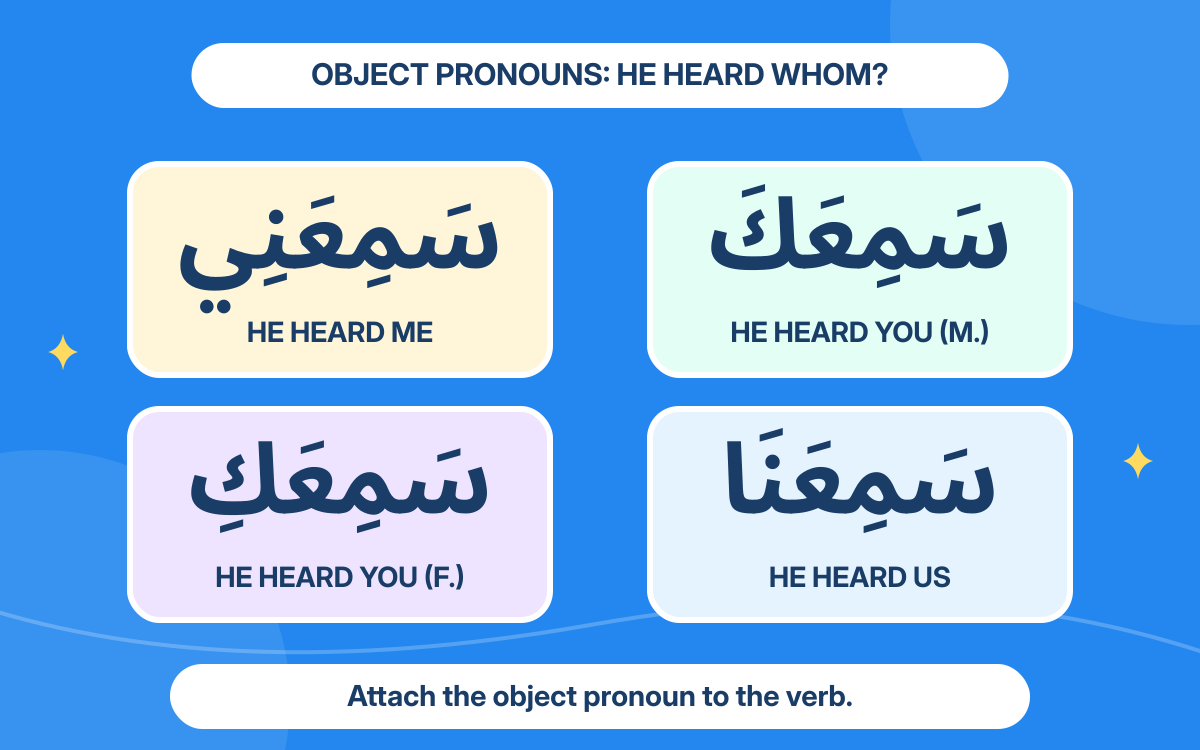
This article limits practice to hu and masculine singular ka. Other recipients require the appropriate pronoun, and reading a report instead of a prayer requires attention to the wider context.
Sources & further learning
References for the language explanations and learning guidance.