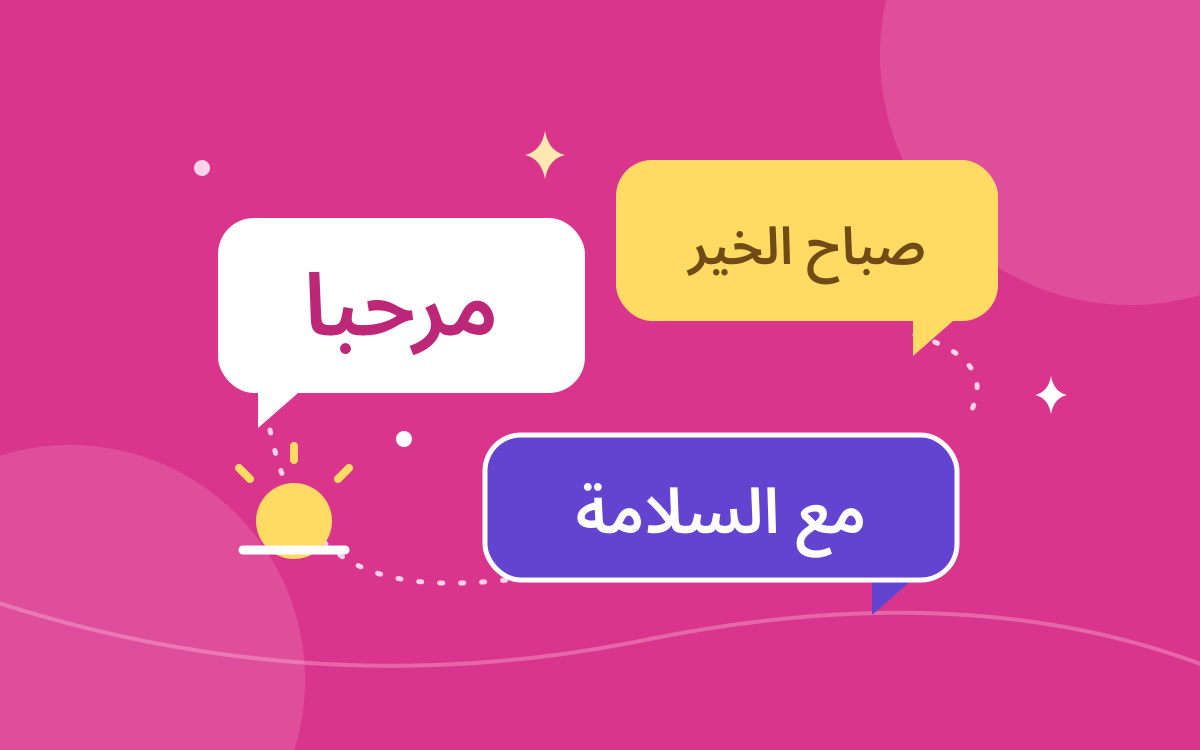
Say hello with marhaban, ask how someone is, and leave with maa ssalama. Learn each greeting with a reply so you can keep a short conversation going. These standard Arabic examples include expressions used widely across Arabic-speaking communities.
01Say hello and listen for the reply
Hello: مَرْحَبًا marhaban
Reply: مَرْحَبًا marhaban
For a neutral opening, the same word works on both sides. Another familiar greeting and its reply are:
- السَّلَامُ عَلَيْكُمْ assalamu alaykum — Peace be upon you.
- وَعَلَيْكُمُ السَّلَام wa alaykumu ssalam — And upon you be peace.
The peace greeting is associated with Muslim greeting practice and is common in many Arabic-speaking settings.
02Match morning with morning
Good morning: صَبَاح الْخَيْر
sabah alkhayr
Usual reply: صَبَاح النُّور
sabah annur
- For evening, use مَسَاء الْخَيْر masa alkhayr.
- The evening reply is مَسَاء النُّور masa annur.
The reply keeps the time word and changes “goodness” to “light.” Learn each pair as an exchange. Exact timing varies by community; marhaban is useful when you want a greeting without a time reference.
Try saying the greeting, pausing, and supplying the reply from memory. Then switch from morning to evening. Keep the two voices separate so you practise both roles.
03Ask how the other person is
- To one man: كَيْفَ حَالُكَ؟ kayfa haluka
- To one woman: كَيْفَ حَالُكِ؟ kayfa haluki
Both mean “How are you?” The ending follows your listener, not your own gender.
أَنَا بِخَيْر، شُكْرًا
ana bikhayr shukran
I am well, thank you.
Return the question with وَأَنْتَ؟ wa anta to a man, or وَأَنْتِ؟ wa anti to a woman. The reply bikhayr works for either speaker.
Without vowel marks, the written question looks the same: كيف حالك؟. Listen for the difference in these careful MSA forms; regional speech may sound different.
04Finish with a farewell
مَعَ السَّلَامَة
maa ssalama
Goodbye.
A straightforward reply is the same phrase. You can also say إِلَى اللِّقَاء ila lliqa, “Goodbye” or “See you.”
- Thank someone who has helped you: شُكْرًا shukran.
- Add your farewell when you are ready to leave.
- Keep a farewell separate from a greeting: “good evening” opens an interaction.
Practise the ending as well as the opening. Two familiar expressions are enough to close a short conversation politely.
For welcoming someone, أَهْلًا وَسَهْلًا ahlan wa sahlan is useful. It welcomes a guest; it is not a goodbye.
05Try a new situation
You meet a woman in the morning. Plan a three-part exchange:
- Greet her with sabah alkhayr and recognise sabah annur.
- Ask kayfa haluki and listen to her answer.
- When leaving, say maa ssalama.
Now imagine meeting a man in the evening. Change the time word and the listener ending. This small variation helps you use the phrases beyond one memorised script.
The plain reading aids are approximate. Pair them with reliable listening practice, especially for Arabic sounds absent from English. Explore a short self-introduction next.
What to remember
- Learn a greeting and its usual reply together.
- Haluka addresses a man; haluki addresses a woman.
- Use a short hello, a check-in, and a farewell to practise a complete exchange.
Sources & further learning
References for the language explanations and learning guidance.