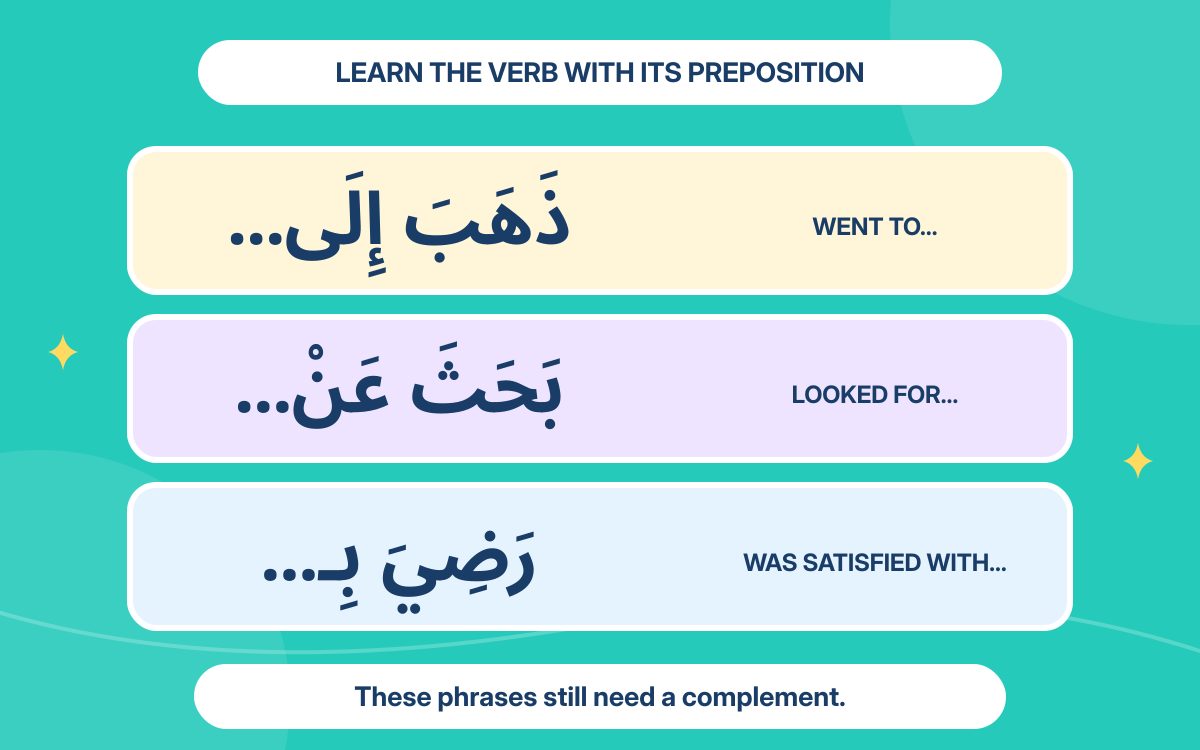
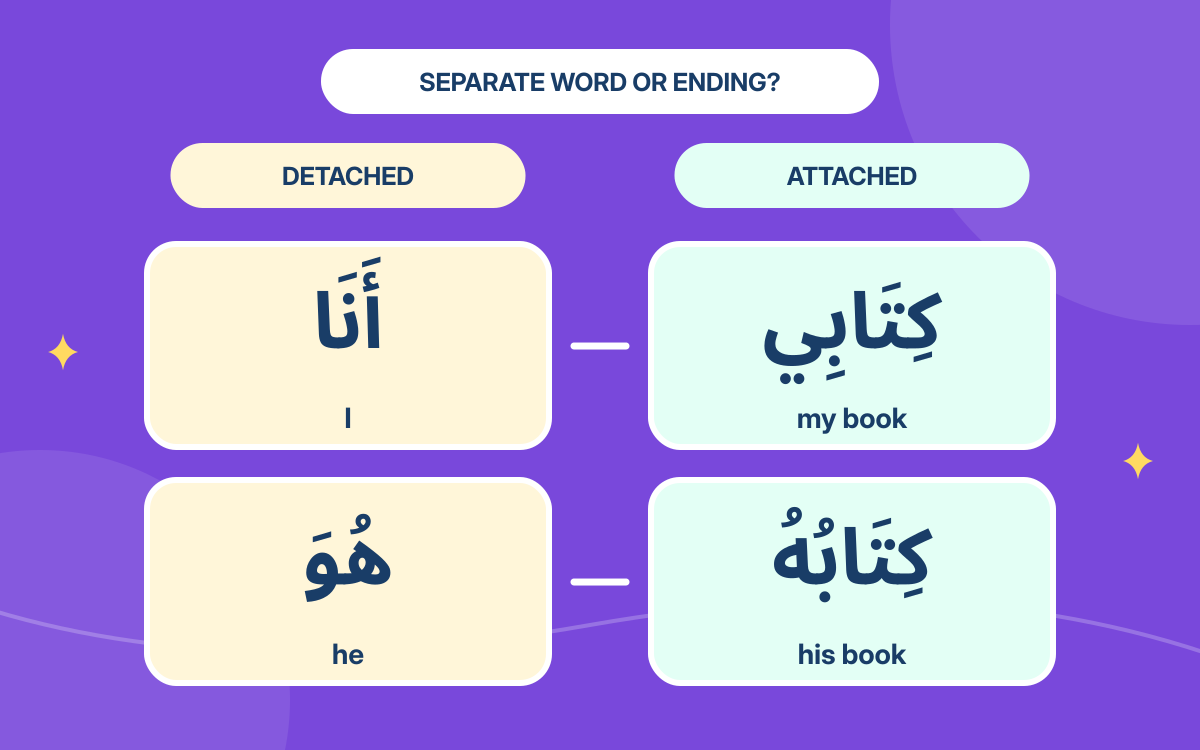
An attached pronoun changes meaning with its host. After a noun it can identify an owner; after a preposition it completes a relationship such as from you or to me. Some combinations also change spelling or pronunciation. Learn a few common forms, then compare the closely related expression maana, with us.
01Read the relationship before the pronoun
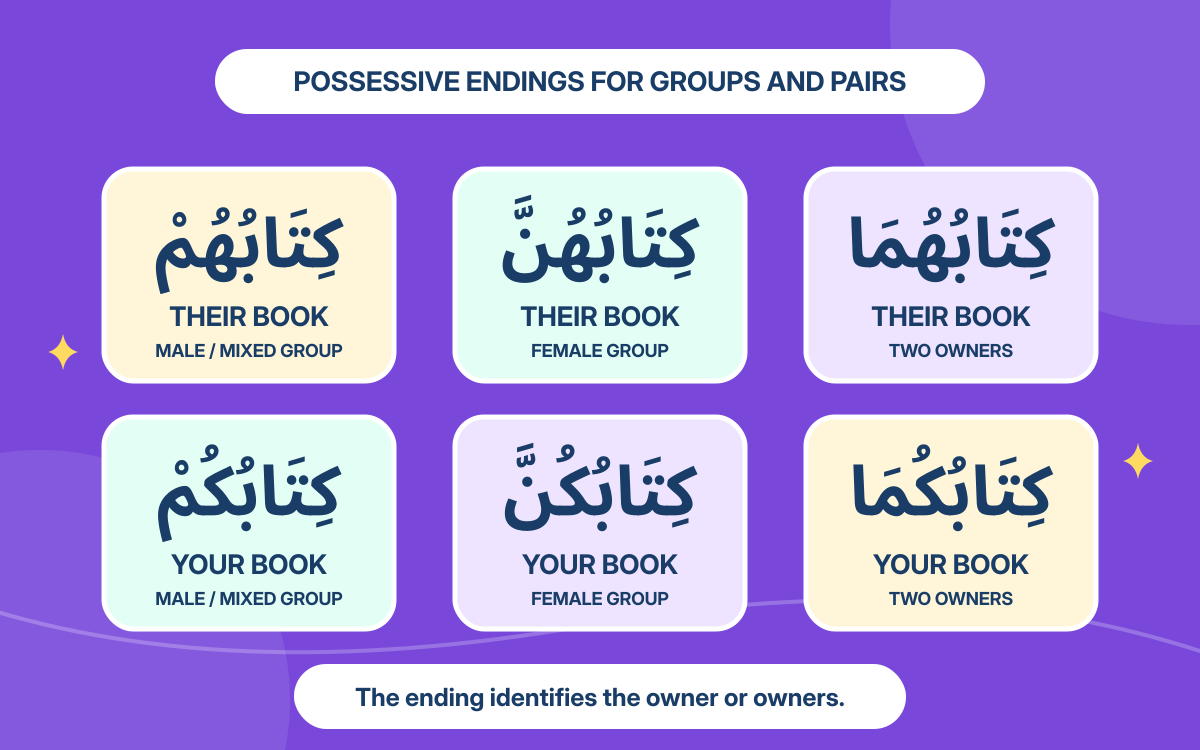
The ending kum identifies you as a male or mixed group. Its host tells you what relationship the speaker means.
لَكُمْ
lakum
For you. (Addressing a male or mixed group.)
مِنْكُمْ
minkum
From you. (Addressing a male or mixed group.)
Both are single written words. The suffix is in a genitive position after the preposition; it is not an owner here. Compare kitabukum, your book, where the same kum attaches to a noun.
02Notice two first-person forms
The first-person pronoun does not attach in one identical shape after every preposition. Learn each combination as a complete word.
لِي
li
For me or to me, according to context
مِنِّي
minni
From me
Li has a long i. Minni has a doubled n, shown by shaddah, and a final long i. Do not write min followed by detached ana to express from me in this pattern. The speaker’s gender does not change either form.
03Read the doubled ya in to me and on me
Ila, to, and ala, on, end in alif maqsura. With attached pronouns that final letter changes to ya. With the first-person ending, two y sounds combine.
إِلَيَّ
ilayya
To me
عَلَيَّ
alayya
On me
The ya carries shaddah and a final a. Keep the doubled yy clear; these forms do not end with the long a of ila or ala. Alayya can also express meanings such as an obligation on me. Choose the English meaning from the full sentence.
04Add the related expression with us
Maa expresses being with someone. With the attached na referring to the speaker’s group, it becomes maana.
هُوَ مَعَنَا
huwa maana
He is with us.
Na can mean us as a pair or a larger group. In traditional Arabic grammar, maa here is an adverbial noun, not a true harf jarr like min. The suffix is its genitive idafa complement. Its English meaning resembles a prepositional phrase, but its Arabic grammatical class differs.
05Notice hu becoming hi
The third-person masculine suffix changes pronunciation after an i sound or a ya ending. Compare these common combinations.
مِنْهُ
minhu
From him
إِلَيْهِ
ilayhi
To him
Hu after min becomes hi after the ay ending in ilayhi. Likewise, عَلَيْهِ (alayhi) means on him, and بِهِ (bihi) can mean by him or with it, depending on context. These are the same masculine pronoun in different sound environments, not different people.
What to remember
- A suffix after a preposition completes its relationship; the host determines the meaning.
- Li, minni, ilayya and alayya are complete forms with different first-person spelling and sound patterns.
- Maana means with us; traditional grammar treats maa here as an adverbial noun rather than a true preposition.
Your reference shelf
Open a guide whenever you need it.
Common joined formsReview the host, the attached referent and the pronunciation change
| Arabic | Reading aid | Meaning |
|---|---|---|
| لِي | li | For me or to me |
| مِنِّي | minni | From me |
| إِلَيَّ | ilayya | To me |
| عَلَيَّ | alayya | On me |
| مِنْهُ | minhu | From him |
| إِلَيْهِ | ilayhi | To him |
| مَعَنَا | maana | With us; adverbial maa |
Prepositions take pronouns in a genitive position, but the pronouns keep their fixed forms with the sound adjustments described here. A genitive position does not require every suffix to visibly end in i.
Maa has a different analysis: it is the first part of an idafa, and the attached pronoun is its complement. In both kinds of expression, keep the pronoun attached in writing. English translation alone does not determine the Arabic word class.
Sources & further learning
References for the language explanations and learning guidance.