Why did you go, sit down or open a book? A purpose clause gives the intended goal of an action. Arabic can attach li to an imperfect verb to express in order to or so that. The verb takes the subjunctive, while its person prefix still tells you who will do the action.
01Add a goal to a completed action
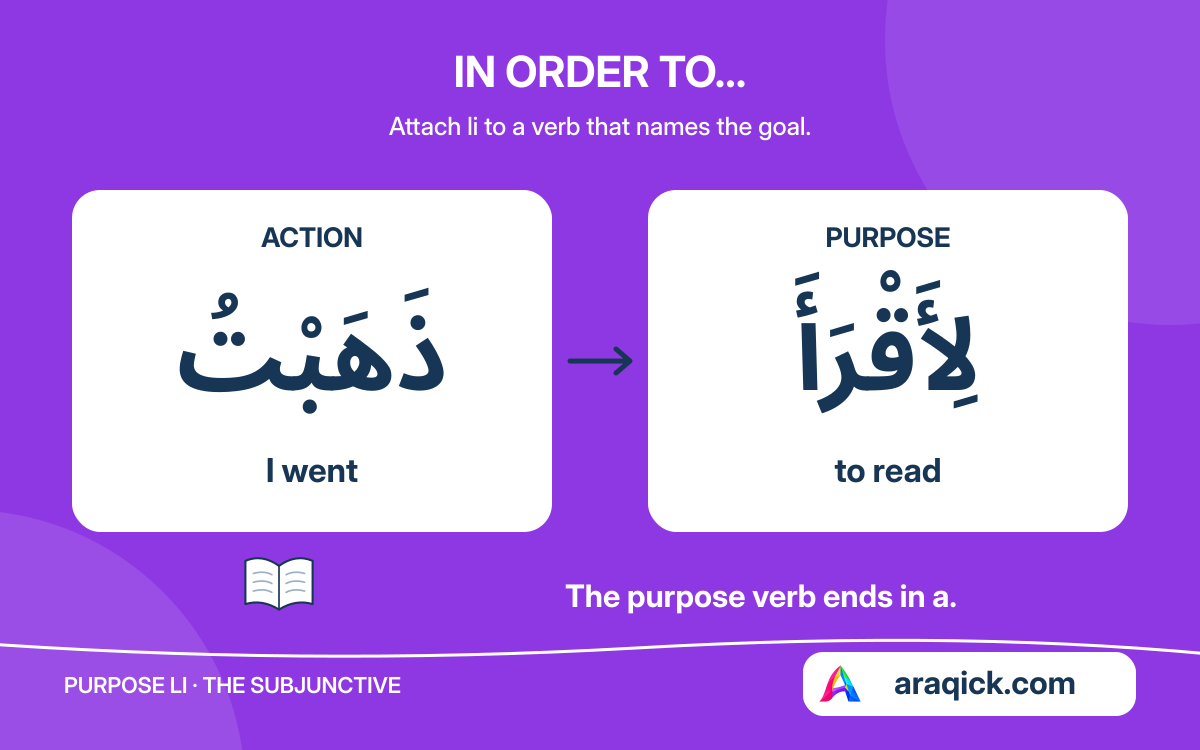
ذَهَبْتُ إِلَى الْمَكْتَبَةِ لِأَقْرَأَ
dhahabtu ila almaktabati liaqraa
I went to the library to read.
Dhahabtu gives the action: I went. Liaqraa gives its purpose: in order for me to read. Li is attached to the following verb in writing; it is not a separate word here.
A purpose describes the intention. This sentence does not by itself prove that the reading actually took place.
02Read the final fathah
أَقْرَأُ → لِأَقْرَأَ
aqrau → liaqraa
I read → in order to read
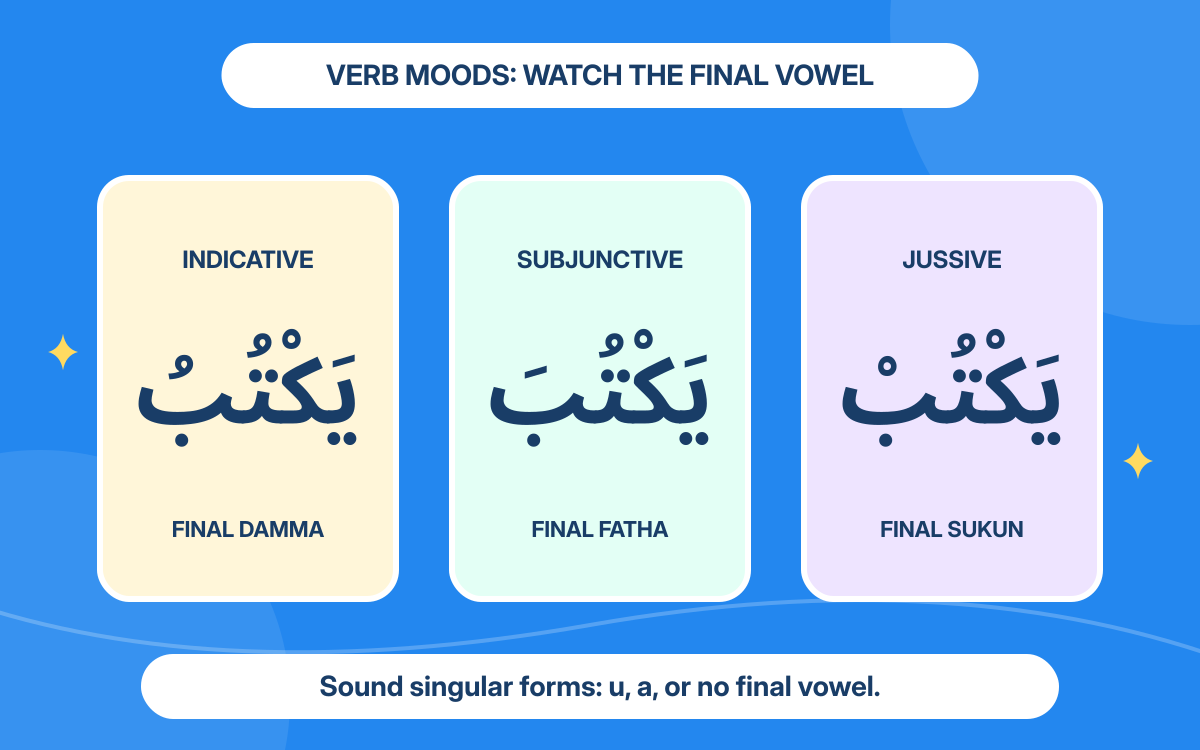
The ordinary indicative ends in u. With purpose li, the regular singular verb becomes subjunctive and ends in a. Traditional analysis supplies an implied an after this lam; you do not need to write an in the pattern shown.
Do not label the verb genitive just because li is also used before nouns. A verb has mood here. The whole purpose clause and the ending of its verb belong to different levels of analysis.
03Keep the intended doer clear
جَلَسْنَا لِنَكْتُبَ رِسَالَةً
jalasna linaktuba risalatan
We sat down to write a letter.
Jalasna identifies we as the people who sat. Naktuba also identifies we, now as the intended writers. The purpose does not require the first-person singular prefix a; choose the person that your meaning needs.
فَتَحْتُ نَافِذَةً لِيَدْخُلَ الْهَوَاءُ
fatahtu nafidhatan liyadkhula alhawau
I opened a window so that the air could enter.
The opener is I, while alhawau, the air, is the subject of entering. A purpose clause can therefore have a different subject.
04Compare a purpose verb with a purpose noun
جَلَسْتُ لِلْقِرَاءَةِ
jalastu lilqiraati
I sat down for reading.
Adding li to alqiraah gives lilqiraati here. The action noun is genitive after the preposition. Compare جَلَسْتُ لِأَقْرَأَ, I sat down to read, where the verb is subjunctive.
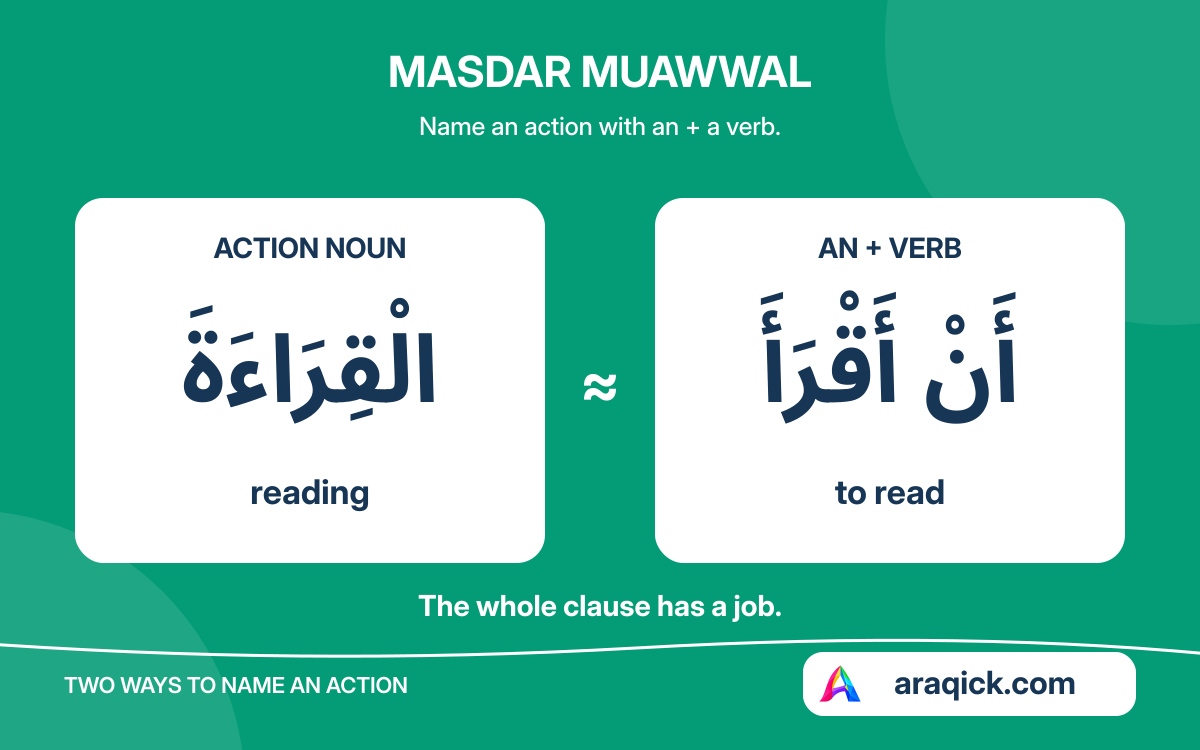
Both can explain the goal, but their endings follow different rules. The masdar muawwal guide explains how a clause can name an action.
05Separate purpose from a command
لِيَكْتُبَ — لِيَكْتُبْ
liyaktuba — liyaktub
so that he writes — let him write
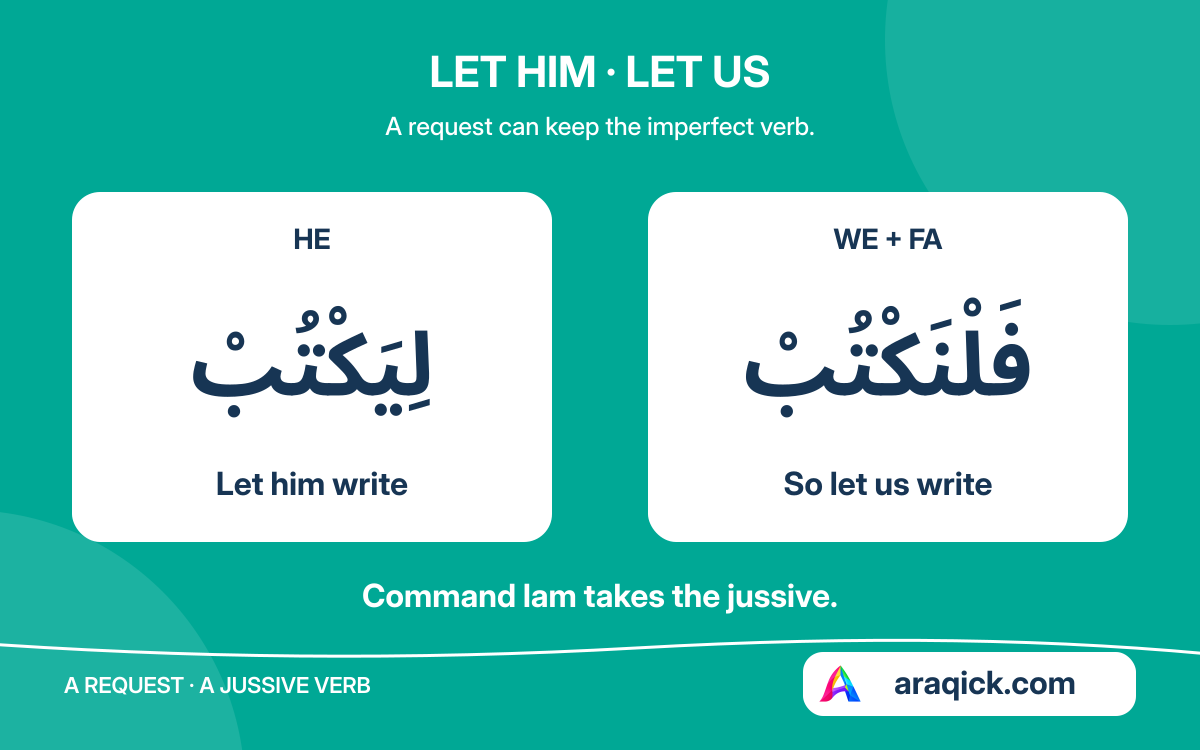
Purpose li takes the subjunctive: yaktuba. The lam of command takes the jussive: yaktub. The initial letters look alike, so read the ending and the sentence’s job together.
Use lam of command for requests such as let him write, and uridu an for I want to write. Plain reading aids simplify sounds and vowel length; the Arabic keeps the grammatical distinctions visible.
What to remember
- Purpose li attaches to the verb and introduces an intended goal.
- The regular singular verb is subjunctive; traditional analysis implies an.
- Purpose, command and li before a noun have different grammatical patterns.
Your reference shelf
Open a guide whenever you need it.
Person forms in a purpose clauseUse a complete subjunctive form after attached li
| Intended writer | Indicative | Purpose form |
|---|---|---|
| I | أَكْتُبُ | لِأَكْتُبَ |
| We | نَكْتُبُ | لِنَكْتُبَ |
| He | يَكْتُبُ | لِيَكْتُبَ |
| She | تَكْتُبُ | لِتَكْتُبَ |
| You: one woman | تَكْتُبِينَ | لِتَكْتُبِي |
| They: male or mixed group | يَكْتُبُونَ | لِيَكْتُبُوا |
| They: female group | يَكْتُبْنَ | لِيَكْتُبْنَ |
The five verbs lose mood nun in the subjunctive. The female-group subject nun stays; that form is fixed in a subjunctive position. Use the sentence to identify the subject when forms are shared.
Sources & further learning
References for the language explanations and learning guidance.