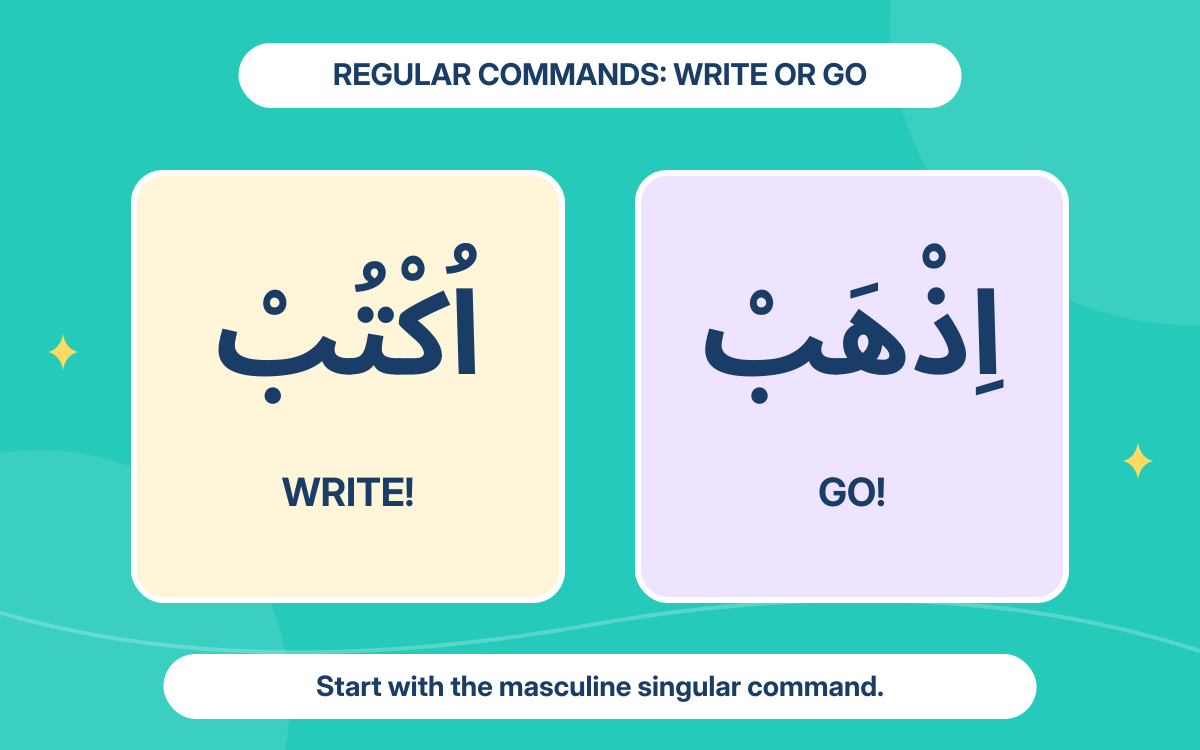
A direct imperative tells a listener to act: write. To express let him write or let us write, Arabic can attach the lam of command to an imperfect verb. The verb becomes jussive. Its prefix and ending still identify the intended doer, so you can extend the request beyond a single listener.
01Ask for a third-person action
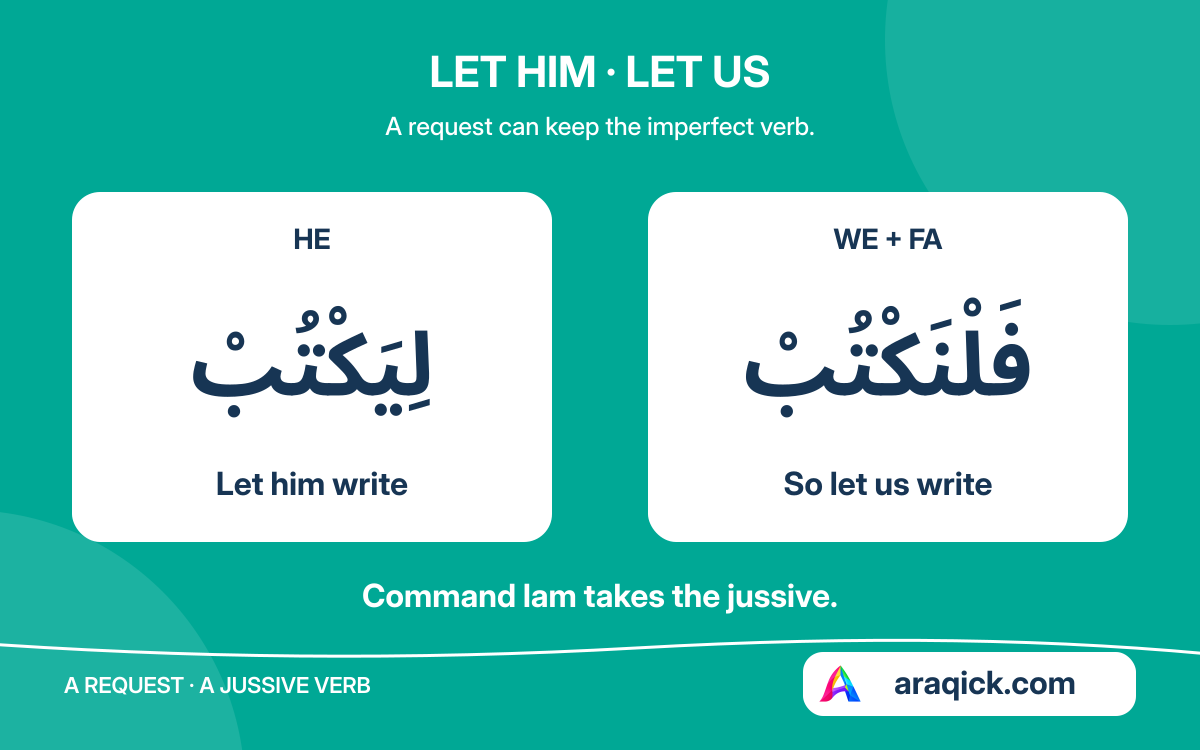
لِيَكْتُبْ رِسَالَةً
liyaktub risalatan
Let him write a letter.
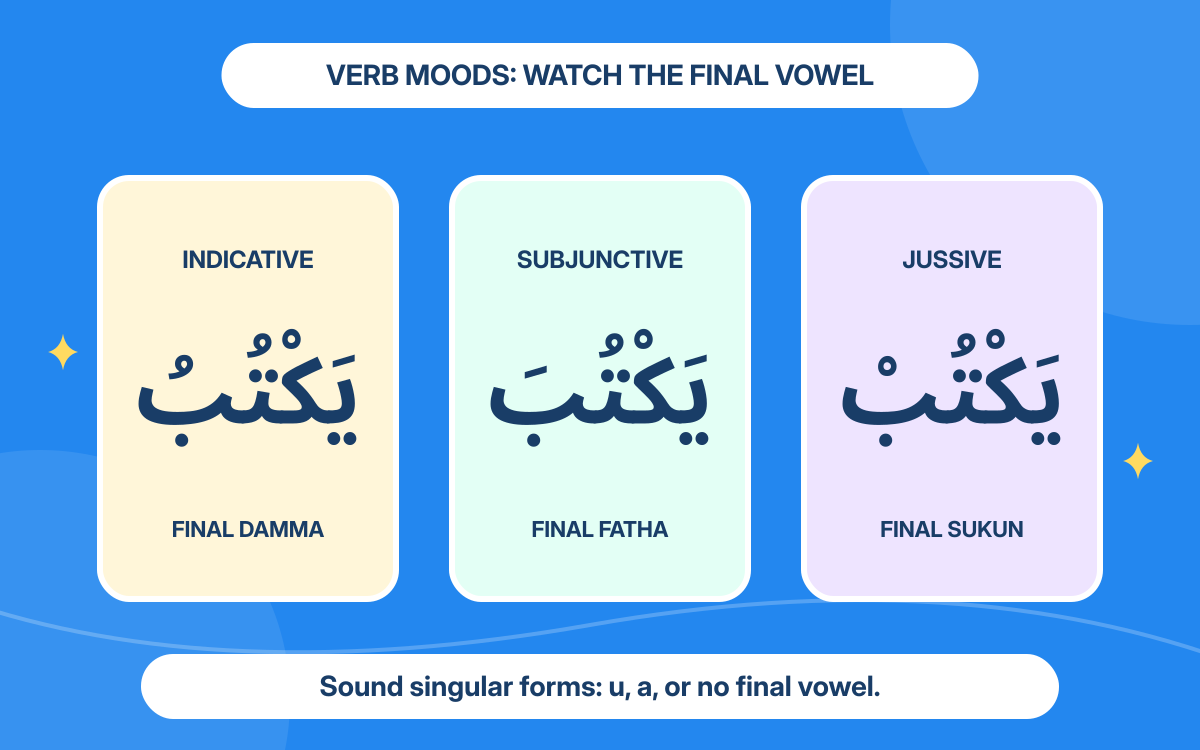
Li is attached to yaktub. The y prefix identifies he in this example, while final sukun shows the jussive. The resulting construction asks that he perform the action; it does not report that he is already writing.
English let can also mean give permission. Here it renders an instruction or request, so do not assume that every sentence with English let uses this same Arabic construction.
02Include yourself in the proposed action
لِنَكْتُبْ رِسَالَةً
linaktub risalatan
Let us write a letter.
The n prefix identifies we. The speaker proposes an action for a group that includes the speaker. The final b still takes sukun, just as in the he form.
Compare نَكْتُبُ, we write, with لِنَكْتُبْ, let us write. The lam and mood change the sentence’s function; the person stays we.
03Recognise the short form after fa
فَلْنَكْتُبْ رِسَالَةً
falnaktub risalatan
So let us write a letter.
After the connector fa, the command lam commonly takes sukun: fal rather than fali. A similar pattern occurs with wa: وَلْيَكْتُبْ, and let him write. The imperfect verb remains jussive.
Do not confuse this attached lam with the separate negative particle لَمْ. Lam of command requests an action; lam followed by a verb denies a past action.
04Ask a group to act
لِيَكْتُبُوا رِسَالَةً
liyaktubu risalatan
Let them write a letter. — a male or mixed group
The indicative yaktubuna loses its mood nun. Its subject waw stays, with the silent alif that follows a final group waw. The form remains a request about they.
For a female group, لِيَكْتُبْنَ retains the subject nun. For two male doers, لِيَكْتُبَا retains the dual alif but loses the mood nun.
05Read command and purpose differently
جَلَسَ لِيَكْتُبَ رِسَالَةً
jalasa liyaktuba risalatan
He sat down to write a letter.
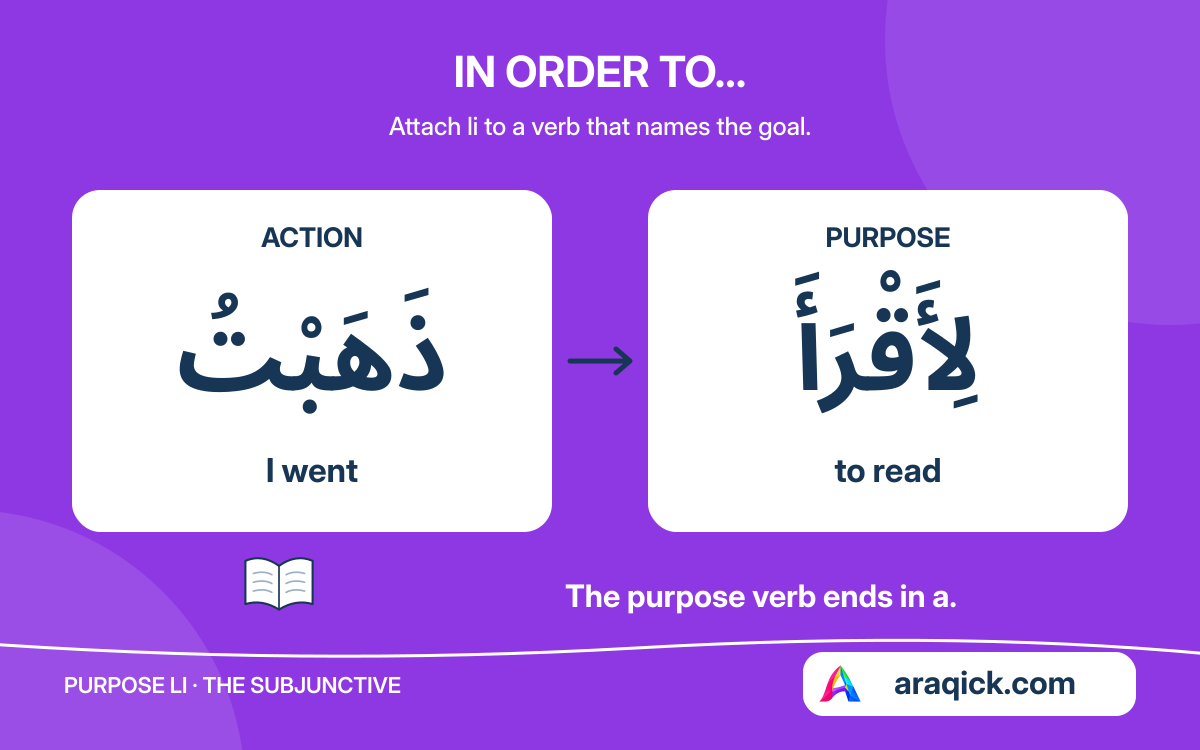
This li explains the purpose of sitting. Yaktuba is subjunctive, unlike command yaktub. The initial spelling alone does not decide which lam you are reading; use the function and the ending together.
Review purpose li, direct imperatives and the five verbs for the neighbouring patterns. Plain reading aids simplify sounds and vowel length, so compare the full Arabic forms when endings look similar.
What to remember
- Lam of command attaches to a jussive imperfect for requests such as let him or let us.
- After fa or wa, command lam commonly has sukun.
- Purpose li takes the subjunctive, so read the meaning and verb ending together.
Your reference shelf
Open a guide whenever you need it.
Let him, her, them and usCompare person endings without changing the request pattern
| Intended doer | Request | Meaning |
|---|---|---|
| He | لِيَكْتُبْ | Let him write |
| She | لِتَكْتُبْ | Let her write |
| Two men | لِيَكْتُبَا | Let them both write |
| Two women | لِتَكْتُبَا | Let them both write |
| Male or mixed group | لِيَكْتُبُوا | Let them write |
| Female group | لِيَكْتُبْنَ | Let them write |
| We | لِنَكْتُبْ | Let us write |
| We, after fa | فَلْنَكْتُبْ | So let us write |
The she form shares its spelling with a second-person masculine form; the intended doer comes from context. The female-group verb is fixed in a jussive position. These regular examples do not cover additional hollow or weak-final stem changes.
Sources & further learning
References for the language explanations and learning guidance.