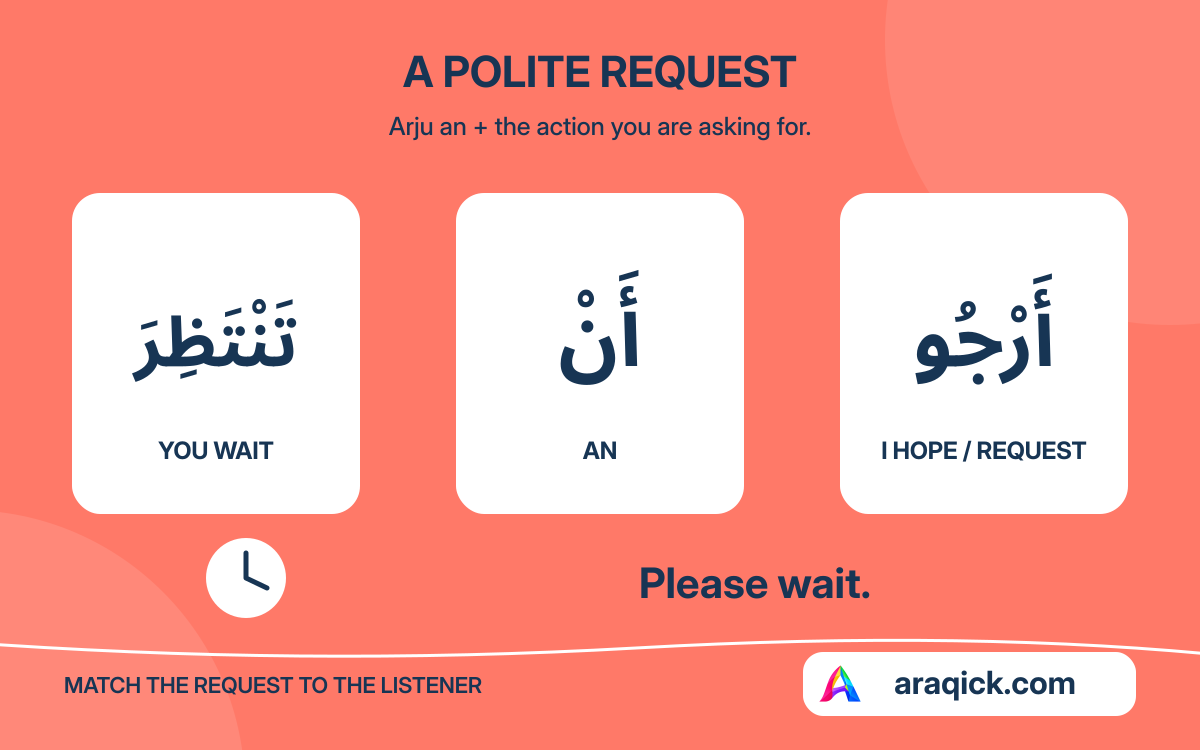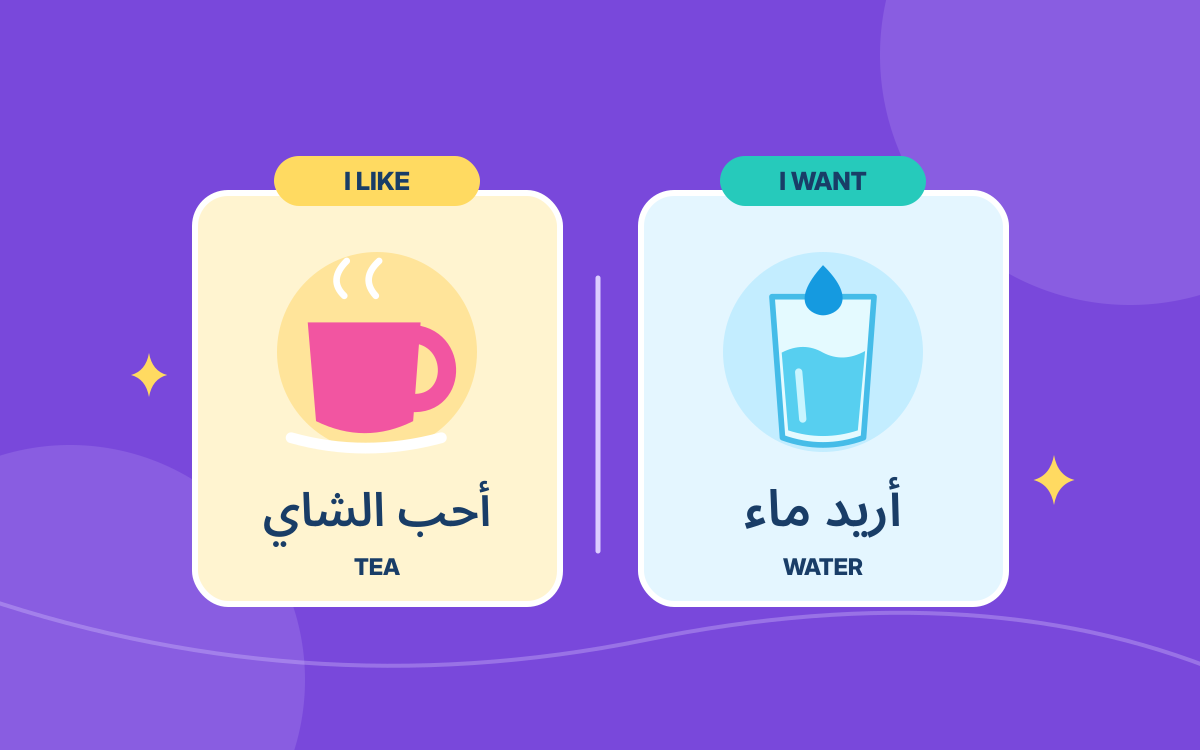
Uridu can request a thing, such as water. To name an action you want to perform, use uridu an followed by a suitable verb. This pattern lets you talk about learning, opening something or going somewhere, with the person and ending built into the second verb.
01Start with a learning goal
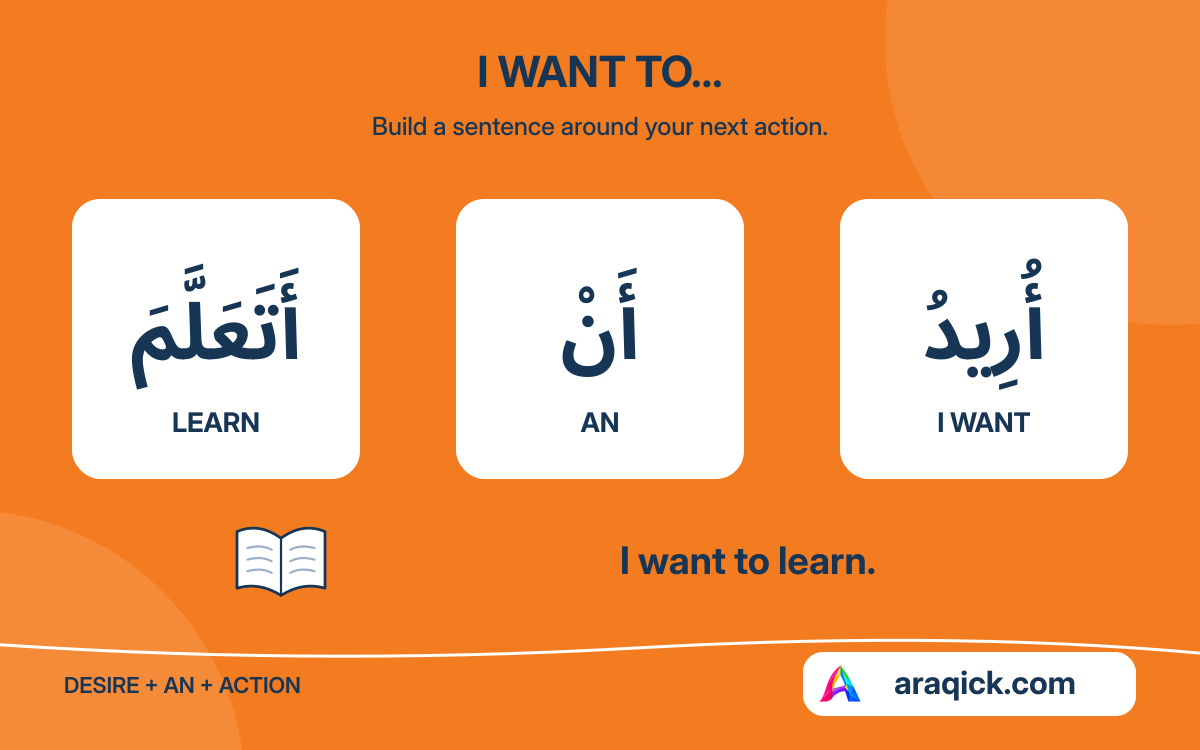
أُرِيدُ أَنْ أَتَعَلَّمَ الْعَرَبِيَّةَ
uridu an ataallama alarabiyyata
I want to learn Arabic.
Uridu means I want. An connects it to the action, and ataallama means learn with I as its doer in this construction. Alarabiyyata names the language being learned.
The two verbs identify the same speaker here. A man or a woman uses this first-person sentence. You do not need to add ana, I, before it.
02Separate wanting a thing from an action
أُرِيدُ كِتَابًا
uridu kitaban
I want a book.
أُرِيدُ أَنْ أَقْرَأَ كِتَابًا
uridu an aqraa kitaban
I want to read a book.
The first requests an object. The second names an action involving that object. Put an before the action verb; do not insert it directly before kitaban.
In the second sentence, the final a of aqraa is its subjunctive ending after an. Learn the marked form together with the complete sentence.
03Swap the action and its details
أُرِيدُ أَنْ أَفْتَحَ النَّافِذَةَ
uridu an aftaha annafidhata
I want to open the window.
أُرِيدُ أَنْ أَذْهَبَ إِلَى الْمَكْتَبَةِ
uridu an adhhaba ila almaktabati
I want to go to the library.
Opening takes the window as a direct object. Going uses ila to introduce the destination, and almaktabati is genitive after that preposition. Keep the whole action pattern when replacing one verb with another.
For regular forms here, an changes final u to a. It does not erase the first-person prefix.
04Decide who wants and who acts
نُرِيدُ أَنْ نَتَعَلَّمَ الْعَرَبِيَّةَ
nuridu an nataallama alarabiyyata
We want to learn Arabic.
أُرِيدُ أَنْ تَفْتَحَ النَّافِذَةَ
uridu an taftaha annafidhata
I want you to open the window. — to one man
In the we sentence, both verbs begin with n. In the second, I want another person to act: uridu stays first person and taftaha addresses the male listener. Check each verb separately.
For one female listener, use أُرِيدُ أَنْ تَفْتَحِي النَّافِذَةَ. Taftahina loses its mood nun after an.
05Say what you do not want to do
لَا أُرِيدُ أَنْ أَخْرُجَ الْآنَ
la uridu an akhruja alana
I do not want to go out now.
Place la before uridu to deny the desire. Keep an and its subjunctive action verb. Alana means now. This sentence does not by itself claim that going out is impossible.
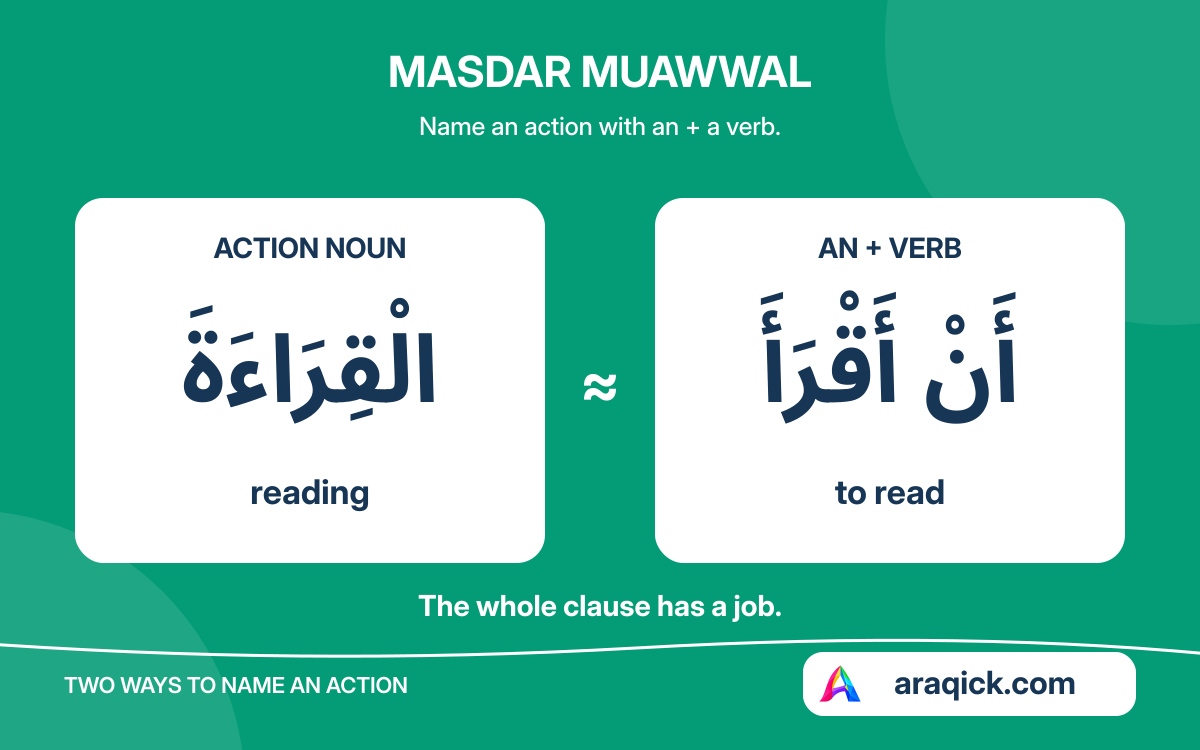
For a fuller explanation of the action clause, see masdar muawwal. The I like and I want guide practises requests for things. Our plain reading aids simplify Arabic sounds and vowel length.
What to remember
- Use uridu plus a noun for a thing, and uridu an plus a verb for an action.
- After an, choose the correct subjunctive form for the person who acts.
- La uridu denies wanting; it does not automatically deny ability.
Your reference shelf
Open a guide whenever you need it.
Useful action requestsChange the action while keeping the connecting pattern
| Arabic | Plain reading aid | Meaning |
|---|---|---|
| أُرِيدُ أَنْ أَتَعَلَّمَ | uridu an ataallama | I want to learn |
| أُرِيدُ أَنْ أَقْرَأَ | uridu an aqraa | I want to read |
| أُرِيدُ أَنْ أَفْتَحَ | uridu an aftaha | I want to open |
| نُرِيدُ أَنْ نَتَعَلَّمَ | nuridu an nataallama | We want to learn |
| أُرِيدُ أَنْ تَفْتَحَ | uridu an taftaha | I want you to open: one man |
| أُرِيدُ أَنْ تَفْتَحِي | uridu an taftahi | I want you to open: one woman |
| لَا أُرِيدُ أَنْ أَخْرُجَ | la uridu an akhruja | I do not want to go out |
These statements express desire. Tone and situation determine whether they function as requests. A polite phrase such as min fadlika, addressing a man, or min fadliki, addressing a woman, can be added when appropriate.
Sources & further learning
References for the language explanations and learning guidance.