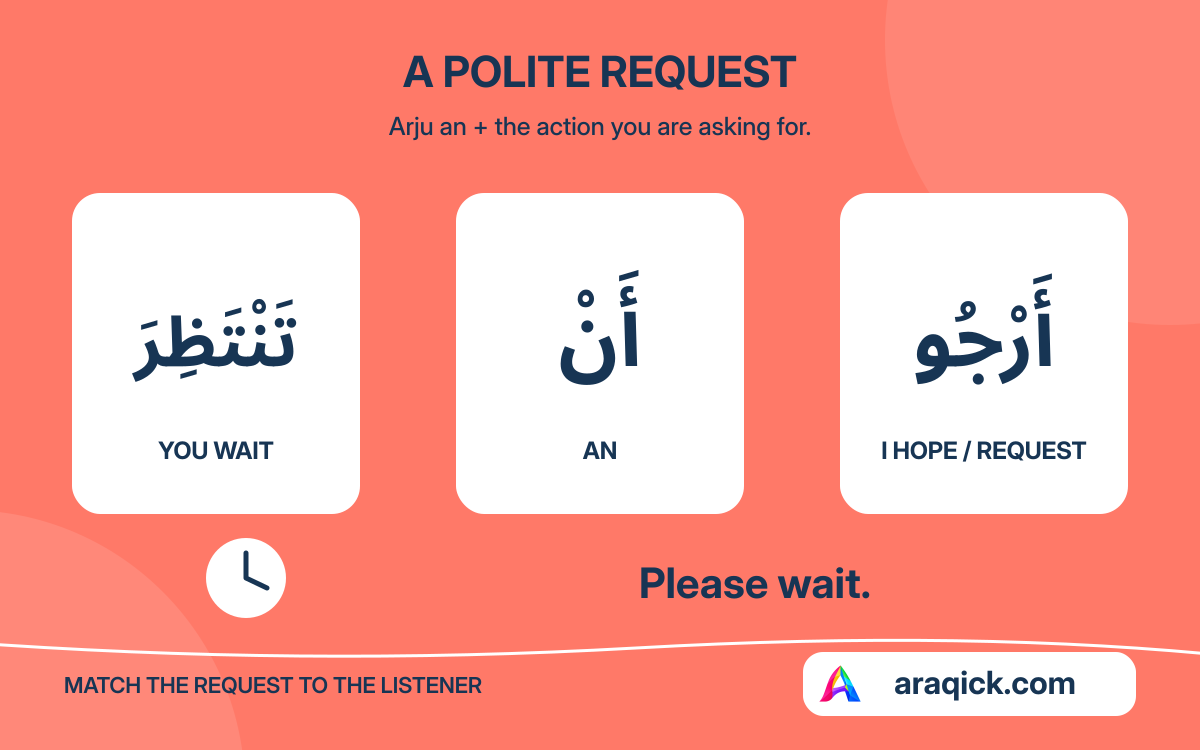
Arju an introduces a request in a more indirect way than a bare command. Literally, arju means I hope; when followed by an action that the listener can perform, the sentence can function as please do this. Learn the listener’s verb form so that the request remains both polite and clear.
01Ask someone to wait
أَرْجُو أَنْ تَنْتَظِرَ هُنَا
arju an tantazira huna
Please wait here. — to one man
Arju expresses the speaker’s hope or request. An introduces what is requested, and tantazira identifies one male listener in this context. Huna tells him where to wait.
This is useful in careful standard Arabic and written requests. Tone and situation still matter: the expression gives you a courteous construction, not a guarantee that every request will sound gentle.
02Use the subjunctive after an
تَنْتَظِرُ → أَنْ تَنْتَظِرَ
tantaziru → an tantazira
you wait → that you wait
The final r takes fathah after an. Keep the imperfect verb here; do not replace it with the bare command intazir inside the same an construction.
In this pattern arju itself ends with its original waw: أَرْجُو. There is no extra alif after that waw. It belongs to the verb’s root, unlike the group waw in many they or you-all forms.
03Address one woman
أَرْجُو أَنْ تَنْتَظِرِي هُنَا
arju an tantaziri huna
Please wait here. — to one woman
The indicative tantazirina loses its mood nun after an. Its final ya remains and identifies the female listener. Arju stays the same because the requester is still I.
This is the same ending change used in uridu an sentences. Change the requested action’s person without changing who is making the request.
04Extend the request to more listeners
أَرْجُو أَنْ تَكْتُبُوا أَسْمَاءَكُمْ
arju an taktubu asmaakum
Please write your names. — to a male or mixed group
Taktubuna becomes taktubu after an: the mood nun disappears. The group waw remains, followed by its silent distinguishing alif. Asmaakum means your names and is the direct object.
A female group uses أَرْجُو أَنْ تَكْتُبْنَ أَسْمَاءَكُنَّ. Its subject nun stays. The reference chart also includes the dual form for two listeners.
05Distinguish a request from a hope
أَرْجُو أَنْ أَفْهَمَ الدَّرْسَ
arju an afhama addarsa
I hope to understand the lesson.
Here the following verb is I understand. The sentence expresses the speaker’s own hope, rather than asking a listener to act. Read both the person and the situation before translating arju as please.
For a direct request, اِنْتَظِرْ هُنَا مِنْ فَضْلِكَ means wait here, please, to one man. Keep that imperative pattern separate from arju an plus a subjunctive. Review command formation and an clauses. The simple reading aids do not mark every sound or long vowel.
What to remember
- Arju an can introduce a polite request when the listener is asked to act.
- An requires the subjunctive; person and group endings still matter.
- Arju an can also express a hope, so translate it in context.
Your reference shelf
Open a guide whenever you need it.
Choose the requested action for your listenerArju stays I while the following verb changes
| Listener | Indicative wait | After arju an |
|---|---|---|
| One man | تَنْتَظِرُ | أَرْجُو أَنْ تَنْتَظِرَ |
| One woman | تَنْتَظِرِينَ | أَرْجُو أَنْ تَنْتَظِرِي |
| Two people | تَنْتَظِرَانِ | أَرْجُو أَنْ تَنْتَظِرَا |
| Male or mixed group | تَنْتَظِرُونَ | أَرْجُو أَنْ تَنْتَظِرُوا |
| Female group | تَنْتَظِرْنَ | أَرْجُو أَنْ تَنْتَظِرْنَ |
The female-group form is fixed in a subjunctive position. A polite request may also use a direct imperative with min fadlika or min fadliki; those are separate constructions, not replacements for the verb immediately after an.
Sources & further learning
References for the language explanations and learning guidance.