A command asks the listener to carry out an action. Start with one male listener and a few regular sound verbs. Their present forms show you which stem and starting vowel to use.
01Ask the listener to act
A present statement such as تَكْتُبُ says you write. The imperative gives the instruction write. It can ask for an action now or later, according to context.
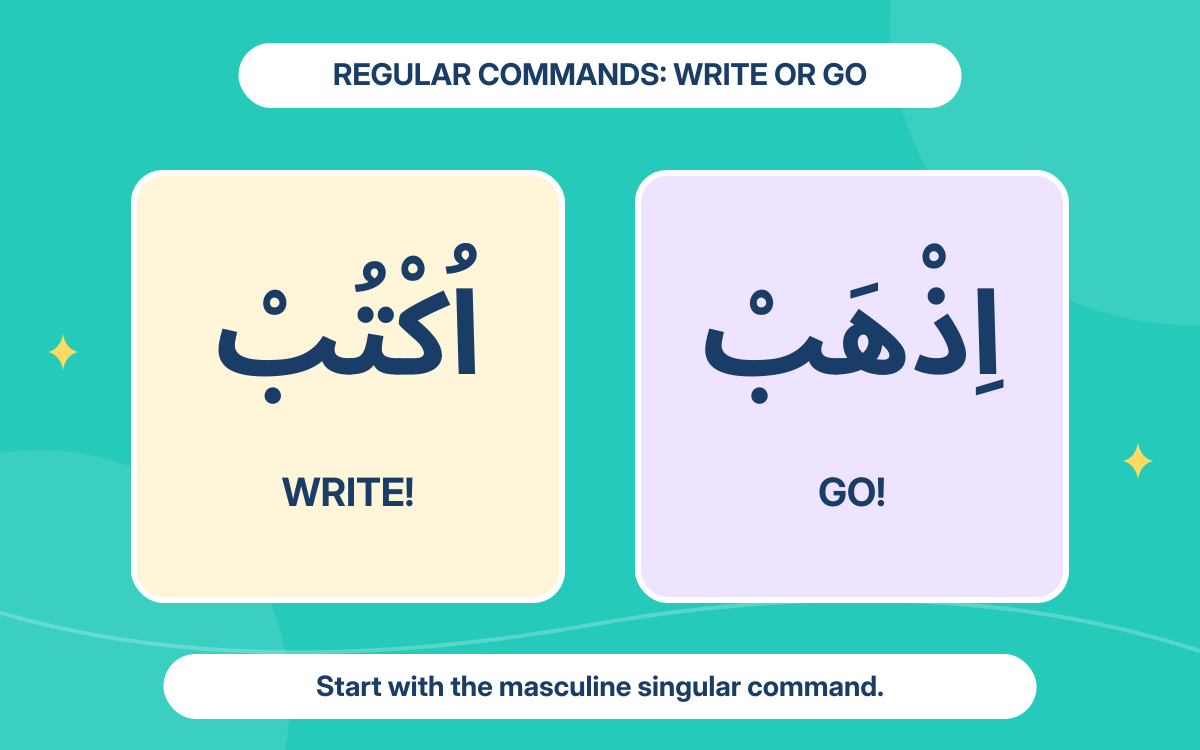
اُكْتُبْ
uktub
Write. — to one male
An imperative is mabni: its grammatical ending is built into its form. This command is built on sukun; it is not a present verb in the jussive mood.
02Use the present stem
For this regular writing verb, start with تَكْتُبُ, you write. Use its jussive shape تَكْتُبْ, then remove the initial ta. The remaining ktub starts with a consonant cluster, so add a joining alif with a vowel.
اُكْتُبْ رِسَالَةً
uktub risalatan
Write a letter. — to one male
The jussive shape helps you build the command. The resulting uktub is an imperative, with its own grammatical classification.
03Choose u or i
For the regular three-root-letter verbs here, use initial u when the present stem’s middle root letter has its regular u, as in تَكْتُبُ. Use i when that vowel is a or i: تَذْهَبُ gives idhhab, and تَجْلِسُ gives ijlis.
اِذْهَبْ
idhhab
Go. — to one male
اِجْلِسْ means sit. Learn the verb’s present stem first; this starter rule is not a rule for every Arabic verb pattern or irregular verb.
04Write the joining alif correctly
The starting alif in uktub and idhhab carries hamzat al wasl, the joining hamzah. At the beginning of speech, pronounce its marked vowel. Write اِذْهَبْ with plain alif, without the hamzah sign used in إ.
وَاكْتُبْ
waktub
And write. — to one male
When the command follows wa in connected speech, its initial joining sound drops. The alif remains in writing.
05Complete the instruction
Put the command before what follows it. Idhhab can introduce a destination with إِلَى, to; the place noun after ila has a genitive ending.
اِذْهَبْ إِلَى الْمَكْتَبَةِ
idhhab ila almaktabati
Go to the library. — to one male
These commands address one male. Commands for women, pairs and groups keep the appropriate listener endings, taught in the next guide.
What to remember
- For these regular sound verbs, use the second person jussive stem and remove the present prefix to build the imperative.
- Uktub begins with u; idhhab and ijlis begin with i. Their initial alif carries hamzat al wasl.
- The imperative is mabni; do not classify it as a jussive present verb.
Your reference shelf
Open a guide whenever you need it.
Compare three regular sound commandsPresent forms, formation aids and final instructions
| Present statement | Jussive formation aid | Command | Meaning |
|---|---|---|---|
| تَكْتُبُ | تَكْتُبْ | اُكْتُبْ | Write |
| تَذْهَبُ | تَذْهَبْ | اِذْهَبْ | Go |
| تَجْلِسُ | تَجْلِسْ | اِجْلِسْ | Sit |
The jussive column is a formation aid, not a standalone instruction. The last column supplies the meaning of the imperative. The initial joining vowel is pronounced when beginning with the command.
Sound regular Form I verbs are the scope of this guide. Weak verbs, exceptional stems and derived patterns need their own rules. Do not form every command by adding i or u to a dictionary past form.
Sources & further learning
References for the language explanations and learning guidance.