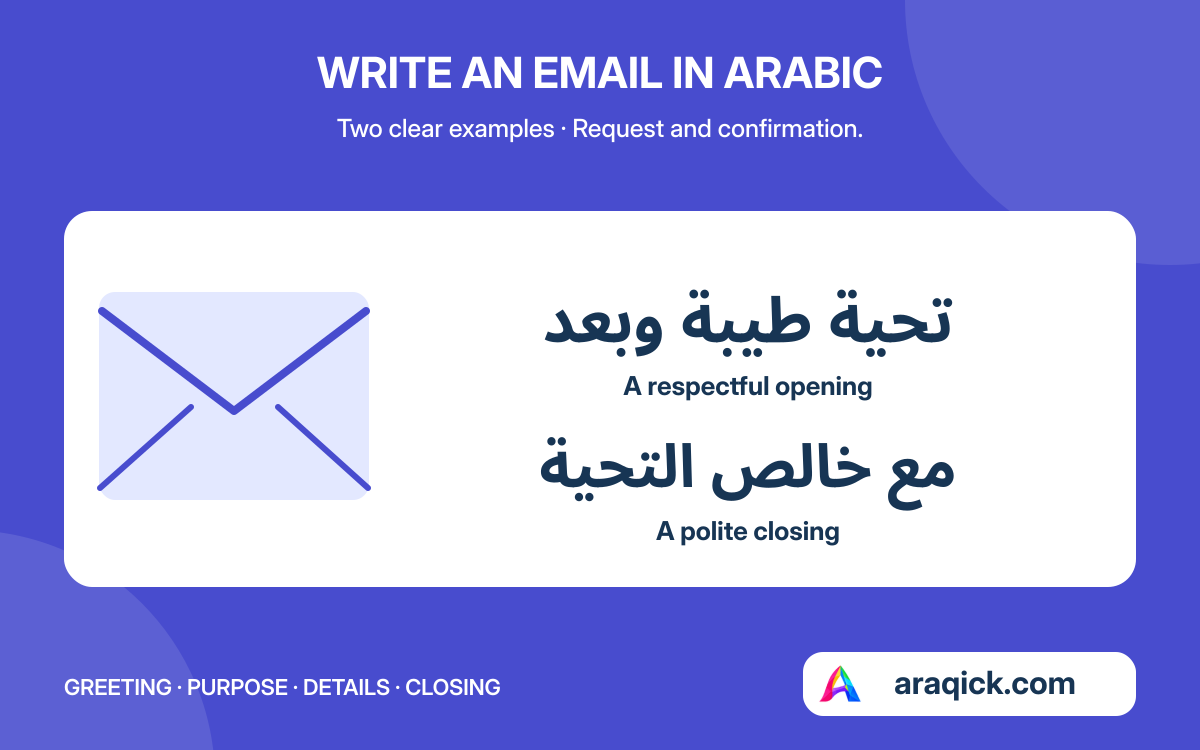
A clear Arabic email needs a specific subject, an appropriate greeting, a direct purpose, the necessary details, and a polite closing. One formal opening is تحية طيبة وبعد، and one closing is مع خالص التحية،. The two original MSA examples below show a meeting request and its confirmation; their text can be selected and adapted.
01What belongs in an Arabic email?
Use this order: subject, recipient, greeting, purpose, details, closing, and your name. The subject should identify the task. طلب موعد لمناقشة المشروع (talab mawid limunaqashat almashru) means “Request for an appointment to discuss the project.” It is more informative than a subject that says only hello.
The examples use ordinary unvowelled written Arabic, as emails usually do.
02How do I address the recipient?
alustadha Maryam almuhtarama
Dear Ms Maryam,
alustadh Sami almuhtaram
Dear Mr Sami,
These are respectful professional forms; ustadh does not have to mean a university professor here. Use a recipient’s known preferred title when available. Muhtarama agrees with the feminine form and muhtaram with the masculine.
03Example 1: request an appointment
Original MSA email · Sami to Maryam
الموضوع: طلب موعد لمناقشة المشروع
الأستاذة مريم المحترمة،
تحية طيبة وبعد،
أود تحديد موعد لمناقشة خطة المشروع. هل يناسبك يوم الثلاثاء الساعة العاشرة صباحًا؟
يرجى اقتراح وقت آخر إذا كان الموعد غير مناسب.
مع خالص التحية،
سامي
The message proposes a time and invites an alternative. It is a request, not a claim that the appointment has already been agreed. For actual scheduling, add the calendar date and time zone if either could be unclear.
04Example 2: confirm the appointment
Original MSA email · Maryam to Sami
الموضوع: تأكيد موعد مناقشة المشروع
الأستاذ سامي المحترم،
تحية طيبة وبعد،
شكرًا على رسالتك. أؤكد موعدنا يوم الثلاثاء الساعة العاشرة صباحًا في قاعة الاجتماعات.
سأحضر نسخة من خطة المشروع.
مع خالص التحية،
مريم
Uakkid means I confirm. The reply restates the day and time and adds the meeting room. It also says what Maryam will bring. The full English versions are in the reference shelf.
05How do I distinguish a request from a confirmation?
awaddu tahdida mawid
I would like to arrange an appointment.
uakkidu mawidana
I confirm our appointment.
Both openings are polite, but they report different stages. If you are still asking whether a time works, do not use confirmation wording. See polite requests for another request pattern.
06How do I finish politely?
Formal written MSA
مع خالص التحية،
maa khalis attahiyya
Kind regards,
Put your name after the closing. This is one suitable option, not a mandatory formula for every organisation. A colleague you know well may use a shorter greeting or closing. Match the relationship while keeping the message easy to understand.
07What should I check before sending?
Check the name, title, purpose, dates, and any attachment mentioned. Read the request as the recipient: is the next action obvious? If replying, confirm the details actually agreed, including any change of place or time.
Use workplace phrases for spoken follow-up and because with lianna when a brief reason is needed. Replace the sample details with your own; do not add promises the message does not need.
What to remember
- State the purpose in both the subject and the body.
- Request wording proposes; confirmation wording confirms.
- Use a suitable greeting and closing, then check the practical details.
Your reference shelf
Open a guide whenever you need it.
English versions of the two emailsRead the meaning, then adapt the Arabic text above.
Example 1 · request
Subject: Request for an appointment to discuss the project
Dear Ms Maryam,
Greetings,
I would like to arrange an appointment to discuss the project plan. Would Tuesday at ten in the morning suit you?
Please suggest another time if the proposed time is unsuitable.
Kind regards,
Sami
Example 2 · confirmation
Subject: Confirmation of the project discussion appointment
Dear Mr Sami,
Greetings,
Thank you for your message. I confirm our appointment on Tuesday at ten in the morning in the meeting room.
I will bring a copy of the project plan.
Kind regards,
Maryam
Email building blocksA reusable structure with short Arabic labels.
| Part | Arabic label or model | Purpose |
|---|---|---|
| Subject | الموضوع | State what the message concerns. |
| Recipient | الأستاذ / الأستاذة | Use an appropriate name and title. |
| Greeting | تحية طيبة وبعد، | Open politely. |
| Request | أود… | Say what you would like. |
| Confirmation | أؤكد… | Confirm an agreed detail. |
| Closing | مع خالص التحية، | Close and add your name. |
Sources & further learning
References for the language explanations and learning guidance.