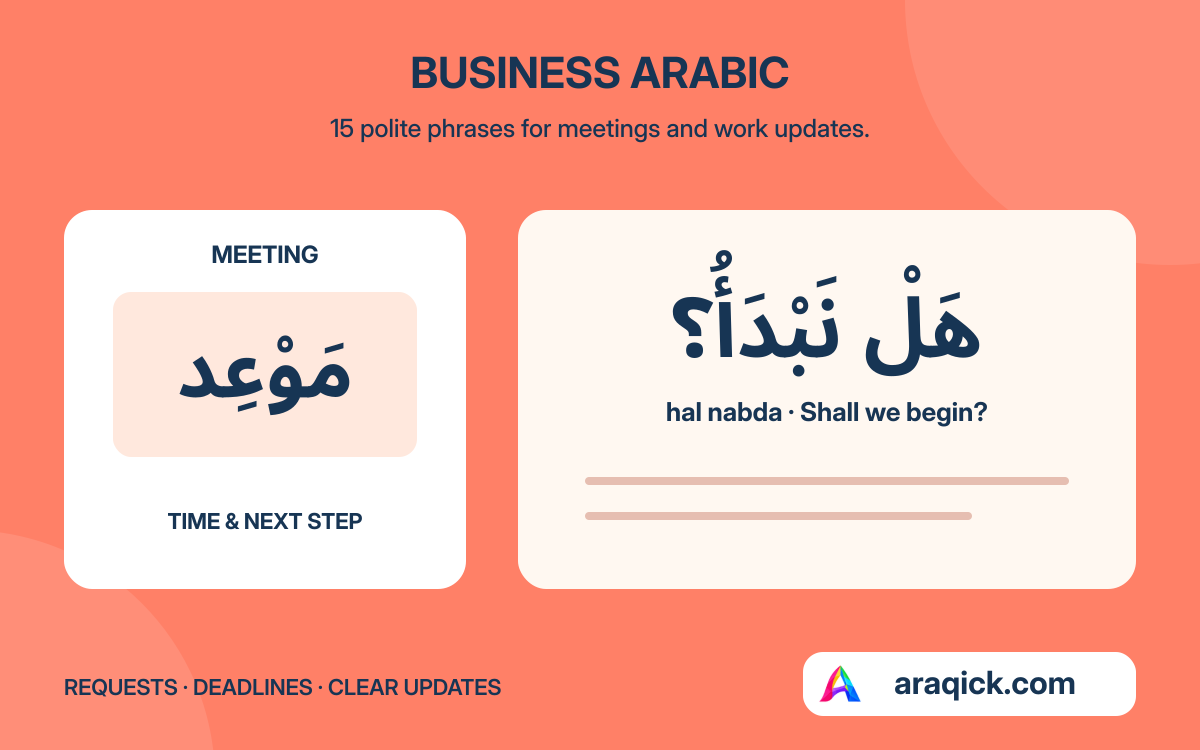
Useful business Arabic includes هَلْ نَبْدَأُ؟ (hal nabda, shall we begin?), عِنْدِي اقْتِرَاحٌ (indi iqtirah, I have a suggestion), and شُكْرًا عَلَى وَقْتِكُمْ (shukran ala waqtikum, thank you for your time). These 15 phrases use clear formal MSA for meetings and work updates. Everyday office speech may instead use a local dialect.
01How do I open a meeting?
Formal MSA · addressing colleagues
أَهْلًا بِكُمْ. هَلْ نَبْدَأُ؟
ahlan bikum. hal nabda
Welcome. Shall we begin?
The invitation includes the group rather than ordering one person to start. State the topic next: مَوْضُوعُ اجْتِمَاعِنَا هُوَ الْجَدْوَلُ (mawduu ijtimaina huwa aljadwal), “The topic of our meeting is the schedule.”
02How do I request a file politely?
Formal MSA · addressing colleagues
هَلْ يُمْكِنُكُمْ إِرْسَالُ الْمِلَفِّ؟
hal yumkinukum irsalu almilaff
Could you send the file?
Yumkinukum addresses a group here. To one man use yumkinuka; to one woman use yumkinuki. Irsal is the action noun sending. Name the file clearly if several files are under discussion.
03How do I check the schedule?
Formal MSA · checking a deadline
A مَتَى الْمَوْعِدُ النِّهَائِيُّ؟
mata almawidu annihai
When is the deadline?
B يَوْمَ الْخَمِيسِ
yawma alkhamis
On Thursday.
A date or day answers the question, but a real task may also need an exact time. هَلْ يُنَاسِبُكُمُ الْخَمِيسُ؟ asks colleagues whether Thursday suits them; it proposes a day instead of confirming an existing deadline.
04How do I distinguish done from planned?
anhaytu almurajaa
I finished the review.
saursilu attaqrira ghadan
I will send the report tomorrow.
Anhaytu reports completion. The sa prefix in saursilu points to a future action. If you need more time, say أَحْتَاجُ إِلَى يَوْمٍ إِضَافِيٍّ (ahtaju ila yawmin idafi), “I need an additional day.”
05How do I offer another idea?
Formal MSA
عِنْدِي اقْتِرَاحٌ. رُبَّمَا نُجَرِّبُ حَلًّا آخَرَ
indi iqtirah. rubbama nujarribu hallan akhar
I have a suggestion. Perhaps we could try another solution.
Rubbama presents the next step as a possibility. It does not state that colleagues have already approved it. Be clear about which point you agree with before introducing an alternative.
06How do I ask for clarification?
Formal MSA · to a man
هَلْ يُمْكِنُكَ تَوْضِيحُ هَذِهِ النُّقْطَةِ؟
hal yumkinuka tawdihu hadhihi annuqta
Could you clarify this point?
Use yumkinuki for a woman. When checking your own understanding, ask هَلْ فَهِمْتُ ذَلِكَ بِشَكْلٍ صَحِيحٍ؟ (hal fahimtu dhalika bishaklin sahih), “Have I understood that correctly?” The two questions have different focuses.
07How do I close with a clear next step?
State the action and its timing, then thank the participants. Saursilu attaqrira ghadan gives both a task and a day. Shukran ala waqtikum is a short closing to colleagues. Avoid treating a friendly acknowledgement as a confirmed deadline.
Use polite request patterns for more grammar, job vocabulary for introductions, and the email guide when turning an agreed next step into a written message.
What to remember
- Match request endings to the person or group addressed.
- Separate completed work from future actions.
- Confirm the next step and deadline before closing.
Your reference shelf
Open a guide whenever you need it.
15 workplace phrasesFormal MSA for short spoken work exchanges.
| Use / meaning | Arabic | Plain reading |
|---|---|---|
| Open a meeting | أَهْلًا بِكُمْ | ahlan bikum |
| Propose starting | هَلْ نَبْدَأُ؟ | hal nabda |
| State the topic | مَوْضُوعُ اجْتِمَاعِنَا هُوَ الْجَدْوَلُ | mawduu ijtimaina huwa aljadwal |
| Ask for clarification · to a man | هَلْ يُمْكِنُكَ تَوْضِيحُ هَذِهِ النُّقْطَةِ؟ | hal yumkinuka tawdihu hadhihi annuqta |
| Request the file · to colleagues | هَلْ يُمْكِنُكُمْ إِرْسَالُ الْمِلَفِّ؟ | hal yumkinukum irsalu almilaff |
| Ask the deadline | مَتَى الْمَوْعِدُ النِّهَائِيُّ؟ | mata almawidu annihai |
| Suggest a time | هَلْ يُنَاسِبُكُمُ الْخَمِيسُ؟ | hal yunasibukumu alkhamis |
| State a future action | سَأُرْسِلُ التَّقْرِيرَ غَدًا | saursilu attaqrira ghadan |
| Report completion | أَنْهَيْتُ الْمُرَاجَعَةَ | anhaytu almurajaa |
| Request more time | أَحْتَاجُ إِلَى يَوْمٍ إِضَافِيٍّ | ahtaju ila yawmin idafi |
| Introduce a suggestion | عِنْدِي اقْتِرَاحٌ | indi iqtirah |
| Agree | أُوَافِقُ عَلَى هَذِهِ النُّقْطَةِ | uwafiqu ala hadhihi annuqta |
| Suggest another possibility | رُبَّمَا نُجَرِّبُ حَلًّا آخَرَ | rubbama nujarribu hallan akhar |
| Confirm understanding | هَلْ فَهِمْتُ ذَلِكَ بِشَكْلٍ صَحِيحٍ؟ | hal fahimtu dhalika bishaklin sahih |
| Thank colleagues for their time | شُكْرًا عَلَى وَقْتِكُمْ | shukran ala waqtikum |
The examples use colleagues in the plural where marked. Workplace preferences and everyday dialects vary; keep requests specific and respectful.
Sources & further learning
References for the language explanations and learning guidance.