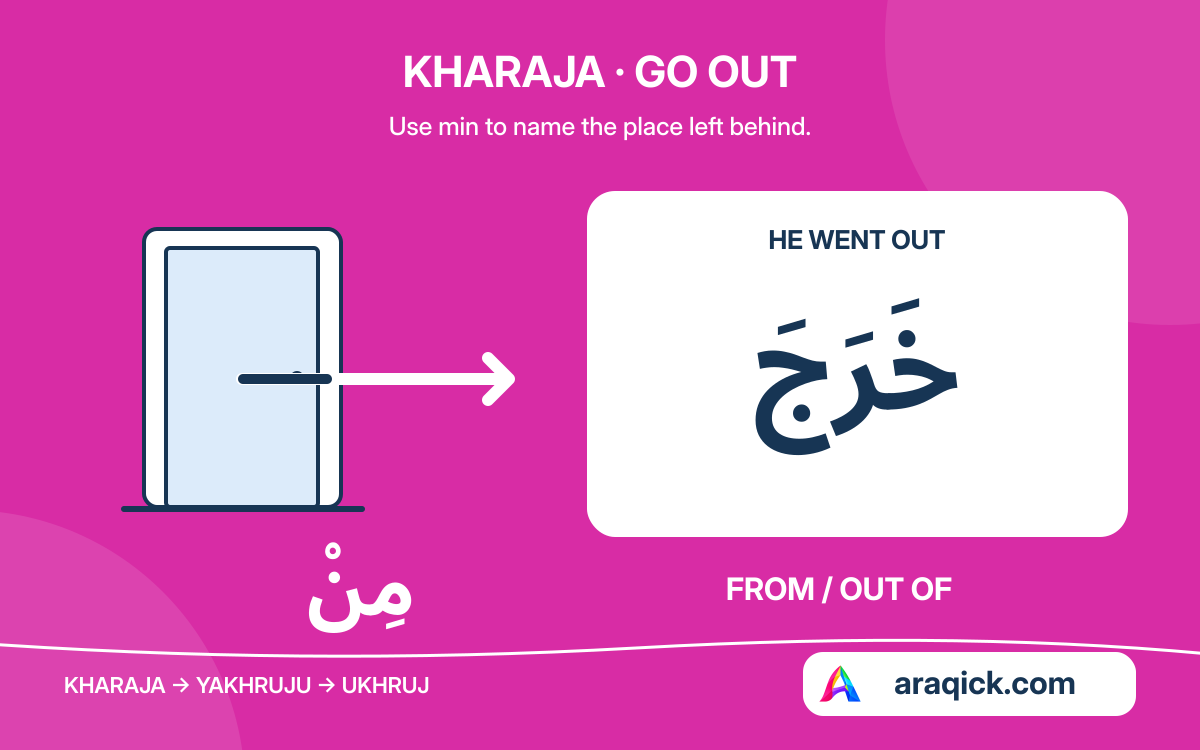
Kharaja means he went out or left a place. Its present is yakhruju, and its root is خ ر ج. Use min to say where the movement starts, then add a destination if it matters. This makes the verb useful for short accounts of leaving a room, going outdoors or returning to a routine.
01Say where someone went out from
خَرَجَ مِنَ الْغُرْفَةِ
kharaja mina alghurfati
He went out of the room.
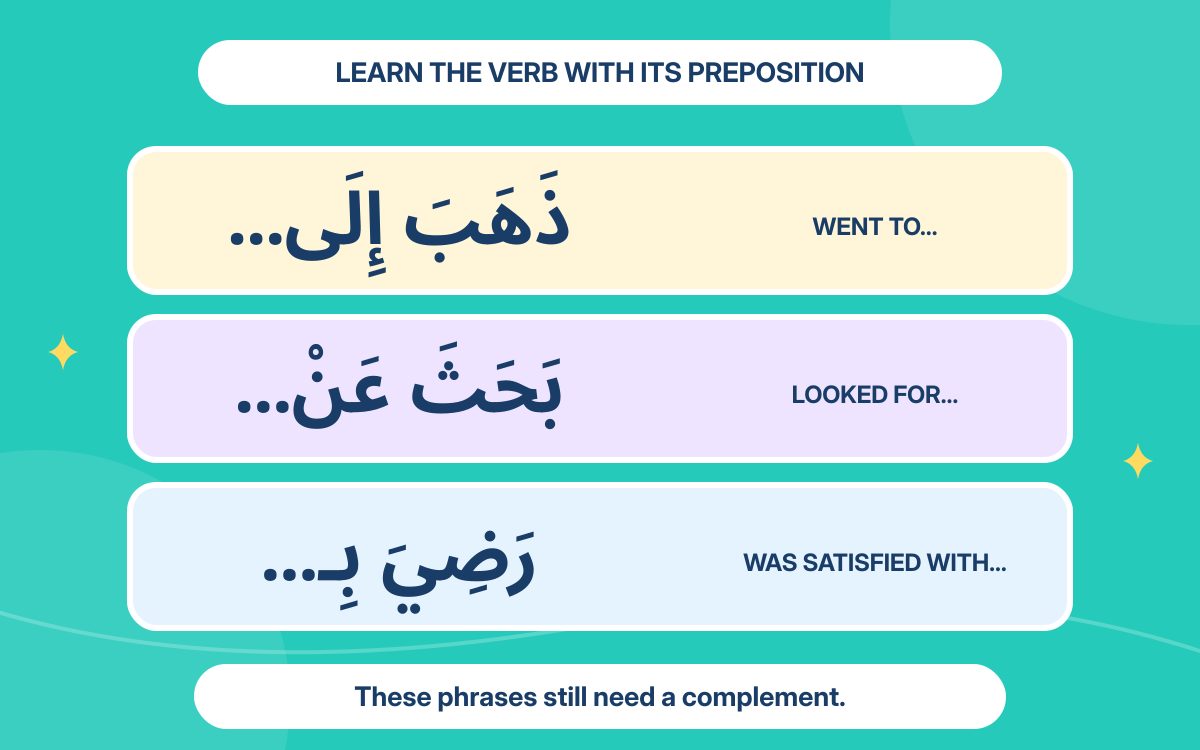
Min introduces the place left behind. Alghurfati is genitive after the preposition. Before the definite article in connected speech, min is read mina, with a helping fathah on n.
Kharaja describes the subject’s own movement. It does not mean that he carried an object outside. Learn the min phrase with the verb so that the route stays clear.
02Tell the story with I or we
خَرَجْتُ مِنَ الْبَيْتِ مُبَكِّرًا
kharajtu mina albayti mubakkiran
I left the house early.
Kharajtu ends in tu for I. The root j has sukun before that suffix. Mubakkiran supplies the extra meaning early; it is not part of the verb’s conjugation.
We went out is خَرَجْنَا (kharajna). She went out is خَرَجَتْ (kharajat). They went out for a male or mixed group is خَرَجُوا (kharaju).
03Add a destination to a present sentence
نَخْرُجُ مِنَ الْمَكْتَبِ إِلَى الْحَدِيقَةِ
nakhruju mina almaktabi ila alhadiqati
We go out from the office to the garden.
Nakhruju has the we prefix n and u on the middle root letter r. The two prepositions do different jobs: min gives the starting point, while ila gives the destination.
Do not confuse kharaja with أَخْرَجَ (akhraja), a Form IV verb meaning he took or brought something out. Compare Form IV when another person or object is made to move.
04Choose a command for the listener
اُخْرُجْ مِنْ هَذَا الْبَابِ
ukhruj min hadha albabi
Go out through this door. — to one man
Ukhruj starts with a helping u when spoken alone and ends with sukun on j. Here min marks the doorway used as the exit route. The context determines whether English through or from reads more naturally.
Address one woman with اُخْرُجِي, two people with اُخْرُجَا, and a male or mixed group with اُخْرُجُوا. Match the ending to the listener instead of using one command for everyone.
05Say did not leave or do not leave
لَمْ نَخْرُجْ مِنَ الْمَكْتَبِ
lam nakhruj mina almaktabi
We did not leave the office.
لَا تَخْرُجْ هَذَا الْمَسَاءَ
la takhruj hadha almasaa
Do not go out this evening. — to one man
Lam denies a past action; prohibitive la tells a listener not to act. Both take the jussive, so the final j has sukun. N identifies we in the first sentence, while t addresses one man in the second.
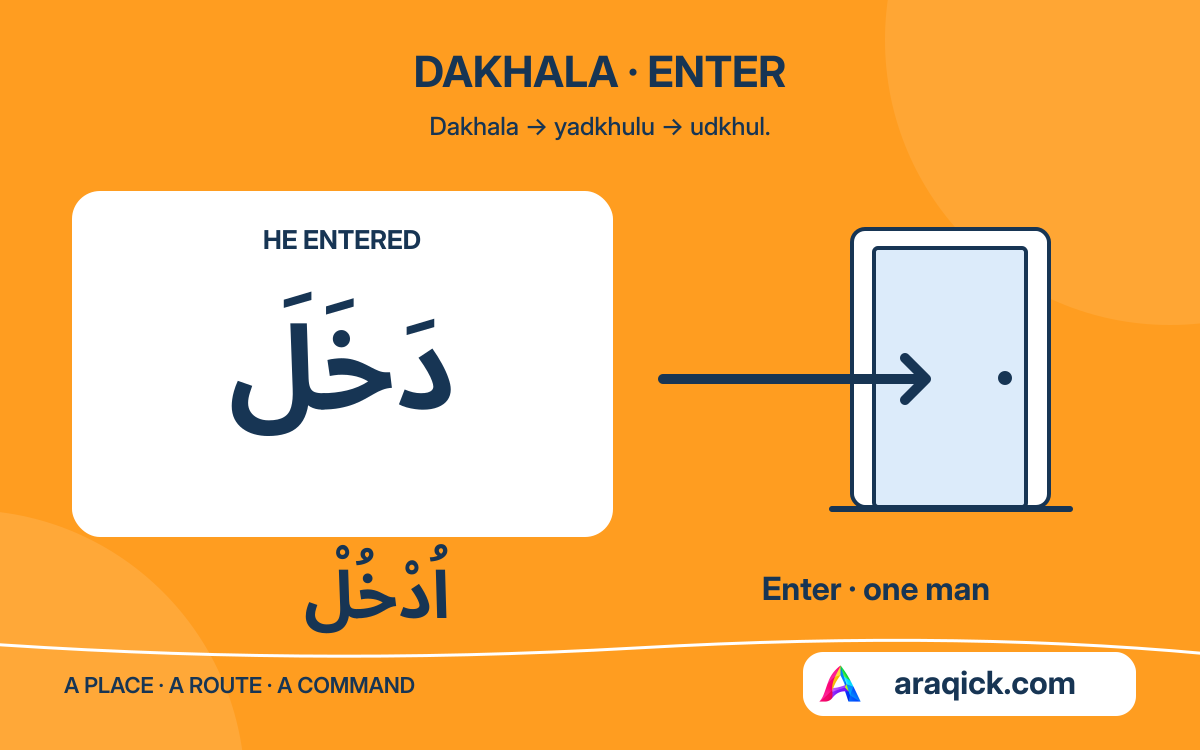
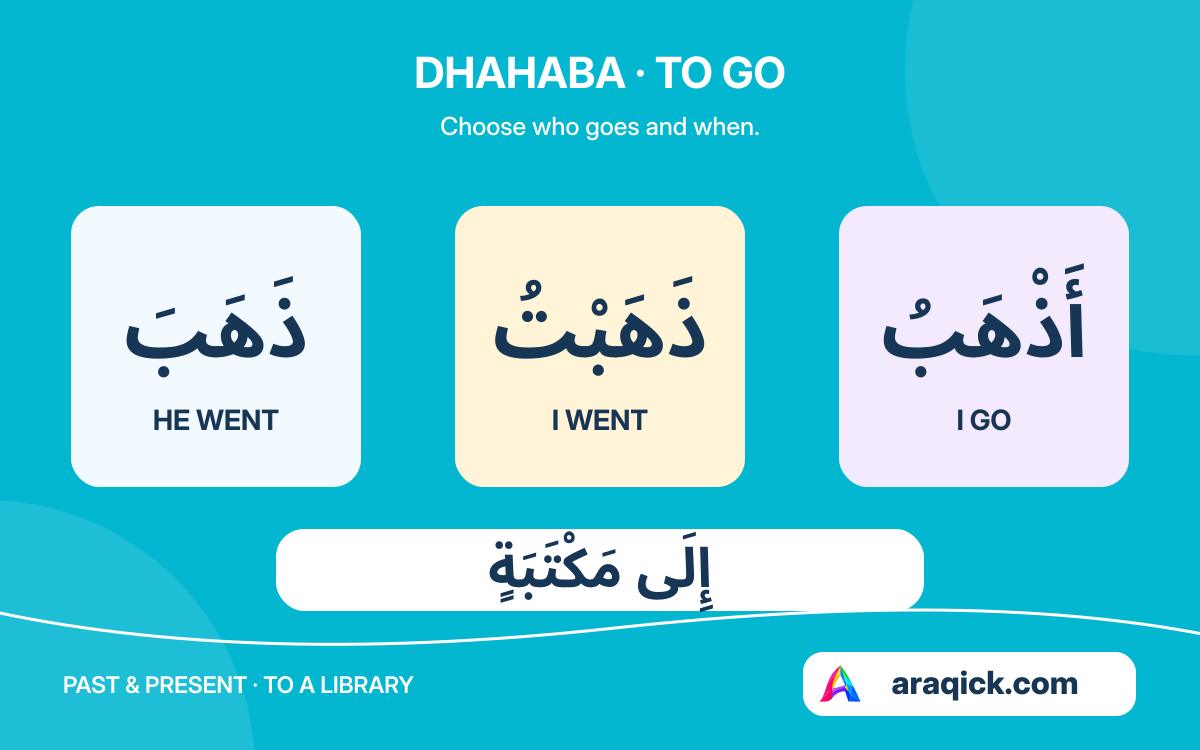
Pair this guide with dakhala for enter, verb–preposition combinations and prohibitive la. The reference charts keep the full vowelled forms beside the simplified reading aids.
What to remember
- Kharaja min gives movement out of a place; ila can add the destination.
- The present is yakhruju, and the singular masculine command is ukhruj.
- Akhraja is a separate causative verb; lam and prohibitive la use jussive forms.
Your reference shelf
Open a guide whenever you need it.
Go out: past and present formsPast and ordinary indicative present; use the lesson for other moods
| Person | Past | Present |
|---|---|---|
| He | خَرَجَ | يَخْرُجُ |
| They: two men | خَرَجَا | يَخْرُجَانِ |
| They: male or mixed group | خَرَجُوا | يَخْرُجُونَ |
| She | خَرَجَتْ | تَخْرُجُ |
| They: two women | خَرَجَتَا | تَخْرُجَانِ |
| They: female group | خَرَجْنَ | يَخْرُجْنَ |
| You: one man | خَرَجْتَ | تَخْرُجُ |
| You: two people | خَرَجْتُمَا | تَخْرُجَانِ |
| You: male or mixed group | خَرَجْتُمْ | تَخْرُجُونَ |
| You: one woman | خَرَجْتِ | تَخْرُجِينَ |
| You: female group | خَرَجْتُنَّ | تَخْرُجْنَ |
| I | خَرَجْتُ | أَخْرُجُ |
| We | خَرَجْنَا | نَخْرُجُ |
The dual you form serves two listeners of either gender. Shared spellings depend on context. The present column is indicative; do not use it unchanged after every mood particle.
Commands by listenerMatch the complete command to the listener
| Listener | Command |
|---|---|
| One man | اُخْرُجْ |
| One woman | اُخْرُجِي |
| Two people | اُخْرُجَا |
| Male or mixed group | اُخْرُجُوا |
| Female group | اُخْرُجْنَ |
The dual command serves two listeners of either gender. A final alif after group waw is silent; the dual alif is pronounced.
Sources & further learning
References for the language explanations and learning guidance.