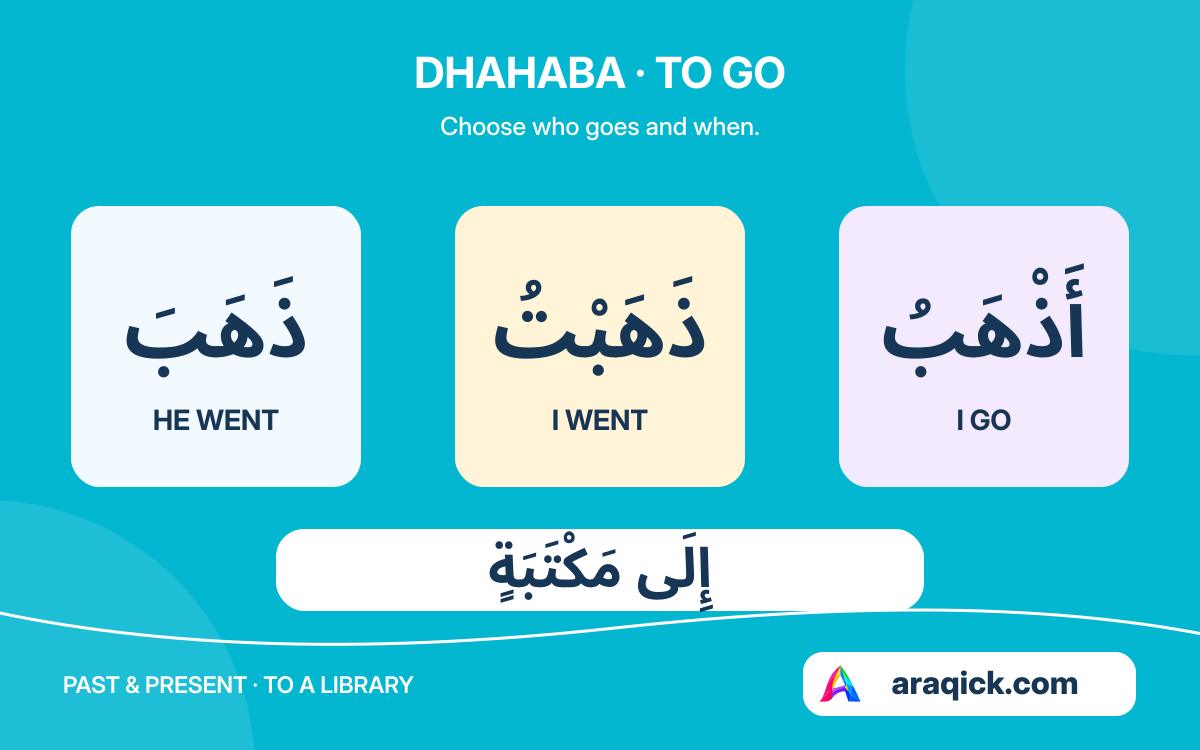
Dhahaba, ذَهَبَ, means “he went.” It is also the form commonly used to look up “to go.” Change the verb to show who goes and when: dhahabtu means I went, while adhhabu means I go or I am going. Add ila to introduce a destination.
01Start with he went
ذَهَبَ سَعِيدٌ إِلَى مَكْتَبَةٍ
dhahaba saidun ila maktabatin
Said went to a library.
Dhahaba gives the completed action. Saidun names the person, and ila maktabatin tells us the destination. The root letters are ذ ه ب.
The first consonant dh is like the sound in English “this.” Keep the following h as a separate consonant. The dictionary label to go is convenient in English, but dhahaba itself is a finite past-tense form.
02Say I went, you went and we went
| Arabic | Reading aid | Meaning |
|---|---|---|
| ذَهَبْتُ | dhahabtu | I went |
| ذَهَبْتَ | dhahabta | You went, one male |
| ذَهَبْتِ | dhahabti | You went, one female |
| ذَهَبْنَا | dhahabna | We went |
The first three differ in the vowel after t: u, a or i. The form for I does not change with the speaker’s gender. We includes the speaker and works for any gender combination.
The verb already identifies the person, so a separate ana or nahnu is optional when the meaning is clear.
03Give the destination with ila
ذَهَبْتُ إِلَى مَكْتَبَةٍ
dhahabtu ila maktabatin
I went to a library.
ذَهَبْنَا إِلَى مَدْرَسَةٍ
dhahabna ila madrasatin
We went to a school.
Ila means to and introduces the destination. The following regular indefinite nouns have genitive in endings: maktabatin and madrasatin. The place is not a direct object in this construction.
Keep the destination phrase intact when changing the traveller. Choose the correct verb first, then attach the place phrase.
04Move from went to go
| Arabic | Reading aid | Meaning |
|---|---|---|
| أَذْهَبُ | adhhabu | I go / I am going |
| يَذْهَبُ | yadhhabu | He goes / he is going |
| تَذْهَبُ | tadhhabu | She goes, or you go to one male |
| نَذْهَبُ | nadhhabu | We go / we are going |
These are present indicative forms. Tadhhabu can refer to she or to one male listener; the subject or context resolves it. The female-listener form is تَذْهَبِينَ (tadhhabina).
أَذْهَبُ إِلَى مَكْتَبَةٍ
adhhabu ila maktabatin
I go to a library. / I am going to a library.
05Change one part at a time
Compare ذَهَبْتُ (dhahabtu, I went) with أَذْهَبُ (adhhabu, I go). Keep ila maktabatin as the destination in both sentences. This isolates the change of tense.
Then change the person: dhahabna, we went, becomes nadhhabu, we go. The reference shelf gives the complete past and present sets, including pairs and groups.
Learn those endings with the past-tense guide, then practise one familiar trip in both tenses. These full forms include study endings; natural pauses can shorten final case or mood vowels.
What to remember
- Dhahaba means he went; dhahabtu means I went.
- Use ila plus a place to state a destination.
- Adhhabu and nadhhabu are present forms for I and we.
Your reference shelf
Open a guide whenever you need it.
Past and present conjugation chartCompare all fourteen traditional person positions
| Person | Pronoun | Past | Present |
|---|---|---|---|
| He | هُوَ | ذَهَبَ | يَذْهَبُ |
| They, two males or a mixed pair | هُمَا | ذَهَبَا | يَذْهَبَانِ |
| They, male or mixed group | هُمْ | ذَهَبُوا | يَذْهَبُونَ |
| She | هِيَ | ذَهَبَتْ | تَذْهَبُ |
| They, two females | هُمَا | ذَهَبَتَا | تَذْهَبَانِ |
| They, female group | هُنَّ | ذَهَبْنَ | يَذْهَبْنَ |
| You, one male | أَنْتَ | ذَهَبْتَ | تَذْهَبُ |
| You, two males or a mixed pair | أَنْتُمَا | ذَهَبْتُمَا | تَذْهَبَانِ |
| You, male or mixed group | أَنْتُمْ | ذَهَبْتُمْ | تَذْهَبُونَ |
| You, one female | أَنْتِ | ذَهَبْتِ | تَذْهَبِينَ |
| You, two females | أَنْتُمَا | ذَهَبْتُمَا | تَذْهَبَانِ |
| You, female group | أَنْتُنَّ | ذَهَبْتُنَّ | تَذْهَبْنَ |
| I | أَنَا | ذَهَبْتُ | أَذْهَبُ |
| We | نَحْنُ | ذَهَبْنَا | نَذْهَبُ |
The two antuma rows have identical forms. Masculine plural agreement also serves mixed human groups. Exactly two people use dual forms. The chart lists present indicative forms; particles can require a different mood ending.
Sources & further learning
References for the language explanations and learning guidance.