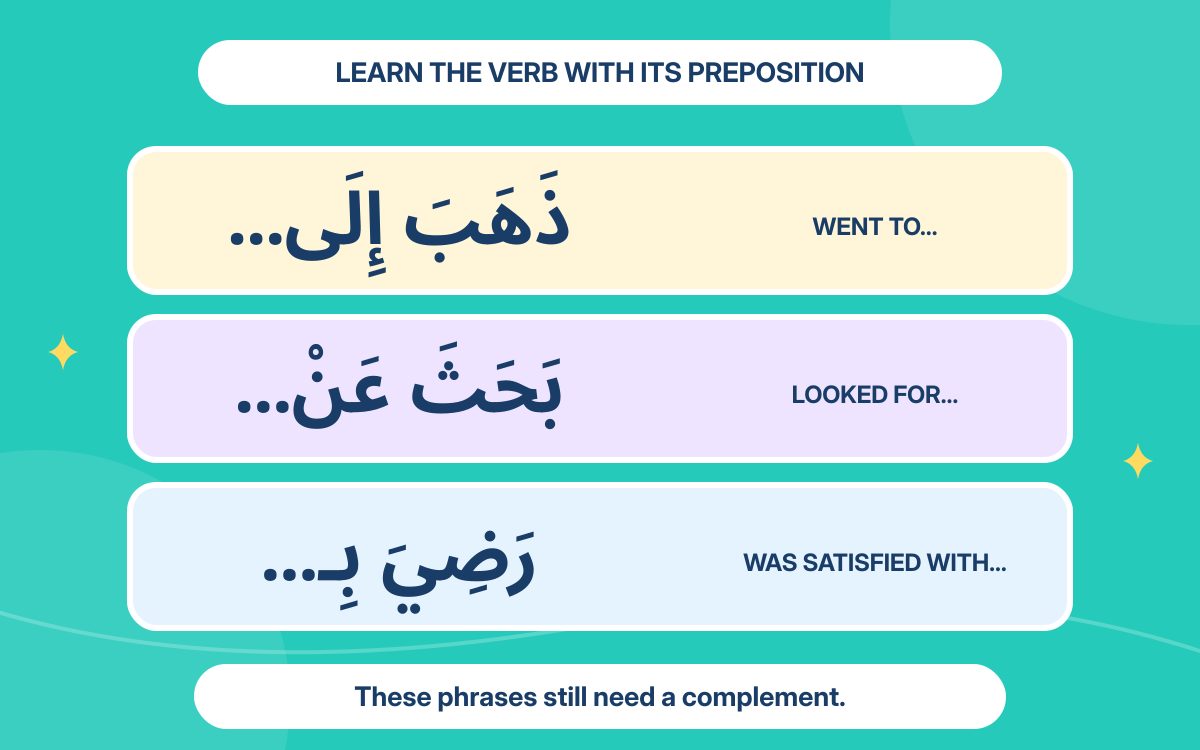
Learn a verb together with the preposition used for the meaning you need. Arabic’s search for and be satisfied with do not simply copy English word by word. Practise three useful pairings and compare them with a direct object.
01Go to a destination with ila
Use ذَهَبَ إِلَى for went to. The preposition ila introduces the destination. A regular noun after it takes a genitive ending.
ذَهَبْتُ إِلَى الْمَدْرَسَةِ
dhahabtu ilal madrasati
I went to school.
Dhahabtu identifies I as the person who went. الْمَدْرَسَةِ ends in kasrah because it follows ila. This destination is not a direct object.
02Search for something with an
For searching for a missing thing, learn بَحَثَ عَنْ. Keep an before the thing sought; Arabic does not use li merely because English says for.
بَحَثْتُ عَنِ الْمِفْتَاحِ
bahathtu anil miftahi
I searched for the key.
The key takes the genitive ending i after an. Before the definite article, an’s final nun receives a temporary joining kasrah, giving ani.
03Be satisfied with something using bi
Use رَضِيَ بِـ for accepting or being satisfied with something. Bi attaches to the following word, and its noun is genitive.
رَضِيتُ بِالنَّتِيجَةِ
raditu bin natijati
I was satisfied with the result.
The final i on النَّتِيجَةِ follows bi. Learn this pairing for this meaning; the same verb can have other constructions and meanings.
04Compare a direct object with a preposition’s complement
The door in I opened the door is a direct object. It follows the verb without a preposition and takes the accusative ending a.
فَتَحْتُ الْبَابَ
fatahtu lbaba
I opened the door.
Compare بَحَثْتُ عَنْهُ, I searched for it. Hu attaches to an, so it is the preposition’s complement. In فَتَحْتُهُ, I opened it, hu attaches directly to the verb and is its object.
بَحَثْتُ عَنْهُ
bahathtu anhu
I searched for it. — a masculine thing
05Keep the verb and its preposition together
Build the searching sentence by choosing the verb, its learned preposition, then the thing sought. Keep the noun genitive after the preposition.
بَحَثْتُ عَنِ الْمِفْتَاحِ
bahathtu anil miftahi
I searched for the key.
These are useful pairings for the selected meanings, not claims that a verb needs a preposition in every sentence. ذَهَبْتُ can simply mean I went. Our plain Latin aids retain teaching endings but simplify vowel length and special letter symbols.
What to remember
- Learn dhahaba ila for going to a destination, bahatha an for searching for something and radiya bi for satisfaction with something.
- A regular noun after a preposition is genitive; a direct object on its own follows a different case pattern.
- A suffix on the verb can be a direct object; a suffix on a preposition belongs to that preposition.
Your reference shelf
Open a guide whenever you need it.
Keep the pairing and meaning togetherThree learned combinations and their complement types
| Pairing | Example | Meaning |
|---|---|---|
| ذَهَبَ إِلَى | ذَهَبْتُ إِلَى الْمَدْرَسَةِ | I went to school |
| بَحَثَ عَنْ | بَحَثْتُ عَنِ الْمِفْتَاحِ | I searched for the key |
| رَضِيَ بِـ | رَضِيتُ بِالنَّتِيجَةِ | I was satisfied with the result |
In traditional analysis, the preposition and its complement are جَارٌّ وَمَجْرُورٌ. A regular complement noun such as school, key or result shows kasrah. An attached pronoun has a fixed form and occupies the genitive position without receiving an ordinary noun’s ending.
These verbs also have other attested constructions. For example, رَضِيَ عَنْهُ can express being pleased with him, while radiya bi is the satisfaction or acceptance pairing practised here. Learn each usage with its meaning instead of replacing one preposition with another automatically.
A verb may stand without naming a destination or another complement when the context is clear. Going can be expressed by dhahabtu alone. Likewise, being transitive does not mean an object must always be spoken; context can leave it understood.
The Latin aids reflect connected readings such as ilal madrasati, anil miftahi and bin natijati. They omit special symbols for ain and emphatic consonants and simplify long vowels; the fully vowelled Arabic remains the spelling guide.
Sources & further learning
References for the language explanations and learning guidance.