I‘rab explains a word’s grammatical status and, where relevant, how that status is shown by its ending. Begin with meaning, identify the sentence structure, then name each word’s role and case. A visible vowel is useful evidence, but it is not the whole analysis.
01Read the meaning before the ending
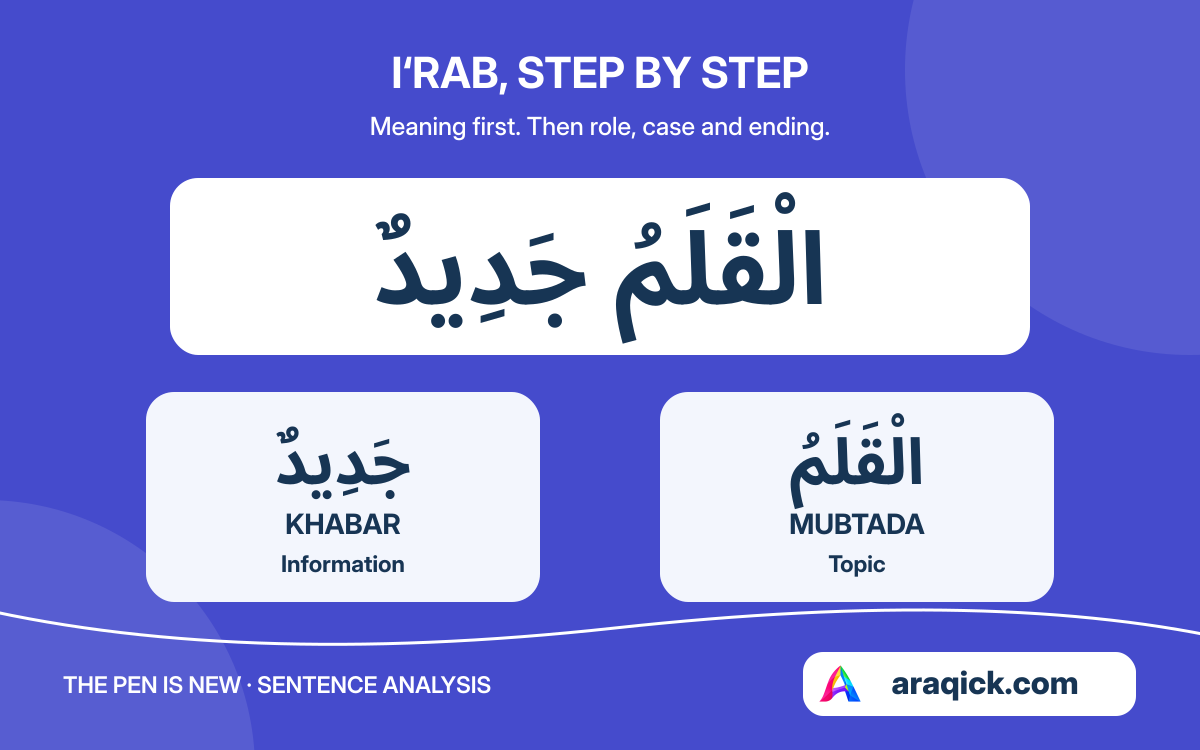
الْقَلَمُ جَدِيدٌ
alqalamu jadidun
The pen is new.
Ask what we are talking about and what we learn. Alqalamu names the pen; jadidun tells us it is new. This is a simple nominal sentence.
Do not begin by calling every word ending in u a subject. A single-word predicate can also be nominative. Meaning and structure explain why an ending appears.
02Name the role, case and sign
| Word | Role | Case and visible sign |
|---|---|---|
| الْقَلَمُ | Mubtada: topic | Nominative; dammah |
| جَدِيدٌ | Khabar: predicate | Nominative; dammah with tanween |
A useful beginner analysis is: alqalamu is the mubtada, nominative, with a visible dammah. Jadidun is the khabar, also nominative, with a visible dammah and tanween.
The endings u and un differ because one regular noun is definite and the other indefinite. Both are still in the nominative case.
03Try a sentence beginning with a verb
حَمَلَ سَعِيدٌ صُنْدُوقًا
hamala saidun sunduqan
Said carried a box.
| Word | Role | What to notice |
|---|---|---|
| حَمَلَ | Past-tense verb | Names the completed carrying action |
| سَعِيدٌ | Fail: subject of the active verb | Nominative; dammah with tanween |
| صُنْدُوقًا | Maful bihi: direct object | Accusative; fathah with tanween |
Ask who carried and what was carried. These questions identify Said and the box. The verb is a past form built on fathah here; its final a is not the noun case label accusative.
Keep verb analysis separate from noun-case analysis. The same visible short vowel can serve different grammatical purposes.
04Analyse a location phrase as a unit
الْقَلَمُ فِي حَقِيبَةٍ
alqalamu fi haqibatin
The pen is in a bag.
Alqalamu is the nominative mubtada. Fi is a preposition, and haqibatin is its genitive noun, with kasrah and tanween.
Fi haqibatin supplies the information about the pen. In this beginner analysis, the whole prepositional phrase fills the predicate role. Haqibatin does not become nominative just because it is inside the predicate.
This is why you need two levels: the phrase’s job in the sentence and the noun’s relationship to the preposition.
05Check meaning, role and ending together
For each new sentence, read the meaning, identify its structure, assign the roles, then explain the endings. Finally, read the sentence again to make sure your labels fit the message.
Start with fully marked regular singular nouns. Not all words change visibly: هَذَا keeps its form, while duals and sound plurals show case through different endings. A word can occupy a nominative position without a visible u.
Use the grammar glossary when a label is unfamiliar. Move to changing endings and fixed forms after these short examples feel clear.
What to remember
- Begin with meaning and structure, then explain the endings.
- A word’s role, case and visible sign are separate parts of its analysis.
- A phrase can act as predicate while its internal noun remains genitive.
Your reference shelf
Open a guide whenever you need it.
Three worked analysesKeep the roles and case signs together
| Word | Analysis |
|---|---|
| الْقَلَمُ | Mubtada; nominative; visible dammah |
| جَدِيدٌ | Khabar; nominative; dammah with tanween |
| Word | Analysis |
|---|---|
| حَمَلَ | Past-tense verb; built on fathah in this form |
| سَعِيدٌ | Fail; nominative; dammah with tanween |
| صُنْدُوقًا | Direct object; accusative; fathah with tanween |
| Word or phrase | Analysis |
|---|---|
| الْقَلَمُ | Mubtada; nominative |
| فِي | Preposition |
| حَقِيبَةٍ | Genitive noun after fi |
| فِي حَقِيبَةٍ | Prepositional phrase supplying the predicate |
Sources & further learning
References for the language explanations and learning guidance.