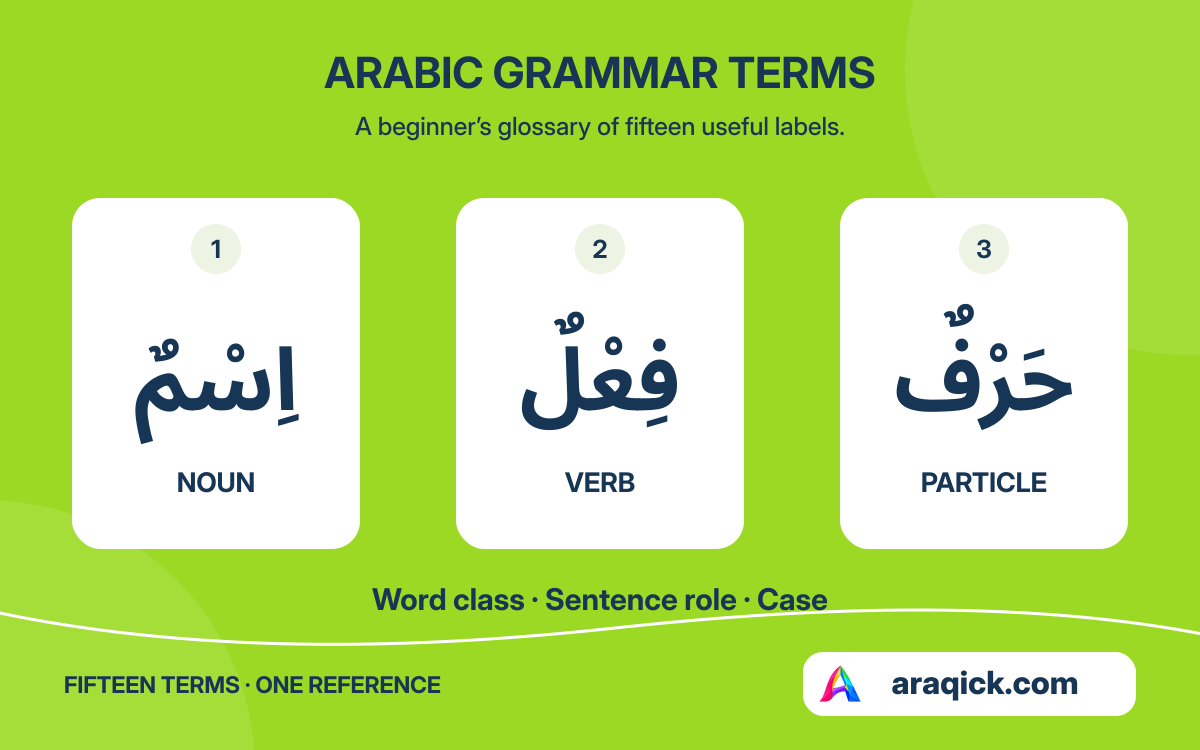
Arabic grammar labels become easier when you connect each one to a job. Ism names a word class; mubtada names a sentence role; marfu names a case. This glossary groups fifteen common terms so you can follow a lesson without treating every label as a new rule.
01Start with three word classes
| Term | Reading aid | Useful meaning |
|---|---|---|
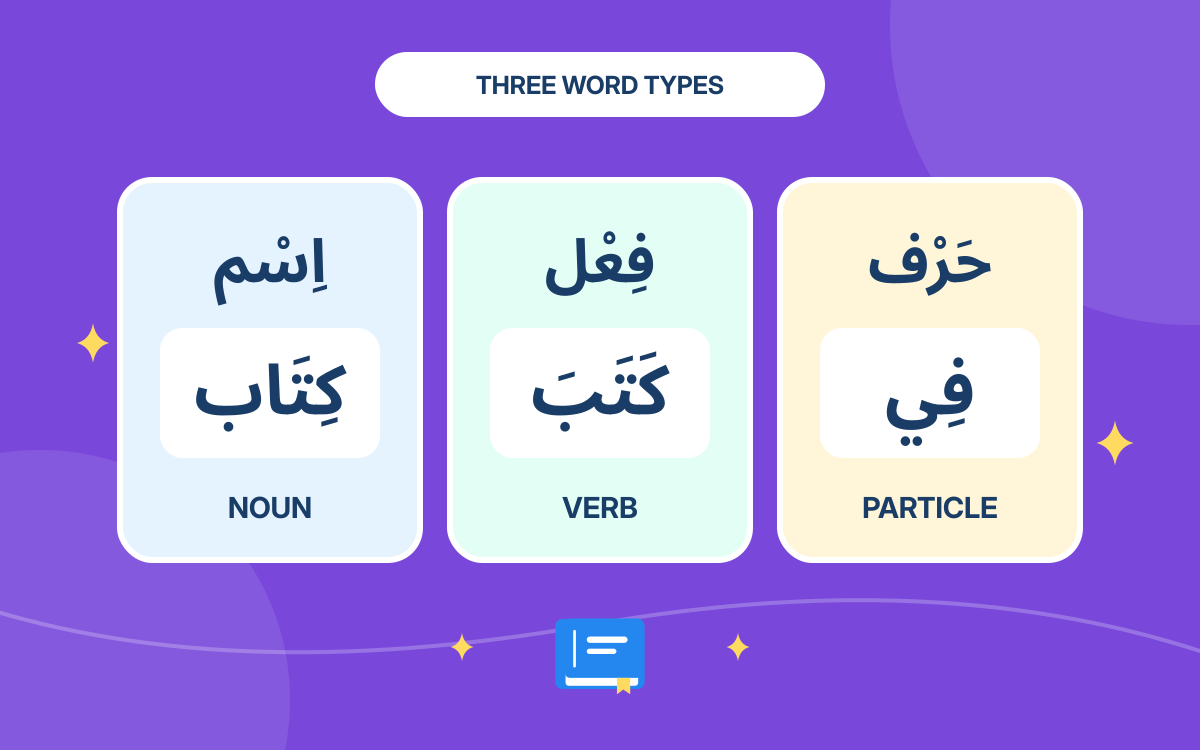
| اِسْمٌ | ism | Noun or nominal word |
| فِعْلٌ | fil | Verb |
| حَرْفٌ | harf | Particle |
كَتَبَ سَعِيدٌ
kataba saidun
Said wrote.
Kataba is a fil, a verb. Saidun is an ism, a noun. Fi, in, is a harf when used as a preposition. The Arabic category ism is broader than the English label noun: it also includes pronouns and adjectives.
Classify the word in context. Harf here means particle, not simply a letter of the alphabet.
02Find the job inside a sentence
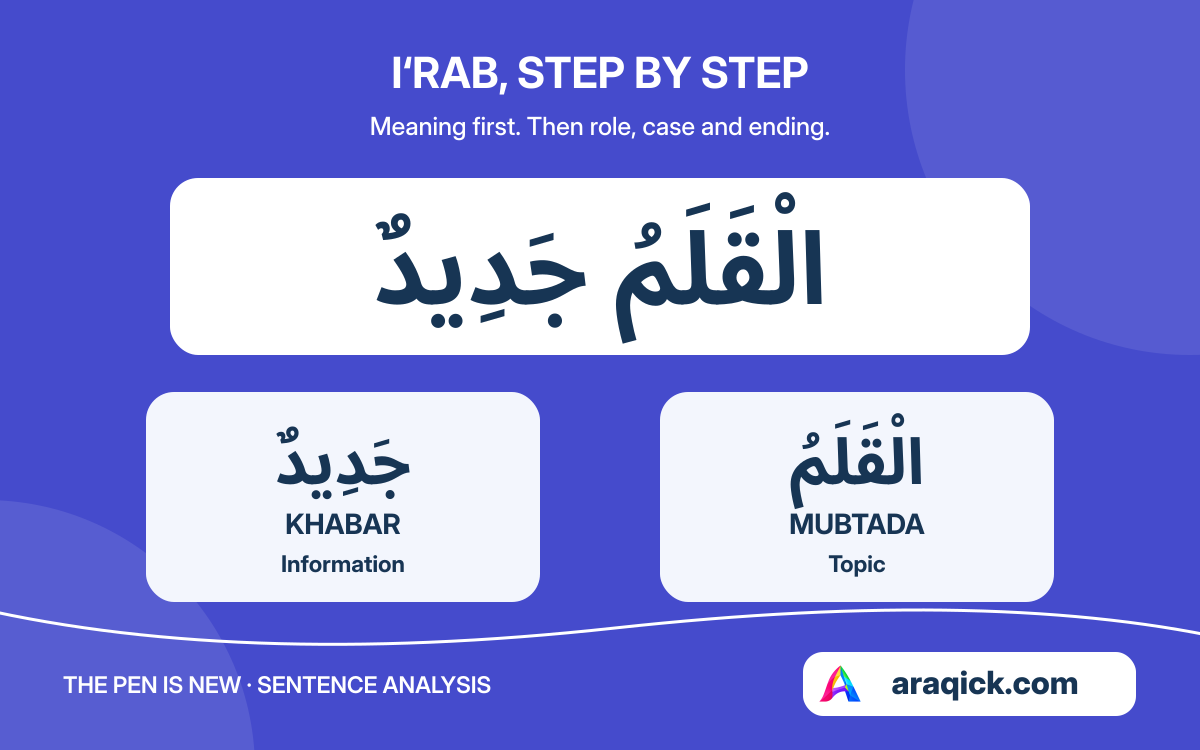
الْمَاءُ بَارِدٌ
almau baridun
The water is cold.
Almau is the mubtada, the topic or nominal subject. Baridun is the khabar, the information about it. These are two sentence roles.
فَتَحَ سَعِيدٌ بَابًا
fataha saidun baban
Said opened a door.
Here Saidun is the fail, the subject or doer of the active verb. Baban is the maful bihi, the direct object. Both are nouns, but their jobs differ. Do not call every subject a mubtada regardless of the sentence structure.
03Read the three noun-case labels
| Term | English name | Common visible sign |
|---|---|---|
| مَرْفُوعٌ | Nominative | Dammah: u / un |
| مَنْصُوبٌ | Accusative | Fathah: a / an |
| مَجْرُورٌ | Genitive | Kasrah: i / in |
These labels describe case, not meaning by themselves. A noun can be both fail and marfu: one label gives its role, the other its case.
The endings above are a starting pattern. Duals, sound plurals, diptotes and fixed words need additional rules. Do not expect every marfu word to display an ordinary dammah.
04Recognise three linked-noun terms
مِفْتَاحُ الْغُرْفَةِ
miftahu alghurfati
The room’s key
Miftahu is mudaf, the first member of this idafa. Alghurfati is mudaf ilayhi, its genitive complement. The relationship can express possession or another close association.
مِفْتَاحٌ صَغِيرٌ
miftahun saghirun
A small key
Saghirun is nat, an adjective describing the key. It is also commonly called sifa. This is a describing phrase, while the first example links the key to the room.
05Use the last two labels as reading clues
هُوَ هُنَا
huwa huna
He is here.
Huwa is a damir, a pronoun. Huna is used as a dharf of place: it tells us where. Dharf can also refer to a time adverbial.
One word can receive several compatible labels. Huwa is an ism by word class, a damir by subtype, and the mubtada in this example. That is not a contradiction.
When a term appears in a lesson, ask: Is this naming a word class, a sentence job or a grammatical state? Then open the sentence-analysis guide to see the labels working together.
What to remember
- Separate a word’s class from its job and its case.
- Mubtada and khabar belong to nominal-sentence analysis; fail names the active verb’s subject.
- Keep the glossary handy and practise each term on a real sentence.
Your reference shelf
Open a guide whenever you need it.
Fifteen terms in one placeArabic term, reading aid, English label and explanation
| Term | Reading aid | English label | Explanation |
|---|---|---|---|
| اِسْمٌ | ism | Noun or nominal word | A word class that also includes pronouns and adjectives in Arabic grammar. |
| فِعْلٌ | fil | Verb | A word expressing an action or state with tense/aspect information. |
| حَرْفٌ | harf | Particle | A grammatical word such as a preposition or conjunction. |
| مُبْتَدَأٌ | mubtada | Topic / nominal subject | What an ordinary nominal sentence begins by talking about. |
| خَبَرٌ | khabar | Predicate | The information given about the mubtada. |
| فَاعِلٌ | fail | Subject of an active verb | The doer in a simple active verbal sentence. |
| مَفْعُولٌ بِهِ | maful bihi | Direct object | What a transitive verb directly acts on in a simple example. |
| مَرْفُوعٌ | marfu | Nominative | A noun case often shown by dammah in regular singular nouns. |
| مَنْصُوبٌ | mansub | Accusative | A noun case often shown by fathah in regular singular nouns. |
| مَجْرُورٌ | majrur | Genitive | The case of nouns after prepositions and as the second member of idafa. |
| مُضَافٌ | mudaf | First member of idafa | The noun linked to a following noun or pronoun in an idafa. |
| مُضَافٌ إِلَيْهِ | mudaf ilayhi | Second member of idafa | The genitive complement of the first member. |
| نَعْتٌ | nat | Adjective / attribute | A modifier describing a noun and following agreement rules. |
| ضَمِيرٌ | damir | Pronoun | A word or attached form referring to a person or thing. |
| ظَرْفٌ | dharf | Time or place adverbial | A word used to specify when or where. |
Sources & further learning
References for the language explanations and learning guidance.