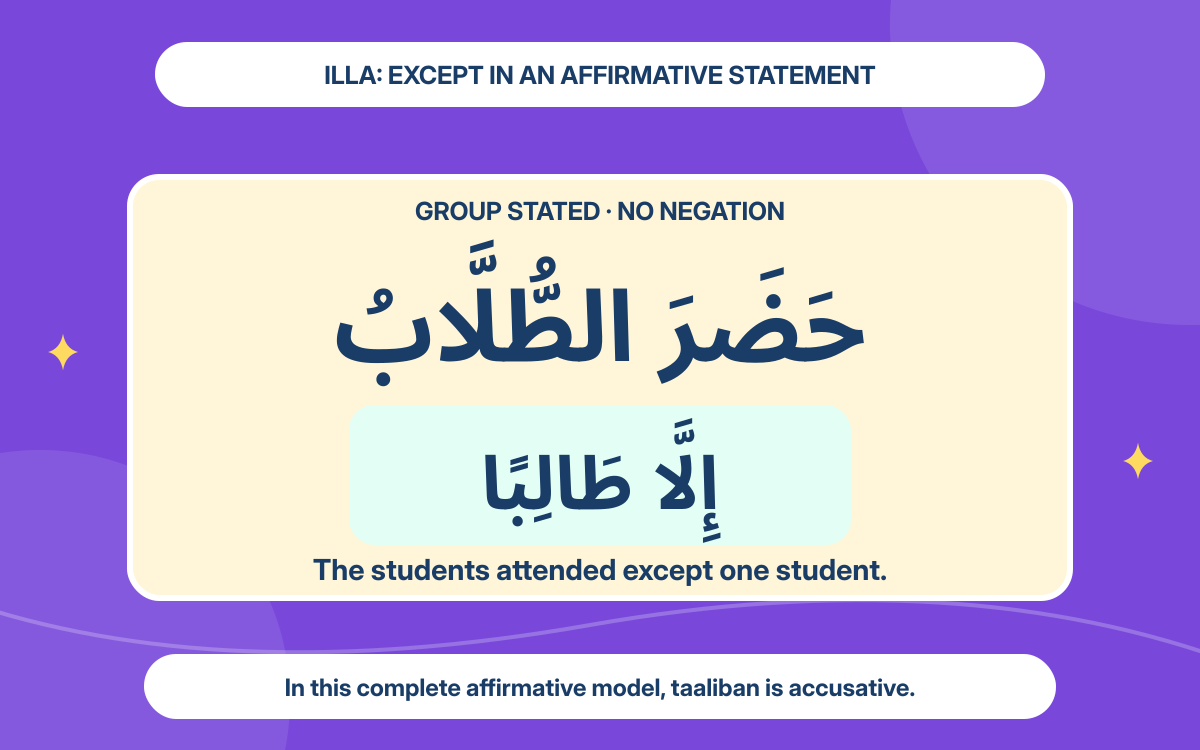
Negative exceptions need more than an always-accusative rule. First ask whether the sentence states a general group. Then ask whether the exception belongs to that group. A complete connected negative exception allows two grammatical analyses; an omitted-group restriction follows ordinary sentence roles instead.
01Find the stated group
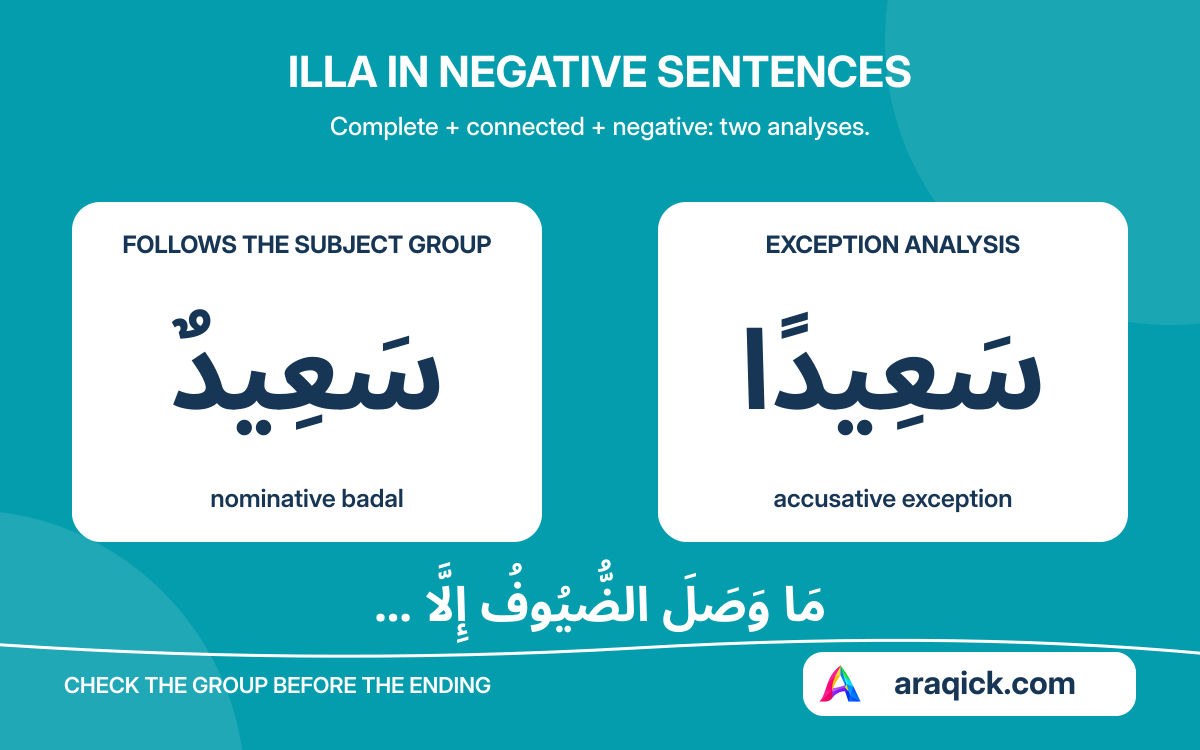
مَا وَصَلَ الضُّيُوفُ إِلَّا سَعِيدٌ
ma wasala alduyufu illa saidun
No guests arrived except Saeed.
The group is alduyuf, the guests. Saeed is assumed to be one of those guests, so the exception is connected. Because the group is stated, the construction is complete, or tamm. Ma makes it negative. All three facts matter before choosing an ending.
02Recognise two valid endings
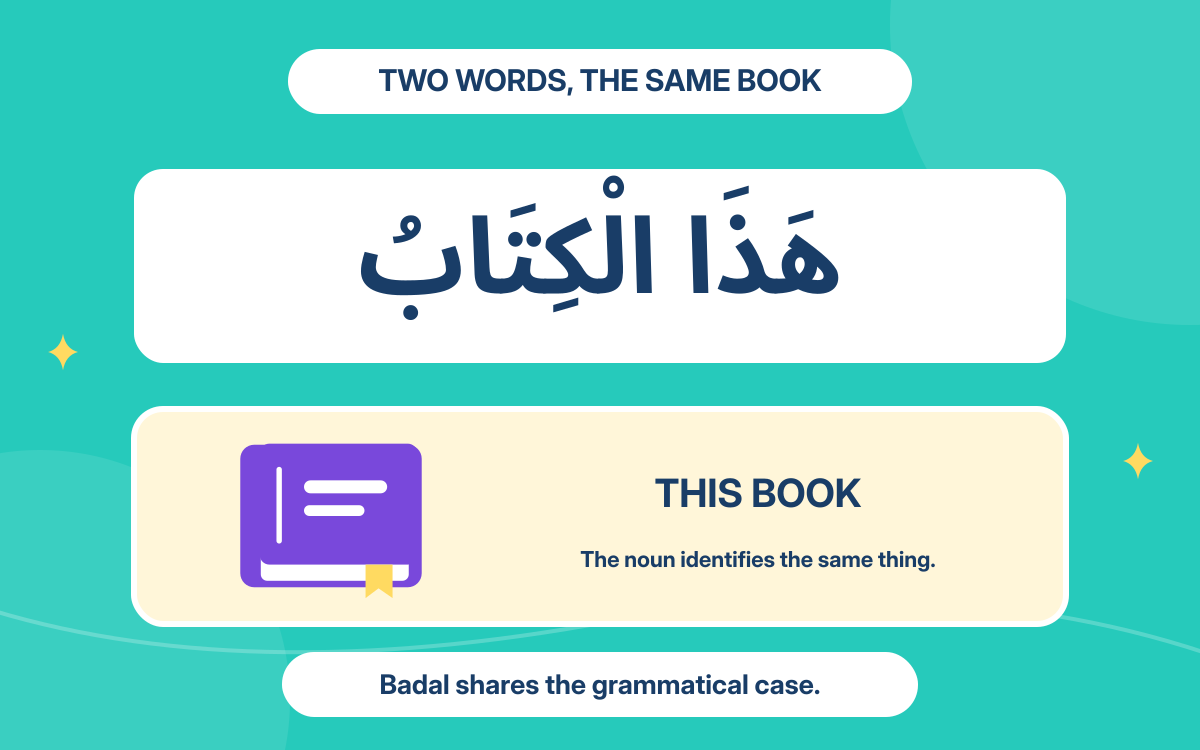
In that sentence, سَعِيدٌ can follow the nominative case of alduyuf as badal, an appositional substitute. The alternative سَعِيدًا is accusative as an exception. Both express the same basic exception here.
مَا وَصَلَ الضُّيُوفُ إِلَّا سَعِيدًا
ma wasala alduyufu illa saidan
No guests arrived except Saeed.
This choice belongs to a complete connected negative construction. It is not permission to alternate endings after every illa. Review badal for the case-following relationship.
03Follow the group’s actual case
مَا مَرَرْتُ بِالضُّيُوفِ إِلَّا سَعِيدٍ
ma marartu bialduyufi illa saidin
I did not pass by any of the guests except Saeed.
The stated group is genitive after bi. A badal reading therefore gives Saidin, not Saidun. Accusative Saidan remains possible as the exception reading.
If the group is an accusative object, both analyses can produce the same visible accusative ending. The analysis is different even when the written form matches.
04Let an unstated group change the analysis
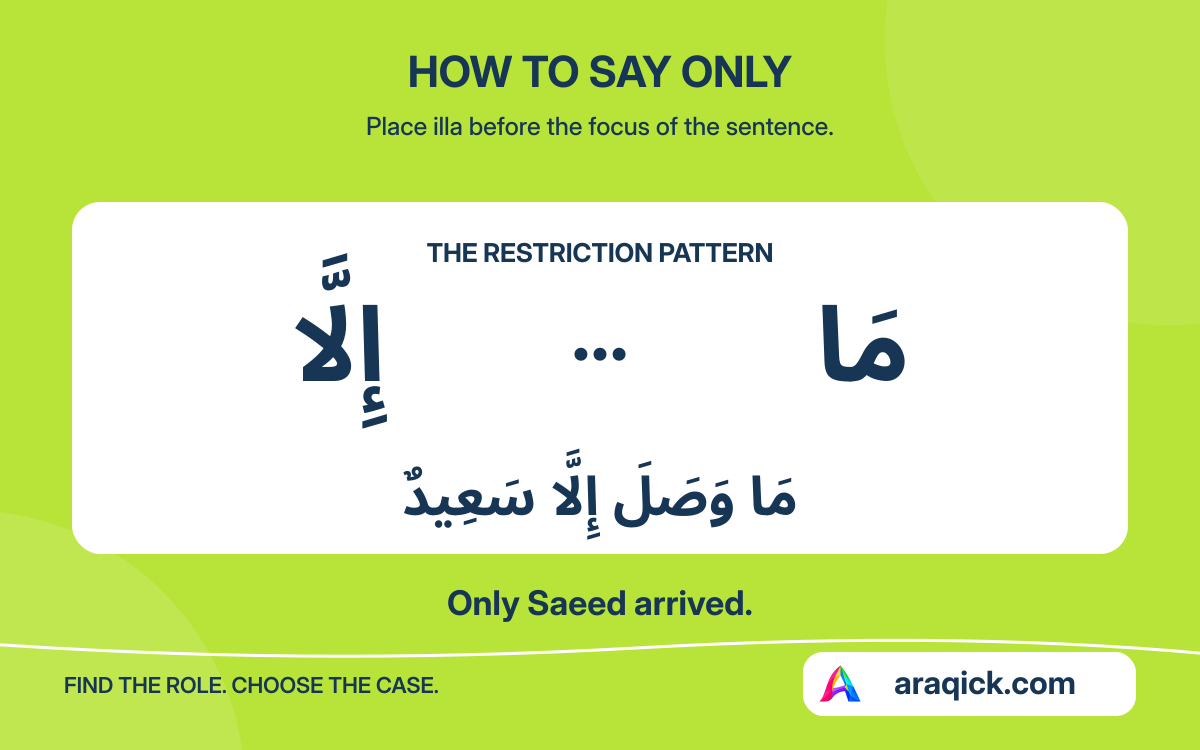
مَا وَصَلَ إِلَّا سَعِيدٌ
ma wasala illa saidun
Only Saeed arrived.
There is no stated group now. Saidun is the subject of wasala, so its nominative ending comes directly from that role. This is the mufarragh pattern, often translated with only. An object would be accusative and a noun governed by a preposition would be genitive.
See ma… illa for only for those examples. An earlier noun counts as an exception group only when it actually names the relevant general set.
05Recognise an exception outside the group
مَا وَصَلَ الْمُسَافِرُونَ إِلَّا أَمْتِعَتَهُمْ
ma wasala almusafiruna illa amtiatahum
The travellers did not arrive, but their luggage did.
Luggage is not one of the travellers. This is a disconnected exception, or munqati, where illa carries a contrast similar to but. Use the accusative in the disconnected model taught here: amtiatahum. Do not apply the connected badal shortcut to it.
The chart summarises the patterns used in this lesson. Compare affirmative exceptions and noun cases before combining them in longer sentences.
What to remember
- A complete connected negative exception allows accusative exception or case-following badal.
- Badal follows the stated group’s case, which need not be nominative.
- An unstated group gives ordinary role-based case; the disconnected model here uses accusative.
Your reference shelf
Open a guide whenever you need it.
Choose the exception pattern firstApply the ending only after identifying the structure
| Pattern | Stated group? | Relationship | Ending |
|---|---|---|---|
| Complete affirmative | Yes | Connected | Accusative exception |
| Complete negative | Yes | Connected | Accusative exception or case-following badal |
| Mufarragh restriction | No | No stated group to follow | Normal subject, object or prepositional case |
| Disconnected model used here | Yes | Exception outside the group | Accusative exception |
This is a practical guide to the ordinary orders shown here. Classical descriptions include further variations; do not treat the chart as a rule for every advanced exception construction.
Compare the two connected negative analysesBoth forms are shown only where the construction permits them
| Stated group | Badal reading | Accusative exception |
|---|---|---|
| الضُّيُوفُ — subject | إِلَّا سَعِيدٌ | إِلَّا سَعِيدًا |
| بِالضُّيُوفِ — genitive | إِلَّا سَعِيدٍ | إِلَّا سَعِيدًا |
| الضُّيُوفَ — object | إِلَّا سَعِيدًا | إِلَّا سَعِيدًا |
Object model: مَا قَابَلْتُ الضُّيُوفَ إِلَّا سَعِيدًا, I met none of the guests except Saeed. The same ending can support either analysis.
Sources & further learning
References for the language explanations and learning guidance.