“The students attended except one student” states what happened to a group, then removes one member from that statement. Learn this complete affirmative pattern with illa and the accusative exception. Other types of exception need different case rules.
01Exclude one member of a group
Illa, إِلَّا, means except in this construction. The group is stated before it:
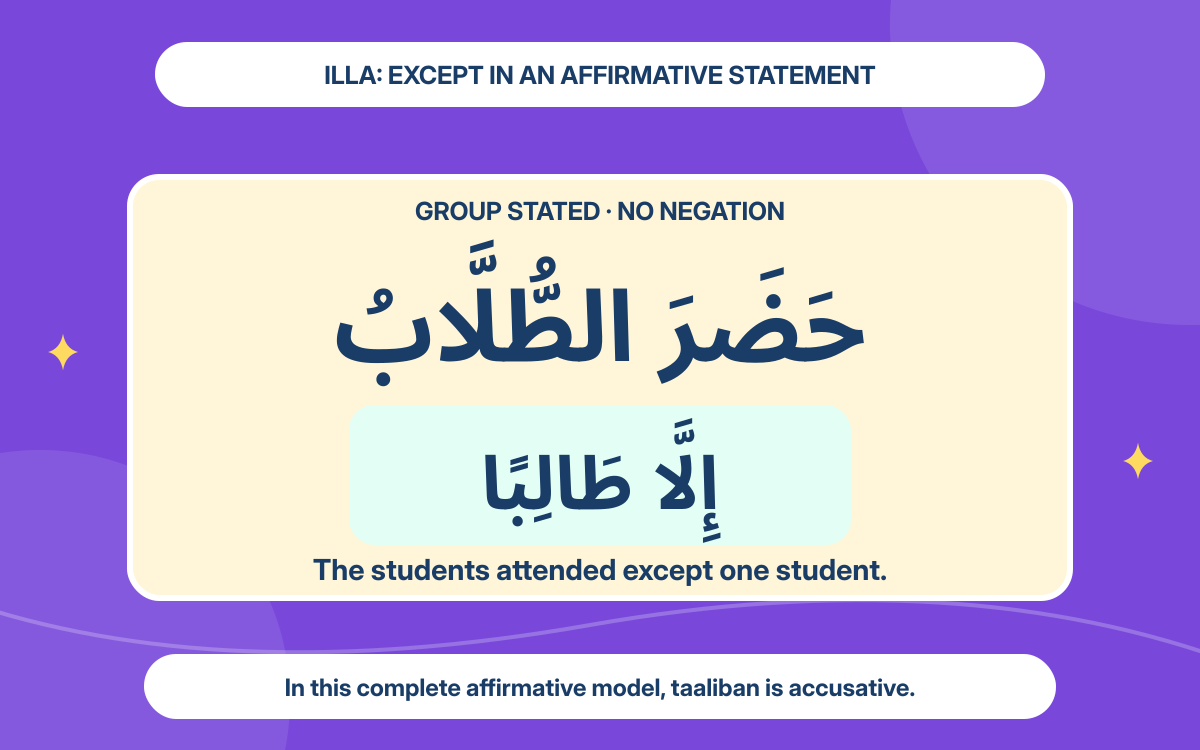
حَضَرَ الطُّلَّابُ إِلَّا طَالِبًا
hadara ttullabu illa taliban
The students attended except one student.
Attending is the statement about the students. Taliban names the student excluded from it: that student did not attend. The three parts are the stated group, illa and the exception.
02Check the scope before choosing case
Our sentence is complete because the group is mentioned. It is affirmative because the statement is not negated. In this pattern, the exception after illa is accusative:
حَضَرَ الطُّلَّابُ إِلَّا خَالِدًا
hadara ttullabu illa khalidan
The students attended except Khalid.
Khalid is one of the students, and khalidan is the accusative form of his regular name. The group itself is nominative here as the doer of attended. Do not extend this rule to every sentence containing illa.
03Let the group have its own role
The stated group can also be the object of an action. Qaratu means I read in the past:
قَرَأْتُ الْكُتُبَ إِلَّا كِتَابًا
qaratu lkutuba illa kitaban
I read the books except one book.
Alkutuba is the accusative object group, the books. Kitaban is the accusative exception, a book from that group which I did not read. The exception rule remains the same because the statement is still complete and affirmative.
04Match a describing word to the exception
Wahidan means one. When it describes the regular singular exception, it agrees with its accusative case:
حَضَرَ الطُّلَّابُ إِلَّا طَالِبًا وَاحِدًا
hadara ttullabu illa taliban wahidan
The students attended except one student.
Taliban and wahidan are both indefinite masculine singular accusative forms. Wahidan describes the excluded student; it does not change the case of the earlier group.
05Build the full affirmative pattern
Place attended first, then the students, then illa, then the excluded regular name:
حَضَرَ الطُّلَّابُ إِلَّا خَالِدًا
hadara ttullabu illa khalidan
The students attended except Khalid.
Check both conditions: the group is explicitly stated and there is no negation. Then use the accusative exception. A negative statement or a construction without a stated group requires its own analysis.
What to remember
- An exception removes a member from the statement made about the explicitly stated group.
- In the complete affirmative pattern taught here, the exception after illa is accusative.
- The group keeps the case required by its own role; an adjective describing the exception follows the exception’s case.
Your reference shelf
Open a guide whenever you need it.
Keep the exception rule within its scopeComplete affirmative examples and a warning about other constructions
حَضَرَ الطُّلَّابُ إِلَّا خَالِدًا — hadara ttullabu illa khalidan — The students attended except Khalid.
قَرَأْتُ الْكُتُبَ إِلَّا كِتَابًا — qaratu lkutuba illa kitaban — I read the books except one book.
The stated group is called almustathna minhu; the exception is almustathna. Both examples mention the group and make an affirmative statement, so the exception is accusative. In a complete negative construction, a connected exception can allow different analyses. In a negative construction without a stated group, the word after illa takes the grammatical role required by the surrounding sentence. This guide does not test those later patterns. Its full formal reading aids retain the case endings; pause pronunciation can differ.
Sources & further learning
References for the language explanations and learning guidance.