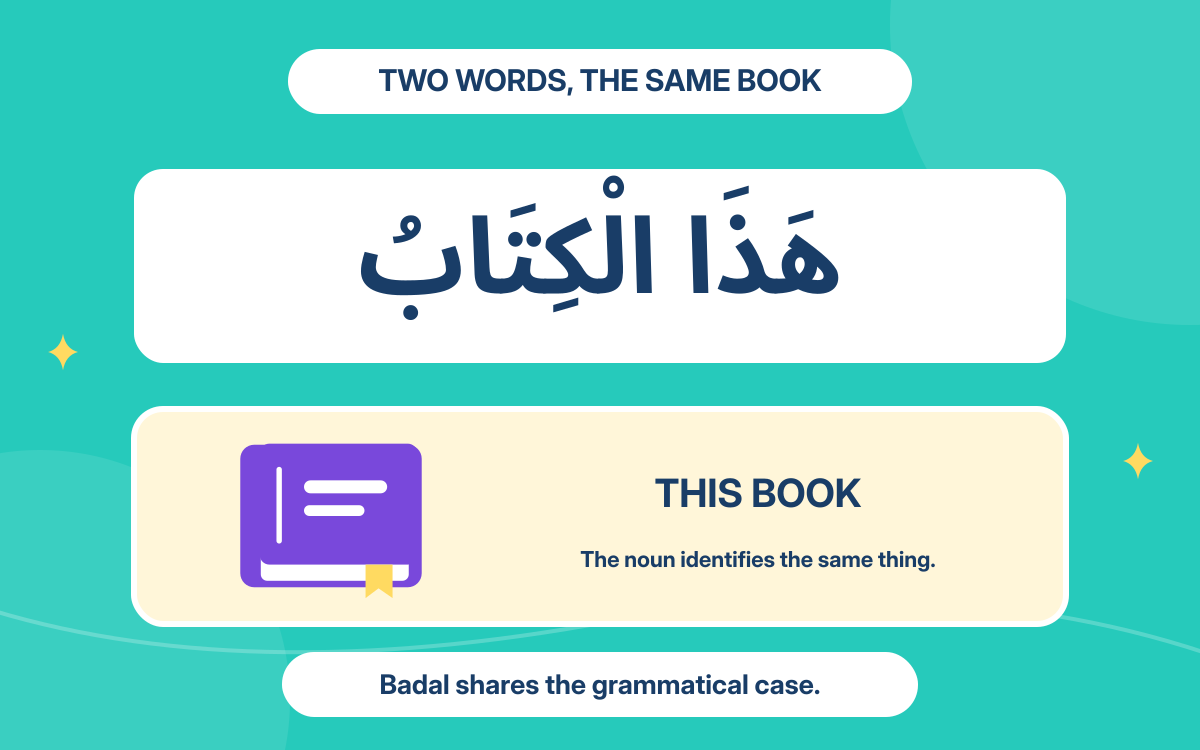
In “this book,” this points and book tells us what is being pointed at. In “the teacher Muhammad,” both expressions identify the same person. A common traditional analysis calls the clarifying noun badal. Begin with these same-entity examples and follow their case.
01Identify the same book
Badal is a following expression that identifies what the earlier expression means. In this guide, both refer to the same whole person or thing.
هَذَا الْكِتَابُ جَدِيدٌ
hadha lkitabu jadidun
This book is new.
Hadha points to the book, and alkitabu names that same object. In the traditional badal analysis used here, alkitabu follows hadha’s nominative subject position. Jadidun is the predicate that completes the statement.
02Compare a phrase with a statement
Watch the article and the intended relationship.
هَذَا الْكِتَابُ
hadha lkitabu
This book
هَذَا كِتَابٌ
hadha kitabun
This is a book.
The first is a noun phrase in our reading: the book clarifies this. The second is a complete nominal sentence: kitabun supplies the predicate, “a book.” A noun after a demonstrative is not automatically badal; ask whether it clarifies the same referent or gives the sentence its information.
03Follow the demonstrative’s position
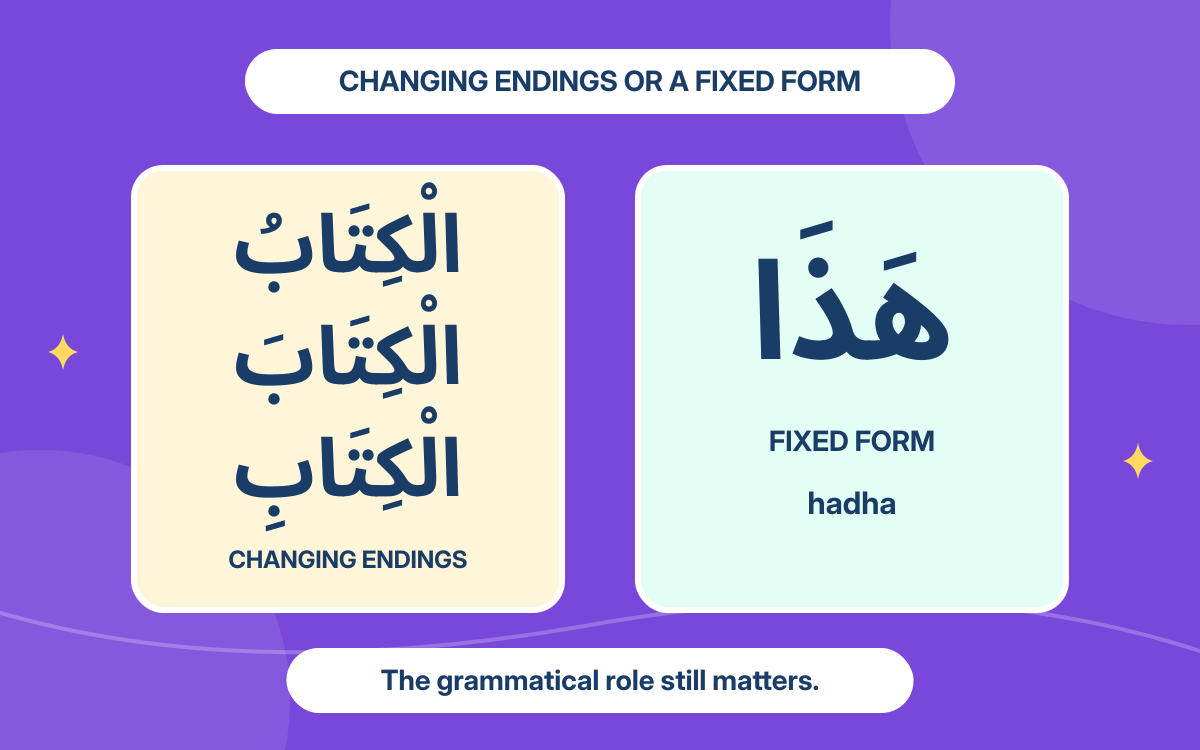
Hadha stays fixed, but the regular noun following it shows the case of the position.
قَرَأْتُ هَذَا الْكِتَابَ
qaratu hadha lkitaba
I read this book.
فِي هَذَا الْكِتَابِ
fi hadha lkitabi
In this book
After “I read,” hadha occupies an accusative direct-object position, so alkitaba is accusative. After fi, hadha occupies a genitive position, so alkitabi is genitive. Case agreement does not require the fixed demonstrative to display the same last vowel.
04Let a name identify the person
A name can clarify a person already introduced by a role.
جَاءَ الْمُعَلِّمُ مُحَمَّدٌ
jaa lmuallimu Muhammadun
The teacher Muhammad came.
رَأَيْتُ الْمُعَلِّمَ مُحَمَّدًا
raaytu lmuallima Muhammadan
I saw the teacher Muhammad.
The teacher and Muhammad are one person. Muhammadun follows the nominative doer in the first example; Muhammadan follows the accusative object in the second. No wa, “and,” joins them. Adding wa would produce a different construction.
05Check identity, role and case
Ask three questions: do the expressions identify the same thing? What role does the first expression have? What case must the clarifying noun follow?
Compare badal with an adjective: in الْكِتَابُ الْجَدِيدُ (alkitabu ljadidu, the new book), new describes a quality. Compare an idafa: in كِتَابُ الْمُعَلِّمِ (kitabu lmuallimi, the teacher’s book), book and teacher are different things in a relationship.
Grammatical analyses can differ in more complex contexts. Use the same-entity badal reading practised here rather than labelling every noun after every demonstrative the same way.
What to remember
- In the same-entity badal examples here, the second expression clarifies the first without and.
- Badal follows grammatical case, including the case position of a fixed demonstrative.
- A predicate gives information, an adjective describes, and an idafa links different nouns in a relationship.
Your reference shelf
Open a guide whenever you need it.
One book in three positionsReview case agreement and the scope of this beginner analysis
| Example | Position of hadha | Badal |
|---|---|---|
| هَذَا الْكِتَابُ جَدِيدٌ | Nominative subject | الْكِتَابُ |
| قَرَأْتُ هَذَا الْكِتَابَ | Accusative object | الْكِتَابَ |
| فِي هَذَا الْكِتَابِ | Genitive after fi | الْكِتَابِ |
The earlier expression is called الْمُبْدَلُ مِنْهُ, the expression being clarified. Our examples concern whole-for-whole badal: both expressions identify the same entire entity. Other kinds can identify a part or an associated feature; those require further rules and are outside this guide.
Some grammar treatments analyse a clarifying noun as عَطْفُ بَيَانٍ in contexts where another treatment uses badal. The practical outcome in our regular examples is the same case agreement. Context still determines whether a later noun is a clarification, a predicate or something else.
Sources & further learning
References for the language explanations and learning guidance.